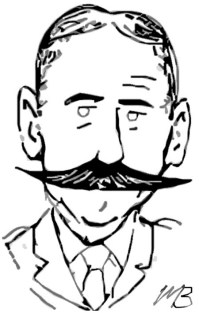
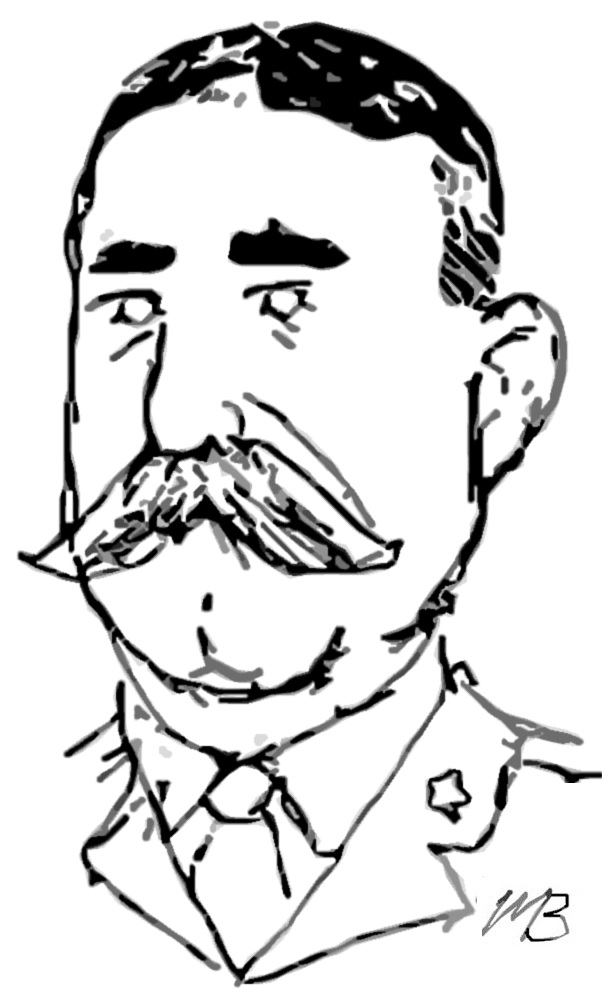
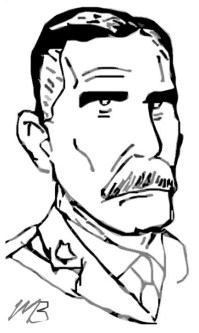
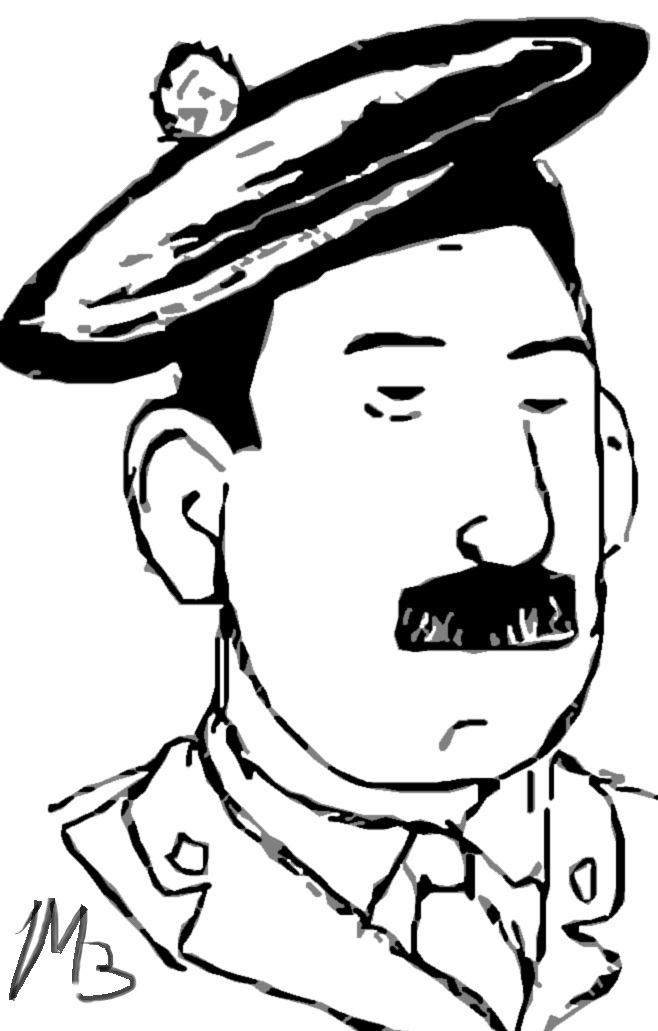
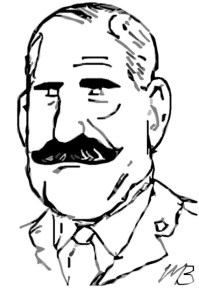
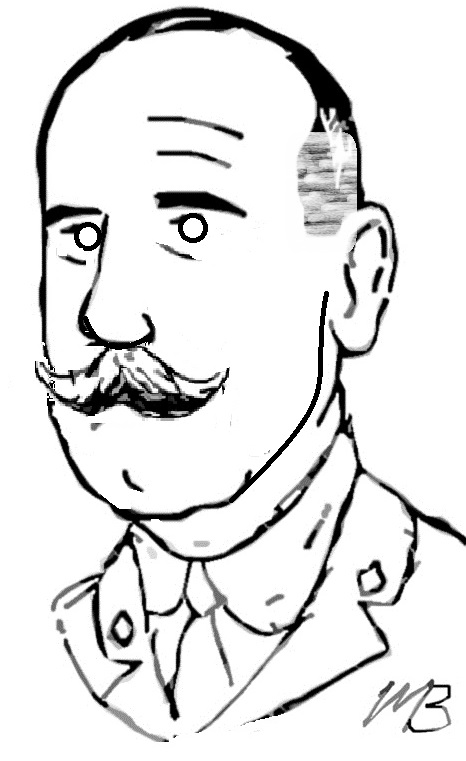
Lt. Col. Yates

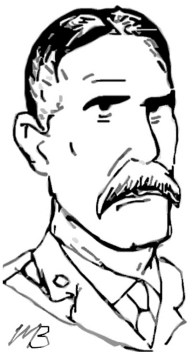
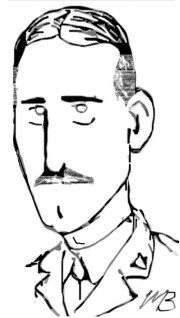
Lieutenant Colonel Wilton Yates
2nd (Iron Second) Battalion
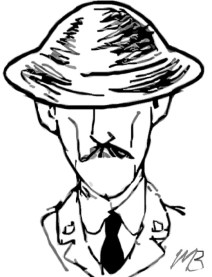
Yates

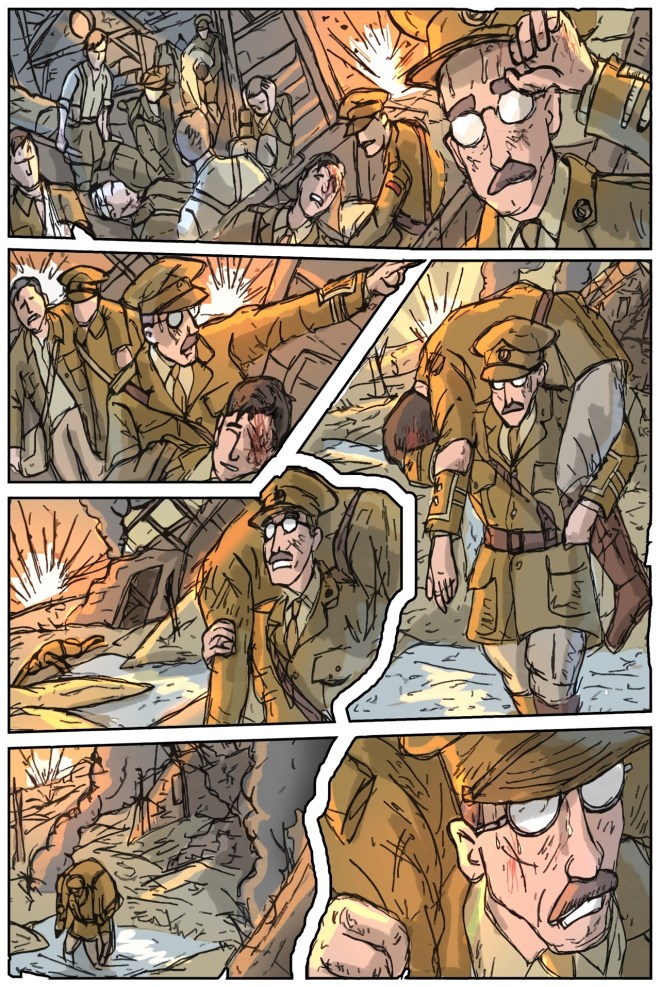
When he was badly wounded in World War I, he was the first to have successful plastic surgery on his face. It was very noticeable of course when he returned to Swift Current. At one time, as he himself relates, he was consigned to an insane asylum “but never reached it owing to my own machinations.” When wounded he was put in the morgue as dead; was saved by a nurse’s aide and given six months to live.

(Jim Greenblat, Those Were the Days in Swift Current, 1971, 32)

A native of England, Wilton Milwarde Yates was born on 17 October 1879. After being wounded in the Boer War, he immigrated to Canada and became a rancher at Swift Current. He enlisted in Lieutenant Colonel Harry Cowan’s 32nd Battalion in December 1914 and was attached to the 2nd Battalion once overseas.
Continue reading →

Lt. Col. Swift

Lieutenant Colonel “Dolly” Swift, D.S.O.
2nd and 259th (Canadian Rifles) Battalions

Swift

The Vics took the first three games and looked like certain winners, but Stocking and Watson kept their team together and are mainly responsible for enabling Swift and Scott to tie the score and then get one ahead. Swift rallied his home and made a steady forward rush, when Grant lifted the puck, which struck “Dolly” Swift under the ear and knocked him out. This involved another fifteen minute delay.

(Toronto Globe, 31 Jan 1898, 8)

Albert Edward “Dolly” Swift was a Boer War veteran and professional soldier with twenty-years’ experience in the permanent militia. Born in Quebec City on 30 January 1866, Swift had also been an amateur hockey player in his youth. He played one season with the Montreal Victorias and thirteen with the Quebec Hockey Club during the 1880s and 90s.

Continue reading →

Lt. Col. Langford

Lieutenant Colonel R.J.S. Langford
193rd (Nova Scotia Highlanders) Battalion

The Battalion, by means of its organization, is able to stand the shock of battle, to surmount confusion, to suffer casualties with the least injury to its efficiency. To abandon the organization is to destroy the fighting power and capacity for training.

(Langford, Corporal to Field Officer, 1940, 8)

Robert John Spinluff Langford was a professional soldier with the Royal Canadian Regiment. He was born in India on 9 July 1887. After Lieutenant Colonel John Stanfield, MP, temporarily assumed command of the Nova Scotia Highlander Brigade, Langford took over the 193rd, which he led to England in late 1916.

Continue reading →

Lt. Col. Bruce

Lieutenant Colonel G.W. Bruce
181st (Brandon) Battalion
GWBruce

Col. Bruce’s wife was not able to give definite particulars about her husband’s death, on account of suffering from the sudden shock.

(Toronto Globe, 24 Apr 1916, 8)

George William Bruce was a barrister, militia officer and former commander of the 35th Simcoe Rifles. He was born in Simcoe County, Canada West on 26 January 1862. He graduated from Victoria College in 1885 and joined the militia in 1890. He moved west to join a law practice in Manitoba after retiring to the reserve officers’ list in 1912. In January 1916, Bruce was appointed to raise the 181st Battalion from Brandon, Manitoba. Continue reading →

Lt. Col. Parsons

Lieutenant Colonel Norval Parsons
246th (Nova Scotia Highlanders) Battalion

Col. Parsons, who was appointed to be second in command of the 185th Battalion, is a very strong Liberal.

 It is a fact as reported to me that great credit is taken by the Liberal party in Nova Scotia for the organization of the Highland Brigade. Yet my hon. friend stands on the floor of this Parliament and says that the whole thing is honeycombed with politics.

(Robert Borden, Debates, 6 May 1916, 3545)

A senior officer with the 85th, 185th and 219th Battalions, Norval Henry Parsons was promoted to command the 246th in August 1916. The latest Nova Scotia battalion was designated as a reserve unit for the expected formation of a Highlander Brigade. Parson was born in Kingston, Nova Scotia on 25 March 1868. He was a lifelong militiaman and former commanding officer of the 68th Regiment.

Continue reading →

Lt. Col. W.R. Smyth, MP

Lieutenant Colonel W.R. Smyth, MP
238th (Canadian Forestry) Battalion
Smyth

Am extremely sorry that certain cables crossed and I inadvertently accepted nomination. I wired Robb withdrawing my acceptance … Please convey this to electorate at first opportunity. I depend on all loyal Canadians to support the Union Government and thereby help win the war. We need men and must have them.

(Smyth to G.B. Nicholson, Nov 1917)

William Ross Smyth was a lumber tycoon, Conservative MPP in the Ontario legislature (1902—1908 and federal MP for Algoma East (1908—1917). He was born in Aberdeenshire, Scotland on 3 January 1857. He was one of several sitting Conservative MPs selected to recruit an overseas battalion.

Continue reading →

Lt. Col. Leach

Lieutenant Colonel Francis Leach
231st (Seaforth Highlanders) Battalion

Before very long you will be going overseas–an event to which I know you have all been anxiously looking forward, and you will then have the honour of taking your place beside the brave lads who have preceded you.

(Lt. Col. Leach, January 1917)

Francis Easton Leach was a graduate of the Royal Military College and a veteran of the Boer War. A native of Montreal, he was born on 24 November 1875. After doing survey work in South Africa, he was employed as a railway engineer in British Columbia. He joined the 72nd Regiment after the outbreak of the Great War and was eventually authorized to raise the 231st Battalion from Vancouver in 1916.

Continue reading →

Lt. Col. Jones

Lieutenant Colonel C.H. LeP. Jones
227th (Men o’ the North) Battalion
Jones_CH

I do not believe I am competent not having been in the trenches myself, to thank you for these men. I do not believe in all modesty I am clothed with sufficient authority from them to speak for them. I do not believe any man can adequately answer this toast unless he has had his baptism of fire in this, the greatest war of all time, but I will clothe myself with sufficient authority to say a good old fashioned “Thank you” for them.

(Col. Jones, Pulp and Paper Magazine, 9 Feb 1917, 148)

Charles Hugh LePailleur Jones was a well-known figure in the paper and pulp industry. He was born in Montreal on 1 May 1876 and graduated with a degree in engineering from McGill University. He had belonged to the 3rd Victoria Rifles before moving to Sault Ste. Marie where he became commanding officer of the 51st Soo Rifles. In August 1916, Jones was appointed to raise the 227th Battalion from Sudbury-Manitoulin-Algoma. Continue reading →

Lt. Col. W.O. Smyth

Lieutenant Colonel W.O. Smyth
209th (Swift Current) Battalion

His Honor Judge Smyth, is, and apparently has been for some time, absent from his judicial duties without leave, and it would appear from the correspondence before me that he is acting as Commanding Officer of the 209th Overseas Battalion.

(Deputy Minister of Justice, 17 Nov 1916)

William Oswald Smyth was a district court judge based in Swift Current and major in the 27th Light Horse Regiment. He was born in Toronto on 4 October 1873 and practiced law in Montreal before moving west. Although “anxious to go to the war,” Smyth was initially denied the opportunity to enlist. Justice Minister Doherty explained, “it did not appear necessary that the judges should be permitted to abandon their judicial duties for the purpose of undertaking military service.” Undeterred, Judge Smyth took command of the 209th Battalion and went overseas anyway.

Continue reading →

Victoria Cross at Ypres

Captain Francis Scrimger
Canadian Army Medical Corps

On the afternoon of 25th April, 1915, in the neighbourhood of Ypres, when in charge of an advanced dressing station in some farm buildings, which were being heavily shelled by the enemy, he directed under heavy fire the removal of the wounded, and he himself carried a severely wounded Officer out of a stable in search of a place of greater safety. When he was unable alone to carry this Officer further, he remained with him under fire till help could be obtained.

(Scrimger, VC citation, 22 June 1915)

Scrimger 1 Continue reading →