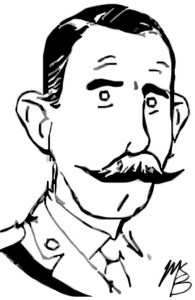
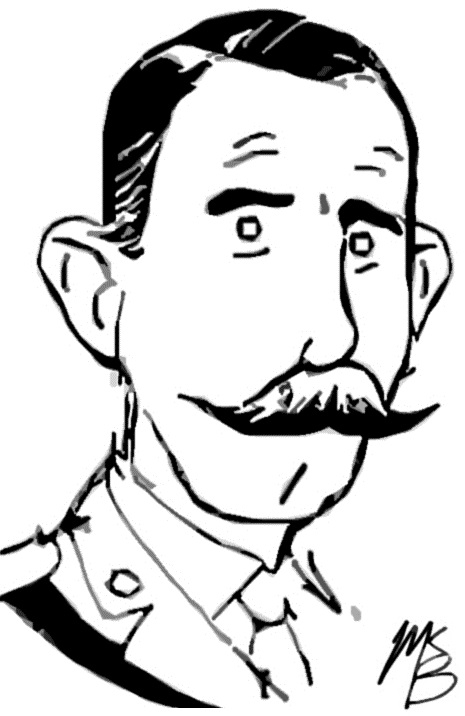
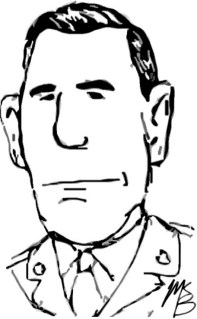
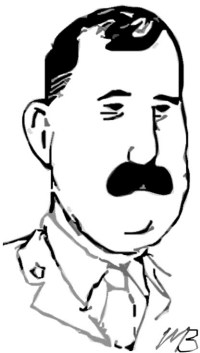
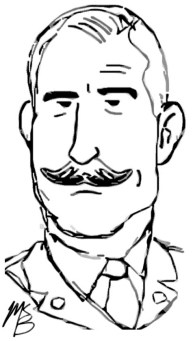
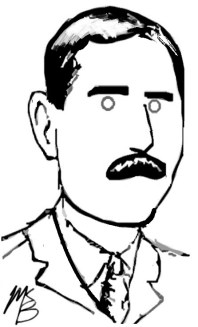
Lt. Col. Chandler

Lieutenant Colonel W.K. Chandler
43rd (Cameron Highlanders) Battalion
Chandler

Instances of desertion have been limited to three cases all of which were men from desertion in the face of the enemy was to be anticipated, execution of the sentence of death would I submit be punitive only; the general state of discipline does not call for an example being made in this case.

(Chandler to General Horne, 1918)

William Kellman Chandler was born in Barbados, British West Indies on 1 November 1883. Sir His father, Sir William Kellman Chandler (1857—1940) was president of the Barbados legislative council. Educated at Cambridge, he moved to Winnipeg to become a barrister with the law firm of Cameron and Phillips. He joined the 43rd Cameron Highlanders in August 1914.

Continue reading

The Prisoner

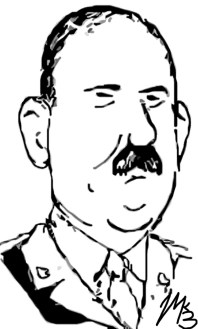
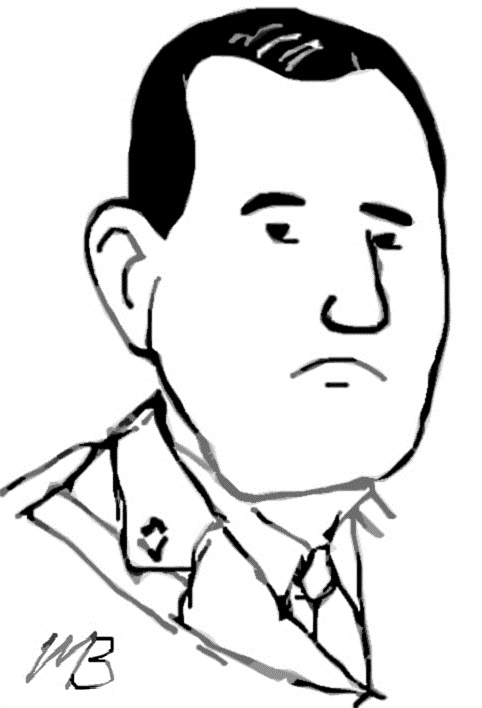
Lieutenant Colonel J.F.H. Ussher
4th Canadian Mounted Rifles
Ussher

In view of the foregoing the people who are providing the taxes for this well-deserved bonus to the soldiers should insist that all strings to the payment should be removed. Don’t let some Government appointee be the sole judge– the soldier’s record of service must decide!

(Ussher to Globe and Mail, 18 Aug 1944, 16)

During the battle of Mont Sorrel on 2 June 1916, John Frederick Holmes Ussher became trapped in a collapsed tunnel during heavy German shelling. He was wounded and captured. He spent the next two and a half years a prisoner of war. Born in Toronto on 27 October 1872, Ussher was a stock broker and Boer War veteran. A nine year member of the Queen’s Own Rifles and ten year member of the 9th Mississauga Horse, he enlisted as major of ‘C’ Squadron in the 4th CMR. Continue reading

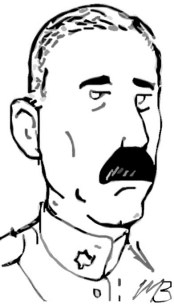
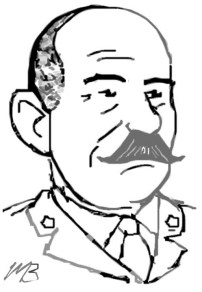
Lt. Col. Riley

Lieutenant Colonel Harold J. Riley
27th (City of Winnipeg) Battalion
Riley

For conspicuous gallantry and able leadership. During four days’ hard fighting, when his battalion was continuously making attacks at short intervals, his gallantry and indomitable energy inspired his men to their utmost efforts.

(Riley, D.S.O. Bar Citation, 11 Jan 1919)

Harold James Riley was the third commanding officer of the 27th Battalion. The son of prominent Winnipeg civic leader, Robert Thomas Riley, he was born on 29 November 1887. Riley was a graduate of University of Manitoba, a lawyer and amateur football and hockey player.

Continue reading

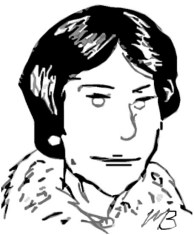
Lt. Col. Edwards

Lieutenant Colonel C.M. Edwards, D.S.O.
38th (Ottawa) Battalion
Edwards

“Where’s your uniform, Colonel?” asked a reporter as he spotted the light gray suit among the red tabs and brass of the inspection party.

 “I guess it’s scattered around among these gentleman,” answered the Colonel, “you know you can’t draw the old age pension and wear a uniform too… The only thing I hated to give up was the kilt,” said Col. Edwards turning away “I really miss that.”

 (Ottawa Citizen, 26 Aug 1957, 3)

Cameron MacPherson Edwards was a Ottawa wealthy lumberman with seventeen-years’ service in the 43rd Regiment. He was born in North Nation Mills, Quebec on 28 September 1881. One of the youngest colonels in France, Edwards was mentioned three times in dispatches and received two Bars to his Distinguished Service Order. Continue reading

Lt. Col. Grassie

Lieutenant Colonel William Grassie
43rd (Cameron Highlanders of Canada) Battalion
Grassie

When I was told that we must take over the line which had been held by a London detachment of 1,000 men, I said, “Well there is one consolation, every man I have is as good as ten of the men who have been holding the line. We will do it.

(Grassie interview, Winnipeg Tribune, 24 Jan 1918) 

A native of Scotland, William Grassie was born on 27 July 1872. He worked in Winnipeg as a real estate broker and was a former member of the 3rd Field Battery and 78th Cameron Highlanders. After Lieutenant Colonel Thomson of the 43rd Battalion was killed on 8 October 1916, Major Grassie assumed command.

Continue reading

Lt. Col. Holmes

Lieutenant Colonel W.J.H. Holmes
48th (British Columbia) Battalion
Holmes

He did not salute, so immediately after passing I stopped, turned back and asked him “what’s the matter. Why didn’t you salute?” He swiftly looked at me without taking his hand out of it pocket … His manner appeared to be so insubordinate that I asked him for his paybook … I then ordered him under close arrest.

(Court martial of Pte. Parents, 4 Jan 1919)

William Josiah Hartley Holmes was a graduate of the Royal Military College, a British Columbia land surveyor and first commanding officer of the 102nd Rocky Mountain Rangers. He was born on 28 May 1871 in St. Catherines, Ontario but moved to Victoria with his family. In 1910, Holmes was part of an expedition to explore Crown Mountain. Although he had retired to the reserve militia list in 1912, he was appointed commander of the 48th Battalion after the outbreak of the First World War.

Continue reading

Lt. Col. Rogers

Lieutenant Colonel J.B. Rogers, D.S.O., M.C.
3rd (Toronto Regiment) Battalion
JBRogers

Colonel Rogers, as he then was, hazarded his life on many a field, and if he came through the war without being physically disabled none can say that his sojourn on this earth was not cut short by the sacrifices and hardships which trench warfare entailed. He was always in the front line with regiment, and it can truly be said that he was a leader of men who won a priceless heritage.

 (Toronto Globe, 15 Oct 1940, 6)

Joseph Bartlett Rogers was a ten-year member of the Queen’s Own Rifles and an original officer of Lieutenant Colonel Robert Rennie’s 3rd Battalion. He was born in Toronto on 3 March 1886. He rose from the rank of lieutenant to command the 3rd Battalion for 25-months on the front between October 1916 and the armistice. Continue reading

Lt. Col. MacFarlane

Lieutenant Colonel R. Alex MacFarlane
58th (Central Ontario) Battalion
Macfarlane

He performed this task with great skill and daring, personally killing two of the enemy. During a subsequent operation he made a reconnaissance forward of his battalion, in which he surprised an enemy machine-gun post; he killed one of the crew and took four other prisoners. Throughout these operations he showed sound judgment, courage and skill.

(MacFarlane, D.S.O. Bar Citation, 11 Jan 1919)

Robert Alexander MacFarlane rose from a lieutenant in the 58th Battalion to command the unit from January 1918 to demobilization. A prewar member of the 77th Regiment, he was born in Montreal on 15 August 1889. MacFarlane was three times wounded in action, five-times mentioned in dispatches and won the Distinguished Service Order and two Bars.

Continue reading

Lt. Col. Hulme

Lieutenant Colonel J.H.D. Hulme
62nd (Hulme’s Huskies) Battalion
Hulme

But, in relinquishing the command of the first troops to leave Vancouver, Colonel Hulme, commanding the Sixth, was actually self-sacrificing, and logical. Major McHarg had had war experience in South Africa as a sergeant; Colonel Hulme had no war service at all, and at that time, and to soldiers especially, war service was considered far more essential to command than later, when all manner of business men rose to high military station and rank.

 To let Major McHarg take the first body of men to the front was proper to a logical mind. But it brought unkind thought, and some criticism from the less thoughtful.

(Major J. S. Matthews, Early Vancouver, Volume V, 1945, 136)

John Herbert Donaldson Hulme was a British Columbia lawyer with thirty years of service in the militia. He was born in Belleville, Ontario on 14 July 1867. He had settled in Vancouver in 1904 after travelling west to the Yukon during the gold rush. As the commanding officer of the 6th Regiment, Hulme was expected to lead his militiamen to Valcartier in August 1914 to join the First Contingent. To the surprise of his second-in-command, Hulme appointed Major W. Hart-McHarg to lead the battalion overseas in his stead. Continue reading

Lt. Col. Ings

Lieutenant Colonel A.E. Ings
105th (Prince Edward Island Highlanders) Battalion
Ings

What I wish you to arrange is this: Secure an understanding in writing from the Minister of Militia that the 105th shall be kept intact and not be broken up or used as reinforcements for other Regiments at the Front. I want to take the Bn. right to France identically the same as it leaves P.E.I. Ours is the only Province not represented by a Regiment at the front.

 I am not willing to take over a splendid Regiment to England from my own Province, and there be ordered to remain behind with all my senior officers and N.C.O.s and see my men drafted…

(Col. Ings to Premier Mathieson, 21 May 1916)

Albert Ernest Ings was born in Charlestown, Prince Edward Island on 11 May 1866. Ings had been a fourteen-years member of the 34th Light Horse and served as second-in-command of the 6th Canadian Mounted Rifles after the outbreak of war. In December 1915, he received an appointment to raise his own battalion from Prince Edward Island. Feeling ignored in the mobilization of the Canadian Expeditionary Force, P.E.I.  politicians had successfully lobbied for the creation of a separate unit raised from the island province.

Continue reading