Lieutenant-Colonel J.M.K. Spurling
2/5th Battalion, Lancashire Fusiliers
4th Battalion, Welch Regiment
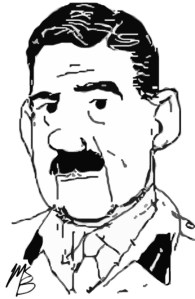
You’ve well reached the end of a long journey. Think of it—the Canadian Army in Berlin. Your experiences here are something to take home and remember … our finest and greatest brothers in the army—the Canadian Army.
(Quoted in Globe and Mail, 16 Jul 1945, 9)
Born on 9 May 1906 in Oundle, Northamptonshire, John Michael Kane Spurling joined the 4th Battalion, Northamptonshire Regiment before completing RMC, Sandhurst and taking a commission with the Leicestershire Regiment in 1927. He was stationed overseas in India and Palestine and attended the staff college at Camberley in 1939. During the early part of the Second World War, he served as a general staff officer in the United Kingdom, the Middle East and the Far East.
From April 1943 to January 1944, Spurling commanded the 7th Battalion, Wiltshire Regiment in the UK. He was next attached to the War Office and then posted to Normandy as a replacement commanding officer. In July 1944, he succeeded Lieutenant-Colonel C.W.D Chads in command of the 2/5th Battalion, Lancashire Fusiliers in the 59th Division. He participated in the fighting near Caen during the Normandy breakout over the next month. By the end of August, the division was disbanded to supply reinforcements.
Spurling transferred to the 4th Battalion, Welch Regiment in the 53rd Division as the new CO until October, when he was promoted to the 131st Infantry Brigade in the 7th Armoured Division. For the defence of a small bridgehead in early April 1945, he earned the D.S.O.:
The opposition mostly consisted of officer cadets, who fought with fanatical bravery and were trained to a very high degree of accurate snipers. For 48 hrs by day and night 131 Bde slowly fought their way through the difficult country until finally on the morning of 6th April the enemy had been drive back into Ibbenberen on their front.
He led the first British formation into the German capital and organized the British Victory Parade in Berlin on 21 July 1945. After a thirty-year army career, Spurling retired as a major-general in 1958. He died in January 1980 in North Dorset.

