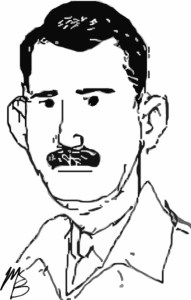
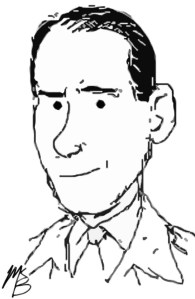
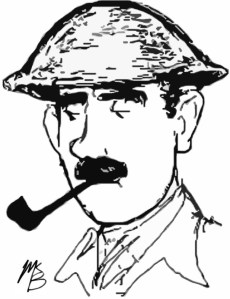
Lt-Col. D.G.B. Ridout

Lieutenant-Colonel D.G.B. Ridout
1/6th Battalion, South Staffordshire Regiment

For two weeks now, Lieutenant-Colonel D.G.B. Ridout had been in considerable pain. On August 8th, with great regret, he had to go back for treatment, and Major R.J. MacDonald, second in command, took over. Colonel Ridout could not have wished for a more worthy successor. Major (now Lieutenant-Colonel) MacDonald was always with the leading troops, sharing their dangers and their comradeship.

(Quoted in Your Men in Battle: The Story of the South Staffordshire, 24)

Born on 5 February 1906, Dudley Gethin Bramley Ridout was the son of Sir Dudley Ridout (1866–1941), a Royal Engineer major-general. The elder Ridout had been born in British India and was educated at the Royal Military College of Canada in Kingston. He retired as general officer commanding the Troops in the Straits Settlements in Malaya in 1924. Commissioned officer with the King’s Own Yorkshire Light Infantry since 1926, the younger Ridout followed his father with service in the Far East during the 1930s. He was seconded to the Straits Settlements Volunteer Force and served as adjutant until 1936.

Continue reading

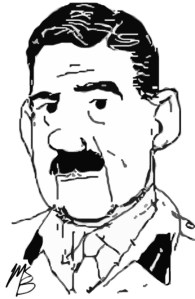
Lt-Col. N.W. Finlinson

Lieutenant-Colonel N.W. Finlinson
2/6th Battalion, South Staffordshire Regiment
2nd Battalion, Essex Regiment


We were waiting in the ruined streets of Cambes and all about us on the pavements and in the shelter of the derelict cottages the men of the battalion (the 2/6th) stood or lay waiting for the order that would take us into battle for the first time. Occasionally a German mortar whistled overhead and crumped behind us in the back end of the village. Otherwise there was complete silence. Those who had to move did so on tiptoe; those who had to talk spoke in whispers; those who would have liked to whistle to ease the tension knew that they must keep quiet. The faces we could see were sad and grim …

(Quoted in Your Men in Battle: The Story of the South Staffordshire, 24)

Born on 13 December 1902 in Bromley, Kent, Norman West Finlinson was commissioned with the South Staffordshire Regiment from Royal Military College, Sandhurst in 1923. He was promoted to captain in 1935. Following an appointment to Sandhurst in the early Second World War, by 1944, Finlinson had assumed command of the 2/6th Battalion. It deployed to France with the 59th Division later in June 1944.

Continue reading

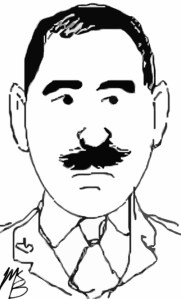
Lt-Col. M.B. Jenkins

Lieutenant-Colonel M.B. Jenkins
5th Battalion, South Staffordshire Regiment
1/4th Battalion, King’s Own Yorkshire Light Infantry

I find it hard to say how much Jenks will be missed by all of us who soldiers with him over the years. His boundless energy, great sense of humour, terrific skill at all games, so well backed up by his great fighting ability will always be remembered.

(Obituary, Stafford Knot, 1975, 11)

Born on 24 January 1909 Thornbury, Gloucestershire, Malcolm Bromley Jenkins enlisted with the Gloucestershire Regiment in 1926 before earning admission to Royal Military College, Sandhurst. He was commissioned into the North Staffordshire Regiment in 1931 and served many years in India. He was active in regimental sports particularly rugby, hockey, and boxing. By September 1939, he was battalion adjutant and then served as a staff officer with the 176th Infantry Brigade.

Continue reading

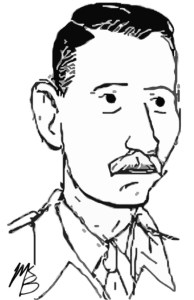
Lt-Col. I.H. Freeland

Lieutenant-Colonel Ian Freeland
7th Battalion, Royal Norfolk Regiment
1/5th Battalion, Queen’s Royal Regiment

The petrol bomb is a lethal weapon … anybody who manufactures, carries, or throws a petrol bomb is liable to most terribly tough punishment. They are liable to be shot dead in the street if, after warning, they persist. So, if you could get that across to any potential … bomb throwers, I would be grateful.

(Freeland interview, 6 Apr 1970)

Born on 14 September 1912 in Milton, Hampshire, Ian Henry Freeland was commissioned into the Norfolk Regiment after completing RMC, Sandhurst in 1932. Following service in India, he became adjutant for the 1st Battalion in 1940 shortly before it returned to the United Kingdom. He was brigade major for the 7th Infantry Brigade in 1942 and posted to the War Office in 1943. In April 1944, he was promoted to lieutenant-colonel in command of the 7th Battalion, Royal Norfolk Regiment.

Continue reading

Lt-Col. G.M. Wilkins

Lieutenant-Colonel G.M. Wilkins
6th Battalion, North Staffordshire Regiment

This officer showed untiring energy and devotion to duty the during the period his company was in the line … His platoon localities were under observation and close range fire from enemy localities throughout the whole period. In addition two of his posts were subjected to continuous shell fire for long periods during which two men were killed and several wounded. Major Wilkins by continuously visiting these posts and assisting in the evacuation of wounded showed total disregard for his personal safety and set a very excellent example to his company.

(M.C. citation, 11 Jul 1940)

Born on 11 June 1901 in Bedford, Bedfordshire, Gilbert McCartney Wilkins attended Royal Military College, Sandhurst before being commissioned with the North Staffordshire Regiment in 1922. From 1926 to 1932, he was seconded to the King’s Africa Rifles, and rose to the rank of major by 1938. He commanded a company with the 2nd Battalion, North Staffordshire Regiment during the battle of France. He was wounded in action on 21 May 1941 and earned the Military Cross.

Continue reading

Lt-Col. J.G. Bullock

Lieutenant-Colonel J.G. Bullock
7th Battalion, South Staffordshire Regiment

Suddenly we heard the well-known sound of the ‘moaning minnies’—the attack was on again and back we went to our trenches, refreshed and ready to carry on the battle. It would be about 11 a.m. when by a stroke of bad luck, the commanding officer Lieutenant-Colonel J.G. Bullock and Lieutenant Spendlove (intelligence officer) were killed by mortar fire.

(Your Men in Battle, 1945, 33)

Born in April 1907 in Moseley, Worcestershire, James George Bullock was a rugby player, head of a building firm, and graduate of the King Edward’s School. He joined the Territorial Army and was commissioned with the 5th Battalion, South Staffordshire Regiment in 1926. He was promoted to acting lieutenant-colonel in February 1942 and led the 7th South Staffords to France in late June 1944 as part of the 59th Division.

Continue reading

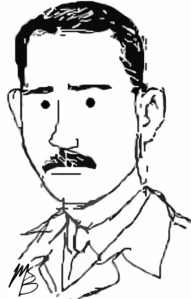
Lt-Col. R.C. Macdonald

Lieutenant-Colonel R.C. Macdonald
1/6th Battalion, South Staffordshire Regiment
1st Battalion, King’s Own Scottish Borderers
2nd Battalion, Royal Warwickshire Regiment
All our families are very much happier about our departure now that there is an armistice. We don’t know quite what we shall find when we get there, but we shall be busy enough competing with the cold, if nothing else.

(Quoted in Birmingham Gazette, 1 Aug 1953, 5)

Born in British India on 1 August 1911, Ronald Clarence Macdonald was a field hockey player educated at the Royal Military College, Sandhurst. In 1931 took a commission with the Royal Warkwickshire Regiment, which his father had earlier commanded. He attended staff college and following instructional duties, was assigned to the 1/6th Battalion, South Staffordshire Regiment.

Continue reading