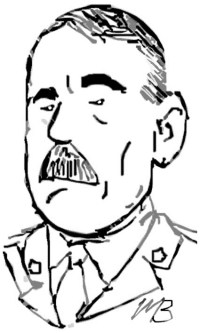
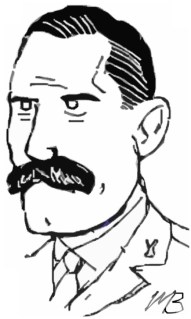
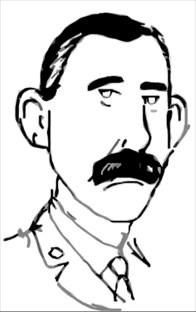
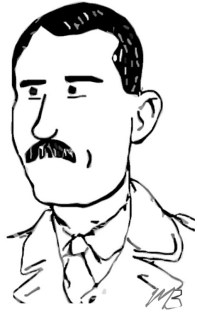
Lt. Col. Sparling

Lieutenant Colonel H.C. Sparling
73rd (Royal Highlanders of Canada) Battalion
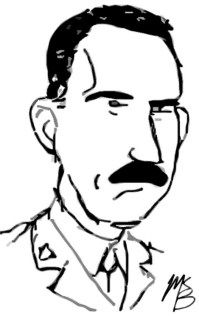
Sparling

The dissolution of the battalion caused the greatest regret and depression among all ranks, and the officers, who had witness the splendid work of the men in the Bn. during the last four months, could only express the highest admiration for the way all N.C.O’s and men carried out their duties during that time, with the knowledge of the possible dissolution of the battalion.

(Sparling, 73rd War Diary, 19 Apr 1917, 36)

Herbert Cosford Sparling was born in Kerrwood, Ontario on 6 February 1880. Previously a member of the Mississauga Horse, Sparling had moved to Ottawa shortly before the First World War. He enlisted as senior major in Peers Davidson’s 73rd Battalion, which deployed to France in March 1916 as part of the 12th Infantry Brigade, 4th Division. Sparling assumed command in December 1916, but the battalion was removed from the line on 9 April 1917 just before the battle of Vimy Ridge. Continue reading →
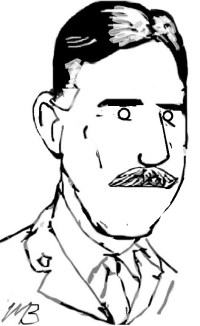
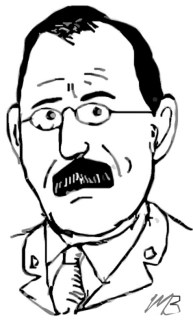
Lt. Col. Towers

Lieutenant Colonel Robert I. Towers
70th (London) Battalion
Towers

Lieut.-Col. Robert I. Towers, K.C., a member of the legal firm of Galt, Gooderham & Towers, died by his own hand in a room in a downtown hotel last night. With a bullet wound through the head the lifeless body of Col. Towers was found in the bathroom by the house detective. With one emptied chamber, a .22 calibre revolver lay at the colonel’s side.

(Toronto Star, 11 April 1930, 13)

A native of Sarnia, Robert Irwin Towers was born on 29 October 1876. He was one of the foremost lawyers in western Ontario, particularly concerning mining, admiralty and maritime law. As the retired commanding officer of the 27th (St. Clair Borderers) Regiment, Towers was appointed to raise the 70th Battalion from Essex, Kent, Lambton and Middlesex counties in summer 1915. Continue reading →

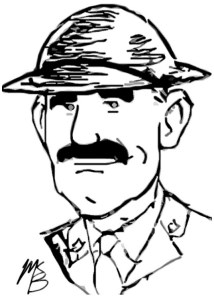
Lt. Col. Ross

Lieutenant Colonel Lorne Ross, D.S.O.
67th (Western Scots) Battalion
Ross

He followed Duty’s guidance/ O’er wide continent and sea,
To the blood-stained fields of France/ Where men battled to be free.

Amid the ruin and carnage,/ The thunder of gun and shell.
Facing grim death with courage./ Fearless he fought and fell.

There where night’s benediction/ Breathes quiet o’er the silent sod.
Waiting the bless’d resurrection/ He rests in peace with his God.

(Lorne Ross, Canada in Khaki, 178)

Born on 26 November 1878 in Montreal, Quebec, Lorne Ross was a banker in Victoria, British and had served for over thirteen years in several militia regiments including the 13th, the 22nd and the 29th. In 1913, he joined the 50th Gordon Highlanders as a major under the command of Colonel Arthur W. Currie. In September 1914, Ross enlisted at Valcartier and sailed with the CEF overseas.

Continue reading →

Lt. Col. Montgomery-Campbell

Lieutenant Colonel H. Montgomery-Campbell
64th (New Brunswick) Battalion
Montgomery-Campbell

I do not want to make any invidious distinctions, but they take a man out of an office and make him a colonel. What does he know about war? His intentions may be good but that does not make him an eminent soldier; that does not make him fit to meet the enemy in the field.

(Col. Domville, Senate Debates, 4 May 1916,  413)

Born in Fredericton, New Brunswick on 24 September 1859, Henry Montgomery-Campbell was a Sussex farmer and commanding officer of the 8th (Princess Louise Hussars) Regiment. His younger brother Herbert Montgomery-Campbell (1861—1937), a graduate of the Royal Military College and a Boer War veteran, served as a brigadier-general in British Army artillery during the First World War. Henry meanwhile raised the 64th Battalion from the three Maritime Provinces. They were sons of George Montgomery-Campbell, a professor of classics at the University of New Brunswick.

Continue reading →

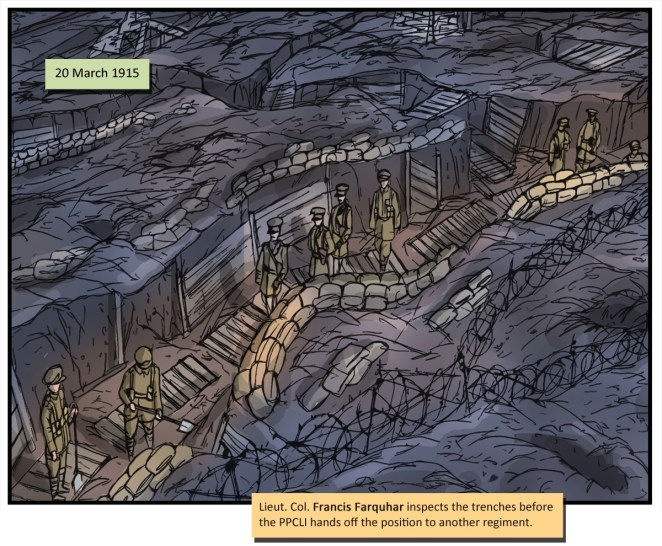
Lt. Col. Farquhar

Lieutenant Colonel Francis Douglas Farquhar
Princess Patricia’s Canadian Light Infantry

Have we the right to grieve for the dead, who have lived and died as the Colonel? We can only be sorry for ourselves and each other. His face showed no sign of suffering or regret … He, more than any other, has given us a reputation and a standard which we must strive to maintain. He himself is with us no longer, but his influence and his memory will endure with the life of the Regiment.

(Lt. Talbot Papineau to Lady Evelyn Farquhar, 22 March 1915)

Farquhar 6 Continue reading →

Lt. Col. Page

Lieutenant Colonel L.F. Page, D.S.O.
50th (Calgary) Battalion

Page

Col. Page was essentially a line officer. Wherever the storm was thickest there he was sure to be found. No officer that was ever with the battalion was better known to the men generally, because he toured his front religiously. He never shirked a duty or danger, and never spared himself, and he expected those under him to live up to the same brand of soldiership and manhood.

 (Red Deer News, 11 Jun 1919, 1)

A native of England, Lionel Frank Page was born on 17 December 1884. He was a Red Deer, Alberta rancher and member of the 15th Light Horse. He enlisted as a subaltern with the 5th western Cavalry in September 1915, rose to become second-in-command and went on to command the 50th Battalion.

Continue reading →

Lt. Col. Keegan

Lieutenant Colonel H.L. Keegan, D.S.O.
47th (Western Ontario) Battalion
Keegan

For conspicuous gallantry and devotion to duty during an attack. In conjunction with another battalion he stormed and successfully captured enemy positions through uncut wire. Throughout the engagement, fought with his right flank exposed, he displayed marked courage and cheerfulness, and in face of the greatest difficulties advanced and held ground gained for three days.

(Keegan D.S.O. citation, London Gazette, 2 Dec 1918, 14213)

Herbert Leo Keegan assumed command of the 47th Battalion after Lieutenant Colonel Ralph Webb lost his leg in battle on 22 April 1918. A native Irish Catholic, Keegan was born in on 3 February 1888. He had previously belonged to the Connaught Rangers before moving to Canada to work for the Department of Agriculture. In November 1914, he enlisted as a captain with the 50th Battalion in Calgary.

Continue reading →

Lt. Col. Cantlie

Lieutenant Colonel G.S. Cantlie, D.S.O.
42nd (Royal Highlanders of Canada) Battalion
Cantile

Col Cantlie, long before he died, had become a living tradition. Not only was the past in him made real; the values of life, which the past enhances for the sake of the future, found in him their gracious embodiment.

(Montreal Gazette, 31 Aug 1956, 8)

A native of Montreal, George Stephen Cantlie was born on 2 May 1867. He was gentleman militia officer with the Royal Highlanders of Canada (The Black Watch) since 1885. He was commanding officer of the regiment during the Quebec Tercentenary of 1908. He commanded the 42nd Battalion in France as part of 7th Infantry Brigade, 3rd Canadian Division.

Continue reading →

Lt. Col. Latta

Lieutenant Colonel W.S. Latta
29th (Vancouver) Battalion
Latta

He led his battalion in an attack against a village, outstripping the troops on his left, as well as the guns and tanks. In this difficult, situation he handled his battalion with such skill that he reached his final objective with, comparatively small loss. He has at all times displayed fine leadership in action until severely wounded.

(2nd Bar D.S.O. Citation, Gazette, 4 Dec 1918, 4380)

Born in Ayr, Scotland on 14 April 1879, William Smith Latta was a British Columbia bookkeeper and member of the 6th Duke of Connaught Regiment. He was commissioned into the 29th Battalion at the rank of major and succeeded Lieutenant Colonel John Munro Ross in command on 23 July 1917. Multiple times decorated for bravery, he received the Distinguished Service Order and two Bars.

Continue reading →

Maj. Bond

Major George Bond, D.S.O., M.C.
28th (Northwest) Battalion
Bond

… he went forward under heavy fire to his most forward troops and made a personal reconnaissance of the situation, afterwards establishing a line from which the village was captured next day. Throughout the operations his work was excellent. (Bond, D.S.O. Citation, 19 Oct 1919, 3202)

Born on 14 November 1889 in Wappella, Saskatchewan, George Frederick Daniels Bond moved to Winnipeg in 1905 and later attended the University of Manitoba Law School. He interrupted his studies to volunteered with Lieutenant Colonel F. J. Clarke’s 45th Battalion in August 1915.

Continue reading →