The Burnt Out

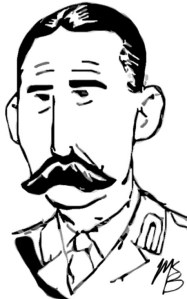
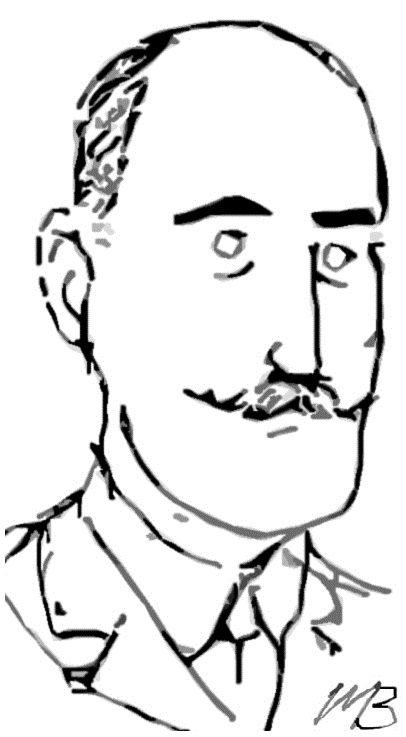
Lieutenant Colonel Peers Davidson
73rd (Royal Highlanders of Canada) Battalion
Davidson

Word received that Col. Davidson was unable to return to his battalion owing to nervous physical breakdown. He was examined by a medical board in London and declared unfit for further service.

(73rd Bn. War Diary, 12 December 1916, 5)

Born on 7 November 1870 in Montreal, Peers Davidson was the son of Quebec Chief Justice Charles Peers Davidson (1843—1925). His hockey player brother, Shirley (1872—1907) won multiple Stanley Cups with the Montreal Vicrorias in the 1890s. Another brother, Thornton (1880—1912), died during the Titanic sinking. A graduate of McGill, Peers Davidson was an advocate with a Montreal law firm, commodore in the Royal St. Lawrence Yacht Club and commanding officer of the 5th Regiment, Royal Highlanders of Canada.

Continue reading

The Silent Member

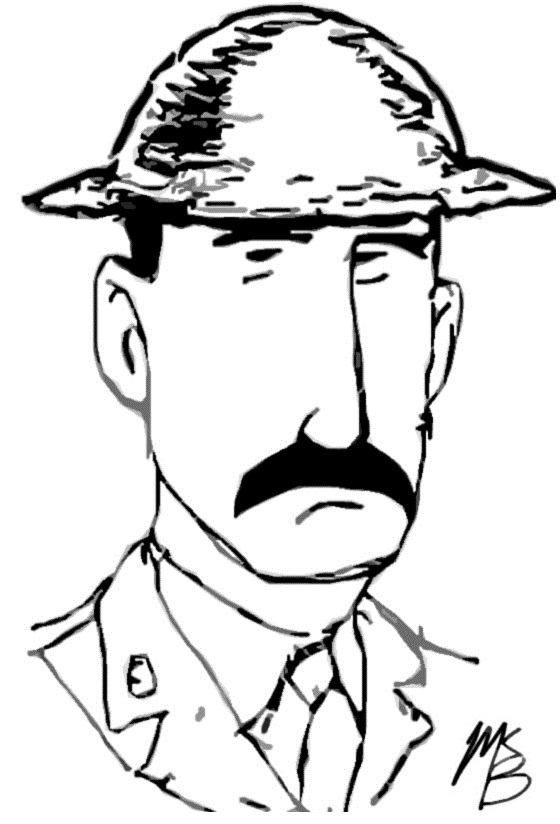
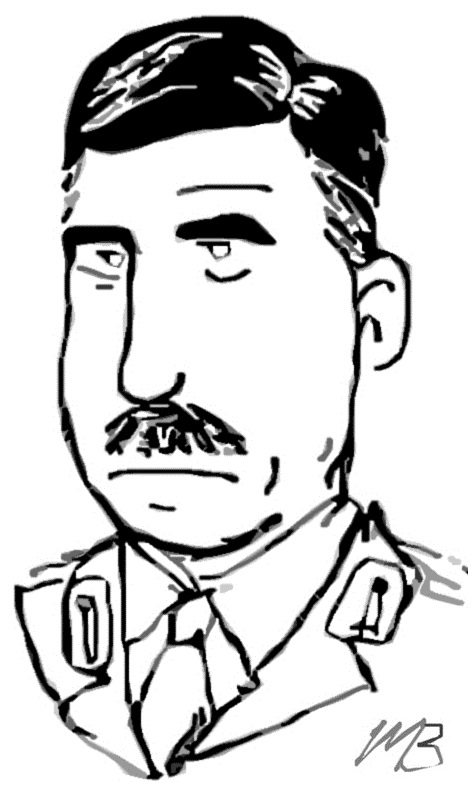
Colonel Harry McLeod, M.P.
12th Battalion
McLeod

Colonel Harry McLeod has also been taken away since last we met here.

His interests were perhaps, as much in the military field as in the political field. He was a student of military tactics and military matters generally, and attended manoeuvres in this and in other countries for purposes of study—and, indeed, in the late war served in the fields of Europe.

(PM Meighen, Debates, 15 Feb 1921, 4)

Born on 17 September 1871, Harry Fulton McLeod was a New Brunswick lawyer, member of Orange Lodge No. 20 and Conservative politician. He was mayor of Fredericton (1907—1908), member of the legislature (1908—1913), and federal MP for York (1913—1917) and York—Sunbury (1917—1921). As colonel of the 71st (York) Regiment, he was appointed to take the 12th Battalion overseas when the First Contingent assembled at Valcartier in August 1914.

Continue reading

The Sidelined

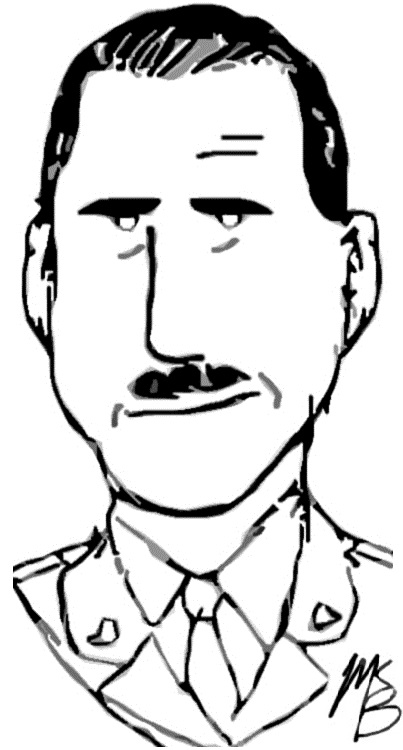
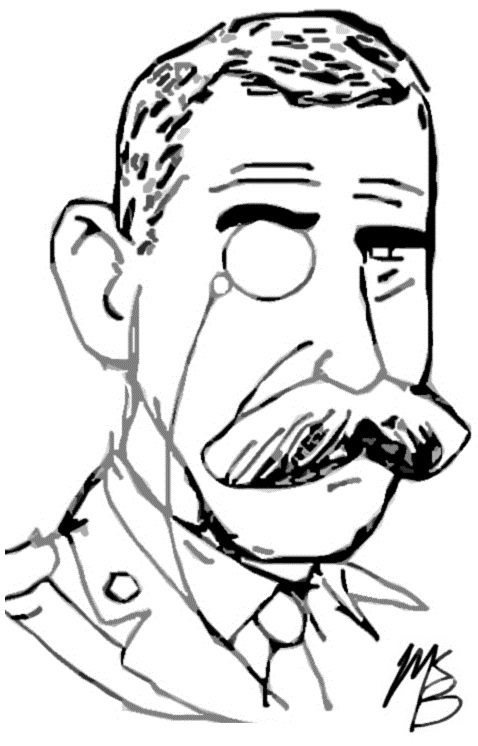
Lieutenant Colonel Herbert Snell
46th (South Saskatchewan) BattalionSnell

May it be our part to play some useful role in the daily life of this great nation during the days of peace as all so faithfully played during the days of conflict, and so, in some way, because of what has come to us of good from our past experiences, the Canada which we shall pass on to those who come after us may reflect those guiding principles which alone exalteth a nation.

(Snell, 46th Battalion CEF – Year Book, 1926, 4)

Herbert Snell was born on 20 August 1880 in Stockbridge, England. As a boy, his family immigrated to Ontario. At twenty-five, Snell went west to become a retail merchant in Moose Jaw. He was appointed commanding officer of the newly creation 60th Regiment in 1913. Although overlooked during the organization of the First Contingent, Snell received authorization to raise the 46th Battalion in early 1915.

Continue reading

The Newspaperman

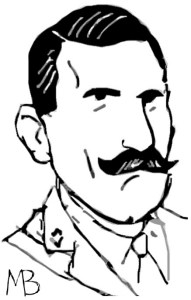
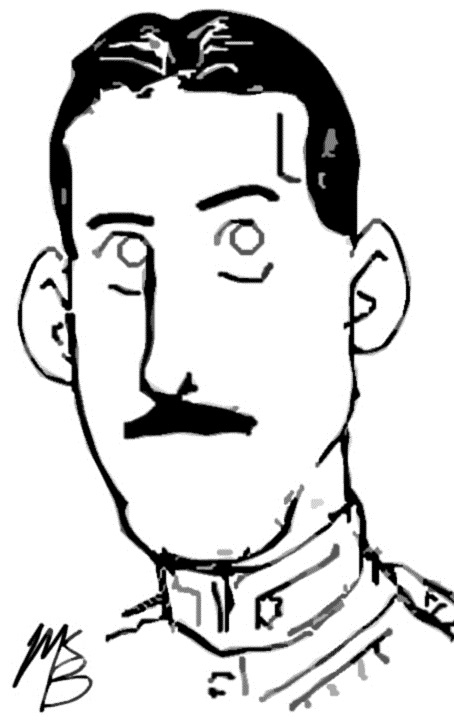
Lieutenant Colonel A. G. F. MacDonald
154th (The Counties’ Own) BattalionAMacDonald

So Cheer Up is our motto; Downhearted, No!
And we will soon be on our way.
We live in hopes to lick them soon.
And be home again some day.

(154th Bn. Postcard, 1916)

Alexander George Fraser MacDonald was a journalist and editor born in Alexandria, Canada West, on 24 August 1863. He was the son of Donald Alexander Macdonald (1817—1896), a Liberal MP of Glengarry and fourth Lieutenant Governor of Ontario (1875—1880). The younger Macdonald had founded the Glengarry Weekly News in 1893 and joined the militia in 1896. By the outbreak of the Great War, he was commanding officer of the 59th Regiment.

Continue reading

The Town Founder

Lieutenant Colonel Harry Lyon
192nd (Crow’s Nest Pass) BattalionLyon

A most interesting visitor to Blairmore during the week was Mr. Harry E. Lyon, well known by the real old-timers of the town, having been connected with the drafting of the plans of the original Blairmore, being in real estate and later becoming the town’s first mayor, etc…

(Blairmore Enterprise, 27 October 1944, 4)

Henry Edward Lyon was a real estate promoter, mayor of Blairmore, Alberta, and a member of Loyal Orange Lodge No. 2224. Born on 17 December 1874 in Richmond, Ontario, he moved west in 1898 to work for the Canadian Pacific Railway.  He soon established himself as a local community leader. He owned the first automobile in the district, was active in organizing amateur hockey and joined the 23rd Alberta Rangers.

Continue reading

The Militiaman

Lieutenant Colonel A. A. Cockburn
182nd (Ontario County) Battalion Cockburn

The novelty of soldiery in this town has worn off, and our citizens were not sufficiently impelled by a sense of duty to give the 182nd Ont. County Battalion a welcome worthy of the name. But the Mayor and two or three citizens were all that put in an appearance as the train pulled in…

It was a reception to which Oshawa could hardly be proud…

(Oshawa Reformer, 25 Oct 1916)

Born on 4 January 1867 in Stormont, Canada West, Angus Alexander Cockburn served for thirteen years in the Queen’s Own Rifles and seventeen in the 34th (Ontario County) Regiment. In late 1915, Cockburn, along with fellow 34th major and rival Sam Sharpe, was authorized to each raise a battalion from Ontario County. Once Sharpe’s 116th, based in Uxbridge, neared completion by spring 1916, Cockburn began to organize the 182nd from his headquarters in Whitby.

Continue reading

The Usurped

Lieutenant Colonel Frank Osborne
9th BattalionOsborne

Some little time after it had been at Valcartier I am informed that as Colonel Osborne sat in his tent one morning another gentlemen, Colonel Maynard Rogers, entered the tent and said to Colonel Osborne; “I am in command of the 9th Battalion.”

(Frank Oliver, Debates, 6 May 1916, 3549)

Born in Port Stanley, Canada West on 13 May 1860, Frank A. Osborne was commanding officer of the 101st Edmonton Fusiliers. After the declaration of war against Germany in August 1914, Osborne offered his services to the Militia Department and raised the 9th Battalion from Alberta. According to Liberal MP Frank Oliver, once the unit arrived at Valcartier, Samuel Maynard Rogers, Jasper Park superintendent and Boer War veteran, usurped power from Osborne.

Continue reading

The Royal Marine

Lieutenant Colonel W. W. P. Gibsone, D.S.O.
&
Lieutenant Colonel A. G. Vincent
40th (Bluenose) Battalion

The next unit was the Fortieth. The command was given to a professional soldier not a Nova Scotian. After it had been recruited he was ordered to England. The command then devolved on an officer who had come to Nova Scotia but recently.

(Maj. J.W. Maddin, ex-MP to Borden, 9 Dec 1916)

Born on 6 June 1872 in Quebec City, William Waring Primrose Gibsone was a professional army officer with the Royal Canadian Regiment. In February 1915, he was appointed to command the 40th Battalion. After receiving a staff posting to England in June, command of the 40th went to Arthur Gustave Vincent, a veteran of the Royal Marine Light Infantry. Born on 17 November 1862 in Saint Peter’s, Guernsey, Channel Islands, Vincent enlisted in the R.M.L.I. at the age of nineteen in 1881. He retired with the rank of major in February 1901 and remained on the reserve list until 1912.

Continue reading

The Anti-Bolshevik

Lieutenant Colonel J. W. Warden, D.S.O.
102nd (Warden’s Warriors) BattalionWarden

Left my batt. & France for England. 8 am, this is the hardest thing I ever had to do in my life. I have the best Batt. in France, there never were men tougher, braver more loyal, more capable, more loved by CO, the finest fighters. It just about broke my heart, I could not say goodbye to a single one. God, how I loved them.

(Warden Diary, 8 Jan 1918)

Born on 8 November 1871 in Baywater, New Brunswick, John Weightman Warden was a British Columbia broker and veteran of the Boer War. He was among the first to enlist after the declaration of war in August 1914. Describing his experiences fighting with the 7th Battalion in the trenches, he explained, “The Boer War was nothing compared with this war. I had been in South Africa, but I found that I knew nothing about war at all.”

Continue reading

The Hotelman

Lieutenant Colonel “Big Nick” Nicholson
Nicholson  &
Lieutenant M. Stewart NicholsonNicholson_MS251st (Goodfellows) Battalion

Col. Nicholson said he had believed he could raise a battalion, and had offered to try to do so. He felt confident, from the results that had attended his effort, that he would succeed.

(Winnipeg Tribune, 16 Jan 1917, 7)

Popularly known as Big Nick, George Henry Nicholson was manager of the Clarington Hotel in Winnipeg. He was born in Woodburn, Canada West on 25 April 1863. He had belonged to the 13th Regiment in Hamilton before moving to Manitoba in 1909. In September 1916, Nicholson received authorization to raise the 251st Battalion.

Continue reading