Lieutenant-Colonel W.S.C. Curtis
4th Battalion, Somerset Light Infantry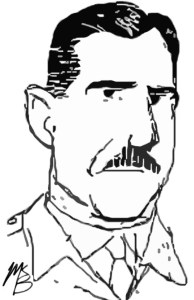
For gallant and determined leadership. He led his platoon in the attack on Borok on 10 August 1919. He organised an attack on a strong enemy position on the banks of the Teda River, and outflanked it. He was wounded whilst leading the final assault up the hill, but his platoon captured the position, enabling the remainder of the company to proceed towards the first objective.
(M.C. citation, 21 January 1920)
Born on 1 August 1899 in Paddington, Middlesex, Walter Stopford Constable Curtis was educated at Marlborough College and the Royal Military College, Sandhurst. He was commissioned with the Somerset Light Infantry in April 1918 and assigned to the 1st Battalion, Dorsetshire Regiment in France. He volunteered with the North Russia Relief Force the during the Russian Civil War in 1919. He served with the 46th Battalion, Royal Fusiliers and earned the Military Cross.
After being evacuated from Russia in August 1919, Curtis rejoined 1st Battalion, Somerset Light Infantry. He served in Ireland and later India, where in 1938 he was attached to the Nilgiri Malabar Battalion. Back in the United Kingdom by 1940, he became second-in-command of No. 8 Commando and then in July 1941 was appointed commanding officer of 4th Battalion, Somerset Light Infantry. After nearly three years leading and training the unit, Curtis was put out of action immediately on landing in Normandy on 23 June 1944. He reportedly injured himself jumping off his landing craft into the water.
One subordinate officer remembered Curtis as brave “with quick brain and even quicker temper. Not as fit as other members of the battalion. Once said to his batman ‘Gudge, Battalion route march, tomorrow make sure my staff car is ready’” (quoted in Delaforce, The Fighting Wessex Wyverns).

