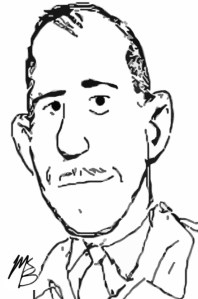
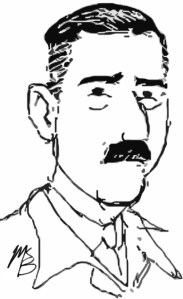
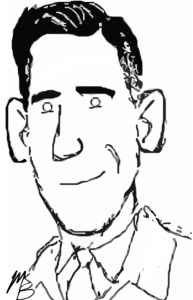
Lt-Col. R.G.P. Besley

Lieutenant-Colonel R.G.P. Besley
7th Battalion, Somerset Light Infantry
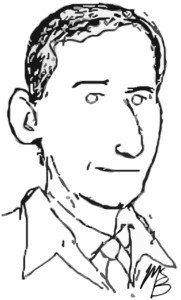
In a letter home he stated he had had a piece of metal through the thigh but that an operation had been performed and the surgeon had told him he thought in course of time the use of the leg would be fully restored.

(Somerset County Herald and Taunton Courier, 15 Jul 1944, 4)

Born on 2 March 1906 in Worcester, Worcestershire, Reginald George Payne Besley was a rugby footballer and director of a textile firm in Taunton, Somerset. A Territorial Army major in the 5th Battalion, Somerset Light Infantry, Besley enlisted for active service in September 1939. He became second-in-command for the 7th Battalion, which he assumed command of in January 1943.

Continue reading

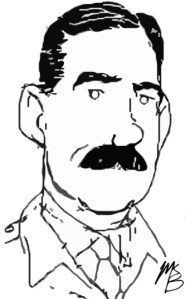
Lt-Col. W.A. Venour

Lieutenant-Colonel W.A. Venour
5th Battalion, Dorsetshire Regiment

For the remainder of the day the battalion was subjected to heavy mortar and shell fire, but the battalion commander frequently visited his forward companies and by his personal example kept up a very fine fighting spirit with his battalion, who had been in close contact with the enemy for three days.

(D.S.O. citation, 22 Mar 1945)

Born on 11 August 1905 on the North West Frontier in British India, Walter Anderson Venour was the son of Lieutenant Colonel Walter Edward Venour of Lieutenant Colonel Walter Edward Venour (1864—1914) of the Indian Army. He was killed on the Western Front on 2 November 1914 in command of the 58th Vaughan’s Rifles (Frontier Force). Following his father’s career path, the younger Venour was commissioned into the Manchester Regiment in 1925.

Continue reading

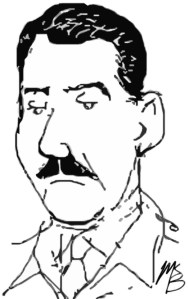
Lt-Col. B.A. Coad

Lieutenant-Colonel Aubrey Coad
5th Battalion, Dorsetshire Regiment

He looked at me and welcomed me to t27th Brigade, then he said, “don’t want any heroes in my brigade—heroes get killed!”

(Rev. William Jones quoted in Andrew Salmon, Scorched Earth, Black Snow: the First Year of the Korean War, 43)

Born on 27 September 1906 in Portsmouth, Hampshire, Basil Aubrey Coad took a commissioned with the Wiltshire Regiment after graduating from RMC, Sandhurst in 1926. Following postings to India and Shanghai, he served during the Arab Revolt in Palestine in 1936. Having transferred to the Terriorial Army, he mobilized for active service and was appointed second-in-command for the 2nd Battalion, Wiltshires in 1941.

Continue reading

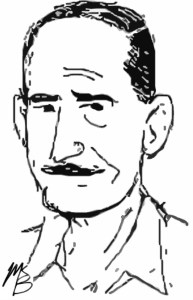
Lt-Col. G. Tilly

Lieutenant-Colonel Gerald Tilly
4th Battalion, Dorsetshire Regiment

Tilly and the American both got into a foxhole and, after the firing died down, Tilly told the man he had to be going.

“You wouldn’t happen to have a drink, would you?” the American asked.

As a matter of fact, Col. Till did. He had stocked his armored carrier with a couple of dozen bottles of champagne and brandy in Brussels.

“What would you like?” he asked. “Champagne or brandy?”

The American looked at him incredulously. “You must be joking,” he said finally. “But in case you’ re not, I’ll have some brandy.”

(Cornelius Ryan WWII papers, box 116, folder 4: Gerald Tilly)

Born on 30 April 1909 in Morecambe, Lancashire, Gerald Tilly was a prewar Territorial Army officer commissioned and mobilized with East Surrey Regiment at the outbreak of the Second World War. He served as a company commander in 5th Battalion, Dorsetshire Regiment during the battle of Normandy. He took over command of the 4th Battalion at the beginning of August, for which he earned the D.S.O. during heavy fighting over the next day.

Continue reading

Lt-Col. D.E.B. Talbot

Lieutenant-Colonel Dennis Talbot
7th Battalion, Hampshire Regiment

Throughout this past year the success rate in eliminations of Communist Terrorists by kills, captures and surrenders has been well maintained in Pahang when it has been dropping in all other States. Statistics show that in the past year it was twice as difficult to eliminate a Communist Terrorist as in the previous year and yet over this period his Brigade has kept up its elimination figures.

(C.M.E. citation, 31 May 1955)

Born on 23 September 1908 in Norwood, Middlesex, Dennis Edmund Blaquiere Talbot was commissioned into the Queen’s Own Royal West Kent Regiment after graduating from RMC, Sandhurst in 1928. He completed a tour in India and completed staff college at Camberley in 1940. He served as brigade major for 30th Infantry Brigade during the Battle of France, for which he earned the Military Cross.

Continue reading

Lt-Col. D.W.G. Ray & Maj. J.R.C. Mallock

Lieutenant-Colonel Donald Ray
&
Major John Mallock
7th Battalion, Hampshire Regiment

The Battalion’s casualties in this, its first major action, totalled eighteen officers and two hundred and eight other ranks killed, wounded and missing. Four officers were killed: Captain Terry and Lieutenants T. P. Evans, Sandy and Waddell. Colonel Ray was twice wounded, but remained on duty until wounded again, this time so seriously that he had to be evacuated, and he died on his way home to England.

(D.S. Daniell, The Royal Hampshire Regiment, 233)

Born on 2 July 1903 in Wimborne, Dorset, Donald William Garnham Ray was a first-class cricket player and wicket keeper. He was commissioned into the Royal Fusiliers after graduating from RMC, Sandhurst in 1923. From 1934 he served in India and in 1938 became adjutant to the Ceylon Planters’ Rifle Corps. He relinquished the post on the outbreak of war and served in France with the Fusiliers in 1940.

Continue reading

Lt-Col. J.L. Brind

Lieutenant-Colonel J.L. Brind
5th Battalion, Wiltshire Regiment

The swinging brigadier now likes music from Burt Bacharach to the Beatles and composes most of his material on his electronic organ. Ask if spreading the message of peace was compatible with his life as a soldier, the brigadier replied: “The Army is there to keep the peace and to keep the peace one has to love everybody.”

(Evening Post, 29 Aug 1972, 5)

Born on 29 August 1909 in Mettingham, Suffolk, James Lindsay Brind was commissioned into the Somerset Light Infantry after graduating from RMC, Sandhurst in 1928. He served with the 1st Battalion in India where his father, Sir John Edward Spencer Brind (1878–1954), had been deputy chief of the general army staff. He returned to the United Kingdom in 1940.

Continue reading

Lt-Col. N.C.E. Kenrick

Lieutenant-Colonel N.C.E. Kenrick
5th Battalion, Wiltshire Regiment

Lt Col Kenrick showed no thought of his own safety, personally killing at least two Germans, and frequently visited bn comds escorted in a jeep. He was well aware that all roads were covered by SP guns and innumerable snipers. He refused to allow the attack on Bde HQ to interfere with his plans and by his personal contacted succeeded in reorganising the Brigade and restoring the situation.

(D.S.O. citation, 3 May 1945)

Born on 9 July 1905 in Kent, Neville Cyril Evelyn Kenrick was commissioned into the Wiltshire Regiment in 1925 and served as battalion adjutant from 1935 to 1938. He was promoted to acting major in August 1940. He was appointed commanding officer of the 5th Battalion in 1943, and led it to France as part of the 43rd Division in late June 1944.

Continue reading

Lt-Col. W.Q. Roberts

Lieutenant-Colonel W.Q. Roberts
5th Battalion, Wiltshire Regiment
4th Battalion, Dorsetshire Regiment

Lt. Col. Roberts is a very busy man with an important job as steward to the Duchy of Cornwall. That he is much respected in his local town of Bath is evident from the fact that he has been appointed a J.P. Yet he has never failed to spare a great deal of his time for his battalion, and is highly regarded throughout his Regiment, to which he is devoted.

(O.B.E. citation, 5 Jun 1952)

Born on 5 August 1912 in London, William Quincey Roberts was a Territorial Army officer and assistant land steward of the Duchy of Cornwall. He was commissioned into the 4th Battalion, Somerset Light Infantry in 1933 and was promoted to captain on mobilization in September 1939. He rose to second-in-command of the battalion but, spent much of the war stationed in England and Ireland, until the 43rd Wessex Division went to France in late June 1944.

Continue reading

Lt-Col. J.H.C. Pearson

Lieutenant-Colonel J.H. Child Pearson
5th Battalion, Wiltshire Regiment

“I’ve never been so frightened in my life,” were the last words that Lt. Col. J.H.C. Pearson spoke to his signals officer striding forward alone, his customary red rose in his buttonhole and his walking stick in his hand As he crossed over the bridge, urging his men onward with the stick, he fell dead, shot by a sniper in the trees.

(Cited from Douglas Burton, BBC WW2 People’s War, 2004)

Born on 26 July 1913 in West Derby, Lancashire, John Harold Child Pearson was a graduate of Royal Military College, Sandhurst and a Regular Army officer, commissioned with the Prince of Wales Volunteers (South Lancashire Regiment) since 1933. By the invasion of Normandy, he had been assigned to the 5th Battalion, Wiltshire Regiment as second-in-command. When Lieutenant-Colonel N.C.E. Kenrick was wounded and evacuated on 1 July 1944, Pearson took over.

Continue reading