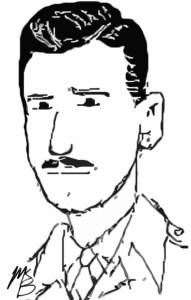
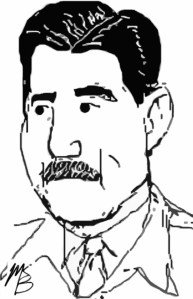
Lt-Col. J.E.L. Corbyn

Lieutenant-Colonel J.E.L. Corbyn
4th Battalion, Wiltshire Regiment

This Commanding Officer who held the position of Second in Command in his bn before taking command has always shown himself to be cool and resourceful in action and his never failing cheerfulness has always had a tonic effect upon all who have come into contact with him.

(D.S.O. citation, 11 Oct 1945)

Born on 14 June 1913 in British India, John Edwin Lorne Corbyn was commissioned into the Lancashire Fusiliers in 1933. While attached to the King’s African Rifles, he earned the Military Cross during the East Africa campaign in March 1941. He later qualified as a staff officer and served as brigade major for the 214th Infantry Brigade in Normandy.

Continue reading

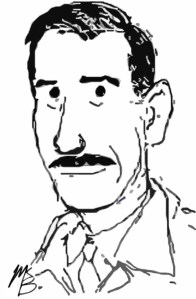
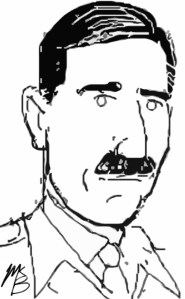
Lt-Col. E.L. Luce

Lieutenant-Colonel E.L. Luce
4th Battalion, Wiltshire Regiment

Times change and those of us in Wiltshire who have long roots may well not care for the changes. But for the future generations, the task and the challenge is to carry on, whatever changes may occur, those traditions and things of good report for the future.

(Quoted in Evening Advertiser, 12 Sep 1960, 5)

Born on 25 August 1907 in Alverstoke, Hampshire, Edward Lancelot Luce was the son of a Royal Navy vice admiral and a Territorial Army officer since 1929. He joined the 4th Battalion, Wiltshire Regiment in 1932 and rose to major by 1942. In February, he was appointed commandant of the divisional battle school but returned in April to take command of the 4th Wiltshires.

Continue reading

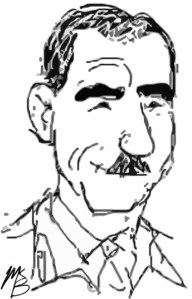
Lt-Col. C.G. Lipscomb

Lieutenant-Colonel C.G. Lipscomb
4th Battalion, Somerset Light Infantry

Lippy was outstanding in many difficult situations and none more so than when the remnants of 5 DCLI after a terrible time in Cornwall Wood on Hill 112, came back into our positions. He rallied them and sensing a crisis drew his pistol and shouted “I’ll shoot the first Somerset who goes back”

(Capt. J Majendie quoted in Martin Windrow, The Soldier’s Story, 113)

Born on 23 December 1907 in Margam, Glamorgan, Wales, Christopher Godfrey Lipscomb was commissioned with the Somerset Light Infantry after graduating from RMC, Sandhurst in 1928. He was attached to the Nigerian Regiment, Royal West African Frontier Force from 1933 to September 1939. From 1941 to 1944, he was chief Instructor at an Officer Cadet Training Unit and then commandant at the divisional battle school.

Continue reading

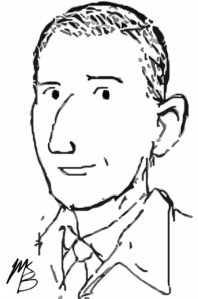
Lt-Col. W.S.C. Curtis

Lieutenant-Colonel W.S.C. Curtis
4th Battalion, Somerset Light Infantry

For gallant and determined leadership. He led his platoon in the attack on Borok on 10 August 1919. He organised an attack on a strong enemy position on the banks of the Teda River, and outflanked it. He was wounded whilst leading the final assault up the hill, but his platoon captured the position, enabling the remainder of the company to proceed towards the first objective.

(M.C. citation, 21 January 1920)

Born on 1 August 1899 in Paddington, Middlesex, Walter Stopford Constable Curtis was educated at Marlborough College and the Royal Military College, Sandhurst. He was commissioned with the Somerset Light Infantry in April 1918 and assigned to the 1st Battalion, Dorsetshire Regiment in France. He volunteered with the North Russia Relief Force the during the Russian Civil War in 1919. He served with the 46th Battalion, Royal Fusiliers and earned the Military Cross.

Continue reading

Lt-Col. H.A. Borradaile

Lieutenant-Colonel H.A. Borradaile
5th Battalion, East Lancashire Regiment
7th Battalion, Somerset Light Infantry
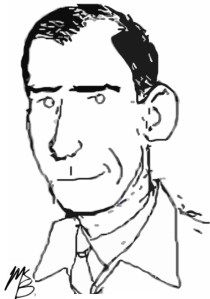
Quiet, almost studious in manner, he never raised his voice, but no one had any doubt about who was in charge. As a CO he once displayed impressive stamina by accepting the hospitality of all 11 of the Battalion cookhouses in success on a festive occasion.

 (Daily Telegraph, 30 Dec 1993, 21)

Born on 22 June 1907 in Exeter, Devon, Hugh Alastair Borradaile was commissioned into the Devonshire Regiment after graduating from RMC, Sandhurst in 1926. Eager to service overseas, he was seconded to the 4th Battalion, King’s African Rifles from 1931 to 1937. He afterwards completed staff college and became an instructor at Camberley in 1940. Following a posting as a military attaché to Dublin, he served as a general staff officer with the West Africa headquarters until 1943.

Continue reading