Lieutenant-Colonel F.G.W. Lane Fox
43rd (Wessex) Reconnaissance Regiment
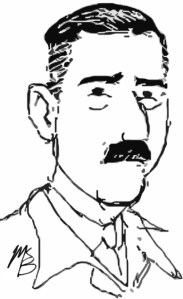
They were quiet and for the most part cultured young men, very different in their outlook from the robust horsy officers of their fellow regiment, the Life Guards. Except, possibly, for the second Colonel, Joe Lane-Fox, whose only advice to me on joining the regiment was “Don’t mix port and champagne and don’t have your wife in the morning, In case you meet somebody more interesting in the afternoon.”
(Somerset De Chair, Morning Glory, 136)
Born on 14 October 1899 in London, Francis Gordon Ward Lane Fox was a graduate of Eton College and the Royal Military College, Sandhurst. He was commissioned in Royal Horse Guards in 1919. Born with the last name Jackson, in 1937 he adopted Lane Fox by deed poll. In 1929, he had married the daughter and heiress of George Lane-Fox, 1st Baron Bingley and niece to Lord Halifax. He was promoted to lieutenant-colonel in 1937.
In June 1941, he was appointed commanding officer of the Household Cavalry Training Regiment in the Home Forces. In September 1943, he was given command of the 43rd Reconnaissance Regiment, part of the 43rd Wessex Division under Major-General Ivor Thomas.
On 18 June 1944, two squadrons of the 43rd Recce with Lane Fox embarked for Normandy on board MV Derrycunihy. Due to enemy shelling, it could not begin to unload the troops for a week. On 24 June, a mine detonated, sinking the Derrycunihy at the cost of several hundred killed and wounded. The 43rd Recee would not be fully reinforced until July.
Lane Fox led the regiment from the breakout from Normandy through the invasion of Belgium until Operation Market Garden. General Thomas removed him from command due to complaints over an alleged slow advance. He was nevertheless awarded the Officer of the Order of the Crown with palm and Croix de Guerre 1940 with palm by the Belgian government.
In his history of the 43rd Division, Brigadier Hubert Essame called Lane Fox’s removal: “a sad loss to the Regiment. Throughout the Normandy battle his constant presence with the forward troops his traditional high standards of honour and his indifference to personal danger had endeared him to all ranks.” He was replaced by Lieutenant-Colonel C.H. Kinnersley.
Following a brief command of the Yorkshire Hussars, Lane Fox retired from the army in 1946. His wife inherited the family estate at Bramham Park. In 1952, the former colonel was elected to the West Riding County Council for the Conservative Party, serving several terms.
He died at Bramham Park, West Yorkshire on 31 July 1989.

