Lieutenant-Colonel J.W. Channing-Williams
4th Battalion, Welch Regiment
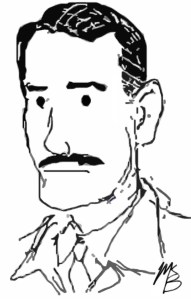
During the short time this officer has been in command of his battalion he has by his fine example and leadership instilled into the battalion a magnificent offensive spirit. This has been achieved in spite of long periods when the battalion has had to hold its positions under heavy mortar fire and shelling result in a heavy toll of casualties, without being given the opportunity to hit back. I consider this officer has earned high recognition for his achievement.
(D.S.O. citation, 1 Feb 1945)
Born on 14 August 1908 in Ceylon, John William Channing-Williams was commissioned into the North Staffordshire Regiment after graduating from RMC, Sandhurst in 1929. He served on the North-West Frontier in India until 1933, then became adjutant at the regimental depot before being posted to Palestine in 1937. He was mentioned in despatches during the evacuation from Dunkirk in May 1940, after which he attended staff college at Camberley.
Following staff and instructional duties, he was assigned to the 1st Battalion, East Lancaster Regiment in the 53rd Welsh Division. The division deployed to France at the end of the July. When Lieutenant-Colonel C.F.C. Coleman of the 4th Battalion, Welch Regiment was promoted to 160th Infantry Brigade, Channing-Williams was appointed his replacement on 1 July.
As the regimental history recounted, within five minutes of arriving, the battalion command post was struck by an enemy shell. For the planning and execution of a raid on 23 July, he earned the D.S.O.:
Lt. Col Williams took his Command Post forward in full view of the enemy and was under heavy mortar and machine gun fire throughout the action. His coolness and utter disregard for his own personal safety were an inspiration to all and were in no small way responsible for the success of the raid.
He served as commanding officer until August when he was replaced by Lieutenant-Colonel J.M.K. Spurling, former CO of the 2/5th Battalion, Lancashire Fusiliers in the disbanded 59th Division. Channing-Williams remained in the North West Europe theatre as a staff officer until February 1945, when he was reassigned to India and then Burma. As assistant-quartermaster-general he oversaw air resupplying of for General William Slim’s Fourteenth Army in the Far East campaign.
After the war, he commanded the 1st Battalion, Worcestershire Regiment in West Germany, and acted as a liaison officer between British forces and US General Douglas MacArthur during the Korean War. Following more postings to Cyprus and the Middle East, he retired from the regular army in 1958.
He died on 26 May 1990.

