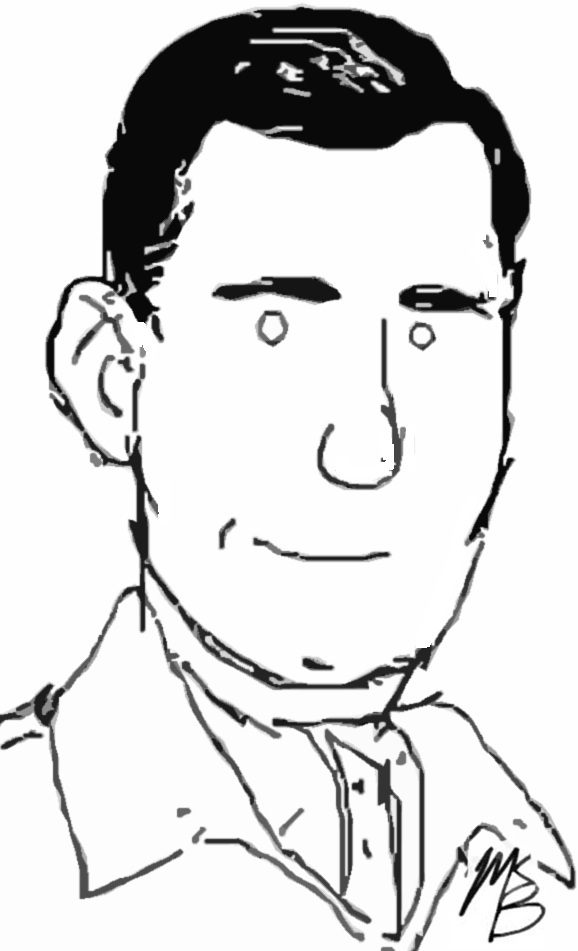
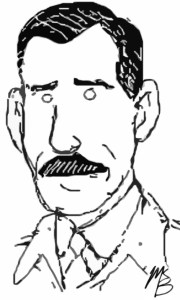
Lt-Col. J.E.L. Corbyn

Lieutenant-Colonel J.E.L. Corbyn
4th Battalion, Wiltshire Regiment

This Commanding Officer who held the position of Second in Command in his bn before taking command has always shown himself to be cool and resourceful in action and his never failing cheerfulness has always had a tonic effect upon all who have come into contact with him.

(D.S.O. citation, 11 Oct 1945)

Born on 14 June 1913 in British India, John Edwin Lorne Corbyn was commissioned into the Lancashire Fusiliers in 1933. While attached to the King’s African Rifles, he earned the Military Cross during the East Africa campaign in March 1941. He later qualified as a staff officer and served as brigade major for the 214th Infantry Brigade in Normandy.

Continue reading

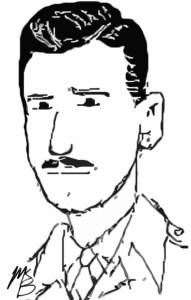
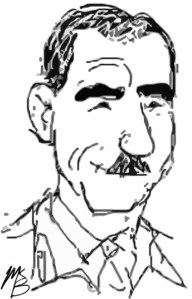
Lt-Col. E.L. Luce

Lieutenant-Colonel E.L. Luce
4th Battalion, Wiltshire Regiment

Times change and those of us in Wiltshire who have long roots may well not care for the changes. But for the future generations, the task and the challenge is to carry on, whatever changes may occur, those traditions and things of good report for the future.

(Quoted in Evening Advertiser, 12 Sep 1960, 5)

Born on 25 August 1907 in Alverstoke, Hampshire, Edward Lancelot Luce was the son of a Royal Navy vice admiral and a Territorial Army officer since 1929. He joined the 4th Battalion, Wiltshire Regiment in 1932 and rose to major by 1942. In February, he was appointed commandant of the divisional battle school but returned in April to take command of the 4th Wiltshires.

Continue reading

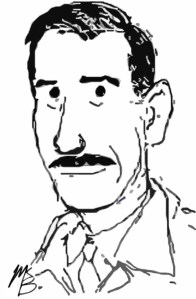
Lt-Col. C.G. Lipscomb

Lieutenant-Colonel C.G. Lipscomb
4th Battalion, Somerset Light Infantry

Lippy was outstanding in many difficult situations and none more so than when the remnants of 5 DCLI after a terrible time in Cornwall Wood on Hill 112, came back into our positions. He rallied them and sensing a crisis drew his pistol and shouted “I’ll shoot the first Somerset who goes back”

(Capt. J Majendie quoted in Martin Windrow, The Soldier’s Story, 113)

Born on 23 December 1907 in Margam, Glamorgan, Wales, Christopher Godfrey Lipscomb was commissioned with the Somerset Light Infantry after graduating from RMC, Sandhurst in 1928. He was attached to the Nigerian Regiment, Royal West African Frontier Force from 1933 to September 1939. From 1941 to 1944, he was chief Instructor at an Officer Cadet Training Unit and then commandant at the divisional battle school.

Continue reading

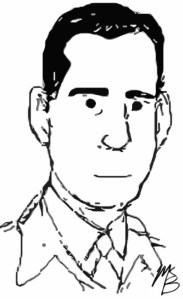
Lt-Col. W.S.C. Curtis

Lieutenant-Colonel W.S.C. Curtis
4th Battalion, Somerset Light Infantry

For gallant and determined leadership. He led his platoon in the attack on Borok on 10 August 1919. He organised an attack on a strong enemy position on the banks of the Teda River, and outflanked it. He was wounded whilst leading the final assault up the hill, but his platoon captured the position, enabling the remainder of the company to proceed towards the first objective.

(M.C. citation, 21 January 1920)

Born on 1 August 1899 in Paddington, Middlesex, Walter Stopford Constable Curtis was educated at Marlborough College and the Royal Military College, Sandhurst. He was commissioned with the Somerset Light Infantry in April 1918 and assigned to the 1st Battalion, Dorsetshire Regiment in France. He volunteered with the North Russia Relief Force the during the Russian Civil War in 1919. He served with the 46th Battalion, Royal Fusiliers and earned the Military Cross.

Continue reading

Lt-Col. E.J. Jerram

Lieutenant-Colonel E.J. Jerram
1/7th Battalion, Royal Warwickshire Regiment

I suppose anti-climax was getting a hold on me. Lumps kept on coming to my throat. There was next to nothing left of my company … It was depressing to see the remnants of the [rest of] the battalion … They didn’t look more than a hundred . . . out of some 500 before the battle.

(Quoted in Hugh Sebag-Montefiore, Dunkirk: Fight to the Last Man, 353)

Born on 5 January 1903 in Wimbledon, Surrey, Edward Jenner Jerram was commissioned into the Royal Warwickshire Regiment in 1923. He was promoted to captain in 1935 and served as a company commander for the 2nd Battalion, Royal Warwicks in the Battle of France for which he earned the Military Cross.

Continue reading

Lt-Col. B.B. Walton

Lieutenant-Colonel B.B. Walton
1/7th Battalion, Royal Warwickshire Regiment

Major Walton said he struggled as hard as he could, but being at such a disadvantage he could do little. He was beginning to get short of breath, but managed to get away from the accused and immediately called out “Help, help,” twice, hoping that his wife would hear. Very soon after that, Mrs. Walton appeared wearing a dressing gown and, seeing what was happening, she started to beat the accused over the head with an object that the witness later learned was his fishing tackle …

 (Royal Gazette and Colonist, 7 Oct 1941, 6)

Born on 8 October 1905 in British India, Bendyshe Brome Walton was commissioned into the Royal Warwickshire Regiment in 1925. He was a battalion adjutant from 1936 t o 1939. In the early phase of the Second World War, he was posted to Bermuda Command as brigade major and general staff officer. While stationed on the island, he was attacked by his carriage driver on the night of 27 September 1941.

Continue reading

Lt-Col. H.A. Borradaile

Lieutenant-Colonel H.A. Borradaile
5th Battalion, East Lancashire Regiment
7th Battalion, Somerset Light Infantry

Quiet, almost studious in manner, he never raised his voice, but no one had any doubt about who was in charge. As a CO he once displayed impressive stamina by accepting the hospitality of all 11 of the Battalion cookhouses in success on a festive occasion.

 (Daily Telegraph, 30 Dec 1993, 21)

Born on 22 June 1907 in Exeter, Devon, Hugh Alastair Borradaile was commissioned into the Devonshire Regiment after graduating from RMC, Sandhurst in 1926. Eager to service overseas, he was seconded to the 4th Battalion, King’s African Rifles from 1931 to 1937. He afterwards completed staff college and became an instructor at Camberley in 1940. Following a posting as a military attaché to Dublin, he served as a general staff officer with the West Africa headquarters until 1943.

Continue reading

Lt-Col. J.M.K. Spurling

Lieutenant-Colonel J.M.K. Spurling
2/5th Battalion, Lancashire Fusiliers
4th Battalion, Welch Regiment

You’ve well reached the end of a long journey. Think of it—the Canadian Army in Berlin. Your experiences here are something to take home and remember … our finest and greatest brothers in the army—the Canadian Army.

(Quoted in Globe and Mail, 16 Jul 1945, 9)

Born on 9 May 1906 in Oundle, Northamptonshire, John Michael Kane Spurling joined the 4th Battalion, Northamptonshire Regiment before completing RMC, Sandhurst and taking a commission with the Leicestershire Regiment in 1927. He was stationed overseas in India and Palestine and attended the staff college at Camberley in 1939. During the early part of the Second World War, he served as a general staff officer in the United Kingdom, the Middle East and the Far East.

Continue reading

Lt-Col. D.G.B. Ridout

Lieutenant-Colonel D.G.B. Ridout
1/6th Battalion, South Staffordshire Regiment

For two weeks now, Lieutenant-Colonel D.G.B. Ridout had been in considerable pain. On August 8th, with great regret, he had to go back for treatment, and Major R.J. MacDonald, second in command, took over. Colonel Ridout could not have wished for a more worthy successor. Major (now Lieutenant-Colonel) MacDonald was always with the leading troops, sharing their dangers and their comradeship.

(Quoted in Your Men in Battle: The Story of the South Staffordshire, 24)

Born on 5 February 1906, Dudley Gethin Bramley Ridout was the son of Sir Dudley Ridout (1866–1941), a Royal Engineer major-general. The elder Ridout had been born in British India and was educated at the Royal Military College of Canada in Kingston. He retired as general officer commanding the Troops in the Straits Settlements in Malaya in 1924. Commissioned officer with the King’s Own Yorkshire Light Infantry since 1926, the younger Ridout followed his father with service in the Far East during the 1930s. He was seconded to the Straits Settlements Volunteer Force and served as adjutant until 1936.

Continue reading

Lt-Col. N.W. Finlinson

Lieutenant-Colonel N.W. Finlinson
2/6th Battalion, South Staffordshire Regiment
2nd Battalion, Essex Regiment

We were waiting in the ruined streets of Cambes and all about us on the pavements and in the shelter of the derelict cottages the men of the battalion (the 2/6th) stood or lay waiting for the order that would take us into battle for the first time. Occasionally a German mortar whistled overhead and crumped behind us in the back end of the village. Otherwise there was complete silence. Those who had to move did so on tiptoe; those who had to talk spoke in whispers; those who would have liked to whistle to ease the tension knew that they must keep quiet. The faces we could see were sad and grim …

(Quoted in Your Men in Battle: The Story of the South Staffordshire, 24)

Born on 13 December 1902 in Bromley, Kent, Norman West Finlinson was commissioned with the South Staffordshire Regiment from Royal Military College, Sandhurst in 1923. He was promoted to captain in 1935. Following an appointment to Sandhurst in the early Second World War, by 1944, Finlinson had assumed command of the 2/6th Battalion. It deployed to France with the 59th Division later in June 1944.

Continue reading