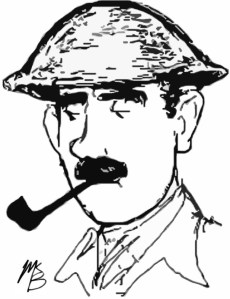
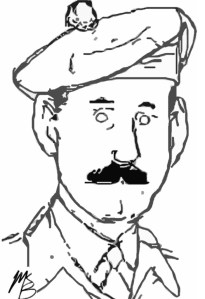
Lt-Col. J.G. Shillington

Lieutenant-Colonel J.G. Shillington
6th Battalion, King’s Own Scottish Borderers

From an Army point of view such a Team might be the Section, Platoon, Company, Battalion, Brigade or Division. In fact, this pride in the Team is described as esprit de corps ; but the term can have a wider meaning than that—it can embrace groups of Armies, such as the 21st Army Group, or a combination of the three Services, where mutual trust and pride are essential as was so well proved when, for instance, the Royal Navy successfully landed the Army on the beaches of Normandy under the umbrella of the Royal Air Force. Indeed, it can extend to nations, groups of nations and, in our utopian dreams, to the World itself.

(Shillington, “Morale,” RUSI Journal, 1950, 254)

Born on 18 December 1900 in Portadown, Armagh, Northern Ireland, John Graham Shillington was a steeplechaser and officer in the King’s Own Scottish Borders since 1921. His father Major David Graham Shillington was elected member of parliament for Armagh (1921–1929) and Armagh Central (1929–1941) for the Ulster Unionist Party. The younger Shillington followed his father in a military career and served as adjutant of the 2nd Battalion while stationed in Hong Kong during the late 1920s.

Continue reading

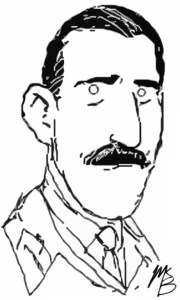
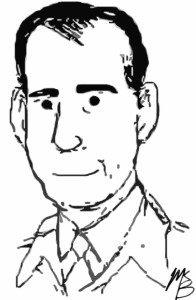
Lt-Col. I. Mackenzie

Lieutenant-Colonel Ian Mackenzie
6th Battalion, Royal Scots Fusiliers

I went on to tea with 6th Royal Scots Fusiliers, which was commanded by Winston [Churchill] for a time in the last war. Ian Mackenzie, who has been C.O. for the last six months, is a great little man. He’s only thirty and has done brilliantly. But I wouldn’t have recognised him for the gay, handsome chap he was when we two crossed the Channel together to join the B.L.A. on that sunny July day so many years ago. He looks ten years older; in fact, I had to look at his badges of rank when he came into the room. He admits he always feels tired nowadays.

(Martin Lindsay, So Few Got Through, 254)

Born in Johannesburg on 7 September 1914, Ian Mackenzie was a partner in a South African accounting firm. He had been educated in Scotland and obtained a degree in philosophy and economics from Pembroke College, University of Oxford in 1935 before returning to his home country. A prewar officer in the Transvaal Scottish Regiment, Mackenzie transferred to the 4/5th Battalion, Royal Scots Fusiliers while visiting London on business in September 1939. He served as a lieutenant during the Battle of France and was on the last ship to evacuate Cherbourg ahead of the advancing German forces.

Continue reading

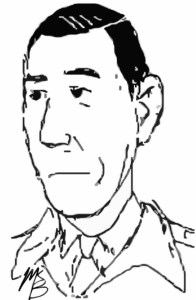
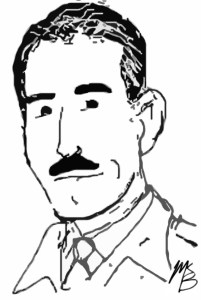
Lt-Col. C.R. Buchanan

Lieutenant-Colonel C.R. Buchanan
6th Battalion, Royal Scots Fusiliers

The Bn was very weary but the leading coys set off and reached the Northern edge of the village which they found to be strongly held … The CO was slightly wounded in the arm about 1300 hrs but when the 2 IC went up he insisted on finishing the battle and was only evacuated later in the evening when the 2 IC took over.

(War Diary, 9 Aug 1944)

Born on 22 May 1902 Shanghai, China, Colin Robert Buchanan was a commissioned officer with the Royal Scots Fusiliers since 1922. He served in the Far East and became 2nd Battalion adjutant in 1930. While stationed in Hong Kong, he and other officer were mistaken for Russian spies and briefly denied by Chinese authorities. He was promoted to captain in 1936 and made a major days before the outbreak of the Second World War.

Continue reading

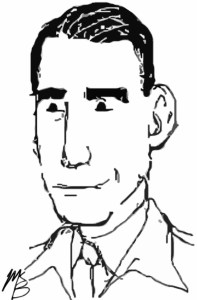
Lt-Col. B.A. Pearson

Lieutenant-Colonel Barclay Pearson
8th Battalion, Royal Scots

During this period this officer continually moved about his battalion under intense art and mortar fire. His energy and determination altered the entire course of the operation and prevented much hard fighting and heavy casualties, not only amongst his own battalion but also for the rest of the brigade.

(D.S.O. citation, 10 May 1945)

Born on 13 January 1912 in Dorchester, Dorset, Barclay Andrew Pearson was commissioned into the Argyll and Sutherland Highlanders in 1932. He served as adjutant with the 1st Battalion, which later fought in the Western Desert and Crete in 1941. In May 1942, the 15th Battalion was re-designated the 2nd Battalion, replacing the unit destroyed in the Battle of Singapore. Pearson served as major when it deployed to Normandy with the 15th Division in June 1944.

Continue reading

Lt-Col. P.R. Lane-Joynt

Lieutenant-Colonel P.R. Lane-Joynt
8th Battalion, Royal Scots

As the bn advanced enemy fire became most intense, control became increasingly difficult and extension of the bridgehead appeared impossible. However in the cramped and increasingly dangerous situation the CO pushed forward his coys in a continuous effort to enlarge the bridgehead.

(D.S.O. citation, 1 March 1945)

Born on 24 December 1901 in County Clare, Ireland, Philip Robert Lane-Joynt was educated at Royal Military College, Sandhurst. He was commissioned into the Royal Irish Rifles in 1921 before transferring to the Prince of Wales’s Volunteers the next year. He was promoted to captain in 1935 and major in 1938. He mobilized with the South Lancashire Regiment.

Continue reading

Lt-Col. R. Delacombe

Lieutenant-Colonel Rohan Delacombe
8th Battalion, Royal Scots

I don’t think I’ll be blown to bits today or tomorrow because of this Cuban business. My assessment of the Russian character is that while they will go to any length in applying pollical, moral or economic pressures, they will always endeavor to stop just short of war.

(Quoted in Montreal Gazette, 26 Oct 1962, 1)

Born on 25 October 1906 in St. Julian’s, Malta, Rohan Delacombe was a commissioned with the Royal Scots since 1926. He was educated at Harrow School before attending Royal Military College, Sandhurst. He served with the 1st Battalion in Egypt, China, India and Palestine where he participated in the suppression of the Arab revolt in the years prior to the Second World War. In 1940, he was assigned to 4th Infantry Brigade during the battle of France and then was posted to the general staff of Adrian Carton de Wiart during the Norway campaign.

Continue reading

Lt-Col. C.H.R. Howie

Lieutenant-Colonel C.H.R. Howie
1st Battalion, Hampshire Regiment

He was an extraordinary commander. He fought the enemy with a furious passion. He encouraged, enthused, chivvied everyone into attack. ‘Keep going forward. Always go forward.’ When battle was joined it was his custom to site his headquarters well forward; and then himself to go forward of that. He spent more time within a stone’s throw of the enemy than anywhere else. And when things were quiet-he was known to take the humble weapon of the Piat and go hunting German tanks. He told one of our officers it was his ambition to die for King and Country. He achieved this ambition without knowing he had been awarded the DSO.

(Geoffrey Picot, Accidental Warrior, [1994], 98)

Born in British India on 12 February 1905, Charles Henry Roger Howie served four years in the ranks before taking a commission with the King’s Regiment (Liverpool) in 1928. He was promoted to captain in 1938 and made temporary major in 1940. When Lieutenant-Colonel H.D. Nelson Smith of the 1st Battalion, Hampshire Regiment was wounded on D-Day, and the second-in-command war killed, Howie was assigned as the new commanding officer.

Continue reading

Lt-Col. H.D. Nelson-Smith

Lieutenant-Colonel H.D. Nelson-Smith
1st Battalion, Hampshire Regiment
1/5th Battalion, Welch Regiment

I was behind the leading companies and its an old story because I had got 50 yards up the beach and was hit. Some soldier dragged me along a bit further and I was hit again. And that was really the end of the story … I remember the drip feed and being taken aboard an American [ship], otherwise I was out for the count.

(Nelson-Smith, IWM interview, Jan 1993)

Born on 30 November 1913, Harold David Nelson-Smith was commissioned into the Hampshire Regiment in 1934, and served with the 1st Battalion in India, Palestine and the Western Desert. He became second-in-command when the unit was attached the 231st Independent Brigade and participated in the defence of Malta before it joined the invasion of Sicily campaign. Nelson-Smith earned the Military Cross and assumed command of the battalion in September before it returned to the United Kingdom as part of the 50th Division.

Continue reading

Lt-Col. A.E.C. Bredin

Lieutenant-Colonel A.E.C. Bredin
2nd Battalion, Dorsetshire Regiment

… it is high time these things were said—and said by some non-military expert—to give the lie to dishonest, biased and selfish opinions, widely held. We are still a great nation, with great responsibilities as well as great opportunities. We are also an affluent nation; and even sever per cent of the so-called gross national income spent on defence is hardly worthy of us. The world is in probably its worst-ever state. And yet, because of the strident clamour of the baser and greedier elements of the nation, we lose our sense of proportion; of purpose and our faith in ourselves, let alone in the Almighty

(Bredin, Daily Telegraph, 12 Dec 1966, 15)

Born on 6 January 1911 in Rangoon, Alexander Edward Craven Bredin, was commissioned into the Dorsetshire Regiment after attending Royal Military College, Sandhurst, where he gained the nickname “Speedy,” for arriving on parade just in time. He served in Palestine and India on the North West Frontier. The 1st Battalion, Dorsets, returned to England after the outbreak of war in 1939, and Bredin was subsequently posted to Gibraltar and then Malta.

Continue reading

Lt-Col. J.E.F. Willoughby

Lieutenant-Colonel J.E.F. Willoughby
2nd Battalion, Middlesex Regiment
2nd Battalion, Dorsetshire Regiment

His huge experience, incisive mind and wicked sense of humour (he once swam the length of a swimming pool in a dinner jacket and more recently fired a potato from a model ballista at a less than well-liked retired officer) brought cheer in later life to his younger friends and doubtless to his men in earlier days. He never allowed his status to come between himself and the common man and all who knew him were enriched by his humanity.

(Wiltshire archaeological and natural history magazine, 1991, 185)

Born on 18 June 1913 in Stroud, Gloucestershire, John Edward Francis Willoughby, was commissioned into the Middlesex Regiment after graduating from Royal Military College, Sandhurst in 1933. He served with the 2nd Battalion during the Battle of France in 1940 and became its commanding officer in 1943. In October of that year, he joined a War Office military mission on a tour of Australia and Burma.

Continue reading