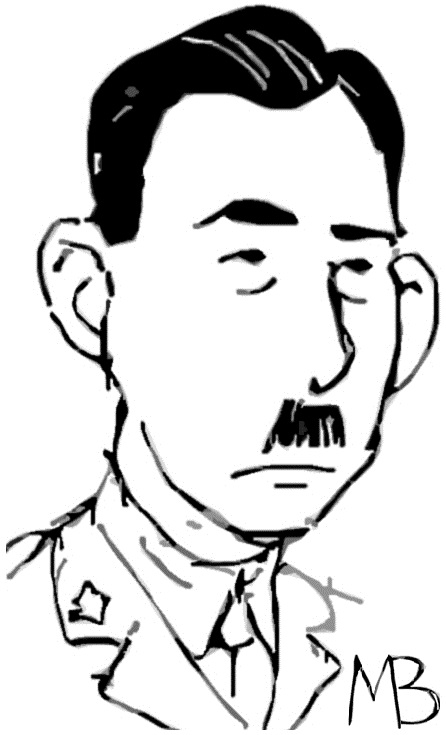
The Superhuman

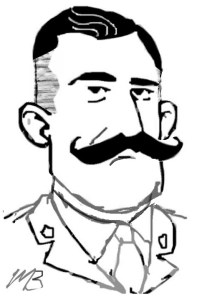
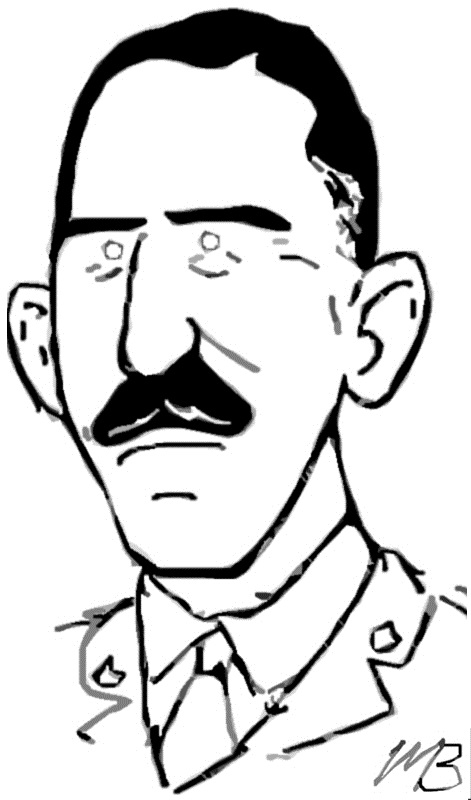
Lieutenant Colonel A. E. G. McKenzie, D.S.O. †
26th (New Brunswick) BattalionMcKenzie

…he followed the immediate centre of his Battalion, and seeing his men held up by most destructive fire of all kinds, he pushed forward to personally lead them and was killed while so doing. On the way, prior to his death, he showed an extreme coolness and an almost superhuman courage.

(Capt. McGillivray to 5th Brigade O.C., 26th Bn. War Diary, Aug 1918, 32)

Archibald Ernest Graham McKenzie was a New Brunswick lawyer, Liberal Party campaigner and militia officer. He was born 21 January 1878 in Campbellton, McKenzie served as second-in-command with the 26th Battalion when it arrived in France in September 1915. By May 1916, he had replaced an ill Lieutenant Colonel James L. McAvity as commander of the battalion.

Continue reading

The Independent

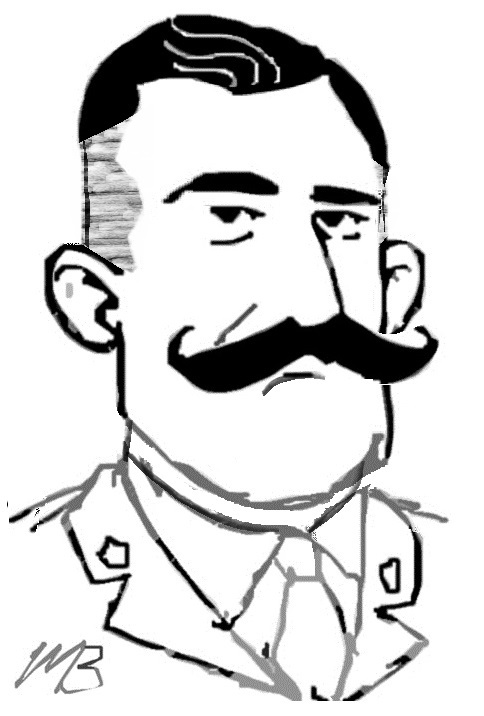
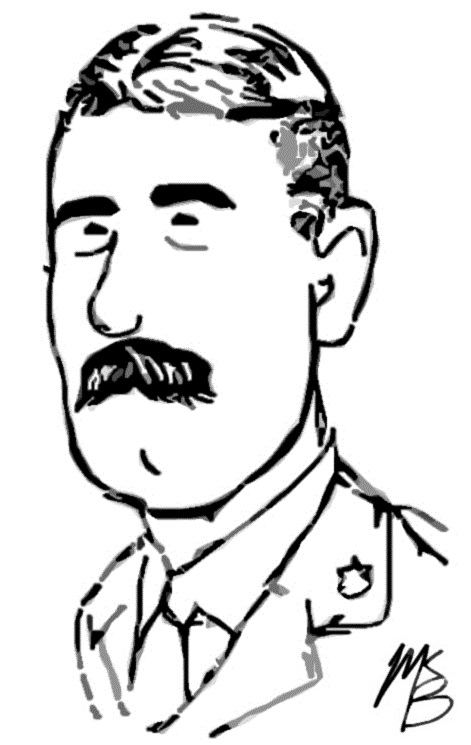
Brigadier General Hugh Dyer, D.S.O.
5th (Western Cavalry) BattalionDyer

I thank you for the unanimity with which you have chosen me as your candidate, for without unanimity we cannot get anywhere. Let there be no mistake. I am not agreeing to run as the representative of any particular party. I am not agreeing to run as a representative of any one class or sect. I will not be tied to any hitching ropes. I will not be haltered by any party. If you elect me, you will elect Hugh Dyer. If that is satisfactory to you, I, on my part, pledge myself to do everything in my power in your interests, and will not spare myself as your representative in the house of commons.

(Dyer speech, Winnipeg Tribune, 21 Oct 1921, 2)

Nicknamed “Daddy Dyer” by his men, Hugh Marshall Dyer was the second CO of the 5th Battalion and commander of the 7th Infantry Brigade. Born in Kingstown, Ireland on 28 January 1861, he immigrated to Manitoba in 1881 and built a farm in Minnedosa where he lived for the rest of his life.

Continue reading

The Lawyer

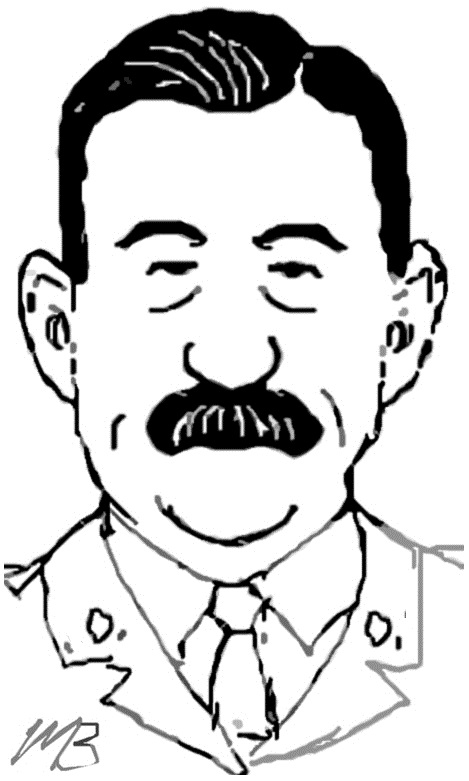
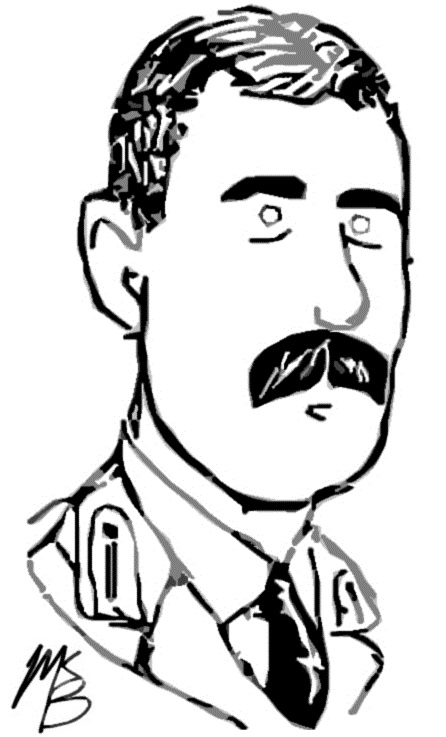
Lieutenant Colonel Henry S. Tobin, D.S.O.
29th (Tobin’s Tigers) BattalionTobin

Colonel Tobin bore testimony to his appreciation of what all those connected with the 29th had done. They had, he said, received splendid support in looking after the sick and wounded and the prisoners of war, and I know he was looking carefully—being a lawyer—after the money that has been so generously sent out to.

(Rev. C. O. Owen, 29th Bn., The Gold Stripe, 1919, 65)

Henry Seymour Tobin was a graduate of the Royal Military College and served with Lord Strathcona’s Horse in the Boer War. He was born in Ottawa on 12 January 1877. After the South Africa campaign, he became a lawyer in the Yukon, Alberta and British Columbia. A major with the 72nd Seaforth Highlanders, Tobin organized the 29th Battalion from Vancouver in early 1915.

Continue reading

The Shame Monger

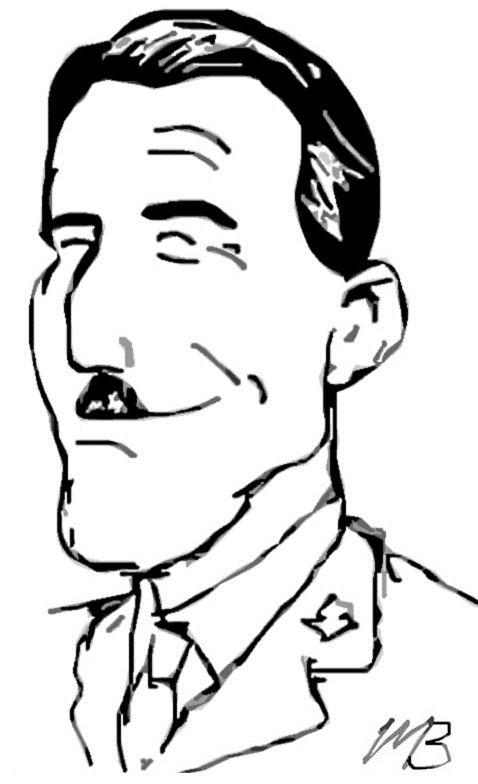
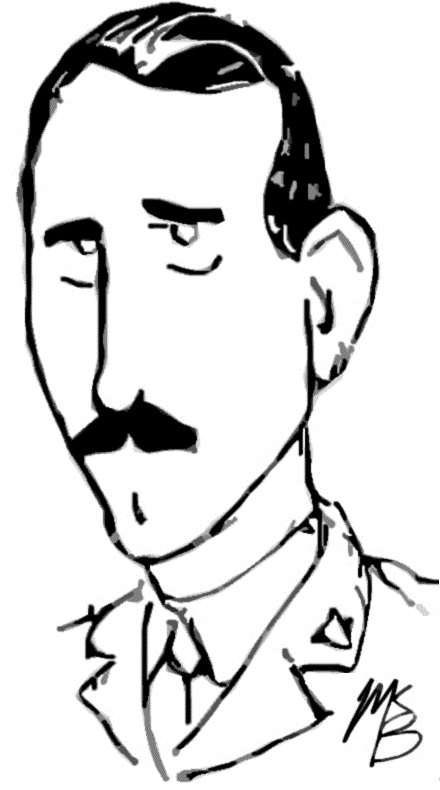
Lieutenant Colonel George C. Royce
255th (Queen’s Own Rifles of Canada) Battalion  Royce_G

GIVE US HIS NAME
Nearly everyone knows of ONE MAN who should be in khaki to-day. We ask you to give us his name so we can call upon him and give him this opportunity to join an Overseas Battalion—

Doing this does not imply any slur upon the man you name…
That man whose name you give us may be just waiting for this chance…
Take this duty seriously. Do not send us unsuitable or “spite” names…

(255th Advertisement, Toronto Globe, 30 Nov 1916, 5)

Authorized in late 1916, the 255th Battalion was to provide reinforcements for the 3rd Battalion fighting on the frontlines France. The commanding officer, Lieutenant Colonel George Cooper Royce quickly realized the dire recruitment situation in Toronto. Having already provided multiple battalions, and with many more units still trying to enlist men, the Ontario capital had nearly exhausted its reserve of suitable soldiers.

Continue reading

The Immortalized

Lieutenant Colonel Harry Baker, M.P. †
5th Canadian Mounted RiflesBaker

It has been the lot of other nations to have their legislators, their parliamentarians, even their kings put on the uniform of soldiers and go forth to battle and meet a patriot’s death, but so far it has been the lot of Canada only once.

(Arthur Meighen, Debates, 3 Mar 1924, 49)

George Harold Baker was the only sitting Canadian Member of Parliament killed in action during the First World War. Born in Sweetsburg, Quebec on 4 November 1877, Baker was Conservative MP for Brome (1911—1916) and commanding officer of the 13th Scottish Light Dragoons. He died in the battle of Sanctuary Wood on 2 June 1916. He is commemorated with a life-sized bronze statue in the Centre Block of the House of Commons.

Continue reading

The Chemist

Lieutenant Colonel John A. Hall
30th (Victoria Fusiliers) Battalion Hall

He retired to British Columbia after the war and worked in his private laboratory, but several times ”threatened,” in his impulsive and outspoken way, to come back to England and help to “clear up the mess.”

(Journal of the Chemical Society, 1932, 2993)

John Albert Hall was born in Manchester England on 24 August 1868. After studying chemistry at Owen’s College, he worked for the Clayton Aniline Company, a manufacturer of dyestuffs. In 1893, Hall and two colleagues established a chemical and acid factory in Victoria, British Columbia, which later merged with Canadian Explosives Ltd. In 1899, Hall joined the 5th Regiment, becoming the commanding officer in 1903. Major Arthur W. Currie succeeded him in 1909.

Continue reading

The Also Ran

Lieutenant Colonel R. A. Carman
10th Canadian Mounted RiflesCarman

Unique in the history of a Federal election campaign in Saskatchewan, Lt – Col. R. A. Carman, an Independent, seeks the endorsation of the electorate of Regina without having held a meeting. By personal contact and the use of pamphlets Col, Carman has carried on his campaign, and he is one of the few candidates who has not delivered a radio speech.

(Lethbridge Herald, 28 Jul 1930, 16)

Russell Aubrey Carman was born in Belleville, Ontario on 22 August 1878. At the outbreak of the Great War, he was living in Saskatchewan and worked as a barrister. With twenty-one years’ experience in the 15th Regiment and the 16th Light Horse, he was authorized to organize the 10th Mounted Rifles from Regina in December 1914.

Continue reading

The Vindicator

Lieutenant Colonel Fred McRobie
244th (Kitchener’s Own) BattalionMcRobie

I desire to pause here to pay just tribute to the memory of that man who organized the army which will yet win victory for Britain and for the allied nations; I mean Lord Kitchener.

To his standing as a great soldier, as the virtual head of the British army at the time; to his military ability, to his indomitable will, which had been tested on so many occasions, the people of the United Kingdom and the whole Empire looked in the day of trial, and they did not look in vain.

(Robert Borden, Debates, 22 Jan 1917, 27)

On 5 June 1916, while transporting British War Minister, Field Marshal Horatio Herbert Kitchener, on a diplomatic mission to Russia, the HMS Hampshire struck a German mine near the Orkney Islands. Earl Kitchener and his staff drowned in the violent sea along with 643 crew and passengers. One day later, the 244th Battalion was authorized from Montreal under the command of Frederick Mackenzie McRobie. Sir Sam Hughes dubbed the new unit Kitchener’s Own and called on recruits to avenge the War Minister’s death.

Continue reading

The Jack-of-All-Trades

Lieutenant Colonel John G. Rattray
10th (Fighting Tenth) BattalionRattray

But when I find myself honored by such frenzied attacks by the Rabbi Samuel, the chief Hebrew apologist of Jewry and Jewish morals, and this attack signed by the Canadian Jewish committee (what’s in a name!) a short statement of my side of the story would appear necessary…

If it is personal attack, it is apparent in every paragraph that the Hebrews are ‘out to get Colonel Rattray.’

(Rattray to Winnipeg Free Press, 13 Jan 1922, 19)

John Grant Rattray was a schoolteacher, militia officer, hardware salesman, newspaper publisher, businessman, town reeve, insurance agent, soldier, police chief, political campaigner, civil servant, veterans’ official and sportsman. Born on 15 January 1867 in Banffshire, Scotland, he immigrated to Manitoba in the 1880s. As commanding officer of the 20th Border Horse, he organized the 10th Battalion at Valcartier when the Canadian Expeditionary Force assembled in September 1914.

Continue reading

The Kentuckian

Lieutenant Colonel W. W. Stewart †
86th (Machine Gun) BattalionStewart

The cost of this tremendous war cannot be stated in terms of the Stock Exchange, for life and happiness mean infinitely more than dollars and cents.

Who can assess the value of a genial disposition, a kindly, sympathetic nature, a forceful personality, a large heart, a noble, earnest spirit?

(The Canadian Machine Gunner, June 1917, 12)

Born on 1 June 1871 in Covington, Kentucky, Walter Wilson Stewart immigrated to Canada with his family as a boy. He pursued a career in architecture, working in Hamilton and Cleveland, Ohio. In the Canadian militia, he served for two years with the 13th Regiment and twelve years with the 91st Highlanders. Beginning in 1915, he organized the 86th Battalion based in Hamilton with former 4th Battalion commander Robert H. Labatt.

Continue reading