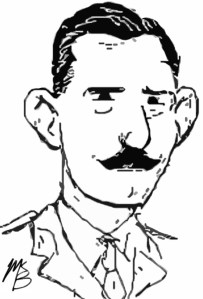
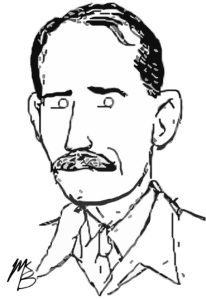
Lt-Col. P.D. Daly

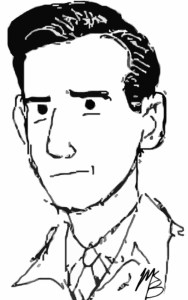
Lieutenant-Colonel P.D. Daly
2nd Battalion, King’s Shropshire Light Infantry

From the start to the finish of the campaign Lt Col Daly has been magnificent first as a staff officer and then as Bn commander. His inspiring leadership and personal bravery have been an inspiration to all ranks.

(D.S.O. citation, 24 January 1946)

Born on 22 November 1912 in Exeter, Devon, Patrick Dunsandle Daly was a commissioned officer with the Duke of Cornwall’s Light Infantry since 1932. During the Normandy campaign, he was brigade major for 185th Infantry Brigade in 3rd Division. In this role, “he distinguished himself as a first class staff officer and earned the respect and admiration of all those with whom he came in contact.”

Continue reading

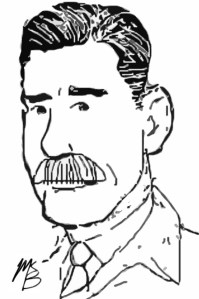
Lt-Col. C.G. Millett

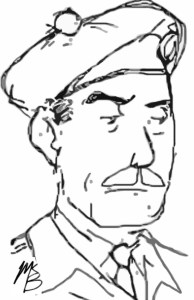
Lieutenant-Colonel C.G. Millett
2nd Battalion, King’s Shropshire Light Infantry

Recce party with the C.O. and his bodyguard left to recce the area of previous nights incidents. Explosions heard and report received that the Commanding Officer Lt. Col. C.G. Millett, O.B.E., his bodyguard and two other ranks had been killed in a minefield. The party had approached the body of a dead German and were examining the corpse when the explosion occurred.

(War Diary, 20 Dec 1944)

Born on 8 April 1903 in Reading, Berkshire, Cecil George Millett was a commissioned officer with the Duke of Cornwall’s Light Infantry since 1923. He was 2nd Battalion adjutant from 1931 to 1934 and was promoted to captain in 1933. By 1942, he was acting lieutenant-colonel and was made an Officer of the Order of the British Empire as part of the King’s Birthday Honours.

Continue reading

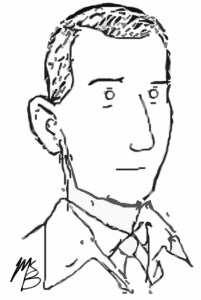
Lt-Col. F.J. Maurice

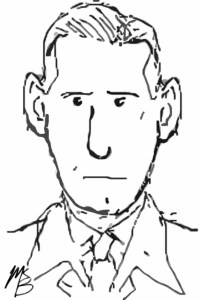
Lieutenant-Colonel Jack Maurice
2nd Battalion, King’s Shropshire Light Infantry

At 0115 hrs several shells fell in the Bn area, one of which killed Lieut Col F.J. Maurice. Col. Maurice had comd the Bn for two years and was dearly loved by all ranks. His death cast a gloom over the Bn just as it was again to go into action.

(War Diary, 7 Jul 1944)

Born on 2 April 1905 in Marlborough, Wiltshire, Frederick Jack Maurice was commissioned with the East Surrey Regiment after graduating from Royal Military College, Sandhurst in 1924. He became adjutant for 2nd Battalion in 1935, and by 1940 had been promoted to major. Home from France on sick leave, when German forces attacked Belgium, Maurice crossed to attempt to rejoin his battalion. In the chaotic situation he fought with an ad hoc group of troops before evacuation.

Continue reading

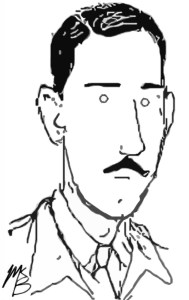
Lt-Col. A. Mackinnon

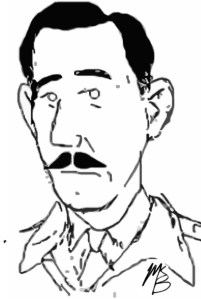
Lieutenant-Colonel A. Mackinnon
7th Battalion, Argyll and Sutherland Highlanders

One enemy tank even succeeded in getting in amongst Bn H.Q. while it was still on the move and Col. Mackinnon personally organised its destruction with a P.I.A.T. mortar. Throughout this difficult operation Col. Mackinnon displayed a very high degree of personal courage and determined leadership which were undoubtedly largely responsible for the highly satisfactory results achieved.

(D.S.O. citation, 12 April 1945)

Born on 20 February 1911 in Mersham, Kent, Angus Mackinnon was a Terriorial Army officer and businessman. After graduating from Eton College and Pembroke College, Oxford, he joined the family merchant firm in Calcutta, India. He mobilized with the Argyll and Sutherland Highlanders in 1939 and served with the 8th Battalion during the Battle of France in June 1940. He earned the Military Cross, showing “complete disregard for danger and led his patrol with skill and daring.”

Continue reading

Lt-Col. D.N. Nicol

Lieutenant-Colonel D.N. Nicol
1st Battalion, Tyneside Scottish
7th Battalion, Argyll and Sutherland Highlanders

The most seductive and productive vehicle may have been Donald Nicol’s coupé SS Swallow—a precursor of the Jaguar—in which the other things or object of our madness could recline with pleasure. The girls round Colchester were a lively lot.

(David Harry Walker, Lean, Wind Lean, 46)

Born on 5 February 1911, Donald Ninian Nicol was the third in his family of his name. His father (1877—1915) had died of illness while serving with the Scots Guards during the First World War and his grandfather (1843—1903) was a member of parliament for Argyllshire. After attending Royal Military College, Sandhurst, Nicol was commissioned into the Black Watch in 1931 alongside Scottish-born Canadian novelist David Harry Walker, who in his memoir recalled the diversions enjoyed by young subaltern officers while stationed in Colchester.

Continue reading

Lt-Col. H.R.D. Oldman

Lieutenant-Colonel Hugh Oldman
7th Battalion, Green Howards
8th Battalion, Durham Light Infantry

This morning the Sultan’s Defence Secretary and former Army Commander, Colonel Hugh Oldman, ex-Second World War, ex-Staff College, ex-NATO, told the official story of the coup which brought Qabus to power. Colonel Oldman modestly denied any knowledge of the coup. It was, he said, all done behind walls, kept within the family.

(The Guardian, 31 Jul 1970, 9)

Born on 24 June 1914 in Belgaum, British India, Hugh Richard Deare Oldman was a graduate of Royal Military College, Sandhurst, a cricket player and London Metropolitan Police constable from 1936 to 1937. He took an emergency wartime commission with the Royal Norfolk Regiment in 1940. He commanded a company of the 5th Battalion, The East Yorkshire Regiment in the North African theatre and earned the Military Cross at the Battle of Gazala in June 1942.

Continue reading

Lt-Col. C.F. Irvine

Lieutenant-Colonel C.F. Irvine
5th/7th Battalion, Gordon Highlanders

It was entirely due to Major Irvine’s cool headedness and personal courage which inspired the men to turn the tables completely on the enemy. Had it not been for his quick thinking and magnificent example the column might well have been captured by the enemy

(Chevalier of the Order of Leopold II citation, 8 Dec 1945)

Born on 12 November 1910 in Drumoak, Aberdeenshire, Charles Francis Irvine was educated at Radley College and Exeter College, Oxford University, with a degree in agriculture. In September 1939, He joined the 5th/7th Battalion, Gordon Highlanders as a lieutenant and served in every engagement the unit fought in the North African and North West Europe campaigns. He earned the Military Cross while leading the transport section in the Normandy breakout in mid-August 1944.

Continue reading

Lt-Col. W.R. Cox

Lieutenant-Colonel W.R. Cox
7th Battalion, Green Howards

During the whole of the action Lt-Col Cox has continually on the move under small arms and mortar fire. His complete disregard for his own safety at a critical period and the calm manner in which he moved about directing the attack and encouraging the Coys was a fine example and great inspiration to all ranks.

(D.S.O. citation, 1 Mar 1945)

Born on 13 June 1905 in Herefordshire, William Reginald Cox was commissioned with the King’s Shropshire Light Infantry after completing Royal Military College Sandhurst in 1925. He rose to captain and adjutant before attending staff college at Camberley in 1939. Following general staff officer appointments, he became commanding officer of 11th Battalion Worcestershire Regiment in July 1942. Six months later the unit was reconstituted as the 1st Battalion—the original had been destroyed after the surrender of Singapore.

Continue reading

Lt-Col. R.H.W.S. Hastings

Lieutenant-Colonel Robin Hastings
6th Battalion, Green Howards
2nd Battalion, King’s Royal Rifle Corps

I want it to be clearly understood that I, who was there and saw it, have nothing but admiration for the way the Bn fought yesterday afternoon. The withdrawal was given entirely on my order, it was carried out perfectly, and it was given chiefly because of the threat of tanks to our Lines of Communication. The men of the Bn deserve more credit for their performance yesterday than for many other battles for which we will have received more credit.

(Quoted in 6th Green Howards war diary, 12 Jun 1944)

Born on 16 January 1917 in Rugby, Warwickshire, Robin Hood William Stewart Hastings was an horse racer, a graduate of Christ Church, Oxford University and a commissioned officer in the King’s Royal Rifle Corps since 1938. In response to press criticism about “undergraduate hooliganism,” in 1937 he wrote a joint letter with George Haig, 2nd Earl Haig, to the Daily Telegraph, “Whereas our father sowed their wild oats in the comparatively secluded company of dons and tutors, our audience is only limited by the circulation of the daily papers … The public gaze is misdirected. The foundations of the Empire are hardly likely to be shaken by the hail of stones.” Hastings’ and Haig’s letter went on to claim the Empire was “however, threatened by the words and actions of those undergraduates whose principal diversion is to pass treasonable motions,” presumably a reference to radical, Communist, or pacifist elements at the university.

Continue reading

Lt-Col. T.L.G. Charles

Lieutenant-Colonel T.L.G. Charles
5th Battalion, East Yorkshire Regiment


Soon after landing and during the unsettled first few days, he had the machinery of comd excellently organised and fully under control, being quite indifferent to and in no way allowing enemy action or movements to interfere with the arrangements. The same zeal and marked efficiency characterised all Lt-Col Charles’ work when he too over comd of 5 E Yorks.

(D.S.O. citation, 21 Jun 1945)

Born on 12 November 1909 Eastbourne, Sussex, Thomas Leslie Gwyther Charles was commissioned into the Essex Regiment in 1930, and served in India and the Middle East. In July 1936, he was injured in a RAF bomber crash in Egypt that killed seven. At the outbreak of the Second World War, he mobilized as adjutant in the 2nd Battalion, Essex Regiment.

Continue reading