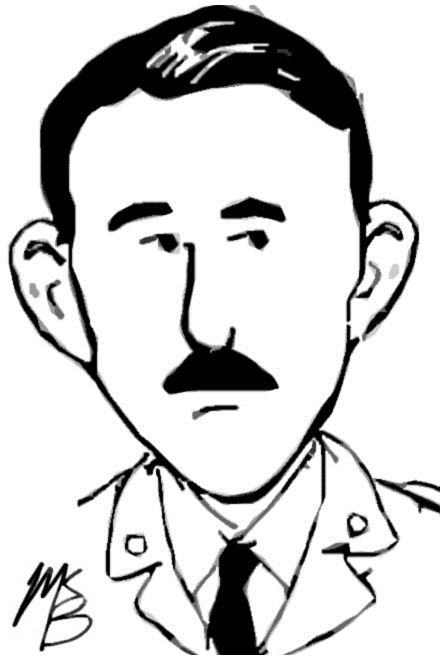
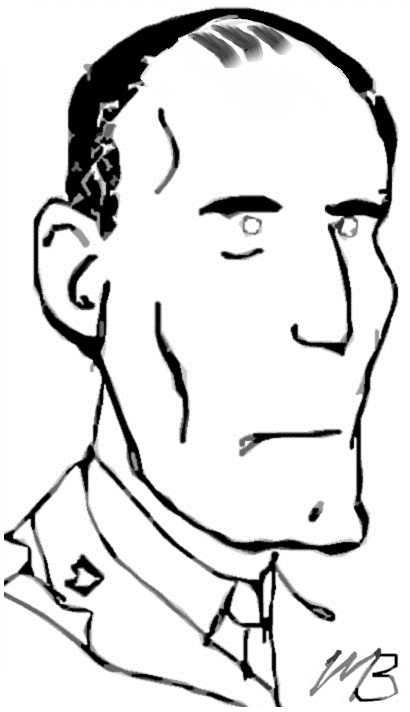
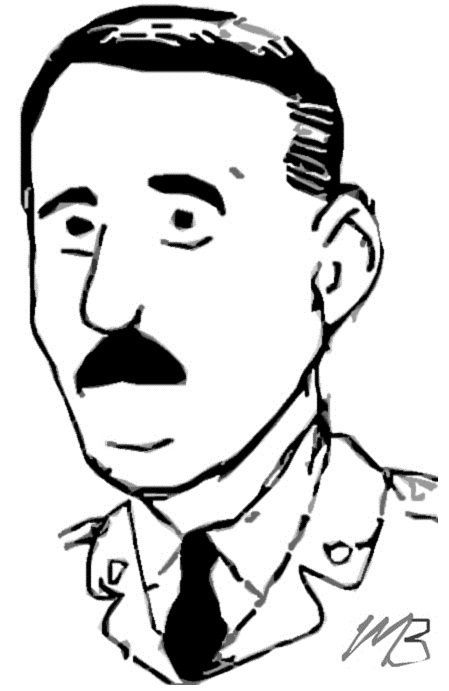
Lt. Col. Semmens

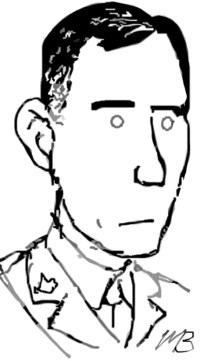
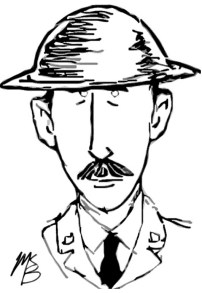
Lieutenant Colonel J.N. Semmens
78th (Winnipeg Grenadiers) Battalion

 it will act like a wild tornado to fan the flame of anger that burns within us now when we see the cryptic phrase, “Remember Hong Kong.” That anger is not alone aimed at the Japanese but at anything that impedes or hampers the all-out effort of this country of ours. To the Winnipeg Grenadiers it means grim preparedness.

(Col. Semmens, Ottawa Citizen, 11 Mar 1942, 3)

Born in Toronto on 7 October 1879, John Nelson Semmens was a Winnipeg architect and militia captain in the Winnipeg Grenadiers. He first joined the 100th Battalion under the command of fellow architect Lieutenant Colonel J.B. Mitchell before transferring to the 78th to act as second-in-command. He assumed temporary command during Battle of Passchendaele until Lieutenant Colonel James Kirkcaldy recovered from his wound in March 1918.
Continue reading

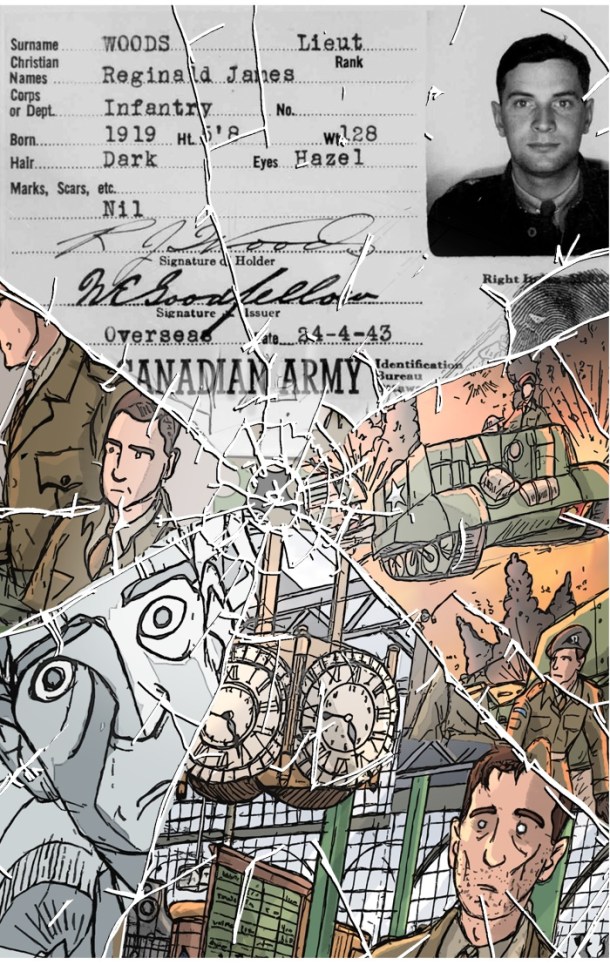
The Vanished Officer

Lieutenant Reginald J. Woods
The Lake Superior Regiment

An illustrated story of one officer featured in my book Scandalous Conduct: Canadian Officer Courts Martial, 1914–45.

On 16 August 1944, Lieutenant Reg Woods joined his regiment fighting in France. After being under enemy fire for the first time, he vanished the next day. Two months later, Woods resurfaced in London claiming amnesia. He was admitted to a neurological hospital as a possible psychiatric casualty. Was he a battle exhaustion case deserving treatment or a disciplinary problem? One doctor believed the amnesia genuine, but the hospital’s commanding medical officer suspected Woods was faking to conceal deliberate misconduct. He was arrested and charged with desertion.

Woods comic 1
Continue reading

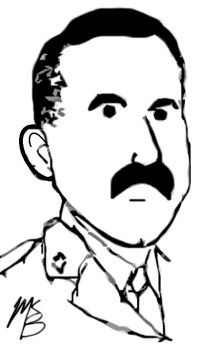
Lt. Col. Ritchie

Lieutenant Colonel C.F. Ritchie, D.S.O., M.C.
24th (Victoria Rifles) Battalion
Ritchie

His battalion held the front line for nine days under very trying conditions prior to our attack . Several counterattacks were completely repulsed, the enemy suffering heavy casualties, and prisoners were made.

(Ritchie, D.S.O. Citation, 8 Cot 1919, 3203)

Charles Frederick Ritchie was three-time commanding officer of the 24th Battalion during some of the heaviest fighting on the front including Vimy Ridge, Passchendaele, Hill 70 and the final Hundred Days. Born in Three Rivers, Quebec on 12 October 1888, he was a bank manager and member of the 3rd Victoria Rifles since 1909. He led the 24th from 7 December 1916 to 14 April 1917, 4 August 1917 to 22 January 1918, and 5 September 1918 to demobilization.

Continue reading

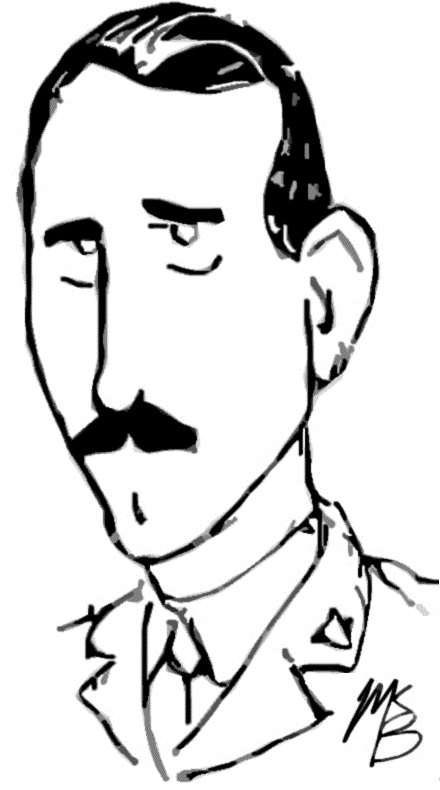
Lt. Col. Frost

Lieutenant Colonel R.W. Frost, D.S.O.
87th (Canadian Grenadier Guards) Battalion
Frost

Capt. Frost was twice blown up by shells but remained on duty.

 (14th Bn. War Diary, 3 June 1916)

 Capt. R. W. Frost, for the third time in 24 hours, was blown to the ground by a shell. Too dazed to walk, he was carried to Railway Dugouts, where he recovered and whence, on the following morning, he hastened to duty with the Battalion.

 (R. C. Fetherstonhaugh, The Royal Montreal Regiment, 14th Battalion [1927], 87)

Just as the 87th Battalion prepared to deploy to France in summer 1916, Reginald William Frost replaced Lieutenant Colonel Irving Rexford in command. A native of Norfolk, England, Frost was born on 21 May 1885 and immigrated to Canada in 1906. He had served seven years with the 66th Princess Louise Fusiliers when he enlisted in the 14th Battalion under the command of Frank Meighen at the outbreak of the war.

Continue reading

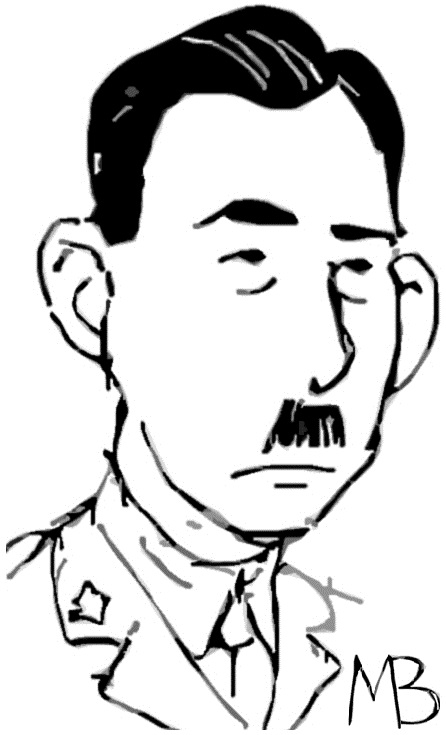
The Executioner

Lieutenant Colonel A.J. McCausland
74th (Peel & York) Battalion

The accused No. 1 Fuehrer Adolf Schicklegruber, alias Adolf Hitler, Elite Guard, Berlin, Germany, a soldier of the Third Reich, is charged with: Murder, rape, theft and sadistic crimes against humanity … The accused was tried before the court of public opinion on this 28th day of April, 1945. The court found the accused guilty of all charges and sentenced him to be taken out and hanged until he is dead and may God have mercy on his soul.

-Maj. A.J. McCausland

(Brantford Expositor, 1 May 1945, 5)

A Toronto native, Alan Joseph McCausland was born on 9 June 1887. He enlisted as a private in the Queen’s Own Rifles in 1903, and at the outbreak of the war was a militia captain with the 36th Peel Regiment. At the age of twenty-eight, he was one of the youngest men appointed to battalion command when authorized to raise the 74th from Peel and York counties. He sailed overseas in March 1916, and his unit provided reinforcements for Ontario battalions at the front.

At the end of the Second World War, McCausland had the distinction of announcing the death sentence for an effigy of Adolf Hitler in Brantford, Ontario just days before the real Hitler killed himself. Continue reading

The Interned

Lieutenant Colonel E. S. Doughty, D.S.O.
31st (Alberta) BattalionDoughty

Looks somewhat tired and languid. States that he does not feel up to the work. Feels nervous and irritable at times. Does not sleep as well as prior to enlistment. Is troubled with nocturnal emissions. Also has occasioned dizzy spells. States that he feels that he requires a rest.

(“Medical History of an Invalid,” 9 Jul 1919)

Born in India on 25 January 1881, Edward Spencer Doughty was second-in-command with the 31st Bell’s Bulldogs Battalion. Twice wounded in the field, he assumed command of the battalion when the original commander, Lieutenant Colonel Arthur Bell, was promoted to brigadier general on 23 April 1918.

Continue reading

Lt. Col. A.W. Sparling

Lieutenant Colonel Albert Sparling, D.S.O.
1st (Western Ontario) BattalionSparlingA

This officer was the only surviving Lt.-Colonel, all other senior field officers having become casualties. He was twice ordered to deal with serious situations on the brigade front, first, in the case of an enemy counter-attack, and a few days later when there was some confusion and loss of direction of our troops.

(Sparling, D.S.O. Bar, London Gazette, 1 Feb 1919, 1600)

Albert Walter Sparling was a Saskatchewan farmer born in Pilot Mount, Manitoba on 12 July 1891. He enlisted in Russell Boyle’s 10th Battalion and earned a promotion to the rank of major in the field. After George C. Hodson was sacked, Sparling assumed command of the 1st Battalion on 17 August 1917 during the battle of Hill 70. Shortly thereafter he was awarded a Distinguished Service Order for conspicuous gallantry.

Continue reading

The Cemetery Keeper

Lieutenant Colonel J. M. Prower, D.S.O.
8th (90th Winnipeg Rifles) BattalionPrower

I am pretty well all right but am scared of my nerves going, as I seem to be getting confoundedly jumpy. I suppose my “blow up” at Festubert and having been buried by Johnsons five times since, is what is worrying me, though why I cannot say, as it happens to most people.

(Prower to Aunt, July 1915)

John Mervyn Prower was born on 8 March 1885 in Quebec but grew up in England. After serving for seven years in the British Army, Prower returned to Canada and settled in British Columbia, where he joined the 31st Horse. In September 1914, he was selected captain of “H” Company in the 8th Battalion under the command of Lieutenant Colonel Louis Lipsett. He quickly gained a promotion to major in summer 1915 and later assumed command of the 8th on 3 August 1916.

Continue reading

The Nazi-Watcher

Major K. C. Bedson
8th (90th Winnipeg Rifles) BattalionBedson

Watched closely by gestapo agents in their midst, Nazi prisoners of war in internment camps in Canada wage a 24-hour battle of wits against the veteran Canadian soldiers who guard them, hoping to earn good marks for their credit in post-war Germany by constantly trying to escape and making life as difficult as possible for the camp staff.

(Col. Bedson’s report, Winnipeg Free Press, 17 Dec 1943, 5)

Kenneth Campbell Bedson was the son of Samuel Lawrence Bedson (1842—1891), an English-born army officer who settled in Manitoba after Wolseley’s Expedition in 1870. The elder Bedson was a prison warden, golfer, sportsman and hunter. As a boy, Kenneth Bedson helped his father herd buffalo on the family farm. Bedson was born In Stoney Mountain, Manitoba on 31 July 1881. During the Boer War, Bedson fought with the 2nd Mounted Rifles. He also belonged to the 100th Winnipeg Grenadiers and the Fort Garry Horse. In September 1914, he enlisted as a captain in Lieutenant Colonel Louis Lipsett’s 8th Battalion.

Continue reading

The Adjutant General

Lieutenant Colonel H. H. Matthews, D.S.O.
8th (90th Winnipeg Rifles) BattalionMatthews

General Matthews had been one of ray closest friends since the First Great War. We are going to greatly miss his advice and help at National Defence Headquarters. He was a man with a most lovable character, who was friendly with people and in turn inspired their friendship. In France and Belgium he was a first class fighting man and in peace-time he was also a first-rate officer. Few officers in either peace or war were more efficient.

(Gen. T. V. Anderson’s statement, Ottawa Journal, 13 May 1940, 15)

Born on 22 May 1877 in Lower Harford, England, Harold Hallord Matthews immigrated to Vancouver in 1894. He became a cattle rancher and joined the British Columbia Horse. He fought in France with Louis Lipsett’s 8th Battalion until he was wounded at Second Ypres in April 1915. He rejoined his unit five months later and was appointed commanding officer on 28 September 1915 following the elevation of Lipsett to the 2nd Brigade.

Continue reading