The Leader

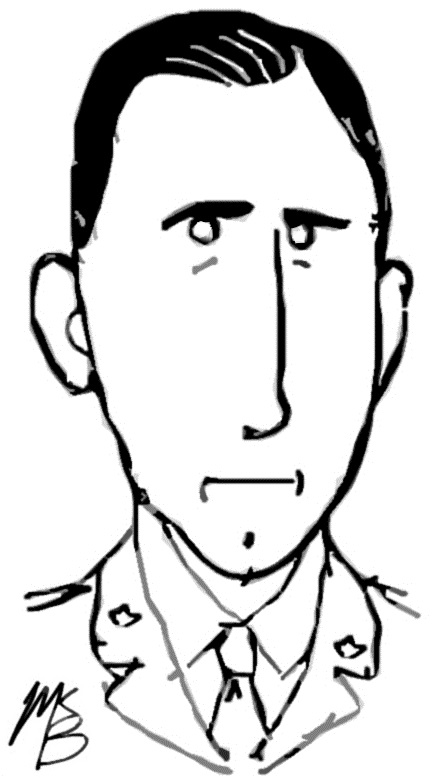
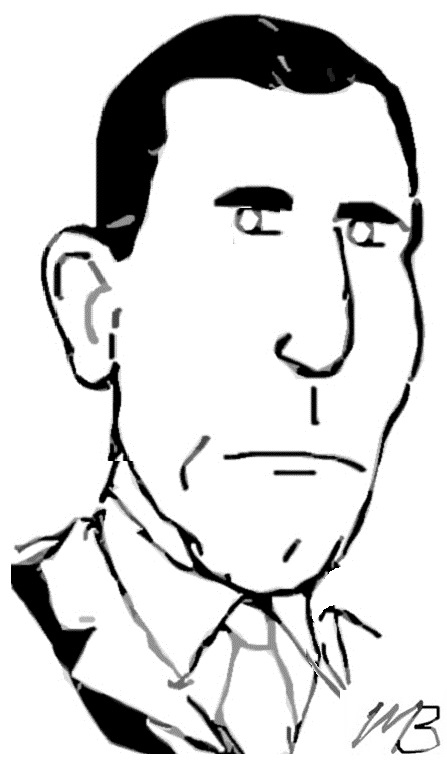
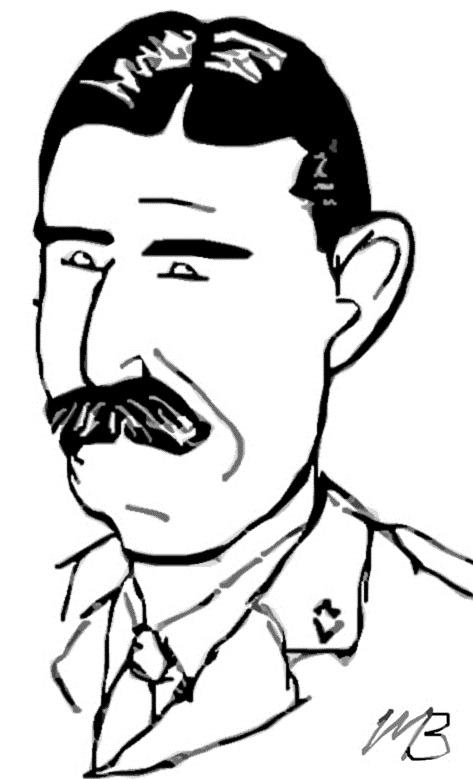
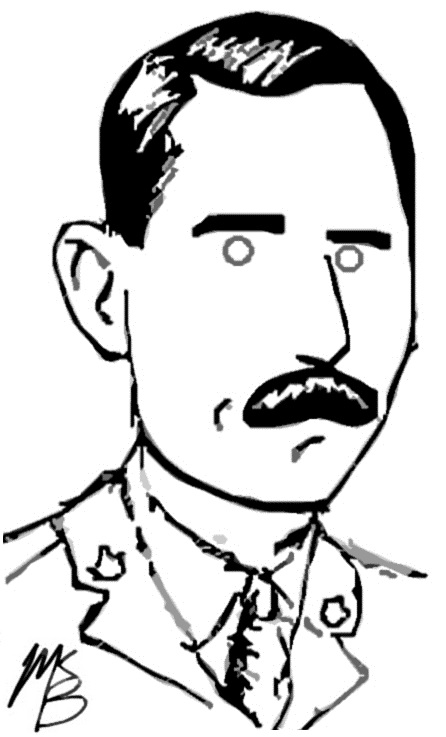
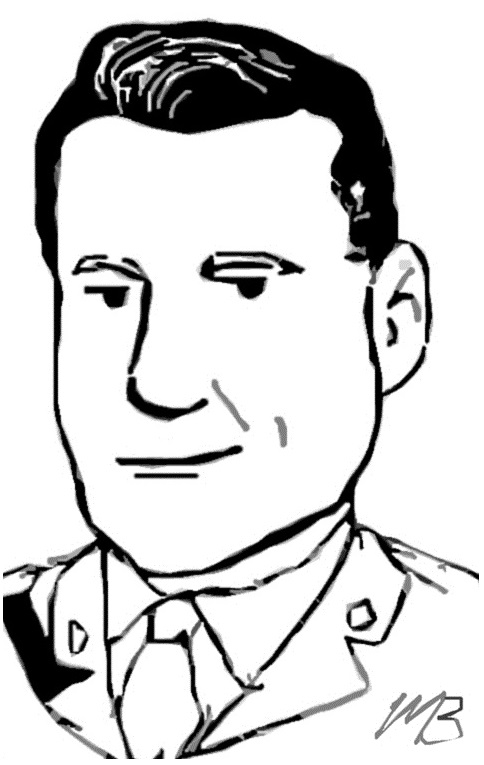
Major James A. De Lancey, M.C. †
25th (Nova Scotia Rifles) BattalionDeLancey
Previously reported Missing, believed Killed, now Killed in Action. While leading his Battalion in the attack on Vimy Ridge and just as he reached the enemy second line, he was instantly killed by a bullet through the head.

(Circumstances of Death, 9 Apr 1917)

A civil engineer and graduate of McGill University, James Arnold DeLancey was born in Middleton, Nova Scotia on 15 July 1880. He originally enlisted in A. G. Vincent’s 40th Battalion before joining the 25th as adjutant. In the absence of Lieutenant Colonel D. S. Bauld, command fell to DeLancey to led the battalion over the top at Vimy Ridge.
Continue reading

The Sure Shot

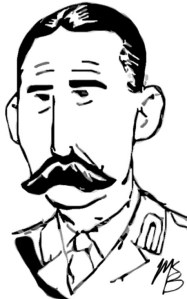
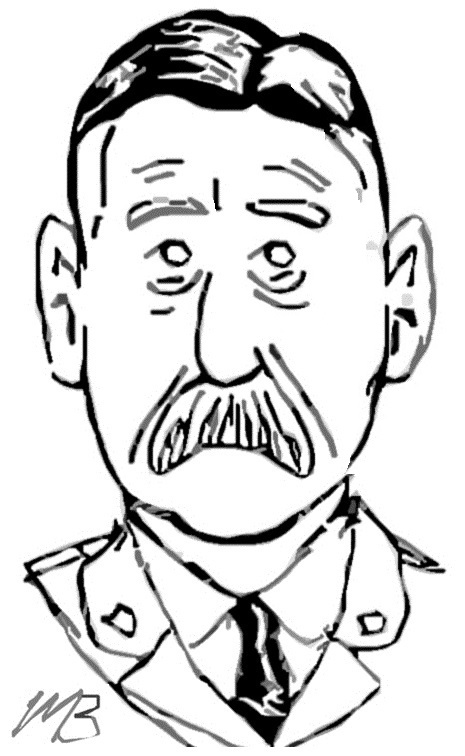
Lieutenant Colonel Archie Hay †
52nd (New Ontario) BattalionHay

It is with the deepest regret that the Battalion chronicles the disappearance of its Colonel, Lieut. Col. Hay, on this date.

(52nd Bn. War Diary, 3 June 1916, 7)

Born on 8 November 1873 in Quebec City, Archibald Walter Hay was a militia officer with the 8th Royal Rifles and noted marksman. During the 1912 Governor General’s prize shooting match organized by the Dominion Rifle association, Hay scored twenty-one consecutive bullseyes.

Continue reading

The Bankrupt

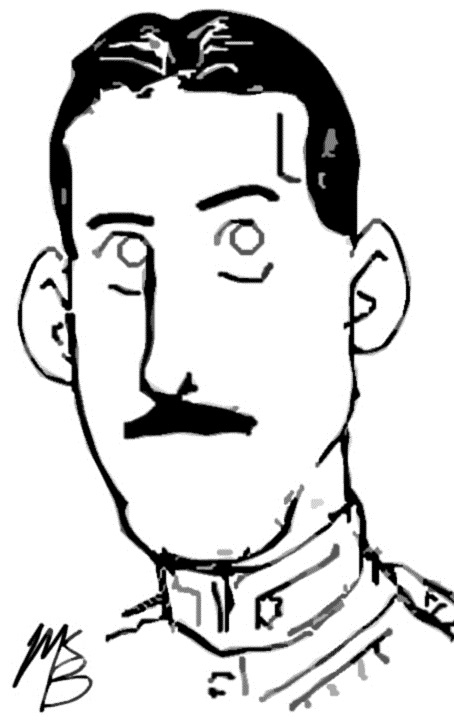
Lieutenant Colonel R. McD. Thomson †
43rd (Cameron Highlanders) BattalionsThomson_RM

Robert McDonnell Thomson, officer commanding the 43rd Battalion, who died at Albert. France, Oct. 8 1916, as a result of wounds, and who was believed to be one of the wealthiest men in Winnipeg, died insolvent.

(Winnipeg Tribune, 28 August 1918, 1)

Born on 4 July 1869 in Hamilton, Ontario, Robert McDonnell Thomson was a veteran of the 1885 Rebellion and founder of the 78th Cameron Highlanders of Canada. Although on the reserve list at the outbreak of the Great War, Thomson raised the 43rd Battalion from Winnipeg and sailed for England in June 1915. The Cameron Highlanders deployed to France with 9th Infantry Brigade, 3rd Division in February 1916.

Continue reading

The Meteorologist

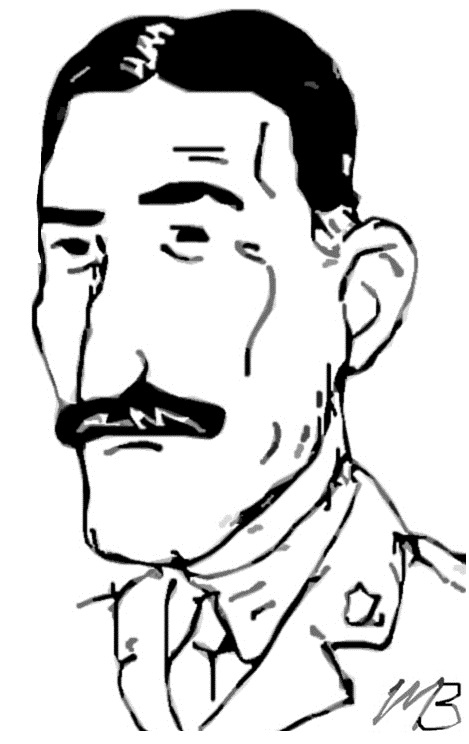
Lieutenant Colonel William D. Allan, D.S.O. †
3rd (Toronto Regiment) BattalionWDAllan

Since going into the trenches he was three times wounded, and mentioned in dispatches for many acts of signal bravery. The people of Canada still vividly recall the story of heroism when he went with another soldier into No Man’s Land under heavy fire to carry in a wounded comrade. The man was struck by a bullet and killed as they were carrying him to shelter. For this and other conspicuous acts of bravery he was awarded the D.S.O.

(Toronto Globe, 3 Oct 1916, 4)

William Donald Allan was a meteorologist and seventeen year member of the Queen’s Own Rifles. He was born in Toronto on 25 November 1879. Allan served as a company captain with the 3rd Battalion during the second battle of Ypres. After Robert Rennie was promoted to command the 4th Brigade, Allan took charge of the 3rd on 10 November 1915.

Continue reading

The Queen’s Own

Major General Malcolm Mercer †
3rd Infantry DivisionMercer

It is now fully believed here that General Mercer is dead.

Nothing whatever has been heard of him since and it is now considered almost certain that his body lies in the shell torn area where the former front trenches were, but are now practically obliterated.

(Montreal Daily Mail, 6 June 1916, 1)

Malcolm Smith Mercer was the highest ranked Canadian officer killed in the First World War. He was born on 17 September 1859 in Etobicoke, Canada West. While a student at the University of Toronto, he joined the Queen’s Own Rifles in 1881. He became commanding officer of the Regiment in 1911 and was posted to the 1st Infantry Brigade when the First Contingent assembled at Valcartier in August 1914.

Continue reading

The Dragoon

Lieutenant Colonel C. T. van Straubenzee †
Royal Canadian DragoonsStraubenzee

It was the C.O.’s intention to ride with “B” Sqdn. Whilst he was walking to his horse from a point where he had been reconnoitring, he was killed by a shell.

(R.C.D. War Diary, 9 Oct 1918, 9)

Born on 17 June 1876 in Kingston, Ontario, Charles Turner Van Straubenzee was a professional soldier and veteran of the Boer War. In 1897, he joined the Royal Canadian Dragoons as a lieutenant and distinguished himself in numerous battles during the South African campaign. He was promoted to major in 1911.

Continue reading

The Subaltern

Lieutenant Colonel Frank Creighton †
1st (Western Ontario) BattalionCreighton

On arrival of the H.Q. Staff of the 8th Battalion at Lt. Col. Creighton’s dugout, a very large calibre shell completely demolished the H.Q. Dugout burying Staffs of both regiments. Lt. Col. Creighton received wounds from which he never recovered consciousness. In this the Division lost a good Officer who had done valuable work that day.

(Gen. Lipsett, 2nd Brig. War Diary, 15 June 1916, 24)

Frank Albro Legion Creighton was born on 6 February 1875 in Dartmouth, Nova Scotia. At the outbreak of the Great War, he was a civil engineer living in Winnipeg. He enlisted in the 1st Battalion as a lieutenant and was promoted to second-in-command in the field. After Lieutenant Colonel F. W. Hill took over the 9th Infantry Brigade, Creighton assumed command of the Western Ontario battalion on 24 January 1916.

Continue reading

The Gambler

Lieutenant Colonel Charlie Stewart, D.S.O. †
Princess Patricia’s Canadian Light InfantryStewart_C

The letters from the regiment after his death read, “The men would follow him anywhere; he seemed to bear a charmed life.” Yet what was his life until the War gave him his chance? A life of adventure wearing down into plain middle-aged failure.

(Charles Ritchie [nephew], My Grandfather’s House, 1987)

Born on 14 December 1874 in Halifax, Charles James Townsend Stewart was a North West Mounted Police constable, sportsman, soldier, womanizer and all-round lovable scoundrel. After being expelled from the Royal Military College for gambling in 1892, he moved back to Halifax before joining the NWMP in 1896. After he was kicked out of the police for bullying and bad behaviour, he drifted throughout the Northwest and the Yukon. A veteran of the Imperial Yeomanry during Boer War, Stewart joined the P.P.C.L.I. as a lieutenant in August 1914.

Continue reading

The Superhuman

Lieutenant Colonel A. E. G. McKenzie, D.S.O. †
26th (New Brunswick) BattalionMcKenzie

…he followed the immediate centre of his Battalion, and seeing his men held up by most destructive fire of all kinds, he pushed forward to personally lead them and was killed while so doing. On the way, prior to his death, he showed an extreme coolness and an almost superhuman courage.

(Capt. McGillivray to 5th Brigade O.C., 26th Bn. War Diary, Aug 1918, 32)

Archibald Ernest Graham McKenzie was a New Brunswick lawyer, Liberal Party campaigner and militia officer. He was born 21 January 1878 in Campbellton, McKenzie served as second-in-command with the 26th Battalion when it arrived in France in September 1915. By May 1916, he had replaced an ill Lieutenant Colonel James L. McAvity as commander of the battalion.

Continue reading

The Immortalized

Lieutenant Colonel Harry Baker, M.P. †
5th Canadian Mounted RiflesBaker

It has been the lot of other nations to have their legislators, their parliamentarians, even their kings put on the uniform of soldiers and go forth to battle and meet a patriot’s death, but so far it has been the lot of Canada only once.

(Arthur Meighen, Debates, 3 Mar 1924, 49)

George Harold Baker was the only sitting Canadian Member of Parliament killed in action during the First World War. Born in Sweetsburg, Quebec on 4 November 1877, Baker was Conservative MP for Brome (1911—1916) and commanding officer of the 13th Scottish Light Dragoons. He died in the battle of Sanctuary Wood on 2 June 1916. He is commemorated with a life-sized bronze statue in the Centre Block of the House of Commons.

Continue reading