The Aggrieved

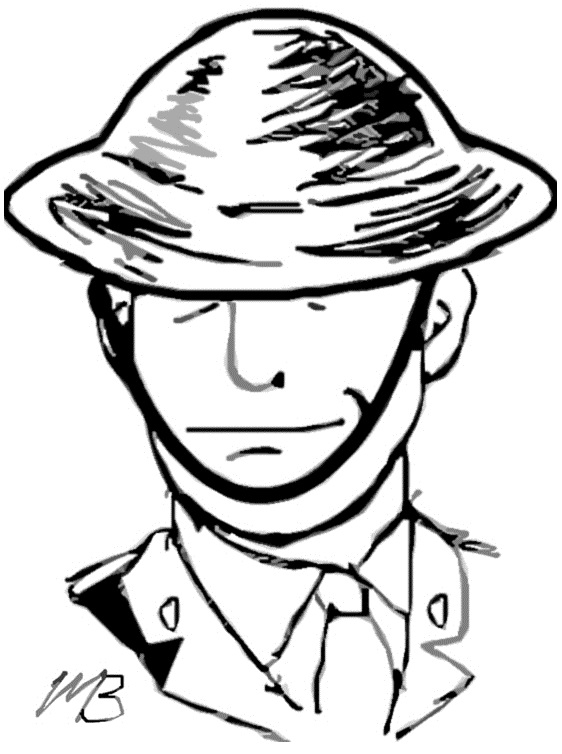
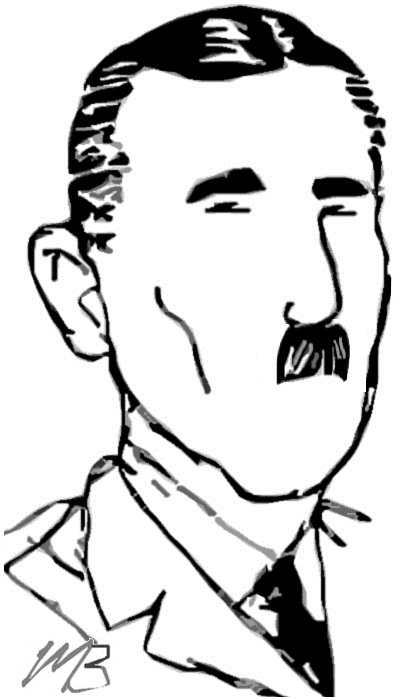
Lieutenant Colonel George C. Hodson, D.S.O.
9th Canadian Mounted Rifles & 1st BattalionCreighton1
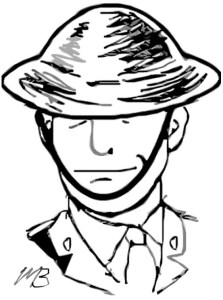
Mr. Rutherford asked: …whether, seeing that this is his only remedy in cases where such officer’s immediate superiors have formed opinions which are not well founded, and would be disproved at once if the case came before officers of higher rank entitled to form their own judgment and hear the evidence and the explanations of the officer in question, he will state why a Court of inquiry is being withheld from Lieutenant-Colonel G. C. Hodson, D.S.O.

(Rutherford, Hansard, 26 Oct 1917, 1651)

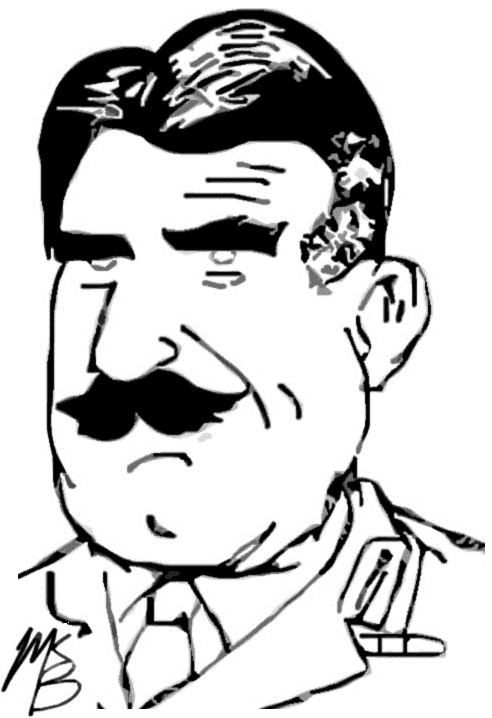
George Cuthbert Hodson was born in New Shoreham, England on 21 July 1879. He was a bank manager in Lloydminster, Saskatchewan,  a veteran of the Boer War and commanding officer of the 22nd Horse. In December 1914, he organized the 9th Canadian Mounted Rifles, which was used for reinforcements with the Canadian Cavalry Reserve Depot in England.
Continue reading

The Subaltern

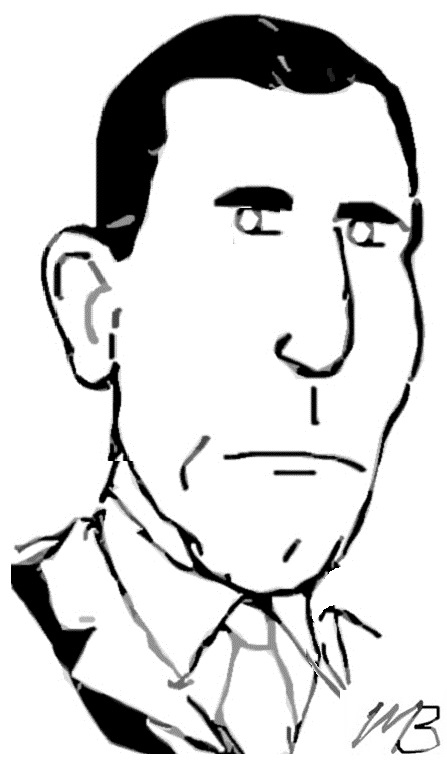
Lieutenant Colonel Frank Creighton †
1st (Western Ontario) BattalionCreighton

On arrival of the H.Q. Staff of the 8th Battalion at Lt. Col. Creighton’s dugout, a very large calibre shell completely demolished the H.Q. Dugout burying Staffs of both regiments. Lt. Col. Creighton received wounds from which he never recovered consciousness. In this the Division lost a good Officer who had done valuable work that day.

(Gen. Lipsett, 2nd Brig. War Diary, 15 June 1916, 24)

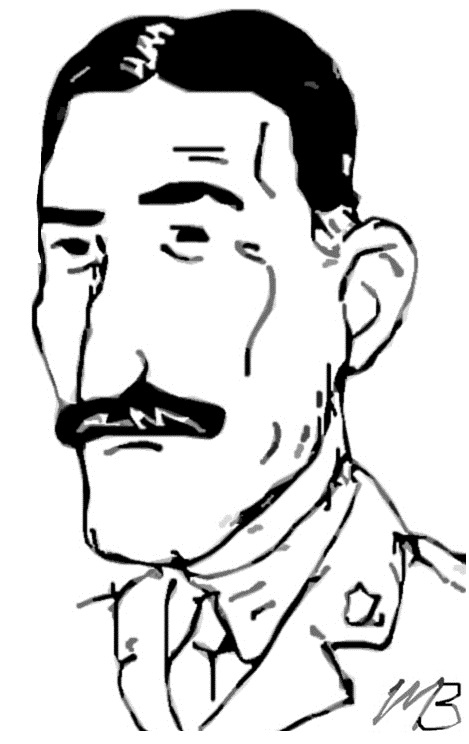
Frank Albro Legion Creighton was born on 6 February 1875 in Dartmouth, Nova Scotia. At the outbreak of the Great War, he was a civil engineer living in Winnipeg. He enlisted in the 1st Battalion as a lieutenant and was promoted to second-in-command in the field. After Lieutenant Colonel F. W. Hill took over the 9th Infantry Brigade, Creighton assumed command of the Western Ontario battalion on 24 January 1916.

Continue reading

The First

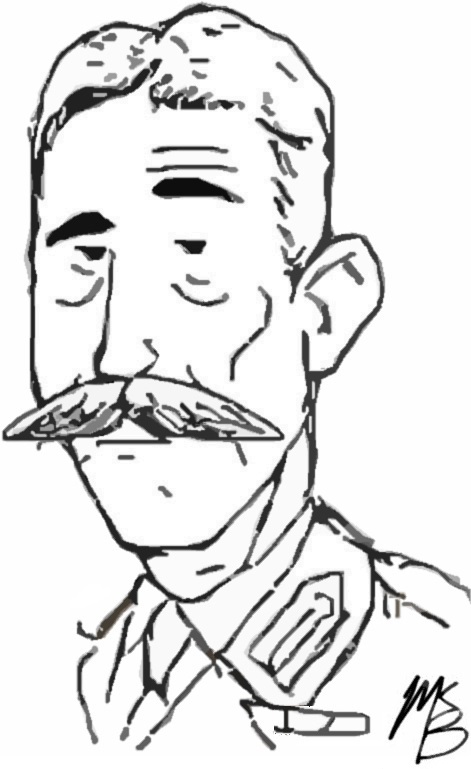
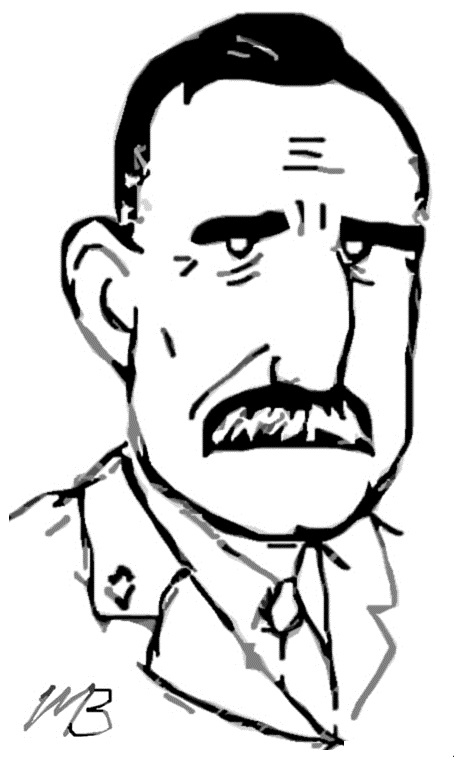
Brigadier General F. W. Hill, D.S.O.
1st (Western Ontario) BattalionHill

There was a bunk in there, and the brigadier was lying there and he was dead drunk. He looked up and mumbled something at me.

It was a pretty disgusting business.

(Lt. G. Rutherford, In Flanders Fields CBC interview, 1963)

Born on 28 July 1866, Frederic William Hill was a lawyer, former mayor of Niagara Falls (1898) and thirty-year member of the 44th Lincoln and Welland Regiment. When the First Contingent assembled at Valcartier in August 1914, Hill was appointed to command the 1st Battalion from Western Ontario.

Continue reading

The Schemer

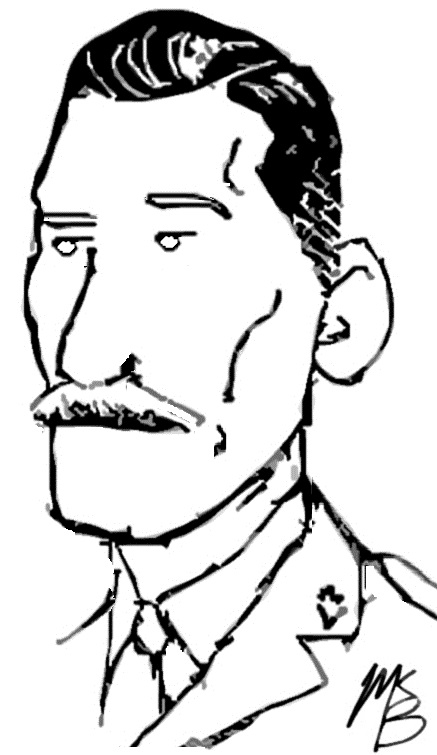
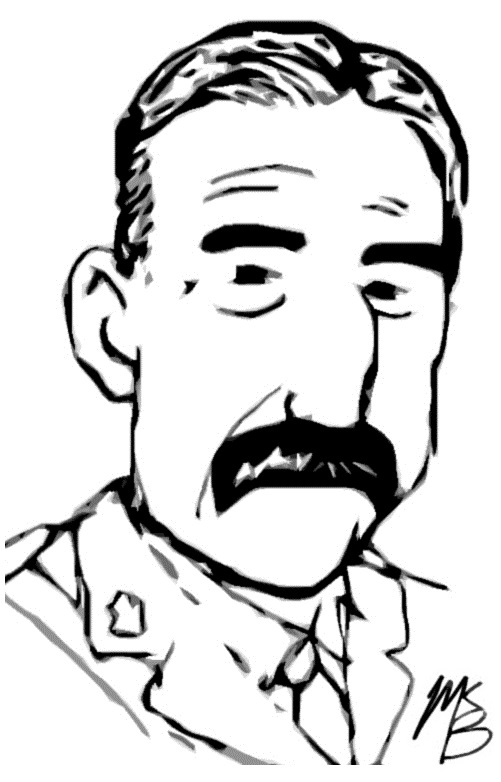
Major General Sir David Watson, D.S.O.
2nd (Iron Second) BattalionWatson

Had he not been colonel he would have received the V.C. for this. Ypres made him a marked man, and it left its mark on him. His friends say that he aged ten years in the ten days, for he and his battalion were in the fiercest part of the fighting.

(F. A. McKenzie, Through the Hindenburg Line, 1918, 10)

David Watson was a sportsman, journalist and owner of the Quebec Morning Chronicle. He was born in Quebec City on 7 February 1869. In his youth, Watson played for the Quebec Hockey Club and became active in the 8th Royal Rifles. Watson, a Conservative Party supporter and friend of Militia Minister Sam Hughes, was selected to command the 2nd Battalion when the Canadian Expeditionary Force assembled at Valcartier.

Continue reading

The Regimental

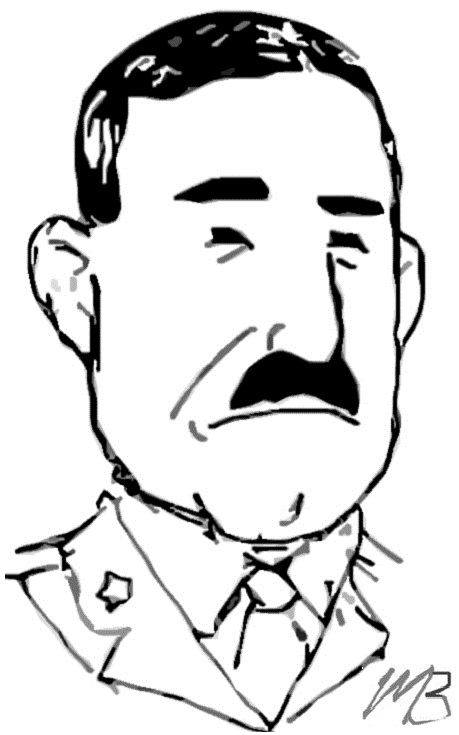
Lieutenant Colonel Claude H. Hill, D.S.O.
Royal Canadian RegimentCHHill

For conspicuous gallantry when in command of his battalion. He repelled several attacks and displayed great coolness and courage in directing bodies of men under heavy fire.

(Hill, D.S.O. citation, 19 Aug 1916, 8226)

Born in Halifax on 30 August 1881 in Claude Hardinge Hill joined the Royal Canadian Regiment in 1901. He volunteered to fight in the Boer War but arrived to South Africa just one day before the Treaty of Vereeniging was signed to end the war. In November 1914, he joined to the 24th Victoria Rifles Battalion as second-in-command.

Continue reading

The Erased

Lieutenant Colonel L. J. Daly-Gingras, D.S.O.*
2nd Battalion, Quebec Depot Daly-Gingras

* His Majesty the King has directed that Ludger Jules Oliver Daly-Gingras, late Lieutenant-Colonel, 22nd Battalion, Canadian Infantry, shall cease to be a member of the Distinguished Service Order to which he was appointed January 1, 1917, and that his name shall be erased from the Register of the Order.

(Canadian Gazette, 11 Feb 1919, 3434)

For two years Ludger Jules Oliver Daly-Gingras fought with the 22nd Battalion until he was shell shocked at the Somme. For heroic gallantry during the battle, he received the Distinguished Service Order. By August 1918, Daly-Gingras was facing a court martial for allegedly embezzling a thousand dollars from the Quebec Depot battalion. His defence counsel strenuously defended the war hero, claiming, “If he was in his right mind he would never have jeopardized his entire career and sacrificed his 31 years of service, and his hard-won honors for that paltry sum.”

Continue reading

The Millennial

Lieutenant Colonel J. Hilliard Rorke
248th (Grey) BattalionRorke

The enthusiasm of Lt.-Col. J. Hilliard Rorke is catching and the 1000 Leaguers of all over the County have got the spirit of extreme optimism and are entering upon the campaign with renewed vigour.

(Flesherton Advance, 15 Feb 1917, 4)

Facing the dismal late-war recruiting environment, Joseph Hilliard Rorke devised a new strategy to fill his battalion. In January 1917, he formed the “1000 Thousand League,” composed of one thousand citizens in Grey County who each pledged to secure one volunteer by 1 March. Born on 30 November 1876 in Thornbury, Ontario, Rorke was a graduate of McGill University, a journalist, and business executive. An expert shot, he had served in the Boer War and was member of the 31st Regiment and the McGill C.O.T.C. His cousin, Lieutenant Colonel Herbert Victor Rorke commanded the 20th Battalion on the front from December 1916 to June 1918.

Continue reading

The Gambler

Lieutenant Colonel Charlie Stewart, D.S.O. †
Princess Patricia’s Canadian Light InfantryStewart_C

The letters from the regiment after his death read, “The men would follow him anywhere; he seemed to bear a charmed life.” Yet what was his life until the War gave him his chance? A life of adventure wearing down into plain middle-aged failure.

(Charles Ritchie [nephew], My Grandfather’s House, 1987)

Born on 14 December 1874 in Halifax, Charles James Townsend Stewart was a North West Mounted Police constable, sportsman, soldier, womanizer and all-round lovable scoundrel. After being expelled from the Royal Military College for gambling in 1892, he moved back to Halifax before joining the NWMP in 1896. After he was kicked out of the police for bullying and bad behaviour, he drifted throughout the Northwest and the Yukon. A veteran of the Imperial Yeomanry during Boer War, Stewart joined the P.P.C.L.I. as a lieutenant in August 1914.

Continue reading

The Oxfordian

Lieutenant Colonel William T. McMullen
168th (Oxford’s Own) BattalionMcMullen

Another thing, if they are going to break up battalions. It is not fair to the men who go over there as colonels and majors; it cast a slur upon them. They are left stranded in England and we are put to the expense of keeping them there. If they are discharged and sent back, a slur is put on them. I say that is not fair.

(Nesbitt, Debates, 24 Jan 1917, 99)

William Thomas McMullen was commanding officer of the 22nd Oxford Rifles and a member of Loyal Orange Lodge No. 93. Born on 29 January 1863 in Woodstock, Canada West, McMullen was solicitor and master of courts in Oxford County. In December 1915, the militia colonel was authorized to raise the 168th from his home county.

Continue reading

The Accident-Prone

Lieutenant Colonel E. Leprohon
233rd (Canadiens-Français du Nord-Ouest) BattalionLeprohon

Lieut-Colonel Leprohon is already one of the veterans of this war, but not satisfied with what he has already done, he is off to the front again in charge of the French-Canadians.

(Vancouver World, 31 Aug 1916, 16)

Gassed at Ypres in summer 1915, car-wrecked in 1916, train-wrecked in 1917 and ship-wrecked in 1918. A reserve officer with the 65th (Carabiniers Mont Royal) Regiment, Edouard Leprohon was born in Montreal on 16 November 1866. In August 1914, he volunteered with the 14th Battalion and earned a promoted from lieutenant to captain to major. He was invalided to Quebec for recovery in late 1915. Eager to get back to the front, he first enlisted with the 150th before receiving authorization to raise a French-Canadian battalion based in Edmonton.

Continue reading