The Professional

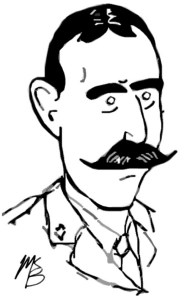
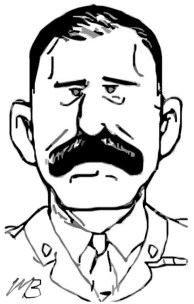
Brigadier General A. H. Bell, D.S.O.
31st (Bell’s Bulldogs) BattalionBell
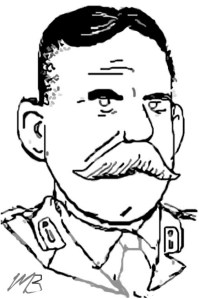
Do not allow any factors to induce you to take an action contrary to the dictates of your own judgment and conscience. In many long years of military life my experience has taught me that a soldier who does so spends the balance of his career in making a series of errors, each in the vain attempt to correct the one immediately preceding, and all resulting from his first violation of sound practice.

(A.H. Bell to H.W. McGill, Medicine and Duty, 2007, 21)

Arthur Henry Bell was a professional soldier and veteran of the Boer War. Born on 16 September 1871 in King’s County, Ireland, Bell served with the Leinster Regiment, the Cape Mounted Police, the Matabele Relief Force, and the Imperial Yeomanry in South Africa. At the outbreak of the First World War, he was the commanding officer of Lord Strathcona’s Horse in Calgary.
Continue reading

The Berserker

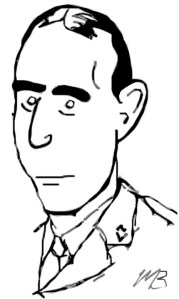
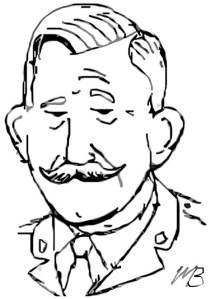
Major Axel “Rass” Rasmussen †
97th (American Legion) BattalionRasmussen

Rasmussen was a big, handsome man; fearless in war and pitiless to four-flushers anywhere, any time.

(J. W. Pegler, Evening News, 26 June 1918, 2)

“But so far I’ve always found that a man has time to get down to avoid the fragments— if he moves fast. If it’s got your initials on it— well, no one but a prime so-and-so wants to live forever!”- Maj. Rasmussen

(E. S. Johnston,  Americans vs. Germans: the First AEF in Action, 1942, 33)

Axel Thorvald Rasmussen was one of the American Legion’s most famous members. The thirty-eight year old, Danish-born resident of Oregon was a veteran of the Spanish-American War and the Philippine Insurrection. During the Mexico Revolution, he fought in support of General Obregón’s army. Regarding his previous fights as “mere skirmishes,” in 1916, Rasmussen traveled to Canada in order to join Lieutenant Colonel Wade Jolly’s 97th American Legion.

Continue reading

The Principal

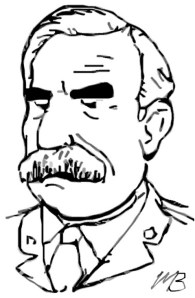
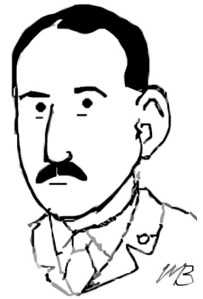
Lieutenant Colonel E. W. Hagarty
201st (Toronto Light Infantry) Battalion

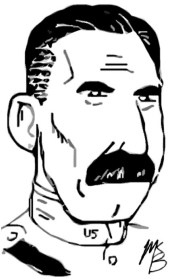
Hagarty

I saw a mock funeral to day up to the 201 Batt they are being split up tomorrow, their Col. lost his job as they have less than 600 men. They dug a grave and buried a dummy representing their Col. They hated him, he was a whiskey soak, so on top of the grave they put a cross, a whiskey bottle, cig or some branches for flowers. Some reporters took a picture of it so likely it will be in the papers.

(L. E. Johns, 161th Bn. to Mother, 20 Sept 1916.)

Edward William Hagarty was principal of Harbord Street Collegiate from 1906 to 1928 and  member of Orange Order Lodge No. 344. He was born on 7 September 1862 in Brantford, Canada West. He served four years with the Queen’s Own Rifles while an undergraduate student at the University of Toronto. An influential figure in the cadet movement for twenty-five years, Hagarty was selected to raise the 201st Toronto Light Infantry in January 1916.

Continue reading

The Brantford Brothers

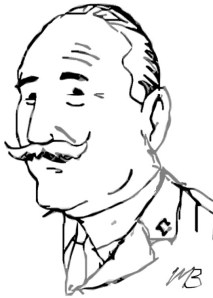
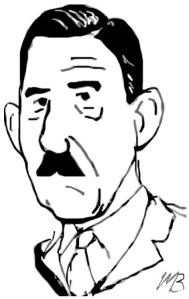
Brigadier General Dr. E. C. AshtonDrAshron

I picked out Col. Ashton as a fighting officer. I did not know what he was as a medical officer but I knew he was a good fighting officer.
(Sam Hughe
s, Debates, 6 Feb 1917)

Major A. Nelles Ashton
36th Battalion

ANAshton

Like his brother, he is every inch a soldier.
(Brantford Expositor, Dec 1915, 5)

Ernest Charles Ashton and Alfred Nelles Ashton served in the 38th (Dufferin Rifles) Regiment for a combined forty years. Born on 28 October 1874, E. C. Ashton was the regiment’s commanding officer and a prominent doctor in Brantford. His younger brother, A. N. Ashton, born on 14 March 1879, was principal of the Mohawk Institution. Their father, Rev. Robert Ashton (1843—1930), was chaplain of the Dufferin Rifles and long-time superintendent of the Mohawk Institution.

Continue reading

The School Builder

Lieutenant Colonel J. B. Mitchell
100th (Winnipeg Grenadiers) Battalion

Mitchell

His figure is as erect as of yore in defiance of his 88 years. He embodies the spirit of those Scarlet Riders who brought law and order to the plains, brought joy to law-abiding folk and spread dismay among the lawless. This picturesque personality is Col. J. B. Mitchell, clear-eyed, soft-spoken, alert as becomes those who are still interested in current events and “tomorrow.” His long service in military and civilian life has not drooped those massive shoulders, nor bowed the finely-posed head. Lacking but two inches of six feet, he is so well sot up that an observer would scarcely suspect his weight to be 200 pounds. That’s what athletic training and outdoor life will do for a busy man.

(Col. G. C. Porter, Winnipeg Tribune, 30 Nov 1940, 36)

James Bertram Mitchell was Architect and Commissioner of School Buildings and Supplies in Manitoba from 1892 until his retirement in 1928. Born on 14 October 1852 in Gananocque, Canada West, Mitchell was an adventurer, policeman and civic leader. At the age of fourteen, he volunteered as a bugler in the militia and participated in the Fenian Raid of 1866. During the second Fenian invasion scare in 1870, he guarded the Welland Canal at Cornwall. In 1874,  he joined the North West Mounted Police.

Continue reading

The Ringleader

Lieutenant Colonel James L. McAvity
26th (New Brunswick) BattalionMcAvity

“Actual demonstration of the wonderful ability of the Overland cars in the rear of the trenches of the allied nations caused me to buy an Overland.” said Colonel McAvity, 26th Battalion, St. John, N.B., Just after one of the new Overland models was delivered to him by J. A. Pugnley, Overland dealer at St. John. Colonel McAvity recently returned home on a short furlough, and in order to get the most out of his, brief leave of absence purchased a motor car.

(Ottawa Journal, 26 August 1916, 13)

James Lupton McAvity was born on 8 October 1867 in Saint John, New Brunswick. He began his career with the family manufacturing business, T. McAvity & Sons Ltd. in the mid-1880s. His position as a company manager and representative took him to western Canada, Chicago and New York. During the gold rush of 1897, he traveled to Alaska and the Yukon in search of his fortune.

Continue reading

The Commandant

Lieutenant Colonel F. F. Clarke, D.S.O.
127th (12th York Rangers) BattalionClarke

“We hold the record for railway building in France. We had a very difficult piece to build, because it was in full view of the German lines in daylight for about 1½ miles across a valley.

When the air cleared on Thursday the Germans saw the railway track from their observation balloon and started to shell it, and, after sending over about 200 shells, they broke a rail, which was repaired in a few-minutes. This line can only be used at night, without light or noise

(F. F. Clarke, Railway Age Gazette, 1918, 404)

Frederick Fieldhouse Clarke was an engineer and surveyor in northern Ontario. Born on 22 August 1878 in Hamilton, Clarke had moved north during the mining rush around Cobalt. He served for three years with the Royal Canadian Regiment and nearly twenty with the 12th York Rangers. Through his work with northern railway development, Clarke helped to found the town of Kapuskasing in 1911

Continue reading

The Home Guard

Lieutenant Colonel W. T. Stewart
84th (Toronto Depot) BattalionWTStewart

…the genial silver-haired Irishman who commands the regiment, and who is the originator of the Home Guard movement of Canada, a movement that to-day has over 160,000 men in its train. The chief characteristic of this commander is that when he wants anything he gets it.

(Brantford Expositor, Dec 1915, 16)

Born on 14 February 1871 in Killarney, Ireland, William Thomas Stewart was a twenty-five year member of the Canadian militia, serving in the 13th (Hamilton), the 66th (Princess Louise) and 100th (Royal Canadians) Regiments. One month after the outbreak of the First World War, Stewart began organizing the Home Guards from Toronto.

Continue reading

The Troublemakers

Lieutenant Colonel W. H. Allen
&
Lieutenant Colonel Robert Innes
106th (Nova Scotia Rifles) BattalionInnes

A fellow works his heart and soul out to recruit and organize a Battalion, brings it across here with the expectation of taking it to the front, has it taken away without even a “thank-you” and is then told that he must revert, or go back to Canada. A just reward for his efforts!

(Innes to McCurdy, MP, 8 Nov 1916)

Born on 1 April 1882 in Kidderminster, England, Walter Henry Allen was a Nova Scotia carriage builder and Boer War veteran. He had enlisted as a captain with the 17th Battalion in September 1914 and fought with the 15th Battalion in France. After being wounded, Allen was authorized to raise the 106th in November 1915. Six months later, Allen was brought before a court martial board for ” behaving in a scandalous manner, unbecoming the character of an officer and a gentleman.” He was cashiered and replaced by Robert Innes, a twenty-four year old major. Born on 18 August 1891 in Colbrook, Nova Scotia, Innes held a degree in scientific agriculture and had served for several years in the militia.

Continue reading

The King’s Own

Lieutenant Colonel F. C. McCordick
35th Battalion & 15th Bn., King’s Own Yorkshire Light InfantryMcCordick

My dear Col. McCordick,

If you haven’t already heard, you will be surprised to get this letter from m⁠e⁠—in Germany. It happened at that awful slaughter⁠—rhe 3rd battle of Ypres, & even now when I think of it all, I doubt my reality of existence…

Hope all is well with you & 35th. Good luck & best regards to all.

(Lt. A. Watson Sime to McCordick, 3 July 1916)

Born on 2 June 1873 in St. Catharines, Ontario, Frank Case McCordick was a leather manufacturer and member of the 19th Regiment. In early 1915, he took command of the 35th  Battalion from Lieutenant Colonel Charles Frederick Bick who transferred to the 37th. Many of McCordick’s volunteers belonged to Toronto’s militia units, the Royal Grenadiers, the Queen’s Own Rifles, the 48th Highlanders, the 12th York Rangers, and the 109th Regiment.

Continue reading