The Bug

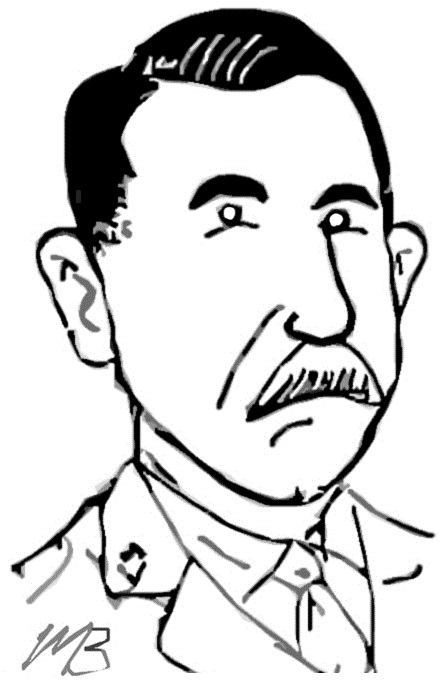
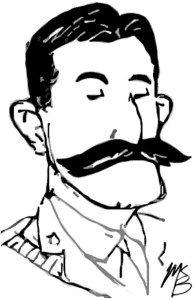
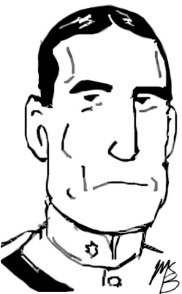
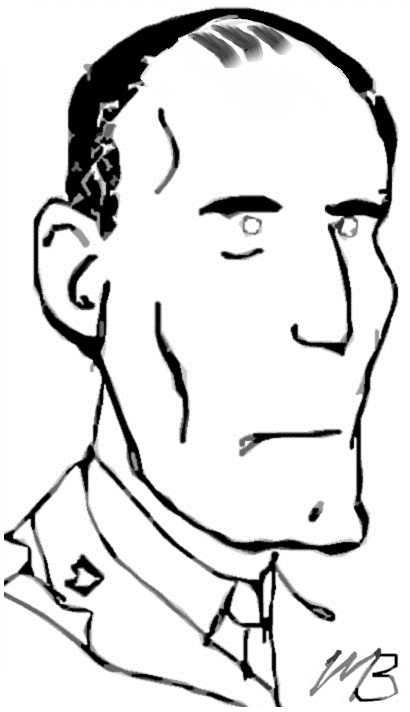
Lieutenant Colonel A. L. Saunders, D.S.O., M.C.
8th (90th Winnipeg Rifles) BattalionSaunders
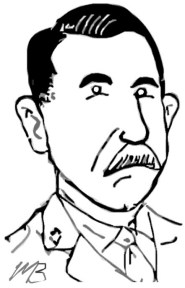
At 1 PM on January 20th 1915, we fell in to march to Tidworth. Pte. Bug Saunders (afterwards Lt. Col. Saunders, D.S.O. and bar, M.C. and bar) distinguished himself by getting into a fight and appearing on parade with one eye closed.

(A. H. J. Andrews, Diary, Jan 1915)

Alec Laurence Saunders was born on 28 September 1888 in Kingston, Ontario. In September 1914, the five-foot-three and a half Winnipeg clerk enlisted as a private with the 6th Battalion. Four years later, he was commanding officer of the 8th Battalion for the final Hundred Days of the war. Although initially viewed skeptically for his short stature, Saunders, nicknamed Bug, quickly distinguished himself in battle.
Continue reading

The Nazi-Watcher

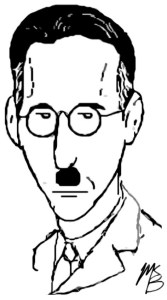
Major K. C. Bedson
8th (90th Winnipeg Rifles) BattalionBedson

Watched closely by gestapo agents in their midst, Nazi prisoners of war in internment camps in Canada wage a 24-hour battle of wits against the veteran Canadian soldiers who guard them, hoping to earn good marks for their credit in post-war Germany by constantly trying to escape and making life as difficult as possible for the camp staff.

(Col. Bedson’s report, Winnipeg Free Press, 17 Dec 1943, 5)

Kenneth Campbell Bedson was the son of Samuel Lawrence Bedson (1842—1891), an English-born army officer who settled in Manitoba after Wolseley’s Expedition in 1870. The elder Bedson was a prison warden, golfer, sportsman and hunter. As a boy, Kenneth Bedson helped his father herd buffalo on the family farm. Bedson was born In Stoney Mountain, Manitoba on 31 July 1881. During the Boer War, Bedson fought with the 2nd Mounted Rifles. He also belonged to the 100th Winnipeg Grenadiers and the Fort Garry Horse. In September 1914, he enlisted as a captain in Lieutenant Colonel Louis Lipsett’s 8th Battalion.

Continue reading

The Irishman

Major General Louis Lipsett †
8th (90th Winnipeg Rifles) BattalionLipsett

General Lipsett is not only a fine soldier but a sympathetic Irishman, with the power of inspiring personal affection and devotion among those under him to a very unusual degree.

He inspires such confidence that I cannot imagine any man showing fear in his presence. To have Lipsett by your side would be enough to give a coward courage. “He never asks anyone to do a thing that he is not ready to do himself,” his men say. “He never forgets a man. He knows everybody’s name and all about us.”

(F. A. McKenzie, Through the Hindenburg Line, 1918, 9)

Born on 14 June 1874 in Ballyshannon, Ireland, Louis James Lipsett was a professional soldier with the Royal Irish Regiment. He served for five years in India on the Northwest Frontier. A veteran of the Tirah Campaign and the Boer War, he participated in an officer exchange program with the Canadian militia in 1911 and relocated to western Canada. After the outbreak of the Great War, he secured British Columbia coastal defences and assumed command of the 8th (Little Black Devils) Battalion, based in Winnipeg.

Continue reading

The Northman

Lieutenant Colonel R. A. Gillespie
226th (Men of the North) BattalionGillespie

An ardent lover of outdoor life and successful participant in many manly sports, a natural leader of men, understanding thoroughly the life and character of the Western man, the Colonel with his splendid military knowledge, especially in machine gun and musketry, is eminently fitted to command any Canadian Battalion, but particularly one containing so large a percentage of Western men as the 226th.

(226th Overseas Battalion, C.E.F, 1916, 3)

A native of Winnipeg, Robert Alexander Gillespie was born on 24 January 1881. He was a trained druggist and chemist. In 1912, he had helped to organize the 106th Winnipeg Light Infantry. Gillespie joined the 61st Battalion as junior major until he received authorization to raise the 226th from northern Manitoba in November 1915. Dubbed the “Men of the North,” the 226th officers considered their volunteers “physically superior” to the other battalions

Continue reading

The Boulton Boys

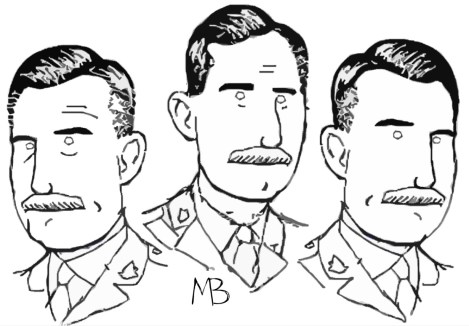
Major Lawrence Boulton
&
Major D’Arcy Boulton
&
Lieutenant Russell Boulton †

Manitoba Depot Regiment  Boultons

If sole support of widowed mother, state what amount you have given per month prior to your enlistment, also reason she has no other support than yourself:

All earnings. Husband dead and her only other sons married and supporting their own families. She has no other income sufficient to support her & her two daughters.

(L. C. Boulton, “Particulars of Family”, 7 Jan 1917)

The Boultons were a prominent Upper Canadian family with deep political connections and a long military tradition. During the 1885 Northwest Rebellion, Colonel Charles Arkoll Boulton (1841—1899) raised a unit to help put down the uprising of Louis Riel. In 1889, he was appointed senator for Manitoba. His oldest son, D’Arcy Everard Boulton was born in Orillia, Ontario on 26 April 1876. Lawrence Charles Boulton was born in Lakefield, Ontario on 10 December 1878. The youngest son, Russell Heath Boulton, was born in Russell, Manitoba on 24 February 1884-1918.

Continue reading

The Warden

Lieutenant Colonel Royal Burritt, D.S.O.
11th (Reserves) BattalionBurritt

“I do not recommend a prison as a desirable place to gain experience. It is much better to profit from the experience of others.”—Col. Burritt

(Winnipeg Tribune, 8 June 1949, 17)

Royal Burritt was born on 1 April 1876 in Stratford, Ontario. He moved to Winnipeg in 1907, becoming a real estate agent and insurance broker. A militia officer in the 100th (Winnipeg Grenadiers) Regiment when the First Contingent of the Canadian Expeditionary Forces organized at Valcartier in August 1914, Burritt assumed command of the 11th Battalion.

Continue reading

The Blue Blood

Lieutenant Colonel A. L. Bonnycastle
200th (Bonny’s Buccaneers) Battalion Bonnycastle

I am raising a battalion of stalwarts that will make the Germans hop.

(Bonnycastle, Winnipeg Tribune, 8 March 1916, 5)

Angus Lorne Bonnycastle was a former Conservative member of the Manitoba legislature (1907—1911), a Winnipeg barrister and provincial police magistrate. Born on 3 November 1873 in Campbellford, Ontario, Bonnycastle moved to Manitoba as a school teacher in 1893. He was a member of one of Ontario’s most prominent military families. His great-grand father, Sir Richard Henry Bonnycastle (1791—1847) helped to suppress the 1837 Rebellion and oversaw fortification construction in Kingston. His father Major R. H. Bonnycastle (1843—1911) had participated in the Fenian Raids and the Northwest Rebellion.

Continue reading

The Boer Beater

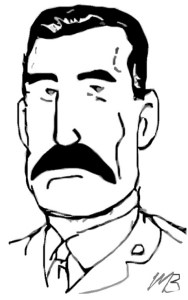
Lieutenant Colonel P. J. Daly, D.S.O.
27th (City of Winnipeg) BattalionDaly

Mayor Davidson received a communication today from Lieut.-Col. P. J. Daly, commanding the City of Winnipeg battalion, now somewhere in France, stating that he had rounded up two more guns, making a total of six. He said he would donate them to the city, if desired. His worship promptly accepted the offer. Congratulations were sent to the officer. The guns will be placed eventually on historic spots in the city.

(Winnipeg Tribune, 9 Aug 1917, 5)

Patrick Joseph Daly took command of the 27th Battalion on 15 April 1916 following Lieutenant Colonel Irvine R. Snider’s nervous breakdown during the battle of St. Eloi. A native of Ireland, Daly had fought with the 6th Western Australian Mounted Infantry during the Boer War. He was seven times wounded in the South African campaign, nominated for a Victoria Cross and awarded the Distinguished Service Order. In one engagement, despite having both arms broken, Daly rode for a mile and captured over forty enemy prisoners.

Continue reading

The Shell Shocked

Lieutenant Colonel Irvine R. Snider
27th (City of Winnipeg) Battalion

… this officer as the result of service in France and severe nervous strain has become very emotional and is unable to sleep well except for a short time each night. He is easily exhausted and has some muscular tremor. At present he is quite unfit for any mental or physical exertion and must have prolonged rest.

(Proceedings of Medical Board, 18 May 1916)

Irvine Robinson Snider was a Manitoba farmer, long-time militiaman and veteran of the Northwest Rebellion and the Boer War. He was born on 1 January 1864 in Nobleton, Canada West. In spring 1885, the twenty-one year old Snider joined the 90th Winnipeg Rifles as a private to put down Louis Riel’s insurrection. Fifteen-years later, he served with Lord Strathcona’s Horse in South Africa.

Continue reading

The Hockeyist

Lieutenant Colonel Francis J. Murray
61st (Winnipeg) Battalion
Murray

The local soldier hockeyists completely outclassed the Saskatchewan champions in the two-game series and proved themselves worthy holders of the coveted mug.

This performance of Colonel Murray’s men is certainly remarkable, as the cup-seekers are a redoubtable squad of players but they were unable to cope with the sensational close checking and speed of the Winnipeggers. Only in the first fifteen minutes of the first game were the Westerners really in the running, as after that they were outplayed and seldom looked dangerous.

(Winnipeg Tribune, 20 Mar 1916, 10)

Born on 23 June 1876 in Portsmouth, England, Francis John Murray was a professional soldier and twenty-two year veteran of the Imperial Army. Having fought in the Boer War, Murray was appointed to raise the 61st Battalion from Winnipeg in spring 1915.

Continue reading