The Son of a Bitch

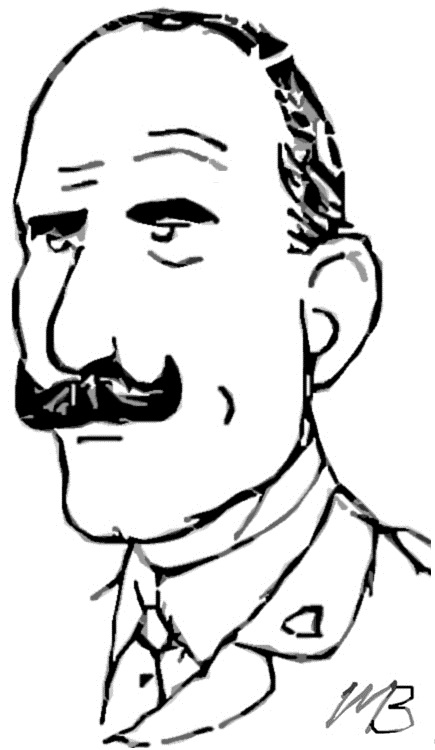
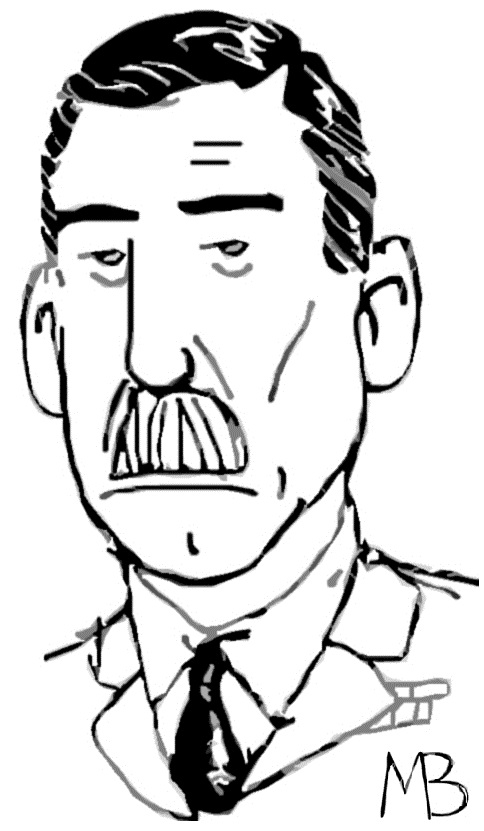
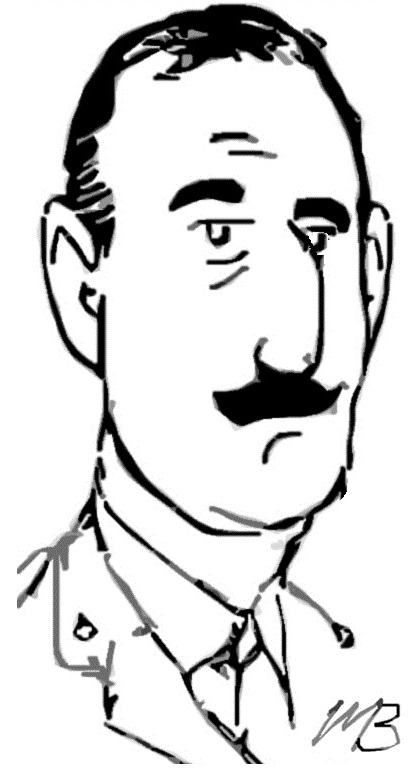
Brigadier General J. A. Clark, D.S.O.
72nd (Seaforth Highlanders) Battalion
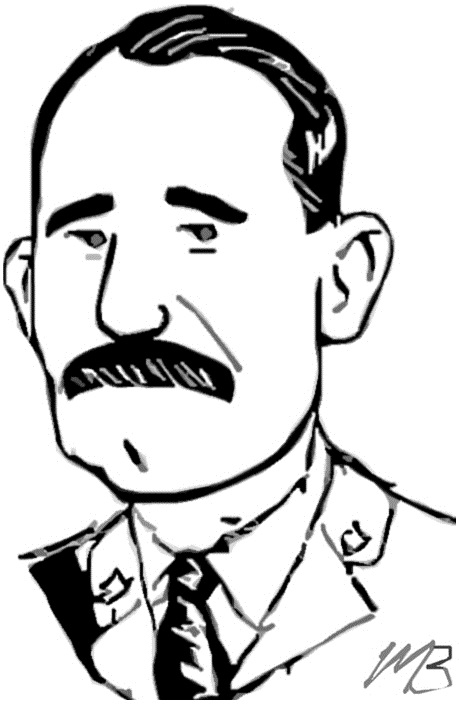
JAClark

“My Brigadier, the son of a bitch, is still alive— I’ll kill him if I see him.”

(Capt. W. G. Little, P.P.C.L.I., 1964)

Born in West Flamborough, Ontario on 8 June 1886, John Arthur Clark was a Vancouver barrister and militiaman. A major in the 72nd (Seaforth Highlanders of Canada) Regiment, Clark was appointed to command the 72nd Battalion, one of the few CEF units to perpetuate its militia designation. Commenting on the tremendous responsibility of a commanding officer one of his men observed that the twenty-nine year old colonel “looked forty.”
Continue reading

The Court Martialled

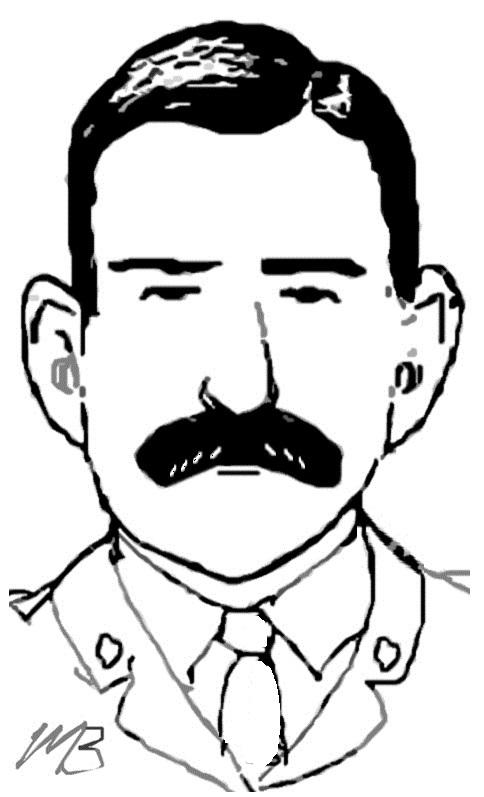
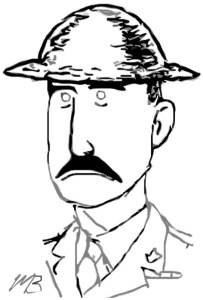
Lieutenant Colonel V. V. Harvey
54th (Kootenay) BattalionHarvey

In view of this incident I no longer have confidence in Lt-Col. HARVEY and I recommend that he be removed from the command of the 54th Battalion and returned to England where he may be otherwise employed. I would not again send the Battalion into action under his command.

(Gen. Odlum, 11th Brig. to 54th Bn., May 1917)

Between 11:00am on 21 May and 8:00am 22 May 1917, Valentine Vyvian Harvey, his acting second-in-command, Jesse Wright, and the battalion adjutant went absent without leave from camp. For nearly a full day, the 54th Battalion was without its commanding officer. When General Odlum attempted to contact the 54th CO for a 11th Brigade meeting, Harvey was nowhere to be found.

Continue reading

The Customs Collector

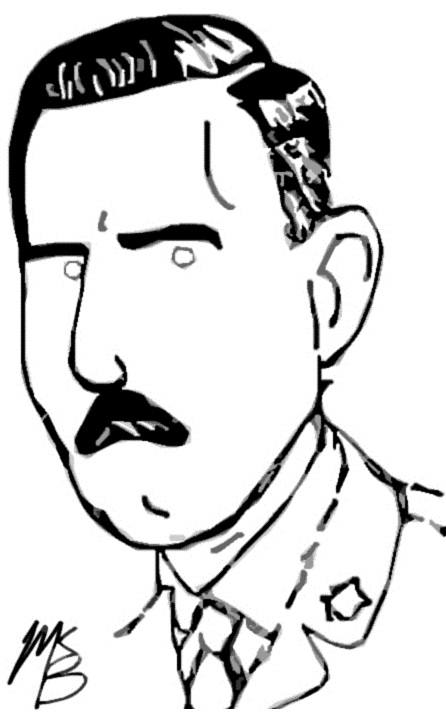
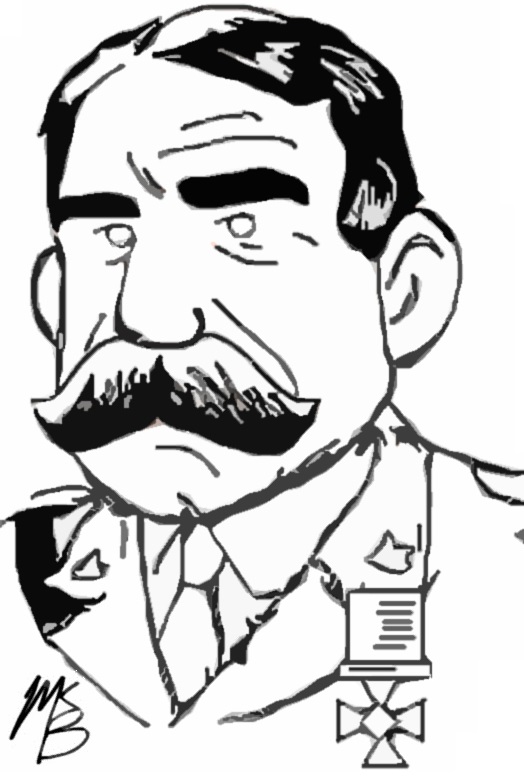
Lieutenant Colonel A. B. Carey, D.S.O
102nd and 54th (Kootenay) Battalion
Carey

When his battalion was held up by intense machine-gun fire in front of a village, he organized a party from his reserve company and, under cover of the smoke from a derelict tank that was on fire, he personally led the party and rushed a wood, capturing sixteen machine guns, and routed the enemy, who retired on a broad front. He then pushed on his battalion and took the village with a rush. His example of personal gallantry, and his quick appreciation of the situation and rapid action, enabled this important result to be so successfully obtained.

(Carey, D.S.O. Bar citation, London Gazette, 7 Nov 1918, 13132)

A graduate of the University of Wisconsin, Alfred Blake Carey served in the 2nd Wisconsin Volunteers during the Spanish American War and the Remington Guards during the Boer War. He was born Blenheim, Ontario on 3 June 1881 and later worked as a civil engineer in British Columbia. In September 1915, he enlisted as a major with Lorne Ross’ 67th Pioneer Battalion. Continue reading

The Gurkha

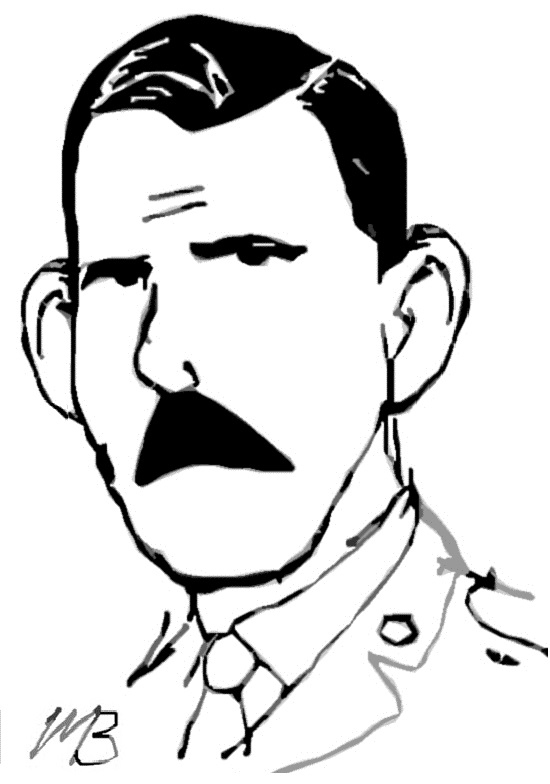
Lieutenant Colonel A. H. G. Kemball, D.S.O. †
54th (Kootenay) BattalionKemball

So Kemball was ignored. That gallant officer—the adjective in his case is deserved—defied orders and refused to stay in the rear when his men were in peril. He led them personally on an attack he knew was futile.

(Pierre Berton, Vimy, 1986, 129)

Born in Belgaum, India on 4 January 1861, Arnold Henry Grant Kemball was a professional soldier with thirty-two years’ experience in the Indian Army.  A veteran of the Gurkha Rifles, Kemball served in the Hazara Expedition (1888), the North West Frontier (1897) and Tirah Campaign (1898). He retired as commander of the 5th Gurkhas in 1910 and moved to British Columbia.

Continue reading

The Architect

Lieutenant Colonel H. J. Rous Cullin
88th (Victoria Fusiliers) BattalionCullin

Message from Victoria Fusiliers to Victoria: Keep on recruiting. The war is only just starting, it will go another two years. Fill up the 88th again. It has only sent a brigade so far. Make it a division before the war is over. Wake up, Victoria, and, organize both soldiering and business. Never mind the dollars— get the Hun!

(Cullin’s message to Daily Colonist, 6 June 1916)

Harold Joseph Rous Cullin was a British Columbia commercial architect. Born on 5 December 1875 in Liverpool, England, he was a cadet officer, cricket player, gymnast, member of the London Rifle Brigade and officer in the Royal Engineers. He immigrated to Canada in 1904.

Continue reading

The Piano Salesman

Lieutenant Colonel Milton Francis, D.S.O
47th (British Columbia) BattalionFrancis

This officer appears before the Board after one month’s extension of leave. He feels very much better and fit to return to duty. Former hospital papers and medical Board puts his disability as V.D.H. [Valvular Disease of the Heart] which is an old lesion & in the opinion of the Board was not the cause of his present breakdown, which was due to nervous overstain,

(Medical Board Report on a Disabled Officer, 1 Mar 1918)

Born in London, Ontario on 26 March 1884, Milton John Francis was manager of a Fort William music store selling pianos and gramophones. He first enlisted with the 44th (Manitoba) Battalion and transferred to the 46th as second-in-command before assuming command of the 47th just before the Vimy offensive in April 1917 .

Continue reading

The Sawmiller

Lieutenant Colonel Fred Lister, M.C.
102nd (Central Ontario) BattalionLister

We started out a British Columbia unit; we return an Ontario Battalion; but I defy anyone to note the point of cleavage. Welded together by many months of common danger, East and West have fused as one…

(Lister, “Final Order,” 25 May 1919)

Born on 10 February 1879 in Wigtoft, Lincolnshire, England, Frederick Lister was a sawmill superintendent in British Columbia. He had been a policeman with the Bechuanaland Protectorate since 1896 and fought in the Matabele Rebellion and the Boer War. He immigrated to Canada in 1903. In December 1915, he enlisted with the 102nd Battalion under the command of Lieutenant Colonel J .W. Warden.

Continue reading

The Capitalist

Brigadier General Robert P. Clark, D.S.O. M.C.
14th (Royal Montreal Regiment) & 2nd BattalionsRPClark

This Christmas, I believe, will be your last in France. That the next may find you Home again, safe and happy, and with your loved ones, is my most earnest wish. The war is drawing to a close. Your many trials and privations will soon be forgotten. The horrors of this war will soon become to you a memory, dimmed by happier things to come. But the glory of this war, though some day a memory too, can never fade.

(Gen. Clark to The Listening Post, 2 Nov 1918)

Robert Percy Clark was a Vancouver businessman, investor, real estate agent and capitalist. He was born in London, England on 17 April 1874. He worked on the London Stock Exchange and volunteered to fight in the Boer War. He later immigrated to British Columbia, where he pursued various gold mining enterprises. He served in the 5th and 50th Regiments under Arthur Currie. As part of the First Contingent of the Canadian Expeditionary Force, Clark became staff-officer to Currie with the 2nd Brigade.

Continue reading

The Mountain Climber

Lieutenant Colonel W. W. Foster, D.S.O., M.L.A
52nd (New Ontario) Battalion Foster

Billy Foster was a very interesting and safe companion, who always wore well no matter what the circumstances or the dangers might be. He was what is called a good mixer and always had an interesting and appropriate tale of experience, or a story, for that pause during a discussion or controversy which, if not pleasantly broken, might result in serious contention.

When there are more men like him to protect and guide its Nations, the whole world will be a safer and better place for all mankind.

(A. H. MacCarthy, Alpine Journal, 1954)

William Wasbrough Foster was a mountaineer, president of the Alpine Club and among the first to climb Mount Robson and Mount Logan, Canada’s highest peak. He was born in Bristol, England on 1 October 1876 and immigrated to Canada in 1894. Mount Colonel Foster on Vancouver Island is named in his honour.

Continue reading

The War Hero

Lieutenant Colonel Cy Peck, D.S.O., V.C.
16th (Canadian Scottish) BattalionPeck

We commanders in the field have to be very careful; if you make a success of a venture you are a great hero, but if you happen to lose a few men, no matter how well your attack might be planned, your position, your reputation, and, perhaps, your head may be the price.

(Peck, Debates, 14 Mar 1919, 466.)

On 2 September 1918, Cyrus Wesley Peck led the 16th Battalion against the Drocourt-Queant Line. Under heavy machine-gun and artillery fire, Peck completed a dangerous reconnaissance mission, captured crucial objectives and directed tanks to support of his battalion’s advance. For “magnificent display of courage and fine qualities of leadership,” Peck was awarded the Victoria Cross, the highest award for gallantry in the British Empire.

Continue reading