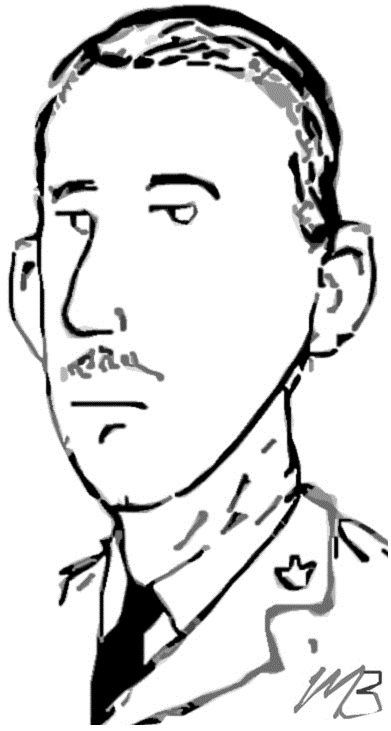
The Indian Fighter

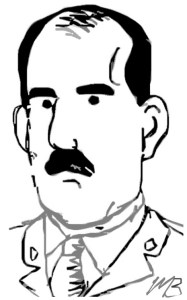
Lieutenant Colonel Glen Campbell, D.S.O.
107th (Timber Wolves) BattalionCampbell_G

I had hoped that I would not have to rise and address the House to-night, because I have been, with other western members, attending hockey matches the last few days, and my voice is not as good as I would like it to be.

(Campbell, Debates, 21 Jan 1910, 2259)

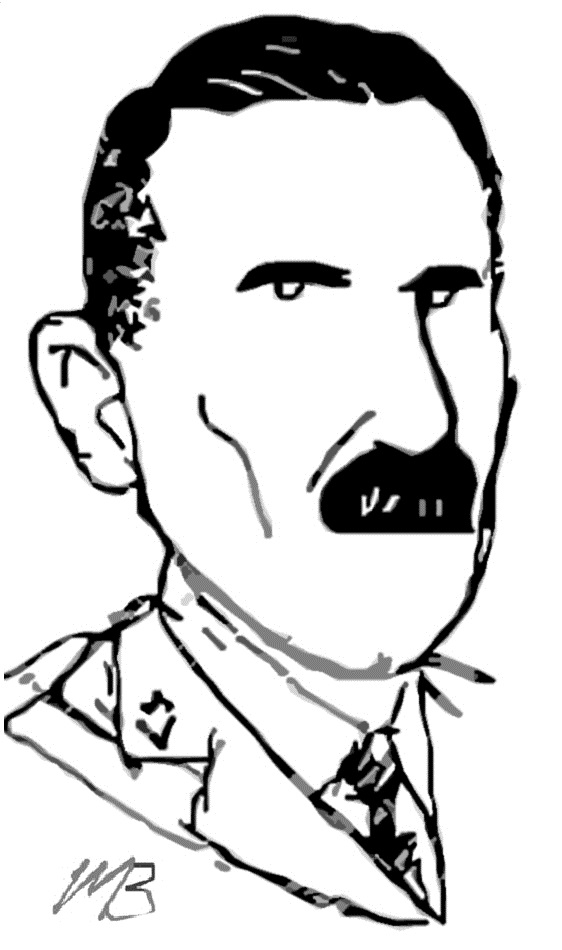
Glenlyon Archibald Campbell was a frontiersman, pioneer, rancher, soldier and politician. He was born in Fort Pelly, North West Territories on 23 October 1863. He fought with the Boulton’s Scouts at the battle of Batoche during Louis Riel’s 1885 Rebellion. Fluent in Cree and other Native languages, he raised the 107th Battalion largely from western First Nations.

Continue reading

The Band Leader

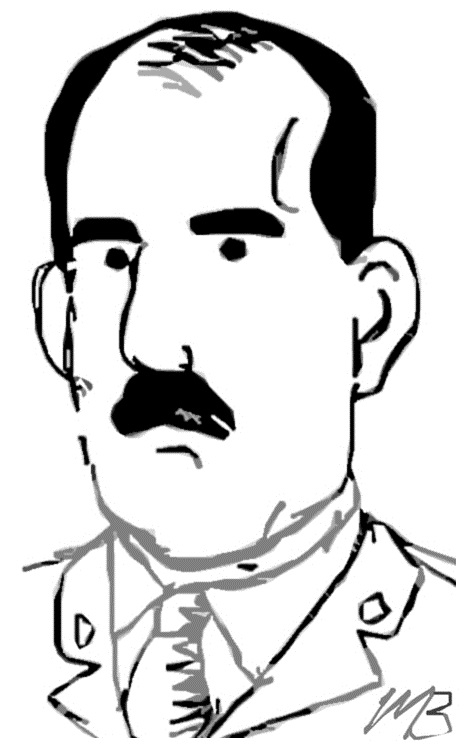
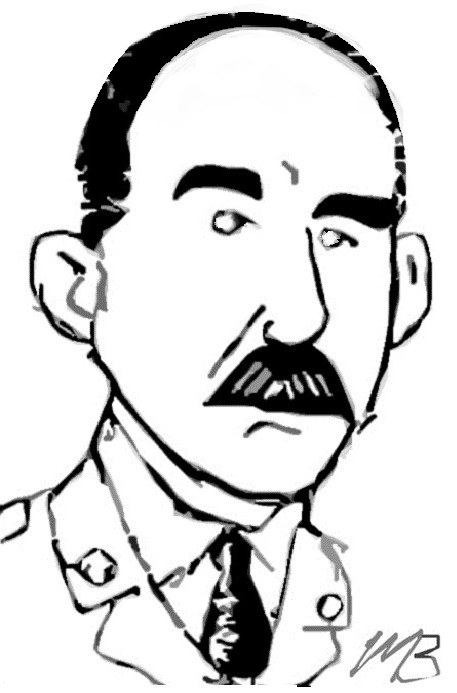
Lieutenant Colonel J. E. De Hertel
130th (Lanark and Renfrew) BattalionDeHertel

You have from now on not only to represent the honor of the 130th Battalion in those colours but the honour of your King. It was, as you know, customary to carry the colours into the battle-field, but this custom has been changed. The reason is that in the past thousands of men have sacrificed their lives in saving the colours. To avoid this unnecessary sacrifice of life it has been decided that in future the colours are to remain at home.

(Col. Hemming’s Address, Perth Courier, 2 June 1916)

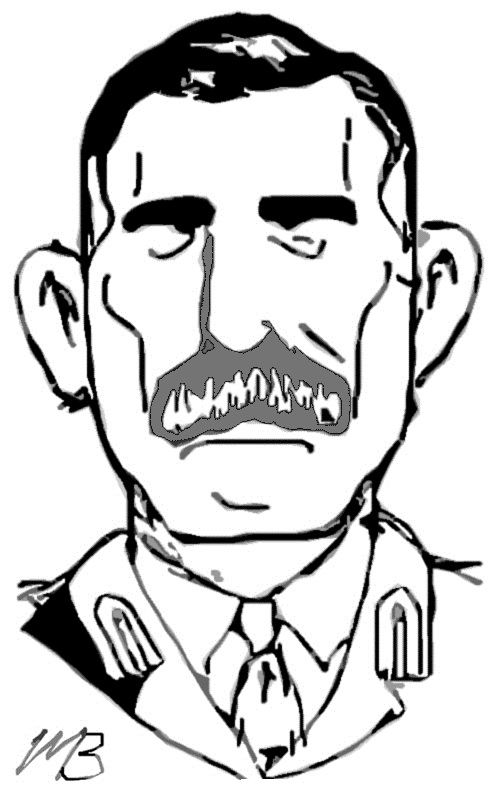
John Edward De Hertel was a Hudson’s Bay Company factor, trade representative, manufacturer and sportsman. He was born in Perth, Ontario on 29 September 1863. While in charge of an HBC outpost during the 1885 Northwest Rebellion, De Hertel was briefly taken prisoner by Cree Chief Big Bear.

Continue reading

The Worn-Out

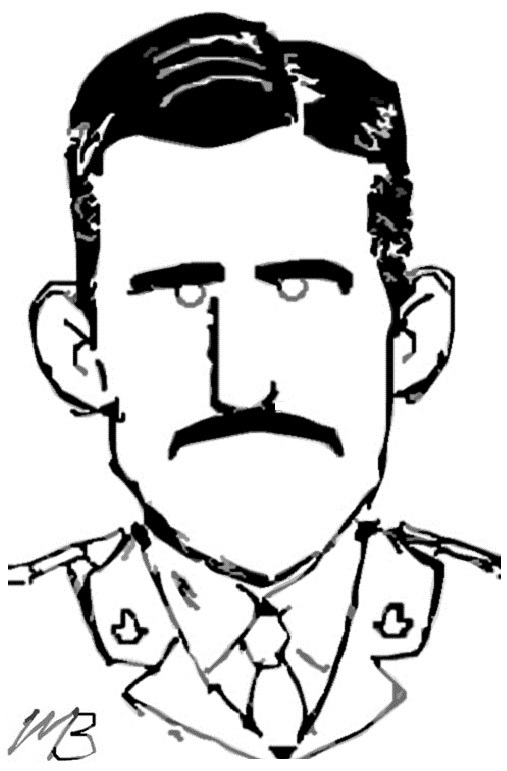
Lieutenant Colonel Billy Evans, D.S.O.
52nd (New Ontario) BattalionEvans

Marked spells of general weakness, occasionally shortness of breath, easily fatigued, spells of nervousness with trembling of whole body. Has no confidence in himself and lacks concentrating powers.

(Medical History of an Invalid, 17 Jul 1919)

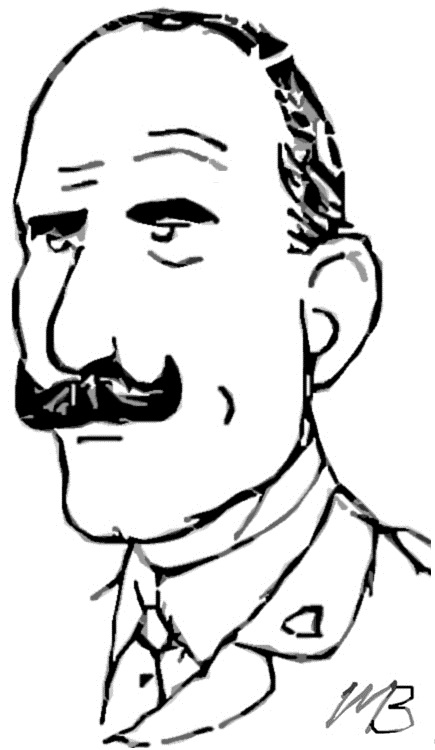
William Barnard Evans was a Montreal businessman with fourteen years’ service in the 3rd Royal Victoria Rifles. He was born in Toronto on 31 October 1875. On the formation of the 60th Battalion in spring 1915, he became second-in-command to Lieutenant Colonel Gascoigne.

Continue reading

The Mountain Climber

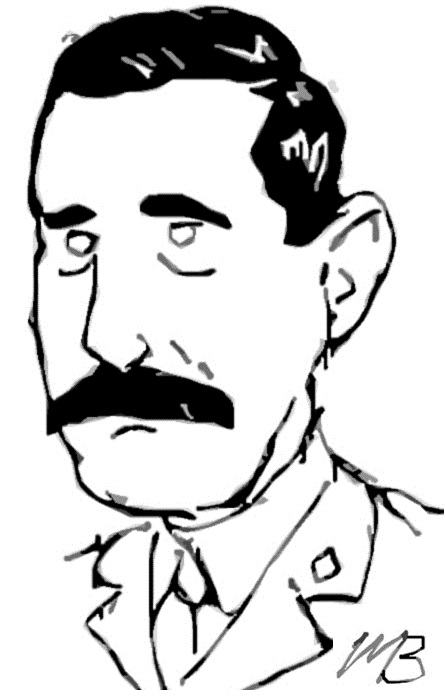
Lieutenant Colonel W. W. Foster, D.S.O., M.L.A
52nd (New Ontario) Battalion Foster

Billy Foster was a very interesting and safe companion, who always wore well no matter what the circumstances or the dangers might be. He was what is called a good mixer and always had an interesting and appropriate tale of experience, or a story, for that pause during a discussion or controversy which, if not pleasantly broken, might result in serious contention.

When there are more men like him to protect and guide its Nations, the whole world will be a safer and better place for all mankind.

(A. H. MacCarthy, Alpine Journal, 1954)

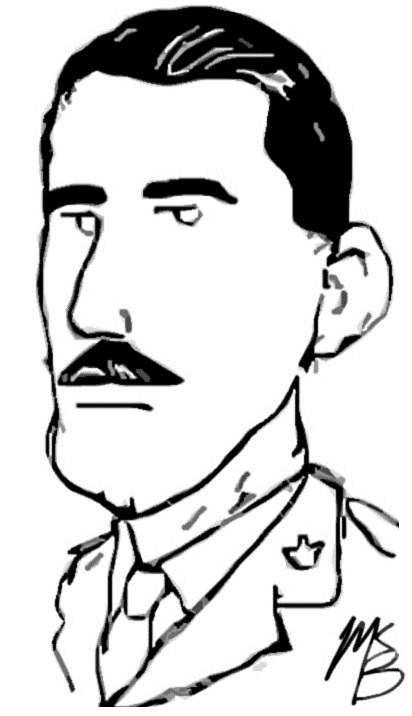
William Wasbrough Foster was a mountaineer, president of the Alpine Club and among the first to climb Mount Robson and Mount Logan, Canada’s highest peak. He was born in Bristol, England on 1 October 1876 and immigrated to Canada in 1894. Mount Colonel Foster on Vancouver Island is named in his honour.

Continue reading

Lt. Col. D.S. MacKay

Lieutenant Colonel Dr. Daniel MacKay
196th (Western Universities) BattalionMackay_DS

The student, then, is working at high pressure and has no time for consideration of the subjects he is taught in the day. As a matter of fact he has no time to think for himself, and the consequence is that he must come out of the university more or less as a sort of stuffed fowl rather than a human being who can tackle a question and analyse it. We have found this not only with our own students but with students from elsewhere.

(MacKay, Medical Conference, 20 Dec 1924, 133)

Daniel Sayre MacKay was a Manitoba physician, graduate of McGill University, officer in the Cameron Highlanders and second-in-command of Lieutenant Colonel Snider’s 27th Battalion. The son of Conservative Senator William MacKay (1847—1915), Major MacKay was born in Reserve Mines, Nova Scotia on 20 January 1878. While serving overseas with the 6th Brigade headquarters, MacKay was selected to command the 196th raised from university students in western Canada.

Continue reading

The Hockey Pioneer

Major Lennox Irving
240th (Renfrew) Battalion

We have the best type of manhood in the world in our brave troop fighting somewhere or everywhere in France. To appreciate even in the slightest degree, one mast see the heroes as they go into the trenches, go over the parapet, facing fearful odds, and then see them at their rest camps preparing for a great attack.

(Maj. Irving, Ottawa Journal, 11 Aug 1917, 16)

After the formation of the 240th Battalion, former 42nd Regiment commanding officer, fifty-three year old Lennox Irving came out of retirement to serve as second-in-command to Lieutenant Edgar John Watt. Born in Renfrew, Canada West on 16 May 1863, Irving was a barrister, militiaman and early hockey pioneer. While a student at Queen’s University, he participated in the first hockey game against the Royal Military College in 1886. Irving scored the lone goal to give Queen’s the victory. The two schools compete for the Carr-Harris Challenge Cup every year to commemorate this first hockey game.

Continue reading

The Bulldog

Brigadier General Edward Hilliam
25th (Nova Scotia Rifles) BattalionHilliam

Colonel Hilliam who was now our commanding officer, says that the 25th battalion made his name; but the 25th boys are equally positive that he made the battalion. It was truly wonderful the confidence we placed in him and he never disappointed us. He was very strong on discipline, and when all is said and done that is most essential in the army.

(Lieut. Lewis, Over the Top with the 25th, 1918)

Born in December 1862 in Spalding, England, Edward Hilliam was a soldier, policeman, boxer and swordsman. He had belonged to the 17th Lancers in the British Army before immigrating to Canada to join the North West Mounted Police in 1893. In 1899, he volunteered to serve in the Boer War and during the campaign, earned a reputation as an excellent scout and was praised as “a bold and resolute leader.”

Continue reading

The Birthday Boy

Brigadier General Victor Williams
8th Infantry BrigadeWilliams

 The whole front was a tangled mass of ruins. Only a few isolated posts were alive. General Mercer was dead. And General Williams, leg broken and spine twisted, yet fighting gamely against odds, with only a wooden wiring-stake for a weapon was being clubbed into submission by the butt-end of a Mauser in the hands of a German infantryman.

(Toronto Globe, 2 Jun 1928, 17)

Victor Arthur Seymour Williams was the most senior Canadian officer taken prisoner during the First World War. He was captured at the battle of Mont Sorrel on 2 June 1916, incidentally his forty-ninth birthday.

Continue reading

The Queen’s Own

Major General Malcolm Mercer †
3rd Infantry DivisionMercer

It is now fully believed here that General Mercer is dead.

Nothing whatever has been heard of him since and it is now considered almost certain that his body lies in the shell torn area where the former front trenches were, but are now practically obliterated.

(Montreal Daily Mail, 6 June 1916, 1)

Malcolm Smith Mercer was the highest ranked Canadian officer killed in the First World War. He was born on 17 September 1859 in Etobicoke, Canada West. While a student at the University of Toronto, he joined the Queen’s Own Rifles in 1881. He became commanding officer of the Regiment in 1911 and was posted to the 1st Infantry Brigade when the First Contingent assembled at Valcartier in August 1914.

Continue reading

The Ironman

Lieutenant Colonel Lorne McLaughlin, D.S.O.
2nd (Iron Second) BattalionMcLaughlin

Such loyal and ready support as this always goes a long way to foster the already good feeling which exists between your own battalion and the one which I have the honour to command. With very best wishes. (McLaughlin to Bart Rogers, 3rd Bn., 11 Nov 1917)

Lorne Tolbert McLaughlin was a farmer born on 14 February 1879 in Tyrone, Darlington Township, Ontario. He was a militia officer and member of Loyal Orange Lodge No. 764. In March 1915, he enlisted with Lieutenant Colonel J. A. V. Preston’s 39th Battalion from Belleville. After the 39th was broken up, McLaughlin transferred to the 2nd Battalion on the front. Continue reading