The Hardnosed

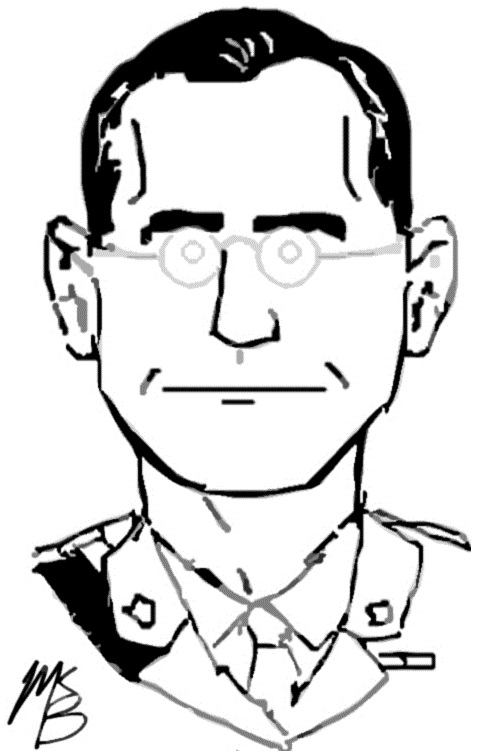
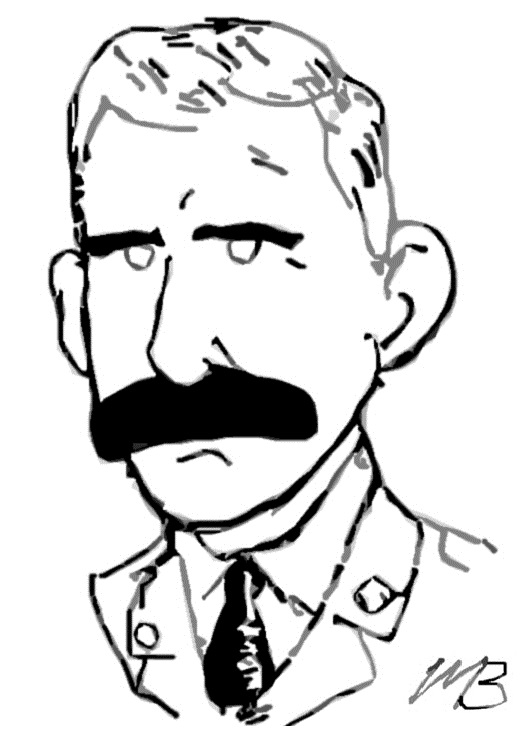
Lieutenant Colonel William C. Craig
194th (Edmonton Highlanders) BattalionCraig

Captain Craig had the honor to be the first officer of the C.M.R. to be wounded. We landed in France in October and went straight to the trenches a little south of Ypres, and Captain Craig was wounded almost immediately after we arrived.

(Capt. Pringle, 3rd CMR, Edmonton Bulletin, 1916, 7)

William Caldwell Craig was born in Leeds, Quebec on 12 March 1884 to English-Scottish parents. He was gazetted to Lord Strathcona’s Horse in 1912 in Winnipeg. He later relocated to Vermilion, Alberta and joined the 19th Alberta Dragoons. At the outbreak of the Great War, Craig enlisted as a captain in the 3rd Canadian Mounted Rifles. After he was wounded in the foot during a battle at Dicksbusche, Craig was invalided to Canada in December 1915.

Continue reading

The Gardener

Lieutenant Colonel R. T. Pritchard
153rd (Wellington) BattalionPritchard

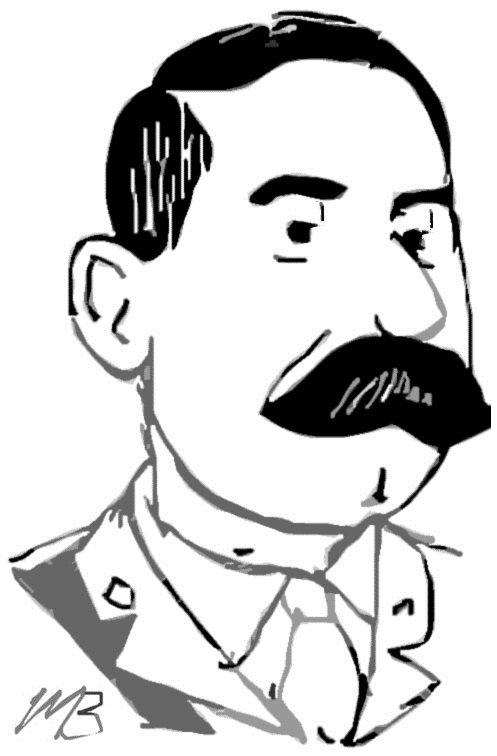
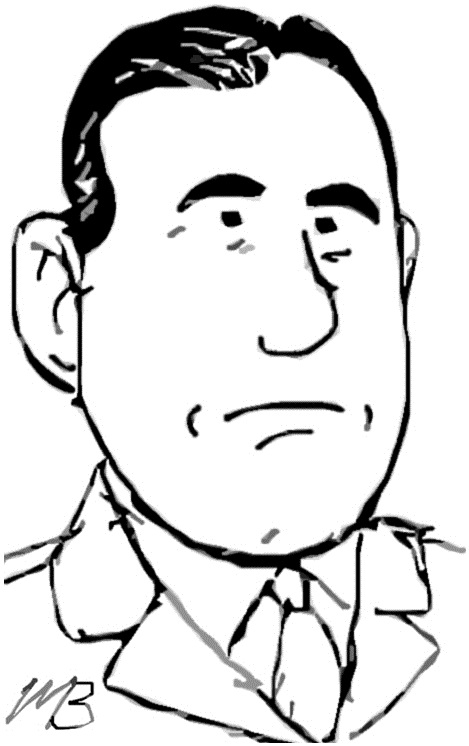
Colonel Pritchard was one of Canada’s unwanted senior officers. He had given up his business, left his home in Ontario, raised a battalion of friends and neighbours, trained them to the best of his ability and knowledge, and taken them to where they could smell gunpowder. Then he was told he could go home, he was no longer wanted. What would they call him at home?

(Col. J. M. Hughes, The Unwanted, 1956)

Born on 9 February 1868 in Nichol Township, Ontario, Robert Thomas Pritchard was a farmer in Wellington County and member of the 30th Regiment since 1893. In March 1916, he transferred from the 111th Battalion to take command of the newly authorized 153rd. After arriving in England in May 1917, the battalion was broken up and Pritchard was deemed surplus to requirements.

Continue reading

The Seigneur

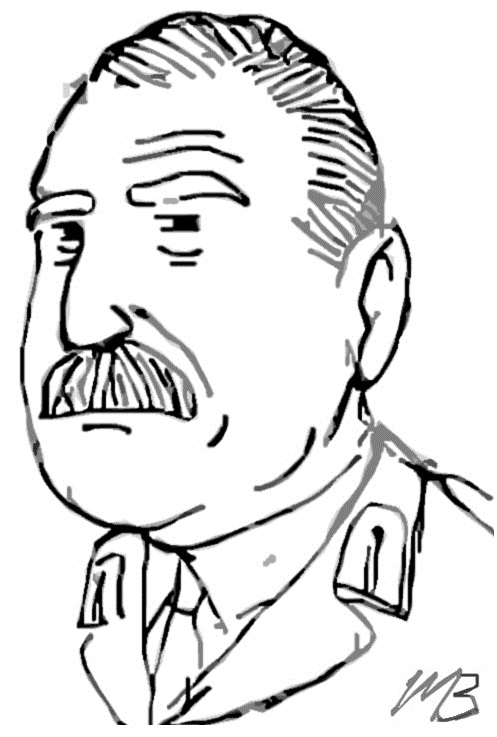
Lieutenant Colonel R. A. de la B. Girouard
178th (Canadien-Français) Battalion

Girouard

There is a fine fibrillary Tremor of hands & tongue on Exam.

Insomnia with frequent migraine over left side & is all the time “nervous.” Is unable to walk a mile at ordinary Military rate. Says he notices he is very irritable at times & has “fits of depression.”

(Medical History of Invalid, 24 Apr 1919)

René-Arthur de la Bruère Girouard traced his family linage to the earliest French settlers in the 17th Century and was a direct descendant of Governor Pierre Boucher (1622—1717). A native of Quebec City, Girouard was born on 29 January 1882. He joined the Royal Leister Regiment at eighteen but left the army to work as a civil engineer and supervise track construction of the Pacific Railway in British Columbia.

Continue reading

The Exonerated

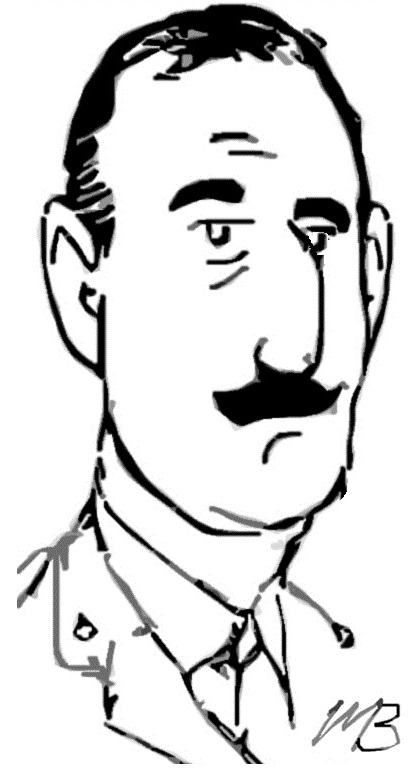
Lieutenant Colonel Arthur Morley, M.C.
144th (3rd Winnipeg Rifles) BattalionMorley

The trenches, too, have their lighter side. There are no more cheerful people connected with this war than the boys in the trenches. They make jokes about everything, especially the German shells. The officers are not excluded from their jokes. I recall one day in the trenches, when the word was passed among some of my own Tommies that some staff officers were coming down the trenches.

“Staff officers in the trenches!” exclaimed one of the boys, “Peace must have been declared!”

(Col. Morley, Canadian Club of Winnipeg, 8 Oct 1915, 86)

Arthur William Morley was a Manitoba lawyer and legislative clerk born on 9 August 1880 in Huntsville, Ontario. He moved west to study law in 1901 and set up a practice in Winnipeg after graduation in 1904. A member of the 90th Rifles since relocating to Manitoba, he volunteered with the 8th Battalion September 1914.

Continue reading

The Bankrupt

Lieutenant Colonel R. McD. Thomson †
43rd (Cameron Highlanders) BattalionsThomson_RM

Robert McDonnell Thomson, officer commanding the 43rd Battalion, who died at Albert. France, Oct. 8 1916, as a result of wounds, and who was believed to be one of the wealthiest men in Winnipeg, died insolvent.

(Winnipeg Tribune, 28 August 1918, 1)

Born on 4 July 1869 in Hamilton, Ontario, Robert McDonnell Thomson was a veteran of the 1885 Rebellion and founder of the 78th Cameron Highlanders of Canada. Although on the reserve list at the outbreak of the Great War, Thomson raised the 43rd Battalion from Winnipeg and sailed for England in June 1915. The Cameron Highlanders deployed to France with 9th Infantry Brigade, 3rd Division in February 1916.

Continue reading

The Surveyor

Lieutenant Colonel Albert C. Garner, D.S.O.
195th (City of Regina) BattalionGarner

The military record of Colonel Garner is a long and gallant one. During the Boer war he served as special scout in Lord Strathcona’s Horse in
1900 and 1901 and was severely wounded. He was honored by “special
mention in dispatches” in the London Gazette, February, 1901, and was
awarded the Queen’s medal and four clasps, the medal being presented
by His Majesty the King, Edward VII, on the 10th of February, 1901.

(Saskatchewan and its People, 1924)

Born on 6 September 1878 in Warwickshire England, Albert Coleman Garner immigrated to Canada with his family in 1888. He fought with Lord Strathcona’s Horse during the Boer War. After returning from South Africa, he joined the 16th Light Horse and the elite Corps of Guides. Before the First World War, he was a land surveyor and civil engineer in Saskatchewan.

Continue reading

The Meteorologist

Lieutenant Colonel William D. Allan, D.S.O. †
3rd (Toronto Regiment) BattalionWDAllan

Since going into the trenches he was three times wounded, and mentioned in dispatches for many acts of signal bravery. The people of Canada still vividly recall the story of heroism when he went with another soldier into No Man’s Land under heavy fire to carry in a wounded comrade. The man was struck by a bullet and killed as they were carrying him to shelter. For this and other conspicuous acts of bravery he was awarded the D.S.O.

(Toronto Globe, 3 Oct 1916, 4)

William Donald Allan was a meteorologist and seventeen year member of the Queen’s Own Rifles. He was born in Toronto on 25 November 1879. Allan served as a company captain with the 3rd Battalion during the second battle of Ypres. After Robert Rennie was promoted to command the 4th Brigade, Allan took charge of the 3rd on 10 November 1915.

Continue reading

The Redeemed

Lieutenant Colonel C. C. Harbottle, D.S.O
75th (Mississauga) BattalionHarbottle

This deplorable affair has ruined him absolutely, and his character has been taken from him forever. His family and mother are heart-broken. For two years, since these things began, he has lived in a hell of torture, and whatever term he has to do he will be more than amply punished.

(Defence counsel Mr. Robinette, Toronto Globe, 9 May 1908, 4)

Colin Clark Harbottle assumed command of the 75th Battalion on 16 April 1917. He proved himself a dedicated leader through the last year and a half of the war and won the Distinguished Service Order for his “fine example of personal gallantry and determination.” Ten years, earlier Harbottle had been a disgraced fugitive from justice and convicted criminal.

Continue reading

The Incompetent

Lieutenant Colonel G. A. LeCain
25th (Nova Scotia Rifles) BattalionLeCain

As I was merely a private at the time I do not know what really transpired; but we never saw the colonel at all that night.

The Germans, however, failed to get into our trenches; and up to this day the 25th can with perfect truth declare that they never failed in the critical hour, for if we did not always have competent officers at the head of the battalion we certainly had them in our companies..

(Lieut. Lewis, Over the Top with the 25th, 1918)

George Augustus LeCain, a fruit farmer and militiaman with twenty-five years in the 69th Regiment, was authorized to raise the 25th Battalion from Nova Scotia in October 1914. He was born on 21 September 1862 in Round Hill, Annapolis County. The 25th Battalion deployed to France In September 1915 as part of the 5th Infantry Brigade, 2nd Canadian Division. Within weeks, the battalion leadership would be overhauled for the alleged incompetence and cowardice of several senior officers.

Continue reading

The Capitalist

Brigadier General Robert P. Clark, D.S.O. M.C.
14th (Royal Montreal Regiment) & 2nd BattalionsRPClark

This Christmas, I believe, will be your last in France. That the next may find you Home again, safe and happy, and with your loved ones, is my most earnest wish. The war is drawing to a close. Your many trials and privations will soon be forgotten. The horrors of this war will soon become to you a memory, dimmed by happier things to come. But the glory of this war, though some day a memory too, can never fade.

(Gen. Clark to The Listening Post, 2 Nov 1918)

Robert Percy Clark was a Vancouver businessman, investor, real estate agent and capitalist. He was born in London, England on 17 April 1874. He worked on the London Stock Exchange and volunteered to fight in the Boer War. He later immigrated to British Columbia, where he pursued various gold mining enterprises. He served in the 5th and 50th Regiments under Arthur Currie. As part of the First Contingent of the Canadian Expeditionary Force, Clark became staff-officer to Currie with the 2nd Brigade.

Continue reading