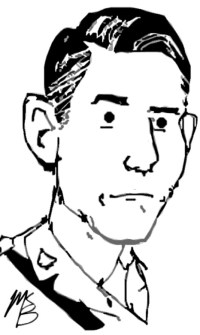
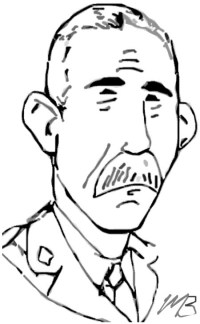
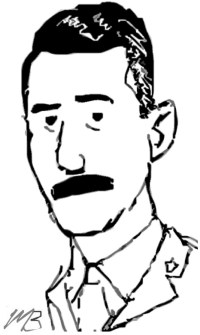
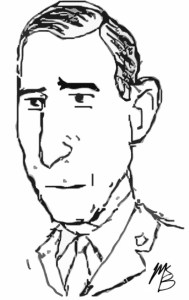
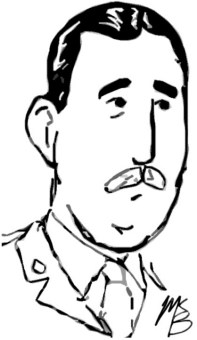
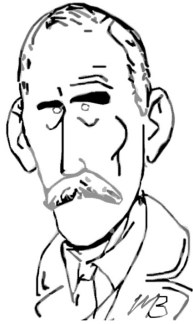
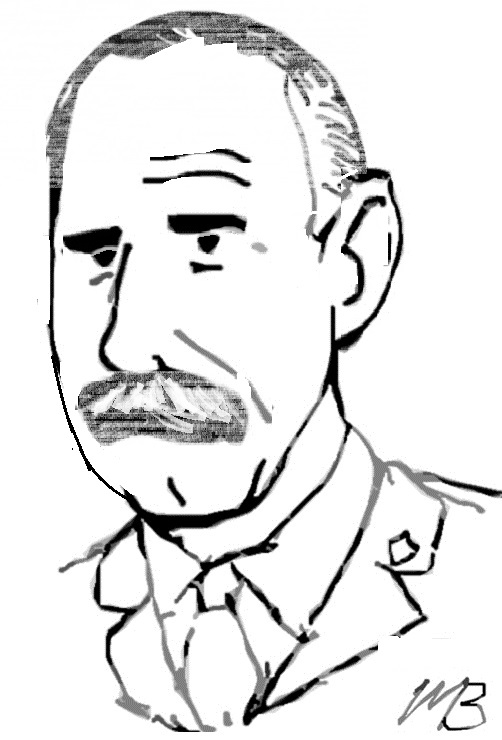
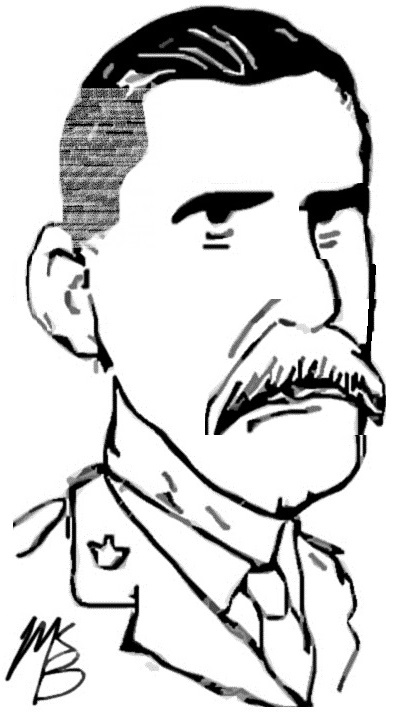
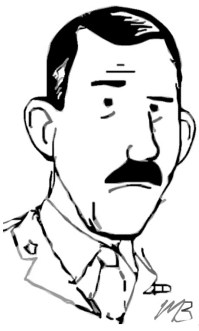
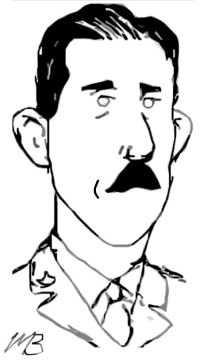
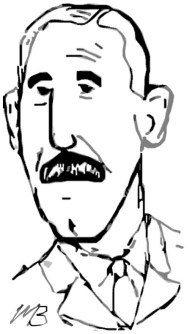
Lt. Col. Bowen

Lieutenant Colonel F.C. Bowen
23rd (Westmount Rifles) Battalion
BowenFC

This officer as a result of damp and exposure in the trenches developed Lumbago. Continued at duty but had to go sick on 6 Nov. 1916. He has still a deal of pain, is sleepless, debilitated and has lost weight.

(Proceedings of Medical Board, 30 Nov 1916)

Frederick Chamberlain Bowen was born in Sherbrooke, Quebec on 8 July 1876. He had been commanding officer of the 53rd Sherbrooke Rifles and served as second-in-command with Frank Fisher’s 23rd Battalion. After Fisher joined the 14th Royal Montreal Regiment on the front, Bowen assumed command of the 23rd, which became a reinforcement unit in England.

Continue reading

The Acadian

Lieutenant Colonel L.C. D’Aigle
165th (French Arcadian) Battalion

I know lots of men who would go, but they are not prepared to serve under mushroom officers who don’t know their duty. An officer, to be a good officer, must be trained not picked up politically or otherwise because he has an uncle or an aunt or somebody connected with the titled people we have around. I am speaking now more particularly of my own province.

(Col. Domville, Senate Debates, 4 May 1916,  413)

Born on 15 December 1869 in Saint-Louis-de-Kent, New Brunswick, Louis-Cyriaque D’Aigle was an Acadian agronomist and dairy farming magnate. Although he did not have any military or militia experience, D’Aigle was appointed to the 165th Battalion. which was to recruit from the Acadian community of the Maritimes.

Continue reading

Lt. Col. Scobell

Lieutenant Colonel S.B. Scobell
235th (Durham and Northumberland) Battalion
Scobell

I had the opportunity of returning to Canada but refused absolutely, and fought hard until I landed this position. I am still and will continue to be paid by the Dominion Government, but will be attached to the Imperial army for duty.

 (Scobell, Toronto Star, 13 August 1917)

Sidney Brandage Scobell, a druggist and Orangeman with twelve years’ experience in the 19th Lincoln Regiment, was authorized to raise the 235th from the counties of Northumberland and Durham in 1916. He was born in St. Catharines on 7 February 1871. After his understrength unit was broken up in May 1917, Scobell sought a position in the field. By August, he was seconded to the Imperial Forces.

Continue reading

Lt. Col. Genet

Lieutenant Colonel Harry Genet
58th (Central Ontario) Battalion
Genet

Is it too much to expect that our fellow-citizens, now living in Canada in comfort and security, purchased by the blood of their brothers here in France, will sin all differences, political or otherwise, and unite in the common cause of our Empire and make one great effort to support and reinforce their army in the field?

(Col. Genet, Toronto Globe, 17 Dec 1917, 3)

Born on 20 February 1864 in London, England, Harry Augustus Genet had served for five years in the 2nd Middlesex Regiment before immigrating to Canada. He worked for the Adams Wagon Works in Brantford and joined the 38th (Dufferin) Rifles. After Lieutenant Colonel F. A. Howard left with the First Contingent in 1914, Genet assumed command of the 38th regiment. In April 1915, he was authorized to raise the 58th Battalion from central Ontario, Toronto and Hamilton. Continue reading

Lt. Col. Chisholm

Lieutenant Colonel George T. Chisholm
92nd (48th Highlanders of Canada) Battalion
Chisholm

I might inform you that your department is getting a tremendous lot of popular disfavor through not supplying your regiments with actual necessities … Now this all gives the ordinary man on the street the impression that the department is not attending to the business for which it is in existence.

(G.T. Chisholm to Militia Department, 25 Sept 1915)

While fighting at St. Julien during the second battle of Ypres in late April 1915, the 15th Battalion was decimated as hundreds were killed, gassed or taken prisoner. Most of the soldiers had belonged to the Toronto-based 48th Highlanders Regiment. In order to replace the casualties, Toronto militia leaders were authorized to raise two new highlander battalions, the 92nd and 134th. George Thomas Chisholm, a Toronto stockbroker, was appointed commander of the former in August 1915.

Continue reading

Lt. Col. Winsby

Lieutenant Colonel W.N. Winsby
47th (British Columbia) Battalion
Winsby

Had long interview with Col. Winsby, 47th Bn. over charges made against his ability as C.O. by Gen. Hilliam, & I gave him until tomorrow morning to send me in, in writing, his answer to these charges.

(Gen. David Watson, 4th Division, 8 Mar 1917)

The charges against Winsby are of so contrived a character and now so serious to his battalion and brigade, that I am compelled to recommend his removal from command.

(Gen. Watson, 4th Division, 20 Mar 1917)

William Norman Winsby was a Victoria teacher, principal and school inspector. He was born on 28 October 1874 in Leyburn, Yorkshire, England. He was a twenty-year member of the 5th Regiment and succeeded Arthur Currie as commanding officer in January 1914. At the end of that year, he received authorization to raise the 47th Battalion from New Westminster in November. Continue reading

Lt. Col. Miller

Lieutenant Colonel Armour Miller
134th (48th Highlanders of Toronto) Battalion
Miller

A reliable and conscientious Officer. He has always been keen and anxious to acquire new ideas. His work here, both theoretical & practical, has shown that he possesses sound military knowledge with the capacity of imparting it to others. He has a cherry disposition.

(Senior Officers School report, 15 Dec 1917)

Along with the 15th and 92nd Battalions, the 134th was the third overseas unit organized by the 48th Highlander Regiment in Toronto. Initiated by Lieutenant Colonel Duncan Donald, the battalion began recruiting in November 1915 to replace the losses suffered by the 15th at St. Julien. Born on 17 December 1869, Donald was a Toronto barrister and commanding officer of the 48th Highlanders. He had served for over twenty-three years in the militia regiment. After Donald stepped down due to illness in July 1916, Armour Adamson Miller assumed command of the 134th.

Continue reading

Lt. Col. White, MP

Lieutenant Colonel G.V. White, MP
224th (Lumbermen) Battalion
GWhite

We cannot be too generous in our treatment of our sailors, soldiers and airmen. I take it that this measure will recompense fairly generously the men and women who have served their country well. I believe the people of Canada will wholeheartedly endorse this very important legislation.

(Senator White, Debates, 11 Aug 1944, 452)

Gerald Verner White was Conservative Member of Parliament for Renfrew North. Born on 6 July 1879 in Pembroke, Ontario, he was the son of Peter White (1838—1906), a lumber tycoon and former Speaker of the House of Commons. After his father’s death, the younger White won a by-election for Renfrew North in 1906. A militia officer with the 42nd Regiment, White enlisted as senior major with J. F. De Hertel’s 130th Battalion in November 1915. By February 1916, he transferred to the 224th Foresters as second-in-command to Alexander McDougall. Continue reading