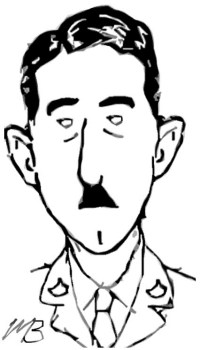
In conclusion, I would like to say that I have no one to blame but myself. It was caused by two things: Drink and women. I never knew the taste of liquor until I went to France. I still wish to stay in the army in any capacity whatsoever.
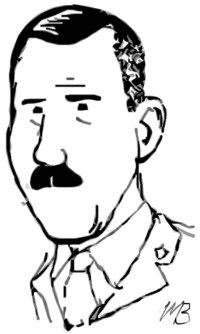
Lieutenant Colonel C.R.E. Willets, D.S.O.
Royal Canadian Regiment
For conspicuous gallantry and devotion to duty. He went forward to the front line under very heavy fire and organized the defence of the position with great skill. He has at all times displayed the greatest courage and initiative.
(Willets, D.S.O. citation, 26 July 1917)
Born in Windsor, Nova Scotia on 21 May 1880, Charles Richard Edward Willets had left the Royal Military College early to serve in South Africa in 1901. After five years with the South African Constabulary, he was gazetted as a lieutenant in the Royal Canadian Regiment.
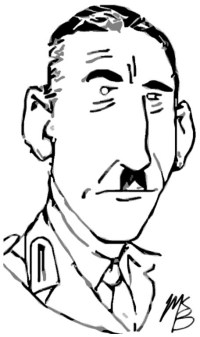
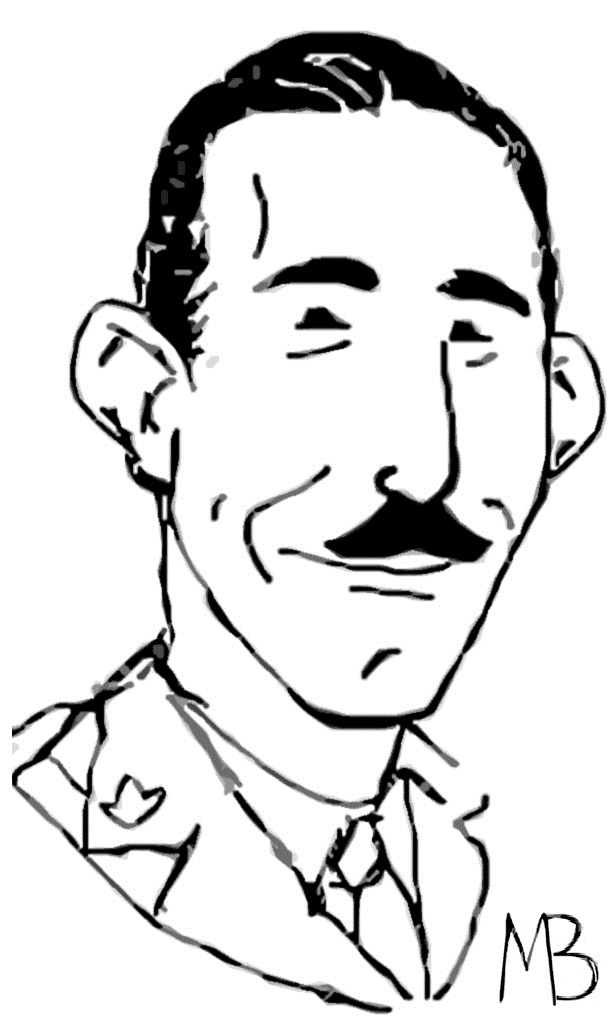
Major Harry Hatch, D.S.O.
19th (Central Ontario) Battalion
Major Hatch has never once been known to show the slightest concern for shells or bullets. He seems almost to have possessed a charmed life, for he would spend hours walking around the front line in any sector…
(Toronto Star, 22 May 1919, 8)
A native of Toronto, Harry Cecil Hatch was born on 5 September 1891. His father, Colonel Arthur Hatch was a leading industrialist in Hamilton and president of the Canadian Manufacturers’ Association. The younger Hatch was graduate from Queen’s University and enlisted with Lieutenant Colonel 19th Battalion.
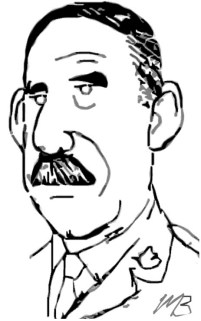
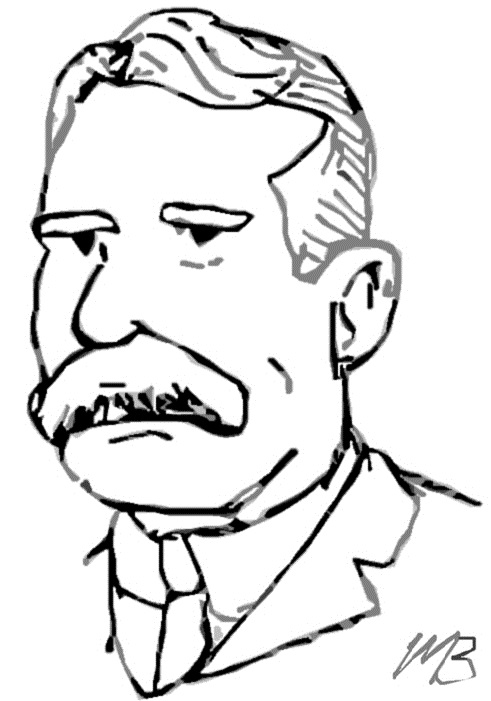
Brigadier General Ross Hayter 10th Infantry Brigade
He was a splendid example of the Royal Military College graduate, and, although all his service before the war was with the British forces, he never lost touch with Canada and never lost his Canadian spirit.
(Arthur Currie, 19 Dec 1929, 3)
Ross John Finnis Hayter was a graduate of the Royal Military College and Boer War veteran with nearly twenty years’ service in the British Army. He was born in Assam, India on 28 February 1875. He served as a brigade major with the 1st Infantry Brigade during the second battle of Ypres and later joined the staff of the 3rd Division under the command of General Louis Lipsett. Continue reading →
Major Thomas Elmitt, D.S.O.
21st (Eastern Ontario) Battalion
From the “jumping-off” place to the refinery was one thousand yards and as it was known to be strongly held, this together with the distance of the advance, severe casualties were expected and although the battalion suffered heavily they were quite successful in attaining their objective.
(Elmitt to Ottawa Citizen, 2 Jan 1917, 2)
Born in Ottawa on 24 January 1871, Thomas Francis Elmitt was a lumber merchant with fifteen years’ experience in the 43rd Duke of Cornwall’s Own Rifles Regiment. He enlisted with the 21st Battalion in November 1914 and was promoted to major in February 1915. Elmitt assumed temporary command of the battalion from 7 May until 6 July 1917.
Lieutenant Colonel Harry Pense, D.S.O., M.C.
21st (Eastern Ontario) Battalion
For conspicuous gallantry in action. He led his company in the attack with great courage and determination, and although wounded, by personal coolness and example assisted in the success of the operation.
(Pense, Military Cross citation, 14 Nov 1916)
Henry Edward Pense was born in Kingston, Ontario on 2 August 1889. An eight-year member of the 14th Princess of Wales’s Own Rifles Regiment, he enlisted as a subaltern with the 21st Battalion in November 1914. He was promoted to command “A” company after the Battle of St. Eloi Craters in April 1916.
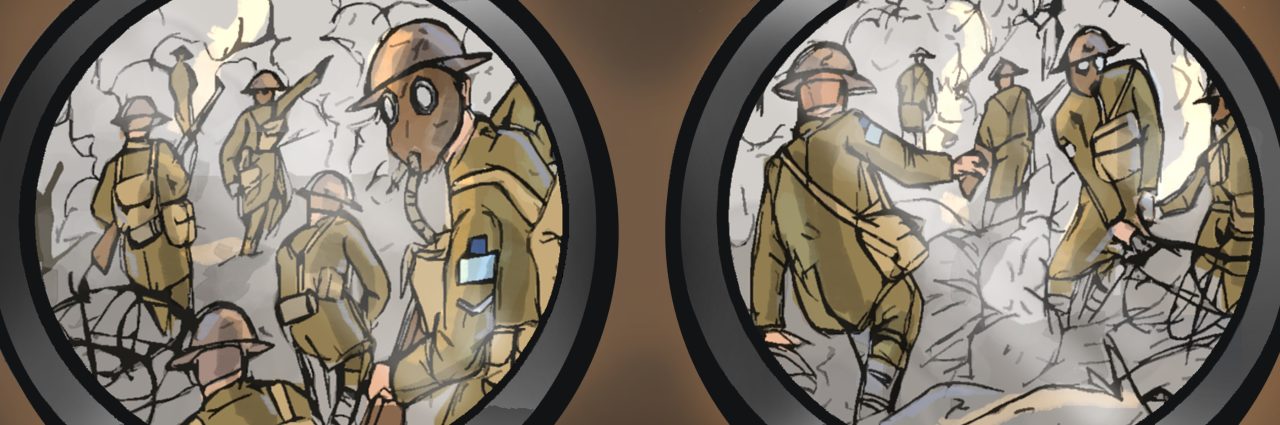
A Graphic History of Hill 70 and Canada’s First World War
By Matthew Barrett (illustrator/co-writer) and Robert Engen (co-writer)
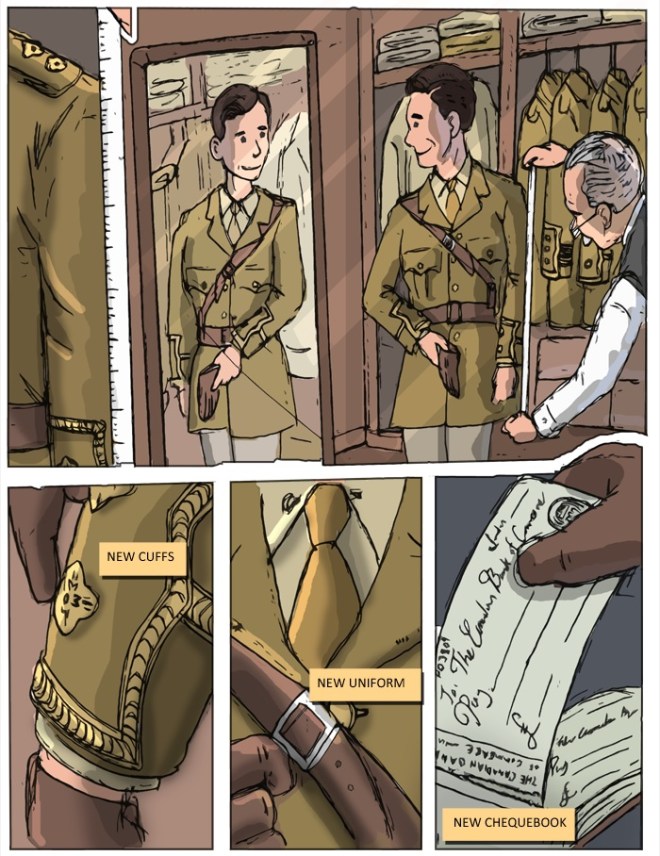
Published by MQUP, our book imagines the experiences of Canadian soldiers during the Battle of Hill 70 in August 1917 through graphic artwork and full-colour illustration.
By the summer of 1917, Canadian troops had captured Vimy Ridge, but Allied offensives had stalled across many fronts of the Great War. To help break the stalemate of trench warfare, the Canadian Corps commander, Lieutenant-General Arthur Currie, was tasked with capturing Hill 70, a German stronghold near the French town of Lens.
After securing the hill on 15 August, Canadian soldiers endured days of shelling, machine-gun fire, and poison gas as they repelled relentless enemy counterattacks. Through Their Eyes depicts this remarkable but costly victory in a unique way. With full-colour graphic artwork and detailed illustration, Matthew Barrett and Robert Engen picture the battle from different perspectives – Currie’s strategic view at high command, a junior officer’s experience at the platoon level, and the vantage points of many lesser-known Canadian soldiers who made the ultimate sacrifice. This innovative graphic history invites readers to reimagine the First World War through the eyes of those who lived it and to think more deeply about how we visualize and remember the past.
Combining outstanding original art and thought-provoking commentary, Through Their Eyes uncovers the fascinating stories behind this battle while creatively expanding the ways that history is shared and represented.
“A powerful and moving book. This is Canada’s First World War as we have never seen it before.”
-Colonel Chris Hadfield, astronaut and four-time best-selling author
“This innovative graphic history provides a new way of understanding the complexity and carnage of the First World War. Employing vivid graphics and authoritative history, Matthew Barrett and Robert C. Engen offer multiple and diverse perspectives to reclaim the Battle of Hill 70 for a new generation.”
-Tim Cook, Chief Historian at the Canadian War Museum
By order of the Militia Department, Ottawa, the entire official staff, from Lieutenant-Colonel J. H. Hearn to the Junior subaltern is on the way back to Saskatchewan, pending an official investigation. The battalion will proceed under other officers. It is claimed that the 214th left Saskatoon with between $5,000 and $7,000 in regimental debts behind, and a host of angry creditors. Under military regulations no officers’ can proceed overseas until the regimental funds are given, clearance.
(Ottawa Journal, 13 Apr 1917, 6)
John Harvey Hearn was born in Sydney, Nova Scotia on 15 October 1882. After graduating from Dalhousie University with a law degree, he moved west to set up a practice in Wadena, Saskatchewan. A proud Roman Catholic lawyer, Hearn fought the Ku Klux Klan’s influence in the province during the 1920s.
Lieutenant Colonel G.W. Fowler, MP 104th (New Brunswick) Battalion
There is often a vast difference between the stories they tell in Canada, as to their achievements in France, and the stories that are told of them here. There have been cases where such Officers have, in consequence of the skillful manner in which they have trumpeted their own achievements (which were really of a very minor character) obtained advancement, much to the annoyance and disgust of men whose services have been far more valuable, but who have remained steadily on the job.
(Fowler to Robert Borden, 6 Sept 1916)
Born on 24 February 1859, George William Fowler was Conservative MP for King’s and Albert (1900—1908, 1911—1917) and senator for New Brunswick (1917—1924). A graduate of Dalhousie University and Boston College, he was a lawyer and Grand Master in the provincial Orange Order.
A retired militia officer with twenty years in the 8th Hussars, Fowler was appointed to command the 104th Battalion from New Brunswick in November 1915. On his attestation form, he lowered his birth date by two years and curiously listed his religion as pagan.
Major “Jock” Rankin, D.S.O.
46th (Suicide) Battalion
Whether in the arena of sports, the Training Camps in Canada or England, or on the Battlefields of France and Belgium, the “Fighting Forty-Sixth” (or Suicide Bn.) held an unsullied record of solid service’ and achievement, and of duty done quietly, surely and effectively.
(46th Battalion CEF—Year Book, 1926, 9)
James Sabiston Rankin was born on 30 December 1882 in Liberton, Scotland. After graduating from the University of Glasgow, he joined the 8th Highland Light Infantry. He moved to Saskatchewan in 1905 to become a lawyer in Weyburn. In June 1915, he enlisted with the rank of captain in Lieutenant Colonel Snell’s46th Battalion.