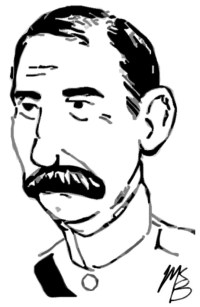
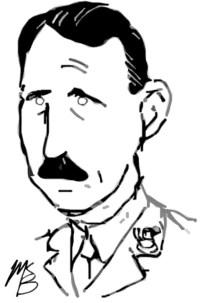
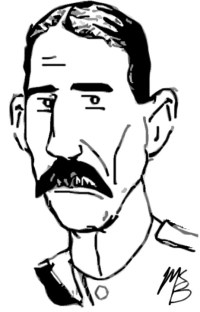
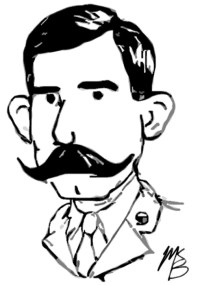
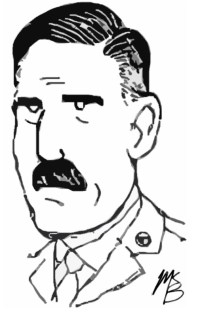
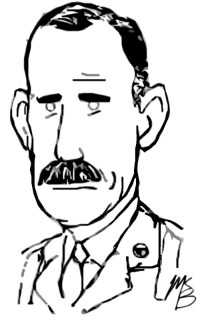
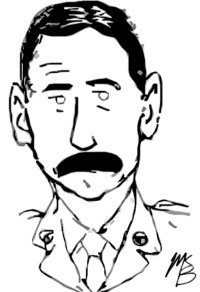
Lt. Col. W.A. Munro

Lieutenant Colonel W.A. Munro
90th (Little Black Devils) Battalion

Munro

Heart disease, which originated in the first gas attack at Ypres in 1915, resulted in the death last night of Lieut.-Col. W.A. Munro, D.S.O., a prominent figure in the active militia in Western Canada.

 (Winnipeg Tribune, 2 Feb 1927, 2)

A native of Toronto, William Aird Munro was born on 12 June 1872. He joined the newly formed 48th Highlanders in 1891 before moving to Winnipeg three years later. At the outbreak of the Great War, he had twenty-years’ service with the 90th Winnipeg Rifles (The Little Black Devils). The regiment’s nickname dated back to the Métis resistance of 1885. A captured rebel remarked, “The red coats we know, but who are those little black devils?” referring to the 90th soldiers’ rifle green uniforms.

Continue reading

Col. Moore

Colonel Edmund E.W. Moore
9th Reserve Battalion

He walked his horse until he got across the Railway Bridge from the Brigade Office. After crossing the Railway Bridge he started to go faster as we went along. The horse broke into a gallop and Colonel Moore lost his cap. The Horse increase his pace galloping down hill. I then thought that Colonel Moore had lost control of the horse.

 (Pte. L.M. Carson, Court of Inquiry, 9 Apr 1917)

Born in Hamilton, Canada West on 8 September 1864, Edmund Evelyn Wentworth Moore was a surveyor and former commanding officer of the 13th Royal Regiment. Just before the First World War, he assumed command of the 4th Infantry Brigade of the militia. He went overseas with the First Contingent and took over the 9th Reserve Battalion from May 1915 until April 1916.

Continue reading

Lt. Col. Bradshaw

Lieutenant Colonel John Bradshaw, M.L.A.
Bradshaw
&
Major Gavin Graham Smith
243rd (Prince Albert) Battalion

Bradshaw sat silent, clothed in the uniform of an officer of His Majesty’s army, representing the justice and right of British traditions. Bradshaw sat there with the red color slowly mounting to his cheeks as he realised that the people of the province through their elected representatives demanded that for once he play the part of a gentleman and live up to the traditions of the uniform he wears.

 (S.S. Simpson, Liberal M.L.A., 9 Feb 1917)

John Ernest Bradshaw was the first commanding officer of the 243rd Battalion. Born on 13 December 1866 in Newport, Isle of Wight, he was a Hudson’s Bay Company manager, Prince Albert mayor (1906) and Conservative member of the Saskatchewan legislature (1908–1917). In June 1916, Bradshaw attempted to raise the 243rd from northern Saskatchewan. According to an inspection report, “He has no military experience; he has however a good business training and looks after his Battalion in a creditable manner.”

Continue reading

Col. MacDonald

Colonel George MacDonald
12th Canadian Mounted Rifles

A quiet, soldierly old gentleman, caring little or nothing about the limelight of public life, he numbered many friends in his personal circle, and probably more among the pensioners and the war-wrecked wounded with whom his postwar medical duties brought him in close touch.

 (Calgary Albertan, 6 Nov 1933, 4)

George MacDonald was an Alberta physician born in Aberdeen, Scotland on 22 September 1863. He immigrated to Canada as a child and graduated with a medical degree from McGill in 1889. He then travelled west and attempted prospecting during the Klondike Gold Rush. He settled down into a medical practice in Calgary in 1900. As commanding officer of 15th Light Horse he was appointed to raise the 12th Canadian Mounted Rifles in November 1914.

Continue reading

Lt. Col. Ripley

Lieutenant Colonel Blair Ripley
1st Canadian Railway Troops

Ripley

“Whatever do you want to write about me for?” asked a tall man with benign expression, his kind eyes glinting humorously behind glasses. “I’m retired.”

(Interview with Gwen Cash, Time Colonist, 22 Jan 1950)

Blair Ripley was a Canadian Pacific Railway civil engineer born in Oxford, Nova Scotia on 28 August 1880. He worked on railways across the west and designed the Lethbridge Viaduct. By the outbreak of the war he was completing the North Toronto Grade Separation. In June 1916, he was assigned to take his railway and bridge building expertise to the front when appointed to raise No. 1 Construction Battalion.

Continue reading

Lt. Col. Jones

Lieutenant Colonel L.E. Jones, D.S.O.
18th (Western Ontario) Battalion

Jones LE

Jones is quite a sport with a forte in the baseball line. This year he is manager of the Varsity nine and his eagle eye is scanning the horizon for recruits. He is just quiet enough to be rated “a good fellow,” without an enemy around the institution.

 (Torontonensis, 1900, 53)

Louis Elgin Jones was born in Elgin County, Ontario on 2 November 1877. A graduate of the University of Toronto, he was a mathematics teacher, civil engineer, and member of the 27th Regiment. In November 1914, Jones joined the 18th Battalion as a captain.

Continue reading

The Widower

Lieutenant Colonel H.L. Milligan, D.S.O.
18th (Western Ontario) Battalion

Milligan

I met Colonel Milligan recently, and am advised that he is not physically fit to return to his duties, and have lost his wife and daughter in the last few months, I hope you will grant him this extension of leave.

(J.E. Armstrong to militia minister, 18 Jan 1917)

Henry Linton Milligan succeeded Lieutenant Colonel Ernest S. Wigle as commander of the 18th Battalion on 8 July 1916. A native of Scotland, he was born on 8 April 1872. A member of the 26th Regiment, he joined the 18th at the rank of major in October 1914. He remained in command until just after the battle of the Somme.

Continue reading

The Other Ranker

Lieutenant Colonel Dick Worrall, D.S.O., M.C.
14th (Royal Montreal Regiment) Battalion

Worrall

He advanced his line half a mile and under heavy fire maintained his position all day. The following day, though his left was exposed to withering machine gun and artillery fire, he captured a village, taking prisoners a whole battalion. Still pushing on, he took the final objective, and established his position, having advanced some 5,000 yards from the jumping off line. He displayed fine courage and leadership.

(Worrall D.S.O. Citation, London Gazette, 11 Jan 1919, 1605)

Richard Worrall was born in Woolwich, England on 8 July 1890. He served for eight years in the Dorsetshire Regiment before emigrating to the United States. He seemed to have joined the US Army but evidently deserted to fight for Canada at the outbreak of the Great War. He was one of the very few men to enlist as a private and rise through the ranks to command an infantry battalion.

Continue reading

Lt. Col. McCombe

Lieutenant Colonel Gault McCombe, D.S.O.
14th (Royal Montreal Regiment) Battalion

McCombe

On page 439 of the last Militia List you have shown Captain G. McCombe in list of deaths as killed in action. I am glad to advise you that Captain McCombe is very much alive. He was slightly wounded, returned to England on sick leave, but he is now, and has been for some time, back in France with his regiment the 14th Battalion.

 (Col. John Carson to Militia Council, 27 Sept 1915)

A native of Ireland, Gault McCombe was born on 16 March 1885. He immigrated with his family to Canada in 1890.  A fourteen-year militia officer with the Victoria Rifles of Canada, he joined the 14th Battalion as captain in September 1914. In late 1915, his name was mistakenly included in a casualty list of deaths at the front, causing much confusion for his family when newspapers requested a photograph for the obituary. McCombe’s brother wrote to the militia records office, explaining, “I have just received a Christmas card from my brother, and he was then in London on a holiday, so he is still in the land of the living as far as we know.”

Continue reading

Lt. Col. Fisher

Lieutenant Colonel Frank Fisher
23rd (Westmount Rifles) & 14th (Royal Montreal Regiment)

Fisher

[Fisher] was not a success when he previously commanded this Battalion and also, that having been to the front in command of a service Battalion and having been returned, that he will not command respect and that the Battalion will suffer.

 (Report of Gen. E.C. Ashton, 21 Apr 1916)

Frank William Fisher was born in Yorkshire, England on 7 July 1868 and emigrated to Canada as a teenager. With twenty-five years in the militia, he had been the commanding officer of the 3rd Victoria Rifles until retirement in 1912. In late 1914, Fisher organized the 23rd Battalion from Quebec City. After it was designated a reserve battalion on arrival in England, Fisher proceeded to France as second-in-command with the 14th Battalion.

Continue reading