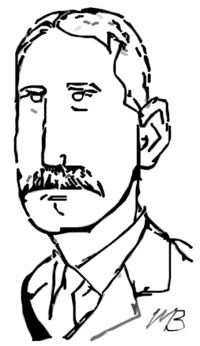
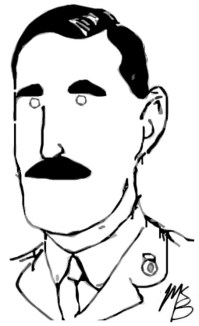
Lt. Col. Burland

Lieutenant Colonel Watty Burland
14th (Royal Montreal Regiment) Battalion

Burland

A cablegram was yesterday received by Mr. B. S. Burland from his brother, Lt. Col. “Watty” Burland senior major and second in command of the 14th Battalion, stating that he had come through the fighting at Langemarcke without injury. Lt. Col. Burland’s cable was brief, but to the point, simply saying, “Pulled through all right.”

 (Montreal Gazette, 4 May 1915, 4)

William Watt Burland was born on 9 September 1877 in Montreal. He had joined the Victoria Rifles of Canada in 1894 and become commanding officer in 1912. He joined the 14th Battalion as second-in-command with the rank of lieutenant colonel. Although he made it through the second battle of Ypres uninjured, he was wounded less than a month later on 10 May 1915.

Continue reading

3rd Infantry Battalion

3rd (Toronto Regiment) Battalion
1st Canadian Division

3rd Bn 1

Robert Rennie was the first 3rd Battalion CO, from September 1914 to November1915, when he was promoted to command the 4th Infantry Brigade.

3rd Bn 2

William D. Allan commanded the 3rd Battalion until September 1916 when he feel deadly ill following a shell splinter wound. His parents returned with the body for burial in Toronto’s Mount Pleasant Cemetery, making him one of the few Canadians buried at home even though he died overseas.

3rd Bn 3

An original officer with the 3rd Battalion, Robert B. Rogers took over after Allan’s death. He remained in command until the end of the war.

2nd Infantry Battalion

2nd (Central Ontario) Battalion
1st Canadian Division

2nd BN 1 A

David Watson was the first 2nd Battalion CO, from September 1914 to August 1915, when he was promoted to command the 5th Infantry Brigade.

2nd Swift

Albert E. Swift commanded the 2nd Battalion until November 1916, about when he learned that his wife had been killed by runaway horses in Quebec. Swift was appointed to command the 14th Infantry Brigade.

2nd Yates

Wilton Yates briefly command the 2nd Battalion until December 1916. While on a training course, Yates suffered severe head injuries when he was in an accident with an overturned bus.

2nd Clark

Robert Percy Clark transferred to the 2nd from command of the 14th Battalion. He relinquished command in May 1917.

2nd McLaughlin

Lorne McLaughlin commanded the 2nd Battalion from May 1917 until 30 August 1918, when he suffered a gunshot wound to the leg. He resumed command from October until the end of the war.

2nd Vanderwater

Roscoe Vanderwater temporary took over the 2nd when McLaughlin was wounded for the month of September 1918.

1st Infantry Battalion

1st (Western Ontario) Battalion
1st Canadian Division

1st Bn 1

Frederic William Hill was the first 1st Battalion CO, from September 1914 to January 1916, when he was promoted to command the 9th Infantry Brigade.

1st Bn 2

Frank A. Creighton succeeded Hill in command of the 1st Battalion in January 1916. He was killed when a shell hit his headquarters on 15 June 1916.

1st Bn 3

Former 9th Canadian Mounted Rifles CO, George C. Hodson was next selected to take command of the 1st Battalion. The appointment of an outsider caused friction with other officers. He was sacked on 16 August 1917.

1st Bn 4

Albert Sparling, who earned a D.S.O. and Bar, commanded the 1st Battalion from 17 August 1917 until the end of the war.

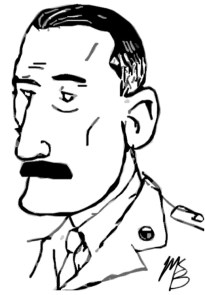
Lt. Col. Docherty

Lieutenant Colonel M. Docherty
Lord Strathcona’s Horse
Docherty

We had 200 men, the Germans about 2,000. We had no artillery support, but the Huns had all kinds. But we stopped their counter-attack. Colonel Docherty fell a few feet from me, shot dead, clean through the head.

  (LdSH soldier’s letter, Winnipeg Tribune, 29 Dec 1917)

Born in Scotland on 1 May, 1877, Malcolm Docherty was a Boer War veteran, marksman and polo player in Winnipeg. A prewar sergeant in the Lord Strathcona’s Horse, he went to France as a lieutenant in May 1915. Six months later, he received a promotion to captain and the Distinguished Service Order for gallantry.

Continue reading

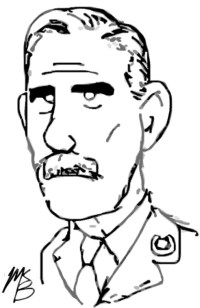
Maj. Dupuis

Major G.E.A. Dupuis
22nd (French Canadian) Battalion

Dupuis

All our senior officers have been hit with the exception of Major Dupuis who seems to stick on through everything. The old battalion will no longer be recognizable.

(Maj. Georges Vanier, 8 Sept)

George Elzer Alexandre Dupuis was a bank clerk born in Quebec City on 31 October 1888. He enlisted with the 57th Battalion on 18 August 1915 before transferring to the 41st in October when he departed for England. As a reinforcement lieutenant he joined the 22nd Battalion in France on 1 July 1916.

Continue reading

The Deadbeat

Colonel D. D. Cameron
17th Reserve Battalion
CameronDD

I expect you wondered why I asked you for Lieut. Col. D.D. Cameron’s address. The reason is because he is the father of my child. I have written to him twice and received no answer. I have given him over 6 months to make up his mind so that I need tell no one which he asked me on my honour no to, but I cannot possible afford to keep Baby myself because I work for a living, which he knew.

(Miss Ivy Smart to Canadian Overseas HQ, 31 Oct 1918)*

Daniel Duncan Cameron was born in Salt Springs, Nova Scotia on 15 March 1859. He had thirteen children with his wife Elizabeth “Bessie.” Although commanding officer of the 78th Pictou Highlanders, he agreed to exchange rank with his second-in-command Major Struan G. Robertson at Valcartier on the formation of the Canadian Expeditionary Force. Robertson was appointed to command the 17th Battalion with Cameron as his second. On arrival in England, to the disappointment of the senior officers, the 17th would not go to France but instead provide reinforcements as a reserve unit.

Continue reading

Maj. Gen. Macdonell

Major General Archie Macdonell
Lord Strathcona’s Horse
MacdonnellAC

“Batty Mac, our brigade commander, was crazy as a coot in many ways, I saw him actually get wounded one day … Somebody said ‘Be careful, sir, there’s a sniper’ and he said ‘Fuck the sniper,’ climbed up to get a look and the sniper took him through the shoulder and he went ass over applecarts into his shellhole from which he had emerged … My god, his language! You could hear him for miles around!”

(G.R. Stevens PPCLI, In Flanders Field interview, 1964)

Born on 6 October 1864 in Windsor, Canada West, Archibald Cameron Macdonell earned the nickname “Batty Mac” for his disregard of danger under fire. He graduated from the Royal Military College of Canada in 1886 and joined the Canadian Militia before transferring to the North-West Mounted Police. He volunteered during the Boer War and was commanding officer of the Lord Strathcona’s Horse at the outbreak of the First World War.

Continue reading

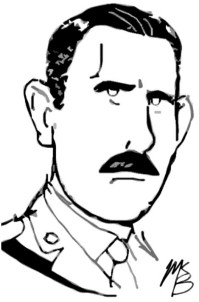
Lt. Col. MacDonald

Lieutenant Colonel D.J. MacDonald
Lord Strathcona’s Horse

For conspicuous gallantry and devotion to duty. In the attack launched by a cavalry brigade he led the reserve squadron of the regiment to the attack. Though suffering acute pain from a wound in the ankle, he continued to direct operations and led his men forward until the position was finally secured. But for his outstanding courage, skill and dash the position could not have been held

(Lt. Col. MacDonald, D.S.O. Bar citation, 1 Jan 1918)

Donald John MacDonald was son of an Ontario MPP and farmer born on 25 July 1889 in Glengarry, Ontario. He was commissioned as a lieutenant in Lord Strathcona’s Horse (LdSH) on 22 September 1914 and proceeded to France on 4 May 1915. After less than a month he was wounded and returned to recover in England and was given rest leave to Canada. He rejoined the LdSH in the field in October 1915 and within a few months had been promoted to major. Continue reading

Lt. Gen. Alderson

Lieutenant General Edwin Alderson
Canadian Corps

Alderson

A great deal of my time is taken up in preventing men being appointed to command Brigades, Battalions, etc., who are not in the least fit, but who have influence. In most cases I have succeeded, and in others I have told them after they have been here a short time ‘I am very sorry, but it is my duty to tell you that you have not the experience, capacity, and above all, the personality to successful command men on active service,’ – and they have gone!

(Alderson to Robert Borden, 13 March 1916)

Sir Edwin Alfred Hervey Alderson was a professional British Army officer and first commander of the Canadian Corps. Born on 8 April 1859 in Capel St Mary, England, Alderson received his commission at seventeen and served in several African campaigns. He came out of semi-retirement after the outbreak of the First World War and was appointed to command the 1st Canadian Division in September 1914.  Due to disagreements about training, discipline, and officer selection, Alderson soon found himself subject to the vitriol and opposition of Canada’s bombastic militia minister Sir Sam Hughes. Continue reading