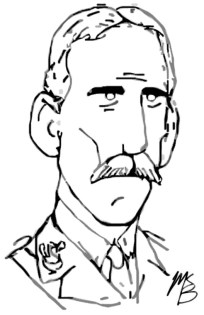
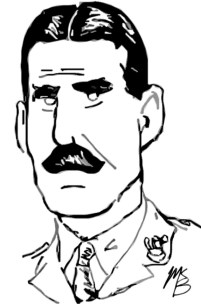
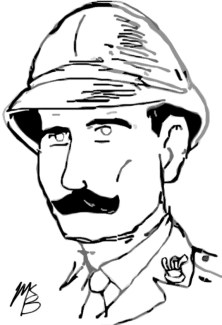
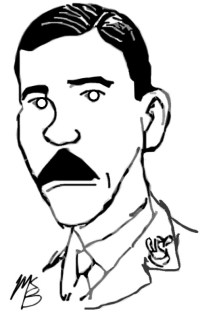
Maj. Gen. Burstall

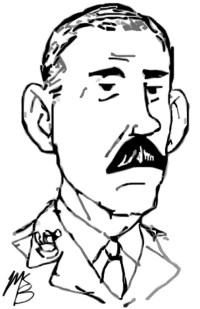
Major General Sir Henry Burstall
2nd Canadian Division
Burstall

General Sir H.E. Burstall who commanded the Canadian artillery in the late war, was reputed to have an iron nerve, and, in action, to have been one of the coolest men in the army. Nothing, it was said of him so quickly aroused his anger as to see a man give way to fear, even momentary fear, and he seldom let such action pass in silence.

 (Vancouver Daily World, 28 Oct 1922, 22)

Born on 26 August 1870 in Sillery, Quebec, Henry Edward Burstall was a graduate of the Royal Military College, Boer War veteran and Permanent Force artillery officer. He commanded the 1st Division Artillery from September 1914 until September 1915 when he was elevated to GOC of the Royal Canadian Artillery Corps. In December 1916, Burstall replaced Major General Richard Turner of the 2nd Canadian Division.

Continue reading

Lt. Col. Worthington

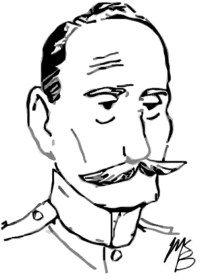
Lieutenant Colonel E.B. Worthington
17th Reserve Battalion

I do not believe that you could have searched your entire county and selected a better man than Colonel E. B. Worthington. A Sherbrooke boy from A to Z, a man who served his (our) country with dignity and distinction; a soldier who was an honor to the (our) dear old British flag; a man that no one can point their finger of scorn at; a man who will make a politician — No, No, a thousand times No — but a man who will make a statesman, an honorable Christian man who will represent the constituency with dignity.

(Letter to Sherbrooke Daily Record, 28 Oct 1925, 12)

Born on 1 December 1860 in Sherbrooke, Canada East, Edward Bruen Worthington was a notary, municipal official, former mayor of Sherbrooke, and long serving militia officer having first joined as a bugler in 1877. He was former commanding officer of the 53rd Sherbrooke Regiment, organized the 11th Hussars, and commanded the Eastern Townships Mounted Brigade since 1911. In January 1915, he replaced Lieutenant Colonel Struan G. Robertson in command of the 17th (Reserve) Battalion in England.

Continue reading

Lt. Col. Sissons

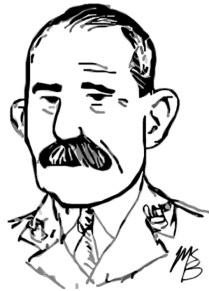
Lieutenant Colonel Frank O. Sissons
1st Mounted Rifles Brigade
Sissons

Col. Sissons is a real westerner in every sense of the word.

(Edmonton Bulletin, 14 Nov 1914, 1)

Born in Burnside, Manitoba on 23 March 1868, Frank Ogletree Sissons was a militia officer, rancher, and landowner in Medicine Hat. He had created the 21st Hussars in 1908 and with the formation of the Canadian Mounted Rifles in November 1914, Sissons was initially given command of the 3rd CMR. The militia council had selected Colonel Victor Williams to command the 1st CMR Brigade, but militia minister Sam Hughes favoured Sissons to represent the West. He was appointed brigade commander in March 1915.

Continue reading

Brig. Gen. Smart

Brigadier General C.A. Smart
2nd Mounted Rifles Brigade

Germany waged war with one idea, and that was world domination or disaster. Well, she had achieved the alternative—disaster—and let her pay the price.  

(Smart quoted in Folkestone Express, Sandgate, Shorncliffe & Hythe Advertiser, 16 Nov 1918)

Born in Westmount, Quebec on 1 January 1875, Charles Allen Smart was a militia officer, manufacturer, and politician. Commissioned since 1898, he commanded the Eastern Townships Cavalry Brigade and was elected to the legislative assembly as Conservative member for Westmount in 1912. With the formation of the Canadian Mounted Rifles, militia minister Sam Hughes offered Smart the command of the 2nd CMR Brigade in July 1915.

Continue reading

Brig. Gen. Elmsley

Brigadier General Jim Elmsley
8th Canadian Infantry Brigade
Elmsley

Facial expression slightly nervous, tremulous and changeable. Has been worrying excessively over routine matters, particularly having to meet people. Has been excessively worried over the ordinary conditions arising in the Brigade under his command. Sleep is fair, but there are times when he will be awake for three or four hours.

 (Medical Board Report of Brig. Gen. Elmsley, 4 June 1918)

Born in Toronto on 13 October 1878, James Harold Elmsley was a professional soldier and Boer War veteran. During the South African campaign, he was shot through the chest but somehow survived. On the start of the Great War. he was appointed second-in-command of the Royal Canadian Dragoons, followed by a brief period commanding the Canadian Light Horse. After Brigadier General Victor Williams was captured at the Battle of Mont Sorrel, Elmsley assumed command of the 8th Infantry Brigade in June 1916.

Continue reading

Col. Nelles

Colonel Charles M. Nelles
Royal Canadian Dragoons

It will thus be seen that he had enjoyed the exceedingly unique distinction of having served his Sovereign and country on three occasions, the Canadian Rebellion, the Boer War and the world hostilities, which broke out in 1914. His military honors were many. He was mentioned in dispatches, awarded the D.S.O. and became a Companion of the Order of St. Michael and St. George.

(Brantford Expositor, 15 Feb 1936)

Born in Brantford, Canada West on 31 August 1865, Charles Mecklan Nelles was a Permanent Force soldier and veteran of the 1885 Rebellion and the Boer War. In summer 1914, his son Norman, who had just received a commission at RMC, joined a British Army regiment while his son Percy was already serving in the Royal Canadian Navy. On 29 January 1915, Second Lieutenant Norman Nelles of the Northamptonshire Regiment was killed in France. Four months later his father went to France as commander of the Canadian Dragoons, which fought dismounted as part of the 1st Canadian Division.

Continue reading

Lt. Col. Walkem

Lieutenant Colonel Hugh C. Walkem
107th (Timber Wolves) Battalion

He was created a chief of the tribe by the name La-de-see, or Great Warrior. The ceremony took place in the Montreal Curling rink and was largely attended by the Indians as well as by pale faces. A war bonnet was placed on the head of the new chief by Chief Clear Sky. Clear Sky was overseas with about 200 other Indians in the 107th Battalion commanded by Colonel Walkem.

(Kingston Whig-Standard, 17 Jan 1934, 2)

Hugh Crawford Walkem was an insurance broker born in Kingston, Ontario on 19 August 1874. A member of the 5th Highlanders of Canada in Montreal, he enlisted as a captain with Lieutenant Colonel Cantlie’s 42nd Battalion in May 1915. Having distinguishing himself in France, he was attached to the Canadian Training School as an instructor in October 1916.

Continue reading

Lt. Col. Leonard

Lieutenant Colonel Ibb Leonard, D.S.O.
7th Canadian Mounted Rifles & Canadian Light Horse

Leonard

Talking about spring, I was much struck on Monday when up in front to see the buds and grass started in little pieces here & there that had not been touched by shell fire even trees that were half shot away seemed to be make an effort to abide the summons of spring and sprout a few little buds.

 It was almost pathetic and made you want to curse and crush the ruthless hands that are responsible for all this destruction and sadness in the face of beautiful and wonderful nature. One almost wonders why God allows it but wonderful are his ways and we must try and understand them and have faith that He is working out a great problem for our good. I can hear the steady rumble of the guns as well as the singing bird.

(Lt-Col. Leonard to sister, 2 May 1917)

Born in London, Ontario, on 30 July 1882, Elton Ibbotson (Ibb) Leonard was a graduate of the Royal Military College and McGill University. On the outbreak of the Great War, as a militia officer with eleven years in the 1st Hussars, he applied several times for an appointment with the Cavalry Brigade without success. Discouraged by the few opportunities for a cavalryman in a modern war, he was appointed to command the 7th Canadian Mounted Rifles in February 1915.

Continue reading

Lt. Col. Watt

Lieutenant Colonel E.J. Watt
240th (Renfrew) Battalion

Watt

I would prefer to assist in organizing Bombing squadrons composed of men of 45 years of age & over who could qualify as aviators.… Teach us to fly and drop Bombs. Just as soon as we are competent and capable send us to France, give us machines and bombs and say ‘This is your machine, there are your bombs and there’s the enemy country so go to it and if you come back, there are plenty more bombs. And I herewith volunteer to take the first machine across and knock H– out of enemy infantry & country.

(E.J. Watt to defence minister, 26 Sept 1939)

Born in Lamarck, Ontario on 4 July 1884, Edgar John Watt was a stove and furnace manufacturer with twelve years’ experience in the 42nd Regiment. Although denied a posting as second-in-command of the 130th Battalion for lacking field officer qualifications, by June 1916 he had been given command of the 240th Battalion. Former 42nd Regiment commanding officer, fifty-three year old Lennox Irving, came out of retirement to serve as Watt’s second-in-command.

Continue reading

Lt. Col. Macdonald

Lieutenant Colonel J.B.L. Macdonald, D.S.O.
3rd Canadian Railway Troops

MacdonaldJBL

This being dominion day and the fiftieth anniversary of Confederation the personnel of this observed a holiday so far as was possible.

(3rd CRT, war diary, 1 July 1917)

Born in Invernessshire, Scotland on 22 July 1867, James Brodie Lauder Macdonald was second-in-command of the 239th Battalion under Vancouver railway tycoon Colonel Jack Stewart. Prior to the war, Macdonald had been a railway contractor in one of Stewart’s firms and member of the 72nd Seaforth Highlanders. He appears to have lowered his age five years on enlistment.

Continue reading