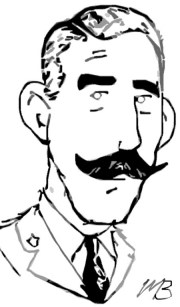
The Myth Maker

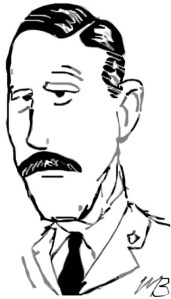
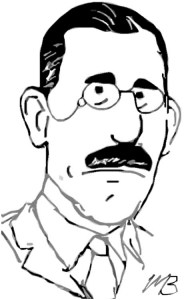
Brigadier General Alex Ross, D.S.O.
28th (Northwest) BattalionARoss

…the barren earth erupted humanity. From dugouts, shell holes and trenches, men sprang into action, fell into military formations and advanced to the ridge–every division of the corps moved forward together. It was Canada from the Atlantic to the Pacific on parade. I thought then, and I think today, that in those few minutes, I witnessed the birth of a nation.

(Brig. Gen. Ross, History of the 28th Battalion, 1961, preface)

Alexander Ross was a Saskatchewan lawyer who rose from a militia lieutenant to brigadier general of the 6th Infantry Brigade. Born on 2 December 1880 in Forres, Harashire, Scotland, Ross immigrated to Regina in the Northwest Territories with his family at the age of six. After graduating from the University of Manitoba with a law degree, Ross became a barrister with King’s Counsel and joined the 95th Rifles. In December 1914, he enlisted as a company commander with the 28th Battalion recruited from Saskatchewan.

Continue reading

The General

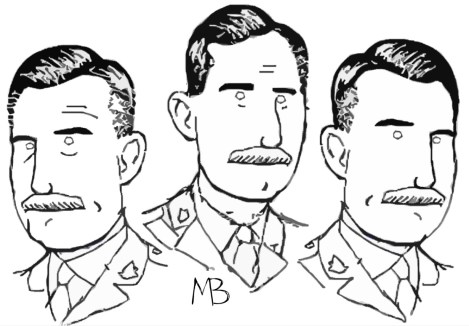
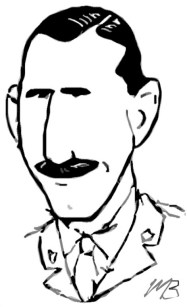
Lieutenant Colonel Robert James Bates
212th (Winnipeg Americans) BattalionBates

The distinctive thing about the battalions in the Legion, of course, is that they are all American, from the humblest private to the commanding officer. In the American army we have Negro regiments commanded by American officers, but the Canadians have placed all responsibility for the battalions in the Legion on American shoulders, and the Americans believe that they will consent to an American general at the head of a division if enough Yankees turn out to form one.

(The Outlook, 28 June 1916, 504)

Robert James Bates was a Canadian-born general in the Michigan National Guard. Born in 1868 in Feversham, Ontario, he moved to the United States with his family at the age of seven. He served for twenty-five years in the American army and was a captain with the 34th Michigan Volunteer Infantry during the Spanish American War.

Continue reading

The Brooklyner

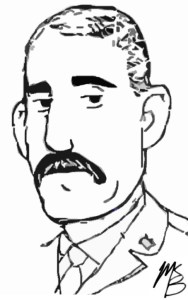
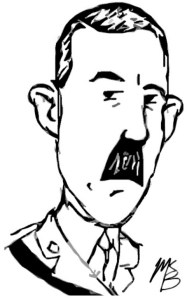
Major George C. Hart
97th (American Legion) Battalion

Major G. C. Hart, a big muscular soldier with a scowl engraved on his leathery face…

(J. W. Pegler, Altoona Mirror, 23 Nov 1916, 2)

George Clark Hart was a twenty-year veteran of the New York National Guard who fought in Cuba during the Spanish-American war and Mexico during the revolution. He was born on 16 April 1875 in Elmira, New York. He was also military drill instructor and disciplinarian at the Elmira Reformatory.

Continue reading

The Undead

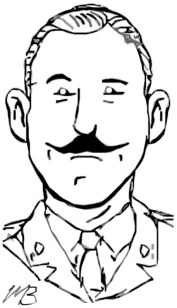
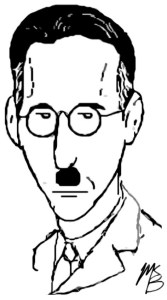
Lieutenant Colonel Joseph A. Dansereau
69th (Canadien-Français) Battalion

I made Lieutenant Dansereau my acting adjutant. He was my scout master and signalling officer, and when I went into the trenches either he or one of the other young rascals would step up smartly and start a conversation when I was passing a dangerous spot. I noticed that these escorts always got between me and the German lines so that if a bullet came they would get it first. This touched me very deeply but I made them stop it. No commanding officer was ever served more devotedly by his officers than I have been.

(J. A. Currie, The Red Watch, 1916, 176)

Born on 15 November 1890 in Montreal, Joseph Adolphe Dansereau was the son of Clément-Arthur Dansereau (1844—1918), influential Liberal journalist and editor of La Presse. A graduate of the Royal Military College and member of the Corps of Guides, the twenty-five year old Dansereau was one of the youngest CEF colonels when he was appointed to raise the 69th Battalion from Montreal in July 1915.

Continue reading

The Mayor

Lieutenant Colonel C. M. R. Graham, D.S.O.
142nd (London’s Own) BattalionCGraham

“I wish to emphatically deny that the 142nd London Battalion was concerned in the recent alleged incident at the ceremonial parade before Sir Sam Hughes.”- Col. Graham

The above disclaimer refers to the “booing” that it is said, broke from the ranks of the London brigade as they passed the saluting base for the second time.

(“142nd Did Not ‘Boo’ Sir Sam,” Toronto Globe, 13 July 1916, 2)

Born on 16 March 1866, Charles Milton Richardson Graham was three-term Conservative mayor of London, Ontario from 1911 to 1914 and raised the 142nd Battalion from his hometown. Although noted for his bravery overseas, Graham was also the centre of scandal due to his unethical conduct and abuse of power.

Continue reading

Another Sportsman

Lieutenant Colonel Peter E. Bowen
202nd (Sportsman’s) BattalionBowen

This officer is well developed. Complains of pain inch above umbilicus at times. Has vomiting of coffee ground and even pure blood. Has passages of large amount of black blood by bowel. When these attacks come on he feels very weak, and breaks out in cold sweats.

(Medical History of Invalid, Edmonton MCH, 26 Sept 1917)

Born on 14 February 1874 in Metcalfe, Ontario, Peter Edwin Bowen was a well-known Alberta hunter, trapper and marksman. An insurance broker in civilian life, Bowen also belonged to the 19th Alberta Dragoons. In August 1914, he enlisted as a captain in the 9th Battalion before transferring into the 2nd Battalion. While fighting at Langemarck during the second battle of Ypres on 23 April 1915, Bowen was shot in the head. Although he only suffered a scalp wounded, he was eventually forced from the field after the battle of Festubert in May due to nearly fatal gas poisoning.

Continue reading

The Sportsman

Lieutenant Colonel Dick Greer
180th (Sportsmen) Battalion
Greer

But the English and Canadians and Australians fight in a different way. They make a sport of fighting.

The German soldier has no sport. He is a machine; he is rigidly in his place. He can’t understand the idea that fighting is sport to the British. That long line of men charging, laughing and kicking a football along ahead terrifies him.

(Greer to Fosdick Commission, Toronto Globe, 18 June 1917, 9)

As president of the Sportsmen’s Patriotic Association, Richard Haliburton Greer proposed to raise a battalion of athletes from Toronto. Born on 19 October 1878 in Toronto, Greer was an Ontario Crown attorney and one of the city’s leading sportsmen. In his youth, Greer played amateur and semi-professional baseball. As a member of the University of Toronto ball club in the late 1890s, he was regarded as “one of the best short-stops in Canada.” In the 1898 UofT yearbook, Greer cited as his chief ambition in life: “To play the game.”

Continue reading

The Diarist

Lieutenant Colonel Lewis H. Beer
140th (St. John’s Tigers) Battalion

I forgot to mention that Gen. Seeley [sic] comes back on Tuesday the 10th. Well I have made up my mind to not stay when he returns. I am quite sure I would only get into trouble and would never feel easy under his command knowing he is not to be trusted. He is the kind of man who pats you on the back and at the same time knifes you. I want nothing to do with him. I have discovered him now in several lies not only about me but about other people. I have applied to return to England at the same time if humanly possible. I am going to make every effort to secure another place in France.

(L. H. Beer, Diary, 8 July 1917)

Lewis Herbert Beer was born in Charlottetown, Prince Edward Island on 12 December 1873. He was a member of Loyal Orange Lodge No. 614, worked in insurance and belonged to the 36th P.E.I. Light Horse. In October 1914, Beer joined Lord Strathcona’s Horse as a lieutenant. He served in England and France until December 1915 when he returned to Canada in order to raise the 140th Battalion from New Brunswick.

Continue reading

The Aristocrat

Major General Jack Seely, M.P.
Canadian Cavalry Brigade Seely

It was at that time, when carrying out a smaller raid, that my horse got shell-shocked, though not myself, I hope, and fell on me and smashed up five bones in my poor old body. However, I managed to get back all right.

(Seely Speech, Empire Club of Canada, 4 Oct 1920)

John Edward Bernard Seely, 1st Baron Mottistone, was a British soldier and politician. Born on 31 May 1868 in Brookhill Hall, Derbyshire, he was the son of Sir Charles Seely (1833—1915), a long-serving Liberal Unionist MP. During the Boer War, Seely joined the Imperial Yeomanry and won the Distinguished Service Order. In 1900, he was elected to the House of Commons as a Conservative. In 1904, he switched to the Liberal Party and later became a cabinet minister in Prime Minister Herbert Henry Asquith’s Government.

Continue reading

The Old Soldier

Lieutenant Colonel Robert Belcher
138th (Edmonton) Battalion
Belcher

I have in mind a man who has served for many years, first in the British Army, and afterwards in the Northwest Mounted Police and then in the South African war. Finally he was authorized to raise a battalion at Edmonton. On strength of his military experience and on the strength of his personal standing, he did raise a battalion without any serious difficulty. Surely such a man with such a battalion, raised under such circumstances—surely it would be right and proper that that battalion should go to the front intact under such leadership.

(Frank Oliver, Debates, 23 Jan 1917, 76)

Criticizing the breakup of the Canadian battalions, Frank Oliver, Liberal MP for Edmonton, alluded to the experience of Colonel Robert Belcher. Born on 23 April 1849 in London, England, the sixty-seven year old soldier and policeman was “one of the real old-timers in the west.”

Continue reading