Lieutenant-Colonel Art Hay
Argyll and Sutherland Highlanders of Canada
Algonquin Regiment
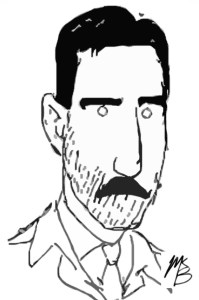
I knew when we landed in Normandy last July that I had with me the “fightingest” outfit in the Canadian Army and you have exceeded all my expectations. Though, to my bitter regret, I was not able to be with you after the middle of August last year, my thoughts and heart at least went with you.
(Hay, Teepee Tabloid, 19 Jul 1945, 2)
Born on 8 April 1909 in Killarney, Manitoba, Arthur John Hay was a Hamilton salesman and adjutant for Argyll and Sutherland Highlanders of Canada (Princess Louise’s). In September 1941, the battalion was dispatched for garrison duty in Jamacia, where Hay acted as instructor at the island’s tactical school. In May 1943, the A&S Highlanders were recalled to Canada in preparation of overseas service. As First World War veteran Lieutenant-Colonel Ian Sinclair was overage, Hay led the battalion to the United Kingdom in August 1943.
In October, he handed command of the Highlanders to Lieutenant-Colonel J.D. Stewart, former brigade major for 8th Infantry Brigade. In March 1944, Hay was appointed to command the Algonquin Regiment, succeeding recently promoted Brigadier Bill Megill. Less than five months later, in July, he led his new battalion into its first action on the battlefield of Normandy.
Operation Totalize on 9 August began disastrously for the 4th Division. Amid the many casualties and destroyed tanks, Hay had been badly hit. He lost and leg and would he left paralyzed. Command of the Algonquins fell to Major R.A Bradburn.
Hay was evacuated to England and underwent prolonged hospitalization in Canada. As the Algonquins prepared for demobilization in late 1945, the battalion newspaper reported their former commander’s grave condition: “Col Hay is in Lyndhurst Lodge. He has great difficulty, being paralysed from the hips down—but he swears by the Holy Mother of Angus he’ll beat it and walk again—a grand show.” Hay wrote to his old battalion:
Through the kindness, of a good number of you, I was able to follow some part of your progress through France, the Low Countries and Germany and my pride in the regt. is absolutely without bounds … It was not my good fortune to be with the Regiment for a longtime, but for the five months I did have with you. I do want to thank every Algonquin for the most loyal support a C.O. ever had. Goodluck and a safe journey ho- me to ail.
A founding member of the Canadian Paraplegic Association, Hay devoted his efforts to rehabilitation and support for the disabled. He was released rom hospital in 1947 and returned to Hamilton where he worked in car sales.
He died in Toronto on 4 June 1949 at the age of 40 from complications of the severe war wounds.

