Lieutenant-Colonel Don Worthington
28th Armoured Regiment (B.C. Regiment)
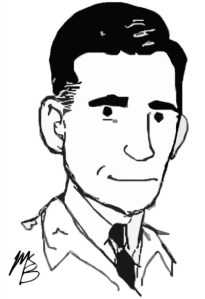
Lt.-Col. Worthington was a fearless, inspiring figure as he moved around the fire-swept square on foot, encouraging the men and organizing the defense … In the afternoon, he was hit by shrapnel when he was out on the perimeter trying to point targets for Canadian artillery. But he carried on. Late in the day he was killed and his regiment’s tribute to him is—there could not be a better commanding officer.
(Ross Munro, Vancouver Province, 4 Dec 1944)
Born on 3 March 1913 in Vancouver, Donald Grant Worthington attended the University of British Columbia and worked as a pharmacist with his brother Jack in the family business. A captain in the British Columbia Regiment since 1934, he mobilized with the unit in May 1940 alongside his younger brother. He went overseas with an advance party of the now redesignated 28th Armoured Regiment and in early 1943 gained combat experience serving the in North African campaign.
In Tunisia, he commanded a tank with the 2nd Battalion, Lothians and Border Horse. Worthington earned a mention in despatches for saving a group of Canadian officers with the Grenadier Guards. Pinned down by enemy fire, a captain recounting seeing a tank emerge over a hill: “It got within shouting distance and I heard a good Canadian voice cry out from the tank: ‘Give me a target, pal, give me a target! … It turned out to be Major Worthington and we gave him plenty of targets.”
On rejoining the B.C. Regiment in April 1943, he completed a senior officers’ course and became second-in-command. He succeeded Lieutenant-Colonel C.E. Bailey in August. After nearly a year of training and preparation, the regiment deployed to Normandy with the 4th Armoured Brigade in July 1944. On 9 August, Worthington led a first into battle for the first time during Operation Totalize.
In the ensuing fighting, the regiment lost nearly fifty tanks and suffered over one hundred killed including Worthington. Major Jack Worthington was killed in a friendly fire incident a week later, and both brothers were reburied beside one another. In 1947, the French government present Don’s posthumous Croix de Guerre to his father.

