Lieutenant-Colonel J.J. Hurley
Royal Hamilton Light Infantry
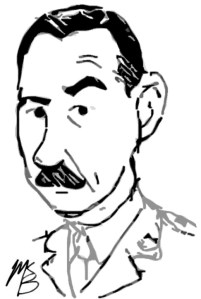
If the government of Canada intends to erect a war memorial in Europe in memory of her dead of the Second Great War, I suggest it be a living memorial, not another Vimy Memorial, which, however, is a beautiful piece of work.
(Quoted in Brantford Expositor, 11 Jun 1946, 2)
Born on 13 August 1897 in Brantford, Ontario, James Joseph Hurley was a First World War veteran, businessman and commanding officer of the Dufferin and Haldimand Rifles. When that regiment was not mobilized for active overseas service, Hurley reverted to major to embark with the Royal Hamilton Light Infantry as second-in-command. In England, he was promoted back to lieutenant-colonel to head of No. Army Tactical Training School.
When Lieutenant-Colonel Bob Labatt was taken prisoner in the Dieppe Raid of 19 August 1942, Hurley returned to the RHLI and assumed command. He oversaw the rebuilding of the regiment until recalled to Canada in April 1943. Command passed to Lieutenant-Colonel J.M. Rockingham. Hurley became chief instructor at the Royal Military College and commandant of the Canadian Army Staff College.
Now promoted to colonel, in April 1944, he returned overseas in a civil affair capacity. After the landings at Normandy and the liberation of Caen, Hurley became civil administrator for the city. As the First Canadian Army advanced into Germany, he acted as chief of organization for military government in the occupied Rhineland region. He ended the war with the Canadian Mission in Berlin.
Speaking of his civil affairs experiences overseas and the human side of the conflict, Hurley advocated for “a truly living war memorial.” Another artistic work such as Vimy monument, he argued, “will not keep out the rain, nor will it feed the hungry and teach the young.”
Postwar Hurley continued diplomatic duties with External Affairs. Postings included counsel in Detroit from 1948 to 1951, high commissioner to Ceylon from 1953 to 1957, and high commissioner to South Africa from 1957 to 1961, when he became ambassador to the country.
He died in Brantford, Ontario on 30 December 1963.

