Brigadier Paul Bernatchez
Royal 22e Régiment
3rd Infantry Brigade
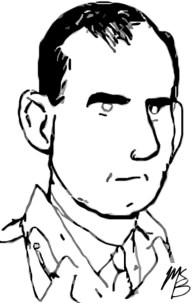
Lieutenant Colonel Bernatchez, a Captain in the Royal 22nd Regiment on the outbreak of war, proceeded overseas in command of a company. His energy and enthusiasm and exceptional military knowledge resulted in his command in October 1941. Those same attributes are responsible for the high degree of discipline and morale of all ranks of his regiment.
(O.B.E. citation, 1 Jan 1943)
Born in Montmagny, Quebec, on 1 March 1911, Joseph Paul Emile Bernatchez was a graduate of RMC and one of fewer than fifty francophones in the Permanent Force prior to mobilization in 1939. In October 1941, at the age of only thirty, he succeeded Lieutenant-Colonel P.E. Poirier. As his two predecessors had been First World War veterans, this appointment signaled a changing of the guard of the francophone regiment. His over two years in command from training in the United Kingdom to the battlefields of Sicily and Italy represented an unusually long tenure for a battalion commander.
He was made an Officer of the British Empire (OBE) even before the unit went into combat but confirmed his leadership skills once under fire. He earned the Distinguished Service Order for his actions on 6 October 1943, a month after the invasion of Italy:
The leadership, skill, courage and devotion to duty of Lt-Col. Bernatchez was an inspiration to the officers and men under his command and the position was not only held under most difficult operational and weather conditions but, by skillful manoeuvre the enemy was pinned and eventually dislodged from the position.
In December 1943, Bernatchez reluctantly went on rest leave and relinquished command to Major J.V. Allard. He returned to the field in April with a promotion to take over the 3rd Infantry Brigade, which included the 22nd Regiment. With this appointment, he became the first francophone Canadian brigadier in the field during Second World War, serving throughout the campaigns in Italy and Northwest Europe.
In his postwar military career, Bernatchez advocated bilingualism across the forces and called for improvements to francophone enlistment. He argued that French Canadian recruits would not find opportunities for advancement so long as the army remained an anglophone institution. His proposals largely rejected or ignored; he retired as a major-general in 1965.
He was colonel of the Royal 22nd Regiment from 1964 to 1974.
He died on 13 November 1983 and is buried at the National Field of Honour Cemetery in Pointe-Claire, Quebec.

