The Americanist

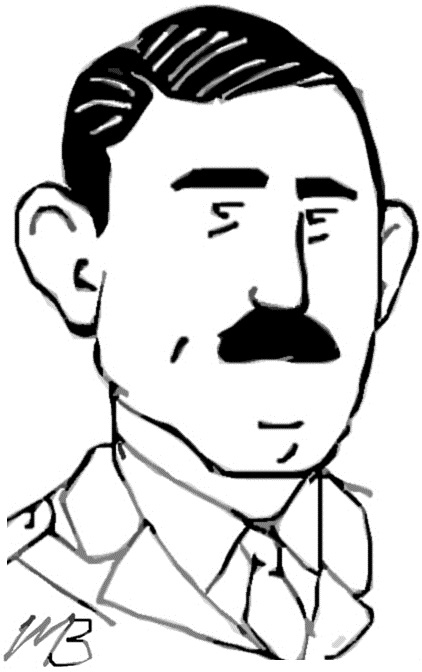
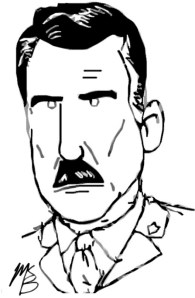
Lieutenant Colonel P. A. Guthrie, M.P.P.
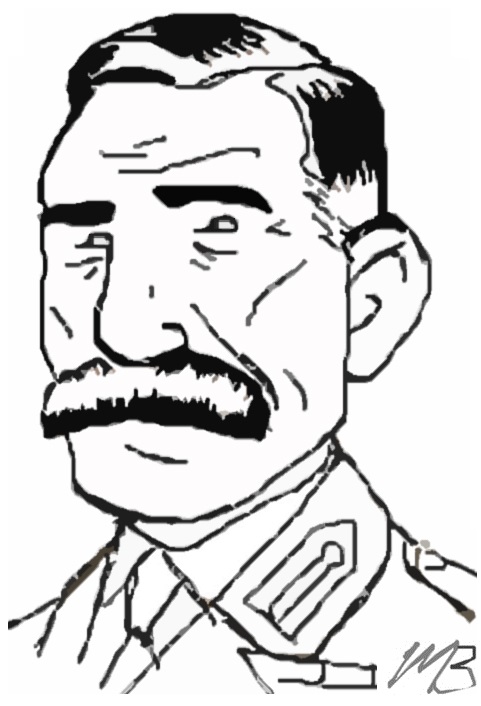
236th (Sir Sam’s Own) BattalionGuthrie
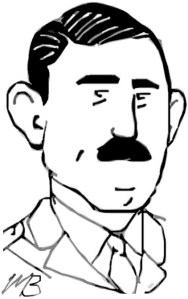
I do confess to be a Christian, but I must confess that when the time comes and we have the chance to even up old scores, I want to see their [German] towns leveled with the earth; I want to see their farmhouses in smoke; I want to see their land laid waste and desolate; and I want to see them fleeing before fire, sword and hate…

If I can but see this and help it on its way I will be happy to fall in the rush of victory…

(Boston Globe, 6 Jan 1918, 15)

Born on 20 June 1884 in Oromocto, New Brunswick, Percy Albert Guthrie was an Orangeman and Conservative member of the provincial legislature. He was one of the first volunteers to join the Canadian Expeditionary Force and sailed to England with Lieutenant Colonel Harry McLeod’s 12th Battalion. He fought with the 10th Battalion at Second Ypres and was seriously wounded by a shell explosion at Festubert on 25 May 1915.
Continue reading

The Ypres Three

Lieutenant Colonels
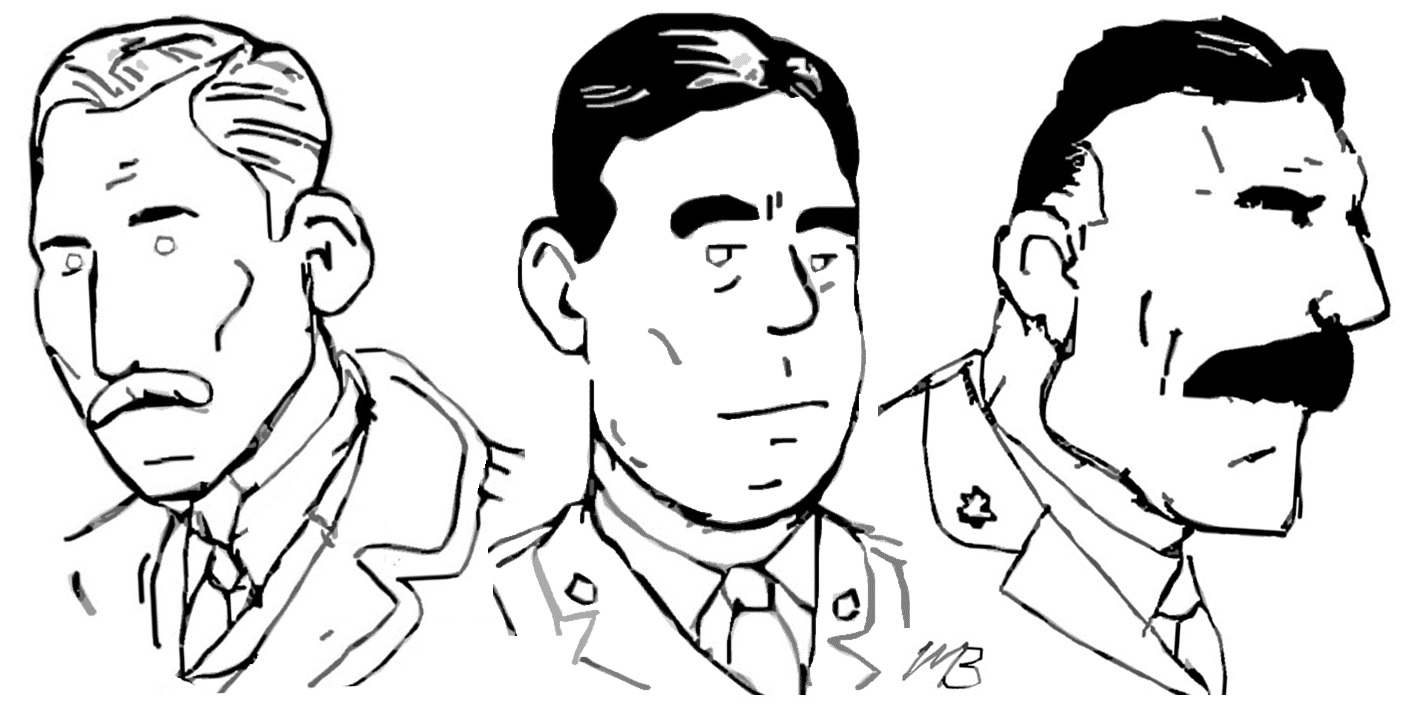
Birchall, Hart-McHarg & BoyleYpres3

The more details I learn of the battle before Ypres, the greater to me does the resourcefulness and bravery of brigadiers, battalion commanders, and individuals become apparent.

(General Horace Smith-Dorrien, Apr 1915)

The Canadians had many casualties, but their gallantry and determination undoubtedly saved the situation.

(Lord Kitchener, April 1915)

This week marks the one hundredth anniversary of the second battle of Ypres, the first major action of the Canadian Expeditionary Force. The battle saw 5,000 Canadian soldiers wounded and nearly 1,000 killed including three battalion commanders. On 23 April 1915, Arthur Birchall (4th Battalion) was struck down leading his men armed only with his cane. On 24 April 1915, William Hart-McHarg (7th Battalion) was shot and killed while on a reconnaissance operation. On 25 April, Russell Boyle (10th Battalion) died of severe wounds and loss of blood at a clearing hospital. All three had belonged to the 2nd Brigade under the command of Brigadier General Arthur Currie.

The Commander

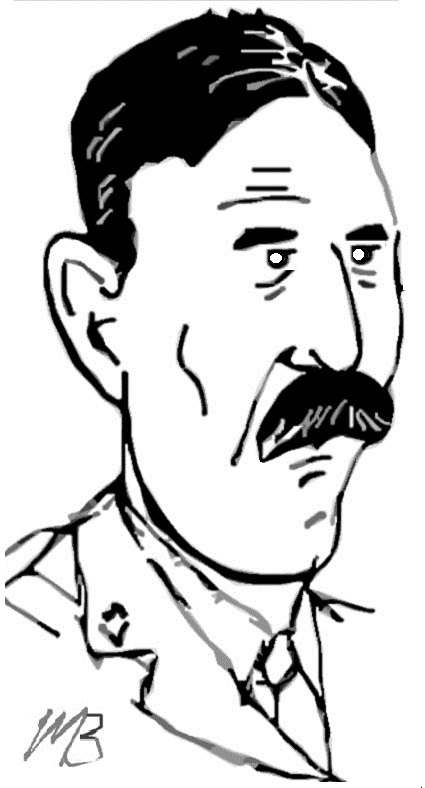
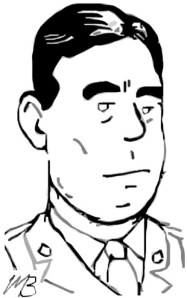
Brigadier General G. S. Tuxford, D.S.O.
5th (Tuxford’s Dandies) BattalionTuxford

On the 24th [April 1915] Major Hilliam, my adjutant, called me out about 4 o’clock in the morning to witness a huge wall of greeny, yellow smoke that was rolling up the hillside. We had no idea what it was, but thought it might have something to do with the reported gas attacks of the preceding day. We were not long left in doubt.

(Tuxford, “After Action Report,” 10 Mar 1916)

Born in Wales on 7 February 1870, George Stuart Tuxford was a Moose Jaw homesteader, rancher and militiaman. In August 1914, he received authorization to raise two mounted units from the West. He later explained, “In the one battalion I placed the 12th, 16th, 27th, 29th, 30th, 31st, 35th (Light Horse) and Corps of Guides. This battalion became the 5th Canadian Infantry Battalion, and later on being asked to select a name for the battalion, I could think of no better than that of Western Cavalry, and as such they remained the 5th Battalion, Western Cavalry.”

Continue reading

The Fruit Farmer

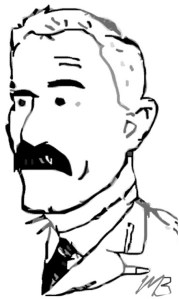
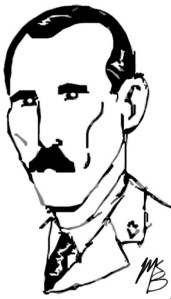
Lieutenant Colonel Berkeley Henry Belson
81st (Niagara) BattalionBBelson

I saw many deeds performed by my own men which in an ordinary campaign would have won the Victoria Cross for them, such as binding up wounded comrades and carrying them to shelter under hot fire. Nobody wavered.

(Maj. Belson’s account of Second Ypres, Toronto Globe, 20 May 1915, 3)

Before the war, Berkeley Henry Belson was a fruit farmer in the Niagara Peninsula outside of St. Catharines. Born on 28 May 1871 in Gloucestershire, England, Belson served for six years as an infantry and artillery volunteer in the British army. His father was a Crimean War veteran and had fought in various colonial campaigns from New Zealand to China. After immigrating to Canada, the younger Belson joined the 19th Lincoln Regiment.

Continue reading

The Ross Rifleman

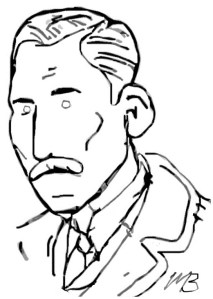
Lieutenant Colonel C. H. Ackerman
247th (Victoria & Haliburton) BattalionAckerman

Officer is troubled with insomnia. There is also a history of nervous symptoms following his wounds. This nervous condition is referred to in previous boards. Officer is slight in build but fairly well nourished and up to his normal weight, no organic disease.

(Ackerman, “Medical History of Invalid,” Kingston, 12 Mar 1918)

While fighting with the 2nd Battalion at Festbuert in June 1915, Lieutenant Charles Haydn Ackerman suffered a gunshot wound to the shoulder and shrapnel injuries to the scalp. Born in Port Perry on 28 July 1888, Ackerman was a manufacturer in his father’s firm and member of the 57th Regiment. He was evacuated from the trenches to England, where he was treated for his physical injuries and mental overstrain.

Continue reading

The Hometown Hero

Colonel Mac Colquhoun, D.S.O.
4th (Central Ontario) BattalionColquhoun

People here have quite a different opinion of the Canadians now. They want to have the Canadians in the fighting all the time. We are classed now among the very best troops.

(Colquhoun to Wife, Apr 1915, History of Brant County, 1920, 451)

Born in Mulmur, Ontario on 13 April 1869, Malcolm Alexander Colquhoun was a Brantford contractor and captain with the 38th Dufferin Rifles. In August 1914, he enlisted in Lieutenant Colonel Robert Hodgetts Labatt’s 4th Battalion. In command of “B” Company at Second Ypres, he was one of the only officers in the entire battalion to emerge unwounded from the battle. Describing the fighting to his wife, Colquhoun wrote, “To put it plainly, it was a perfect hell.”

Continue reading

The Fearless

Lieutenant Colonel Arthur Birchall †
4th (Central Ontario) Battalion Birchall

A few years ago it was thought that a soldier was a machine, and should never be allowed to think for himself; the South African War altered all that, as far as our Army was concerned; the soldier is now taught to use his brains and to take advantage of ground and cover, with results which have been amply justified during the present war. In other words, our men are regarded as intelligent human beings.

(Birchall, Rapid Training of a Company for War, 1915, 29)

Arthur Percival Dearman Birchall was one of three CEF colonels killed in action during the second battle of Ypres in April 1915. Born on 3 July 1877 in Gloucester, England, Birchall was a professional soldier and fourteen-year veteran with the British Army. Before the World War, he participated in an officer exchange program with the Canadian militia and relocated to western Canada. As a military instructor, he attempted to transform citizen militiamen into effective soldiers prepared for war.

Continue reading

The Undeterred

Lieutenant Colonel Donald Sutherland, D.S.O.
52nd, 71st, 74th, & 160th Battalions
Sutherland

A man that can fight, a fighter who’s fought,
A man to whom danger to self counts for naught,
A man all the way with a conduct sheet clean,
As a man and a soldier our Colonel’s beloved.
A man; Colonel Sutherland, that’s whom I mean.

(Lieut. L. Young, 71st Bn. “Our Colonel,” Bruce in Khaki, 12 Oct 1917, 2)

Born on 3 December 1879, Donald Matheson Sutherland was a Norwich County physician, militia officer in the 24th Grey Horse and member of Loyal Orange Lodge No. 999. In September 1914, he enlisted as a captain with the 1st Battalion. Wounded during the second battle of Ypres on 24 April 1915, he was invalided to Canada. After raising the 71st Battalion from Woodstock, he again embarked for England in April 1916.

Continue reading

The Rifleman

Lieutenant Colonel W. Hart-McHarg †
7th (1st British Columbia) BattalionHart-McHarg

There was much gloom and sorrow among the British Columbians that night for they all loved their colonel and they knew that there was very little hope for him. He died the following day at Poperinghe. Thus died one of the bravest of the Canadians, a splendid soldier, the champion sharpshooter of America, for that matter of the world. He had always displayed great coolness and daring, and British Columbia will always cherish and revere his name.

(Col. Currie, 15th Bn. The Red Watch, 1916, 233)

William Frederick Richard Hart-McHarg was one of three CEF colonels killed in action at the second battle of Ypres on 24 April 1915. A veteran of the Boer War, he was serving as second-in-command of the 6th Regiment at the outbreak of the Great War. The militia colonel, J. H. D. Hulme, stepped aside in order for Major Hart-McHarg to organize the 7th Battalion at Valcartier. Puzzled why Hulme would miss “the chance of a lifetime,” Hart-McHarg reasoned, “But with me it is different. I have only a couple of years to live in any case.”

Continue reading

The Undead

Lieutenant Colonel Joseph A. Dansereau
69th (Canadien-Français) Battalion

I made Lieutenant Dansereau my acting adjutant. He was my scout master and signalling officer, and when I went into the trenches either he or one of the other young rascals would step up smartly and start a conversation when I was passing a dangerous spot. I noticed that these escorts always got between me and the German lines so that if a bullet came they would get it first. This touched me very deeply but I made them stop it. No commanding officer was ever served more devotedly by his officers than I have been.

(J. A. Currie, The Red Watch, 1916, 176)

Born on 15 November 1890 in Montreal, Joseph Adolphe Dansereau was the son of Clément-Arthur Dansereau (1844—1918), influential Liberal journalist and editor of La Presse. A graduate of the Royal Military College and member of the Corps of Guides, the twenty-five year old Dansereau was one of the youngest CEF colonels when he was appointed to raise the 69th Battalion from Montreal in July 1915.

Continue reading