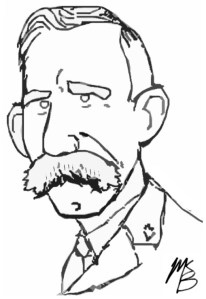
Brig. Gen. MacBrien

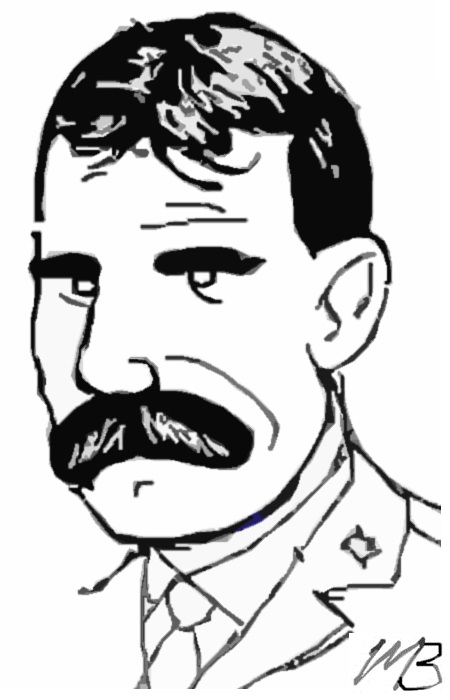
Brigadier General James H. MacBrien
12th Canadian Infantry Brigade

The ending of war involves the most fundamental modification of the whole structure of society, and can only be brought about by a reversal of the general method of human life and the general method of nature which up to this time has been manifested in the survival of the fittest. I think that until we see a complete change of heart in human society we should prepare our sons to fight and quickly organize that they may have as chance of success. The league of nations as a means of definitely preventing war is about as likely to succeed as a proposal to abolish hunger and death.

(Maj. Gen. MacBrien in the Weekly Albertan, 1 Dec 1920, 2)

Born in Myrtle, Ontario on 30 June 1878, James Howden MacBrien was a North-West Mount Police constable when he joined the South African Constabulary during the Boer War. A few years after he returned to Canada, he was commissioned in the Royal Canadian Dragoons in 1910. In September 1914, he joined the 1st Canadian Division headquarters as a staff officer at the rank of lieutenant colonel. Two years later he replaced Lord Brooke in command of the 12th Infantry Brigade.
Continue reading

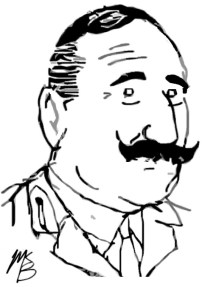
Maj. Gen. Steele

Major General Sir Sam Steele
2nd Canadian Division
Steeke

Climbed the high hill to where the 19th, 20th [Bns.] and engineers were busy digging trenches and completing them. They are doing very well indeed, all hands working with a will, but I thought what an awful thing it is to be obliged to do this for the sake of our freedom, and to enable us to kill other men.

(Gen. Steele diary, 1 July 1915)

Born on 5 January 1848 in Medonte Township, Upper Canada, Samuel Benfield Steele was among the first officers of the North-West Mounted Police and the first commanding officer of the Lord Strathcona’s Horse in the Boer War. His leadership during the Klondike Gold Rush and his memoirs contributed to linking his name with the iconic image of the Mountie. As Canada’s most famous policeman and soldier, Steele received an appointment to command the 2nd Canadian Division in May 1915.

Continue reading

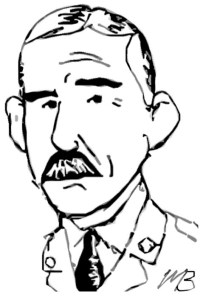
Lt. Col. Laws

Lieutenant Colonel Burnett Laws
1st Canadian Mounted Rifles
Laws

During the last war I served 41 months in France as Adjutant, 2nd in Command and Officer Commanding of a fighting Battalion — so surely my experience in the handling of me could be put to some use. I have kept pretty well posed in the changes made during the time elapsed since going on the reserve of officers and with a Refresher course could take hold of a Battalion or even a Brigade and whip it into shape. As you know I qualified for the command of a fighting Battalion which at the end of the last war had a reputation second to none in the Canadian Corps.

(Col. Laws to Military District No. 12, 22 May 1940)

Burnett Laws was a former North West Mounted Police constable, Boer War veteran and member of the 22nd Saskatchewan Light Horse. Born in Northumberland, England on 3 March 1877, he immigrated to Canada in 1897. After retiring from the NWMP in 1904, he became a farmer in Lloydminster, Saskatchewan.

Continue reading

Brig. Gen. Ketchen

Brigadier General Huntly Ketchen
6th Infantry Brigade

Ketchen

Gather round, boys, I want to have a little talk with you. You’ve been under my command about nine months now, and I’ve always been proud of you, and now you are going up the line, and I want to say this to you: Don’t go up with any idea that you are going to be killed—we want you all to take care of yourselves and not expose yourselves recklessly.

 And remember a dead man is no use to us, we want you alive, and when we want you to put your heads up, we’ll tell you! And I’ve no doubt that you will only be too eager.

(Ketchen’s Speech, quoted in Pte. Jack O’Brien, Into the Jaws of Death, 1919, 54)

The son of an Indian Army officer, Huntly Douglas Brodie Ketchen was born in Sholopore, India on 22 May 1872. After graduating from the Royal Military College at Sandhurst, England, Ketchen moved to Canada, joined the North West Mounted Police in 1894 and fought in the Boer War. He was appointed to lead the 6th Infantry Brigade in May 1915.

Continue reading

The Mountie

Lieutenant Colonel W. C. Bryan
191st (Bryan’s Buffalos) BattalionBryan

The province of Alberta owing to its cosmopolitan population is hard to police, alien settlements being scattered all over it. These people, banded together as they are, and in a good many instances retaining the customs and mode of life they lived in their own countries before coming to Canada, are not as yet educating themselves with regard to the laws of this country, it is impossible to obtain evidence from them, and they are too prone to look upon any policeman as an enemy instead of a friend.

(W. C. Bryan, APP Annual Report, 1921)

Willoughby Charles Bryan was a western cowpuncher whose adventures took him from Buffalo Bill’s Wild West and the Mexican army of Porfirio Díaz to the Texas Rangers and the Northwest Mounted Police. A native of Nottingham, England, Bryan was born on 17 December 1866 and immigrated to Manitoba in 1883.

Continue reading

The Birthday Boy

Brigadier General Victor Williams
8th Infantry BrigadeWilliams

 The whole front was a tangled mass of ruins. Only a few isolated posts were alive. General Mercer was dead. And General Williams, leg broken and spine twisted, yet fighting gamely against odds, with only a wooden wiring-stake for a weapon was being clubbed into submission by the butt-end of a Mauser in the hands of a German infantryman.

(Toronto Globe, 2 Jun 1928, 17)

Victor Arthur Seymour Williams was the most senior Canadian officer taken prisoner during the First World War. He was captured at the battle of Mont Sorrel on 2 June 1916, incidentally his forty-ninth birthday.

Continue reading

The Monocle

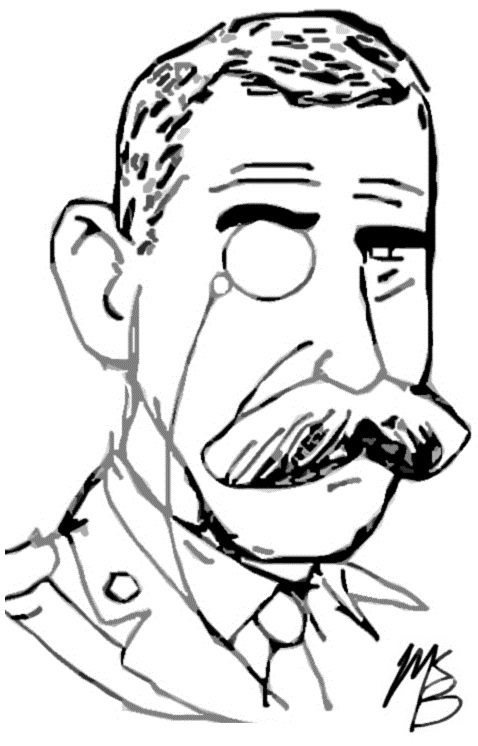
Lieutenant Colonel G. E. Sanders, D.S.O.
2nd Pioneer Battalion
Sanders

I would sooner see a man go around and murder people outright than have him peddling this sort of thing [cocaine]. It is apparently the greatest danger and menace against which we must contend. Once addicted to the habit, a man is never cured and is no longer a human being but a beast.

(Sanders, Calgary Herald, 15 Jan 1913, 12)

Born in Yale, British Columbia on 25 December 1863, Gilbert Edward Sanders was a graduate of the Royal Military College and a Calgary police magistrate. A former Northwest Mounted Police inspector, he was also a veteran of the 1885 Rebellion and the Boer War, where he won the D.S.O. Notorious for his harsh sentences, corporal punishment and blatant bigotry, Sanders once remarked, “the cells were the proper abode for many of the coloured men.”

Continue reading

The Gambler

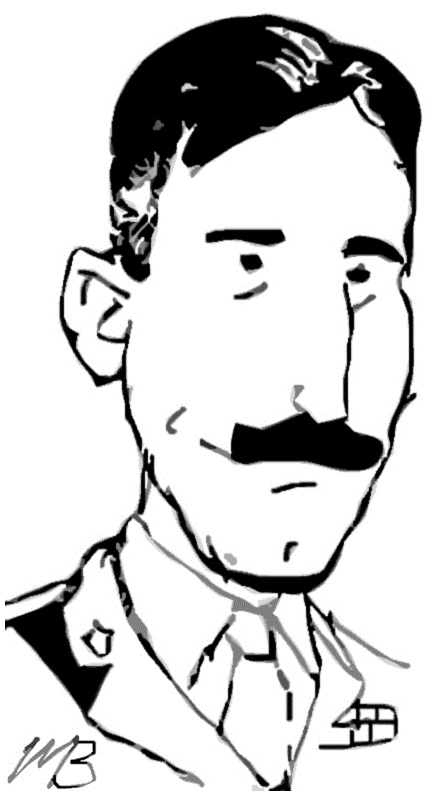
Lieutenant Colonel Charlie Stewart, D.S.O. †
Princess Patricia’s Canadian Light InfantryStewart_C

The letters from the regiment after his death read, “The men would follow him anywhere; he seemed to bear a charmed life.” Yet what was his life until the War gave him his chance? A life of adventure wearing down into plain middle-aged failure.

(Charles Ritchie [nephew], My Grandfather’s House, 1987)

Born on 14 December 1874 in Halifax, Charles James Townsend Stewart was a North West Mounted Police constable, sportsman, soldier, womanizer and all-round lovable scoundrel. After being expelled from the Royal Military College for gambling in 1892, he moved back to Halifax before joining the NWMP in 1896. After he was kicked out of the police for bullying and bad behaviour, he drifted throughout the Northwest and the Yukon. A veteran of the Imperial Yeomanry during Boer War, Stewart joined the P.P.C.L.I. as a lieutenant in August 1914.

Continue reading

The Defence Minister

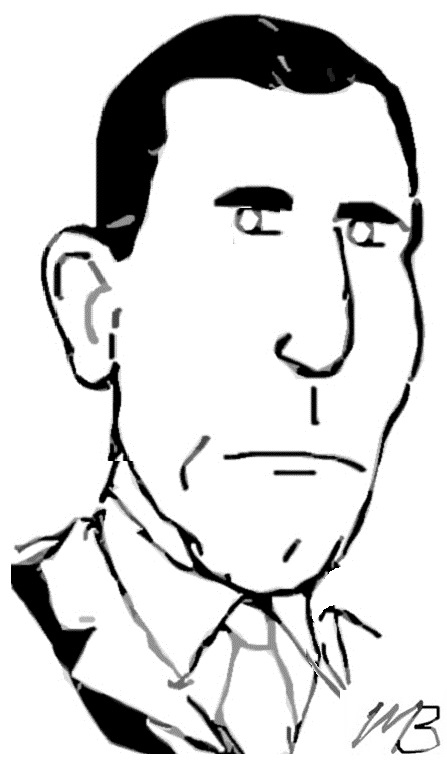
Lieutenant Colonel G. R. Pearkes, D.S.O., M.C., V.C.
116th (Ontario County) BattalionPearkes

What kind of war must we be prepared to fight? With the introduction of nuclear weapons and the anticipated production of long-range ballistic missiles, it is obvious that the methods of waging any future war have clearly changed from those of World War II. Looking into the future is at best a risky business, but our military advisers must plan ahead, and it is their present opinion that a third world war would commence with a sudden ferocious thermonuclear attack of great intensity…

(Pearkes, Debates, 5 Dec 1957, 1900)

George Randolph Pearkes was a solider, politician, and winner of the Victoria Cross, the highest award for gallantry in the British Empire. He was born on 28 February 1888 in Watford, Hertfordshire, England and immigrated to Alberta in 1906. He joined the North West Mounted Police and fought with the 2nd and 5th Canadian Mounted Rifles. Pearkes began his military career as a private; he retired as major general.

Continue reading

The Old Soldier

Lieutenant Colonel Robert Belcher
138th (Edmonton) Battalion
Belcher

I have in mind a man who has served for many years, first in the British Army, and afterwards in the Northwest Mounted Police and then in the South African war. Finally he was authorized to raise a battalion at Edmonton. On strength of his military experience and on the strength of his personal standing, he did raise a battalion without any serious difficulty. Surely such a man with such a battalion, raised under such circumstances—surely it would be right and proper that that battalion should go to the front intact under such leadership.

(Frank Oliver, Debates, 23 Jan 1917, 76)

Criticizing the breakup of the Canadian battalions, Frank Oliver, Liberal MP for Edmonton, alluded to the experience of Colonel Robert Belcher. Born on 23 April 1849 in London, England, the sixty-seven year old soldier and policeman was “one of the real old-timers in the west.”

Continue reading