The Silent Member

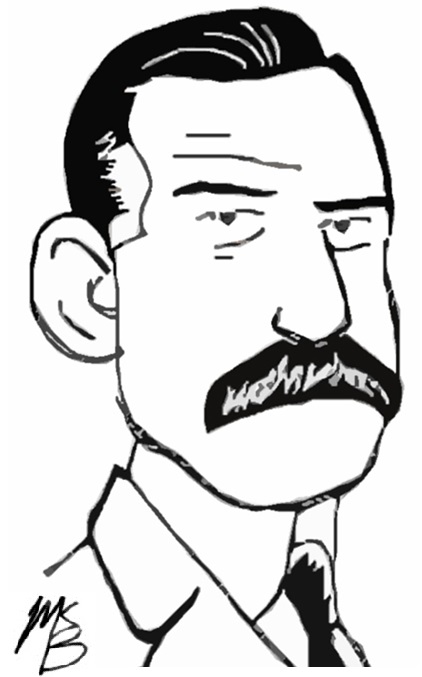
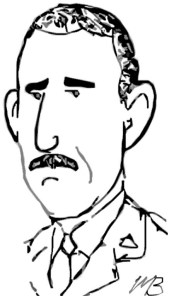
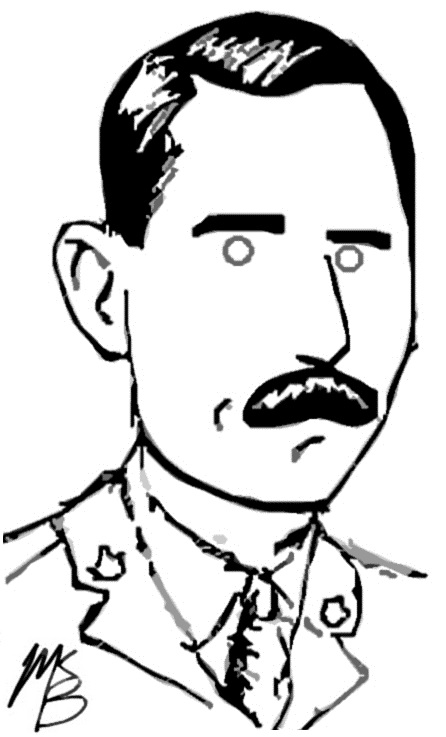
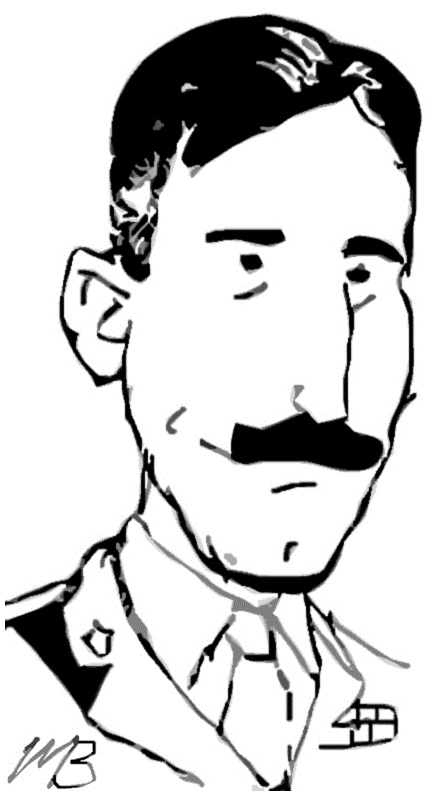
Colonel Harry McLeod, M.P.
12th Battalion
McLeod

Colonel Harry McLeod has also been taken away since last we met here.

His interests were perhaps, as much in the military field as in the political field. He was a student of military tactics and military matters generally, and attended manoeuvres in this and in other countries for purposes of study—and, indeed, in the late war served in the fields of Europe.

(PM Meighen, Debates, 15 Feb 1921, 4)

Born on 17 September 1871, Harry Fulton McLeod was a New Brunswick lawyer, member of Orange Lodge No. 20 and Conservative politician. He was mayor of Fredericton (1907—1908), member of the legislature (1908—1913), and federal MP for York (1913—1917) and York—Sunbury (1917—1921). As colonel of the 71st (York) Regiment, he was appointed to take the 12th Battalion overseas when the First Contingent assembled at Valcartier in August 1914.
Continue reading

The Immortalized

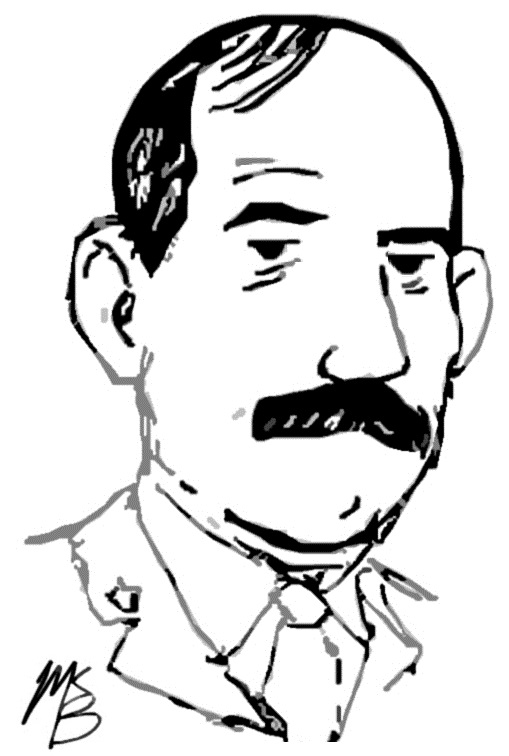
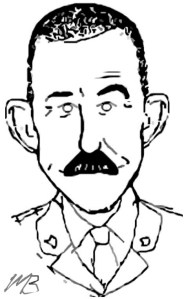
Lieutenant Colonel Harry Baker, M.P. †
5th Canadian Mounted RiflesBaker

It has been the lot of other nations to have their legislators, their parliamentarians, even their kings put on the uniform of soldiers and go forth to battle and meet a patriot’s death, but so far it has been the lot of Canada only once.

(Arthur Meighen, Debates, 3 Mar 1924, 49)

George Harold Baker was the only sitting Canadian Member of Parliament killed in action during the First World War. Born in Sweetsburg, Quebec on 4 November 1877, Baker was Conservative MP for Brome (1911—1916) and commanding officer of the 13th Scottish Light Dragoons. He died in the battle of Sanctuary Wood on 2 June 1916. He is commemorated with a life-sized bronze statue in the Centre Block of the House of Commons.

Continue reading

The Defence Minister

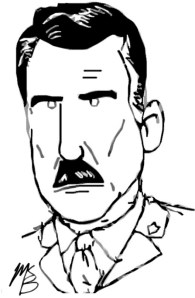
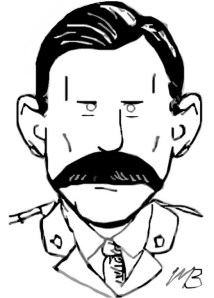
Lieutenant Colonel G. R. Pearkes, D.S.O., M.C., V.C.
116th (Ontario County) BattalionPearkes

What kind of war must we be prepared to fight? With the introduction of nuclear weapons and the anticipated production of long-range ballistic missiles, it is obvious that the methods of waging any future war have clearly changed from those of World War II. Looking into the future is at best a risky business, but our military advisers must plan ahead, and it is their present opinion that a third world war would commence with a sudden ferocious thermonuclear attack of great intensity…

(Pearkes, Debates, 5 Dec 1957, 1900)

George Randolph Pearkes was a solider, politician, and winner of the Victoria Cross, the highest award for gallantry in the British Empire. He was born on 28 February 1888 in Watford, Hertfordshire, England and immigrated to Alberta in 1906. He joined the North West Mounted Police and fought with the 2nd and 5th Canadian Mounted Rifles. Pearkes began his military career as a private; he retired as major general.

Continue reading

The Methodist

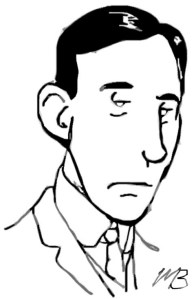
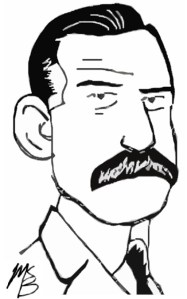
Lieutenant Colonel Sam Sharpe, D.S.O., M.P. †
116th (Ontario County) BattalionSSharpe

But it is awful to contemplate the misery and suffering in this old world & were I to allow myself to ponder over what I have seen & what I have suffered thro the loss of the bravest & best in the world, I would soon become absolutely incapable of “Carrying on.”

(Sharpe to Muriel Hutchison, 21 Oct 1917)

Samuel Simpson Sharpe was a militia major and Conservative Member of Parliament for Ontario North (1908—1918). Born on 13 March 1873 in Zephyr, Scott Township, Ontario, he was a graduate from the University of Toronto and Osgoode Hall. During his university days, he was a champion tennis player and became a prominent solicitor in Uxbridge.

Continue reading

The Westerner

Lieutenant Colonel Sam Donaldson, M.P.
188th (Prince Albert) BattalionDonaldson

If you had 300 or more of these Indians at the Front they would make good snipers as they are crack marksmen and they are as tough as any class of people I have ever met in this country.

(Donaldson to Sam Hughes, 25 Nov 1915)

Samuel James Donaldson was a veteran of the 1885 Rebellion, a former member of the North-West Mounted Police, farmer, sportsman and politician. He was born on 12 March 1856 in Appleton, Canada West. Saskatchewan and its People (1924) claimed that “his varied activities and numberless experiences serve to make his life story one of the most interesting of any of Canada’s native and adventurous sons.”

Continue reading

The Undeterred

Lieutenant Colonel Donald Sutherland, D.S.O.
52nd, 71st, 74th, & 160th Battalions
Sutherland

A man that can fight, a fighter who’s fought,
A man to whom danger to self counts for naught,
A man all the way with a conduct sheet clean,
As a man and a soldier our Colonel’s beloved.
A man; Colonel Sutherland, that’s whom I mean.

(Lieut. L. Young, 71st Bn. “Our Colonel,” Bruce in Khaki, 12 Oct 1917, 2)

Born on 3 December 1879, Donald Matheson Sutherland was a Norwich County physician, militia officer in the 24th Grey Horse and member of Loyal Orange Lodge No. 999. In September 1914, he enlisted as a captain with the 1st Battalion. Wounded during the second battle of Ypres on 24 April 1915, he was invalided to Canada. After raising the 71st Battalion from Woodstock, he again embarked for England in April 1916.

Continue reading

The Minister

Lieutenant Colonel C. C. Ballantyne
245th (Canadian Grenadier Guards) BattalionBallantyne

Mr. HUGHES: The hon. gentleman on his return from overseas, was one of the most wrathy men I ever met.

Mr. BALLANTYNE: Disappointed.

Mr. MCMASTER: The remarks of the ex-Minister of Militia may be very interesting, but I would ask him to speak a little louder, so that we all may get the benefit of them.

Mr. HUGHES: I was saying that the present Minister of the Marine and Fisheries, on his return from England was—I will not say the maddest man, but one of the most intensely disappointed men that it has ever been my privilege to meet.

(Debates, 10 Apr 1918, 597)

Born on 9 August 1867, Charles Colquhoun Ballantyne was a Montreal industrialist and millionaire through marriage. He raised the 245th Battalion in late 1916 and departed for England with less than three-hundred volunteers in May 1917. After the breakup of his unit, Ballantyne became one of the hundreds of unemployed senior officers in London.

Continue reading

The Unionist

Major Richard C. Cooper
7th (1st British Columbia) BattalionRCCooper

People’s thoughts are now turning to memorials to perpetuate the memory of our fallen, but unfortunately, their thoughts are turning to stone and iron to perpetuate flesh and blood. That is wrong. It is not worthy of the men who gave their lives that we might be free. I suggest that there is a greater, nobler, finer memorial to be erected to our fallen. I suggest that education is the only possible, adequate method of perpetuating the memory of the “immortals.”

(Cooper, Debates, 10 Mar 1919, 340)

Born in Dublin, Ireland on 31 December 1881, Richard Clive Cooper was a police constable in Rhodesia and South Africa where he was associated with the imperial projects of Cecil Rhodes. After serving in the Matabele War and the Boer War, he immigrated to British Columbia in 1906. Cooper enlisted in Lieutenant Colonel Hart-McHarg’s 7th Battalion in September 1914. He fought at Second Ypres before being recalled to Canada in order to aid training and recruitment efforts.

Continue reading

The Dentist

 Lieutenant Colonel E. F. Armstrong
159th (1st Algonquins) Battalion
EFArmstrong

I feel a little timid, but I know that you, Sir [Speaker of the House], are very sympathetic towards a young member who has had very little experience in public speaking and is addressing this House for the first time. But I am sent here by people of the north…

(Armstrong’s maiden speech, Debates, 22 Feb 1926, 1234)

Born 14 July 1878 in Flesherton, Ontario, Ernest Frederick Armstrong was a dental surgeon and mining prospector. He moved north as a young man and became an early settler of Cobalt. In the small mining community, he set up a dental practice and became chief magistrate.

Continue reading

The Rancher

Lieutenant Colonel Norman Lang
65th (Saskatchewan) BattalionLang

No doubt, the graves of the men who have fallen in France will be as well looked after as is possible, but those who have been over there know that numbers of men have been blown to atoms. Something should be done in their honor, something that would serve as a permanent reminder of their sacrifice.

(Col. Lang, Saskatoon Daily Star, 21 Jan 1919, 17)

Born on 4 August 1879 in Exeter, Ontario, Norman Lang was a farmer and rancher in Allan, Saskatchewan. The grey-eyed, moustachioed, six-foot-three Lang was a member of the 29th Light Horse and veteran of the Boer War. In April 1915, he was authorized to raise the 65th from the Saskatoon area.

Continue reading