The Old-Fashioned

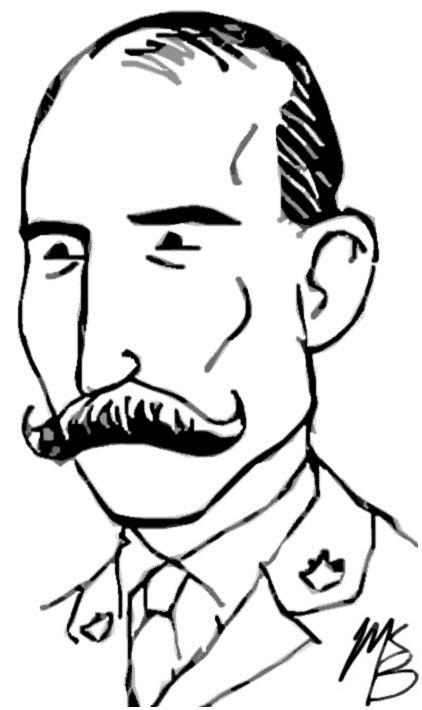
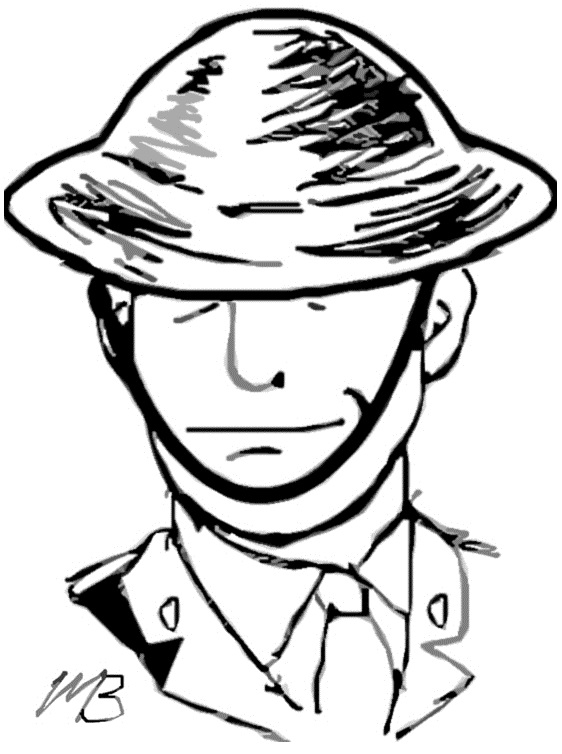
Lieutenant Colonel F. V. Wedderburn
115th (Wedderburn’s Warriors) BattalionWedderburn
On the other hand the tactics of his enemy, Col Wedderburn, were considered by military experts at the front as decidedly clever. A less practical and inexperienced man could not have given Col. McLean the fight he did.

It was evident that Col. Wedderburn had laid his plans well, but the fact that he had burned Moncton and that if victorious he might mete out the same treatment to St. John and the other surrounding towns, field the hearts of the defending soldiers with one determination—to win or die.

(St. John Daily Sun, 8 Jul 1905)

Frederick Vernon Wedderburn was a New Brunswick barrister and militiaman born in St. John on 16 April 1861. After graduating with a law degree from the University of New York in 1882, he joined the 8th Princess Louise Hussars.
Continue reading

The Bulldog

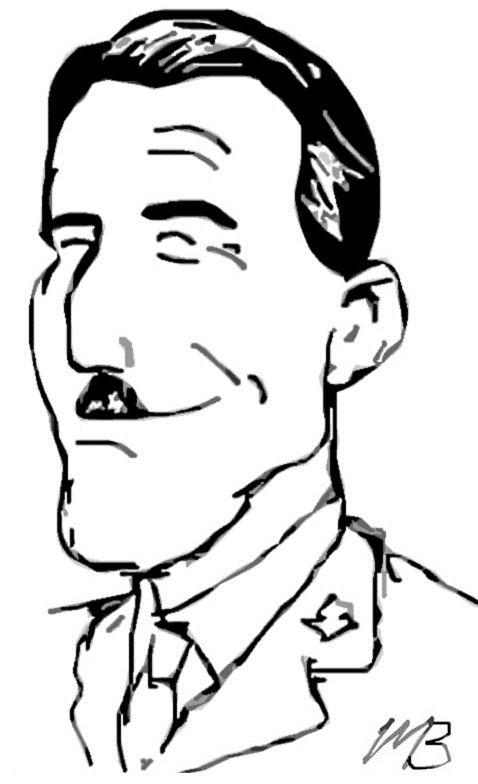
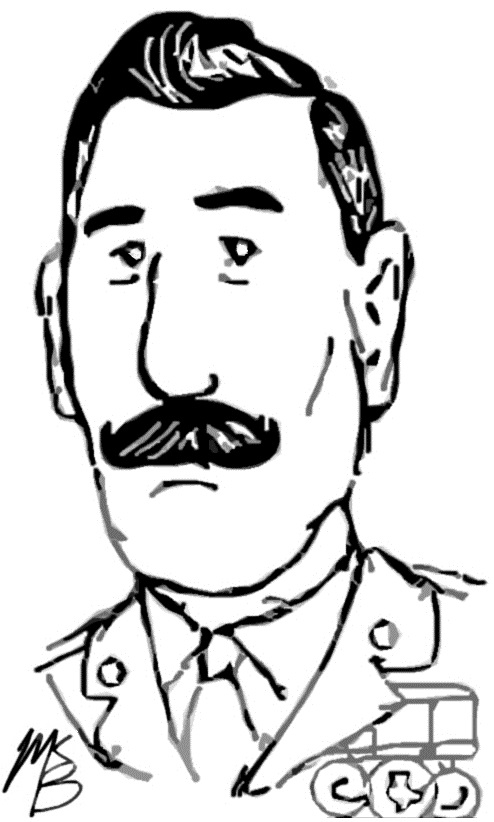
Brigadier General Edward Hilliam
25th (Nova Scotia Rifles) BattalionHilliam

Colonel Hilliam who was now our commanding officer, says that the 25th battalion made his name; but the 25th boys are equally positive that he made the battalion. It was truly wonderful the confidence we placed in him and he never disappointed us. He was very strong on discipline, and when all is said and done that is most essential in the army.

(Lieut. Lewis, Over the Top with the 25th, 1918)

Born in December 1862 in Spalding, England, Edward Hilliam was a soldier, policeman, boxer and swordsman. He had belonged to the 17th Lancers in the British Army before immigrating to Canada to join the North West Mounted Police in 1893. In 1899, he volunteered to serve in the Boer War and during the campaign, earned a reputation as an excellent scout and was praised as “a bold and resolute leader.”

Continue reading

The Birthday Boy

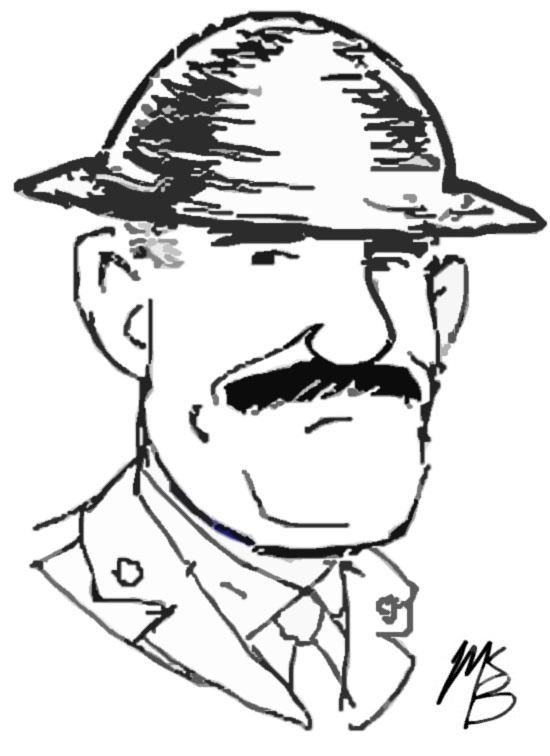
Brigadier General Victor Williams
8th Infantry BrigadeWilliams

 The whole front was a tangled mass of ruins. Only a few isolated posts were alive. General Mercer was dead. And General Williams, leg broken and spine twisted, yet fighting gamely against odds, with only a wooden wiring-stake for a weapon was being clubbed into submission by the butt-end of a Mauser in the hands of a German infantryman.

(Toronto Globe, 2 Jun 1928, 17)

Victor Arthur Seymour Williams was the most senior Canadian officer taken prisoner during the First World War. He was captured at the battle of Mont Sorrel on 2 June 1916, incidentally his forty-ninth birthday.

Continue reading

The Monocle

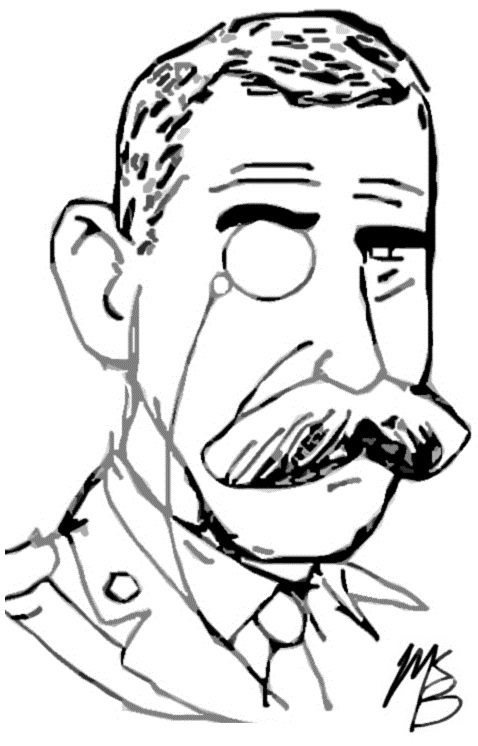
Lieutenant Colonel G. E. Sanders, D.S.O.
2nd Pioneer Battalion
Sanders

I would sooner see a man go around and murder people outright than have him peddling this sort of thing [cocaine]. It is apparently the greatest danger and menace against which we must contend. Once addicted to the habit, a man is never cured and is no longer a human being but a beast.

(Sanders, Calgary Herald, 15 Jan 1913, 12)

Born in Yale, British Columbia on 25 December 1863, Gilbert Edward Sanders was a graduate of the Royal Military College and a Calgary police magistrate. A former Northwest Mounted Police inspector, he was also a veteran of the 1885 Rebellion and the Boer War, where he won the D.S.O. Notorious for his harsh sentences, corporal punishment and blatant bigotry, Sanders once remarked, “the cells were the proper abode for many of the coloured men.”

Continue reading

The Dragoon

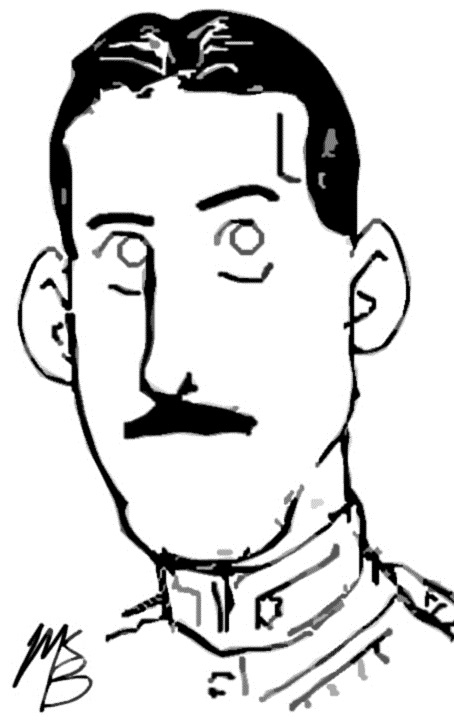
Lieutenant Colonel C. T. van Straubenzee †
Royal Canadian DragoonsStraubenzee

It was the C.O.’s intention to ride with “B” Sqdn. Whilst he was walking to his horse from a point where he had been reconnoitring, he was killed by a shell.

(R.C.D. War Diary, 9 Oct 1918, 9)

Born on 17 June 1876 in Kingston, Ontario, Charles Turner Van Straubenzee was a professional soldier and veteran of the Boer War. In 1897, he joined the Royal Canadian Dragoons as a lieutenant and distinguished himself in numerous battles during the South African campaign. He was promoted to major in 1911.

Continue reading

The Ambassador

Brigadier General Victor Odlum 7th
(1st British Columbia) Battalion Odlum

Victor Wentworth Odlum was a curious specimen. Warfare fascinated him. It was said that he had taken to peacetime soldering because it presented an interesting problem, that he had set himself the task of mastering the psychology of war.

(Pierre Berton, Vimy, 1985, 114)

Victor Wentworth Odlum was a prominent journalist, businessman, diplomat and media tycoon. Born in Cobourg, Ontario on 21 October 1880, he moved to British Columbia as a young man to become a reporter and later editor for the Vancouver Daily World. A veteran of the Boer War and member 6th Regiment, he volunteered with the 7th Battalion in September 1914. He deployed to France as second-in-command.

Continue reading

The Aggrieved

Lieutenant Colonel George C. Hodson, D.S.O.
9th Canadian Mounted Rifles & 1st BattalionCreighton1

Mr. Rutherford asked: …whether, seeing that this is his only remedy in cases where such officer’s immediate superiors have formed opinions which are not well founded, and would be disproved at once if the case came before officers of higher rank entitled to form their own judgment and hear the evidence and the explanations of the officer in question, he will state why a Court of inquiry is being withheld from Lieutenant-Colonel G. C. Hodson, D.S.O.

(Rutherford, Hansard, 26 Oct 1917, 1651)

George Cuthbert Hodson was born in New Shoreham, England on 21 July 1879. He was a bank manager in Lloydminster, Saskatchewan,  a veteran of the Boer War and commanding officer of the 22nd Horse. In December 1914, he organized the 9th Canadian Mounted Rifles, which was used for reinforcements with the Canadian Cavalry Reserve Depot in England.

Continue reading

The Anti-Bolshevik

Lieutenant Colonel J. W. Warden, D.S.O.
102nd (Warden’s Warriors) BattalionWarden

Left my batt. & France for England. 8 am, this is the hardest thing I ever had to do in my life. I have the best Batt. in France, there never were men tougher, braver more loyal, more capable, more loved by CO, the finest fighters. It just about broke my heart, I could not say goodbye to a single one. God, how I loved them.

(Warden Diary, 8 Jan 1918)

Born on 8 November 1871 in Baywater, New Brunswick, John Weightman Warden was a British Columbia broker and veteran of the Boer War. He was among the first to enlist after the declaration of war in August 1914. Describing his experiences fighting with the 7th Battalion in the trenches, he explained, “The Boer War was nothing compared with this war. I had been in South Africa, but I found that I knew nothing about war at all.”

Continue reading

The Ruthless

Brigadier General John M. Ross
29th (Vancouver) Battalion JMRoss

At the end of September 1916, twenty German prisoners were transferred from the 28th Battalion to the 29th under the command of John Munro Ross. After only eleven prisoners arrived to the “Corps Cage,” the 6th Brigade command staff began to make inquiries. Ross clarified the situation:

“The enemy party mentioned ran into bad luck and after a misunderstanding with one of my L.G. [Lewis Gun] crews they were too dead to be used as prisoners.”

Continue reading

The Nobleman

Brigadier General Lord Brooke
4th and 12th Infantry BrigadesLordBrooke

All day long I had witnessed the tragedy of men “made in the image of God” bringing their utmost skill and science to the hateful task of mutual murder.

As an exhibition of scientific slaughter the firing was lacking in nothing. The range of the guns was exact, the shooting perfect. The shrapnel burst over the heads of the retreating troops, as it were in large patterns. There was no cover, no escape for the unhappy Russians. Under this awful hail of bullets the men dropped like wheat beneath the sickle of the reaper. Death most truly was gathering a rich harvest.

(Lord Brooke, An Eye-Witness in Manchuria, 1905, 131)

Born on 10 September 1882, Leopold Guy Francis Maynard Greville was the son of British Conservative MP Francis Greville, 5th Earl of Warwick (styled Lord Brooke) and Daisy Greville, Lady Warwick, a socialist socialite who had been mistress to King Edward VII. While a student at Eton, Lord Brooke ran away to fight in the Boer War. He was a press correspondent during the Russo-Japanese War and recounted his experiences in An Eye-Witness in Manchuria (1905).

Continue reading