The Liberal

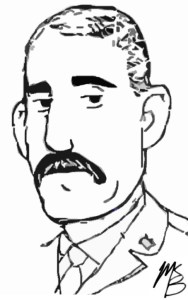
Lieutenant Colonel George B. McLeod
63rd (Edmonton) BattalionGBMcLeod
Every consideration should be given to the question of sentiment and it is well to encourage the idea of community of interest among the people of a certain locality. If a certain battalion is known as an Edmonton battalion, or an Alberta battalion… those who remain behind and those who have gone forward, have an interest in what that battalion is doing that he otherwise would not have had, and ignoring of that fact has tended very greatly against rapid recruiting in many parts of the country.

(Frank Oliver, Debates, 8 May 1916, 3589)

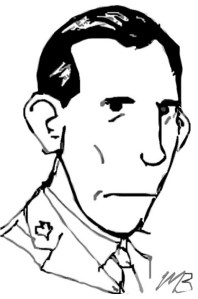
George Brown McLeod was born in Guelph, Ontario on 3 March 1870. He moved west in 1901 in order to pursue business interests in Edmonton. A member of the 101st Fusiliers, McLeod first enlisted as a captain with the 31st Battalion. He later became second-in-command of the 51st before receiving a promotion to lieutenant colonel in order to raise the 63rd from Edmonton.
Continue reading

The Coach

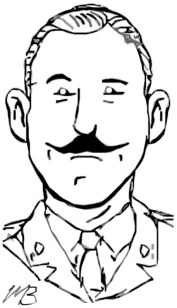
Lieutenant Colonel Archie Earchman, D.S.O.
228th (Northern Fusiliers) BattalionEarchman

Col. Earchman was the most popular officer ever connected with a hockey club, and he drilled it into his men to play that game. They carried this out at all times. The best wishes of every player, fan and citizen go with the Battalion.

(Porcupine Advance, 21 Feb 1917, 6)

When Archibald Earchman began organizing the 228th Battalion in early 1916, he was as much interested in putting together a championship hockey team as he was an effective military unit. In total, he recruited over sixty semi-professional and amateur players. Earchman entered a team into the 1916/1917 season National Hockey Association but they were forced to withdraw when the battalion was ordered overseas in February 1917.

Continue reading

The Boulton Boys

Major Lawrence Boulton
&
Major D’Arcy Boulton
&
Lieutenant Russell Boulton †

Manitoba Depot Regiment  Boultons

If sole support of widowed mother, state what amount you have given per month prior to your enlistment, also reason she has no other support than yourself:

All earnings. Husband dead and her only other sons married and supporting their own families. She has no other income sufficient to support her & her two daughters.

(L. C. Boulton, “Particulars of Family”, 7 Jan 1917)

The Boultons were a prominent Upper Canadian family with deep political connections and a long military tradition. During the 1885 Northwest Rebellion, Colonel Charles Arkoll Boulton (1841—1899) raised a unit to help put down the uprising of Louis Riel. In 1889, he was appointed senator for Manitoba. His oldest son, D’Arcy Everard Boulton was born in Orillia, Ontario on 26 April 1876. Lawrence Charles Boulton was born in Lakefield, Ontario on 10 December 1878. The youngest son, Russell Heath Boulton, was born in Russell, Manitoba on 24 February 1884-1918.

Continue reading

The Druggist

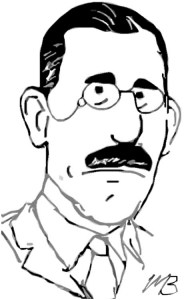
Lieutenant Colonel Alex Wilson
33rd (London) Battalion

A sordid story of graft was told by witness after witness at the inquiry into the affairs of the 33rd Battalion at the Armories to-day. One after another admitted trafficking in the stores of the battalion, and on top of these confessions… there came revelations of what one of the court characterized as a “liquor supply depot.”

(Toronto Globe, 17 Nov 1915, 3)

Born on 17 November 1855 in Seaforth, Canada West, Alexander Wilson was a pharmacist with thirty-five years’ experience with 33rd Huron Regiment. A noted marksman, Wilson was a five-time member of Canada’s Bisley team and won several Dominion Rifle Association awards.

Continue reading

The Party Hack

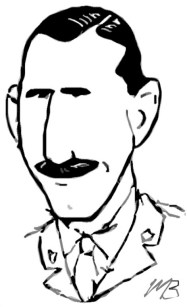
Lieutenant Colonel W. H. Muirhead
219th (Nova Scotia Highlanders) BattalionMuirhead

When the war broke out one of the very first to volunteer from the province of Nova Scotia, and to place his services unqualifiedly at the disposal of his King, was Major Muirhead.

For nine months Major Muirhead has been in the trenches, and for the last four months of that period he has been a member and in charge of a bombing party, which you know, Sir is the most dangerous branch of the service.

(F. B. McCurdy, Debates, 28 Jan 1916, 398)

In summer 1914, the Nova Scotia Supreme Court indicted William Harry Muirhead on eight counts of electoral fraud and perjury. Muirhead, a Conservative political operator, had allegedly secured a February 1914 provincial by-election in Victoria County through bribery and forgery. After the outbreak of the Great War, the embattled party bagman joined the Royal Canadian Dragoons, or as Liberal MP Daniel Duncan McKenzie intimated, “Major Muirhead fled the country on the pretext that he was going to war.”

Continue reading

The Doc

Lieutenant Colonel T. C. D. Bedell
156th (Leeds and Grenville) BattalionBedell

Well the old 156th Battalion has been broken up having suffered the fate of other battalions… We have some doctor now and all of the new ones from the 156th were given a strict medical examination. Eighty, including myself, were turned down out of less than three hundred. He didn’t examine my eyes but that ‘bum’ toe of mine got me. I did not cry when he told me that I would get a hospital job but I told him “that was what I enlisted for.” He told some of the boys that if he had the doctor here who passed us he would ‘string him up and shoot him.’

(Pte. John Ford to Mrs. Ford [Mother], 25 Nov 1916)

Born on 20 April 1874 in Hillier, Ontario, Thomas Casey Dorland Bedell was a physician in Merrickville and commanding officer of the 56th Regiment. In August 1914, Bedell gave up a lucrative medical practice when he enlisted in the Canadian Expeditionary Force. He embarked for England in October 1914 attached to the 2nd Battalion. He proceeded to France with the 15th Battalion in March 1915.

Continue reading

The Homesteader

Lieutenant Colonel E. C. J. L. Henniker
103rd (Vancouver Island Timber Wolves) Battalion Henniker

This country has a great future before it most certainly, but only those who are healthy and strong, both mentally and physically, ought to be allowed to come out and help people it.

The wild free life of the North-West, untrammeled by social fads, has its attractions, but to be able to really enjoy it, or I should be better within the truth if I write, to endure it, one must have plenty of grit, and some education leading up to it, otherwise dire discouragement and failure, may be the result.

(Homesteader, Canadian Life As I Found It, 1908, preface)

Edward Constant Joseph Lelievre Henniker was born on 28 March 1875 in Dinan, France. Henniker immigrated from England to Canada with his wife and six-month old son in 1904. The twenty-nine year old immigrant settled in Saskatchewan to build a homestead on a ranch outside of Tessier. His wife Mabel later collected letters she had written home in a book about the young family’s experiences on the prairies, Canadian Life As I Found It: Four Years’ Homesteading in the North-West Territories.

Continue reading

The Currie Advocate

Lieutenant Colonel Allan A. Magee, D.S.O.
148th (McGill C.O.T.C.) BattalionMagee

“You are told that Montreal’s record for recruiting is wonderful. I tell you Montreal’s record is simply rotten,” said Lt.-Col. Magee at His Majesty’s Theatre last night in a stirring speech…

“We have tried to stir up the patriotism of Montreal but it seems as though we must give up because there is nothing left to stir.”

(Ottawa Journal, 1 March 1916)

Allan Angus Magee was a Montreal lawyer and graduate of the University of Toronto. He was born on 17 February 1881 in London Ontario. At the outbreak of the war, Magee joined the Canadian Officer Training Corps at McGill University as second-in-command. In November 1915, he was selected to raise the 148th Battalion from Montreal.

Continue reading

The Divorced

Lieutenant Colonel A. P. Allen
254th (Quinte’s Own) BattalionAPAllen

WHEREAS Arthur Percival Allen, of the city of Belleville, in the province of Ontario, coal merchant, has by his petition alleged, in effect, that on the eleventh day of September, A.D. 1906, at the said city, he was lawfully married to Mabel Aleen Vermilyea; that she was then of the said city, a spinster; that his legal domicile was then and is now in Canada; that since the said marriage she has on divers occasions committed adultery; that he has not connived at nor condoned the said adultery; that there has been no collusion, directly or indirectly, between him and her in the proceedings for divorce; and whereas by his petition he has prayed for the passing of an Act dissolving his said marriage, authorizing him to marry again, and affording him such other relief as is deemed meet; and whereas the said allegations have been proved and it is expedient that the prayer of his petition be granted.

(Senate Journals, 7 June 1922, 265)

Arthur Percival Allen was born in Stella, Ontario, on 6 March 1880. He was a Belleville coal merchant with twenty years’ experience with the 18th Regiment. He had limited success in recruiting for the 254th Battalion from Hastings and Prince Edward Counties and sailed to England with only 250 men in June 1917. Allen was quickly deemed surplus to requirements and returned to Canada.

Continue reading

The Warden

Lieutenant Colonel Royal Burritt, D.S.O.
11th (Reserves) BattalionBurritt

“I do not recommend a prison as a desirable place to gain experience. It is much better to profit from the experience of others.”—Col. Burritt

(Winnipeg Tribune, 8 June 1949, 17)

Royal Burritt was born on 1 April 1876 in Stratford, Ontario. He moved to Winnipeg in 1907, becoming a real estate agent and insurance broker. A militia officer in the 100th (Winnipeg Grenadiers) Regiment when the First Contingent of the Canadian Expeditionary Forces organized at Valcartier in August 1914, Burritt assumed command of the 11th Battalion.

Continue reading