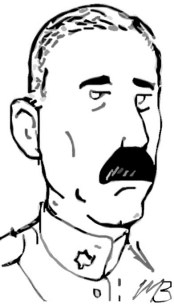
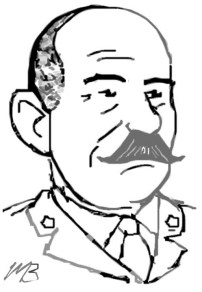
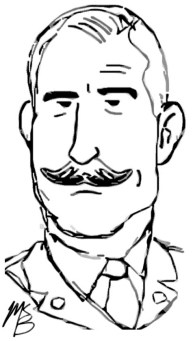
Lt. Col. Reid

Lieutenant Colonel J.Y. Reid
179th (Cameron Highlanders of Canada) Battalion
Reid

He proved himself an excellent Group Commander, energetic and capable, and concerned for the comfort of the men under his command.

(Labour Commandant, Second Army, 13 Jan 1919)

John Young Reid Jr. was a department store manager and merchant in Winnipeg. Born in Toronto on 30 June 1871, he was the son of John Reid Sr., publisher of the Toronto Globe. After working as a clerk in Toronto, the younger Reid moved to Manitoba in 1907. He was one of the first officers in the 79th Cameron Highlanders and became senior major of the 179th Battalion in January 1916.
Continue reading

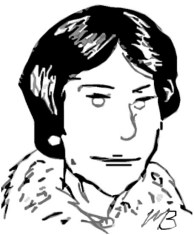
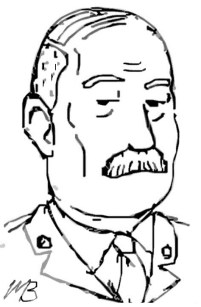
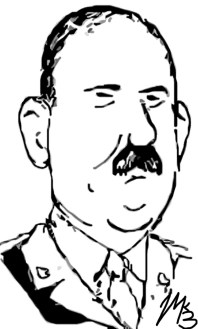
Lt. Col. Grant

Lieutenant Colonel D.M. Grant
122nd (Muskoka) Battalion
Grant

This affords an opportunity to the men who are accustom to working in the bush to take on their regular line of work for the next year or so, have a trip to England or France and if on the ground when Peace is declared will have the time of their lives. It is ENTIRELY a separate force from the fighting units.

(122nd Batt., Recruiting Poster, 1917)

Born on 2 April 1868 in Deleware, Ontario, Donald McKenzie Grant was a Huntsville lawyer and son of Rev. George Munro Grant (1835—1902). Commanding officer of the 35th Regiment, he was initially authorized to raise a new battalion from Simcoe County in November 1915. However, he soon ordered to switch with Lieutenant Colonel D. H. MacLaren of the 157th to organize the 122nd from Muskoka. A local newspaper wrote, “Such a change would have made many men give up their work in disgust, but such was not the case with Col. Grant, who thus roved his true military worth, sincerity, loyalty and determination.” Continue reading

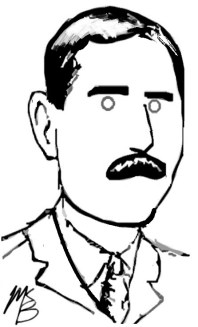
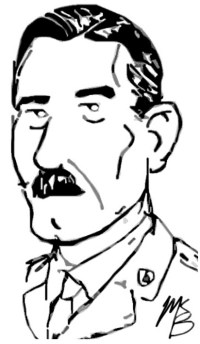
Lt. Col. Bruce

Lieutenant Colonel W.H. Bruce
173rd (Canadian Highlanders) Battalion
WHBruce

A very good officer well qualified and with many years experience in the Militia. He is tactful, popular with all ranks and fitted for command. He has organized and trained a battalion which does him credit.

(Maj. Gen. Lessard, Inspection Report, 12 Oct 1916)

Born on 26 May 1870 in Hamilton, Ontario, Walter Hamilton Bruce was a seed merchant and militia officer. He had belonged to the 13th Royal Regiment for 14 years and the 91st Highlanders for nine years. In February 1916, Bruce began to organize the 173rd Battalion from his hometown.   Continue reading

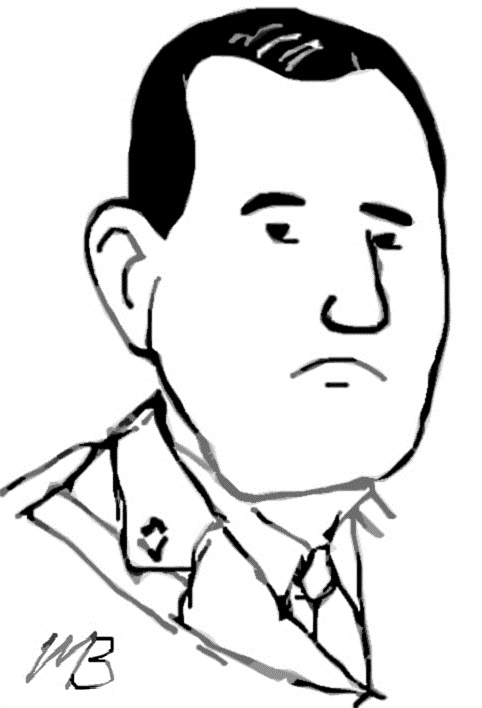
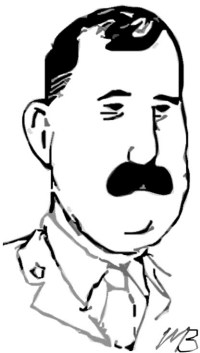
Lt. Col. Fee

Lieutenant Colonel J.J.H. Fee
109th (Victoria & Haliburton) Battalion
Fee

& Lady Flora McCrea Eaton

LadyEaton

I have often thought that if I were a man I would be at the front to relieve them. The honor and glory of the Canadian soldier is all his own because he has made it himself. It is our duty now that we see that he is not deserted.

 (Lady Eaton, Toronto Star, 8 Dec 1917, 5)

On 24 May 1916, the 109th Battalion under the command of John James Havelock Fee assembled before a crowd of ten thousand in Lindsay, Victoria Country as it prepared to depart overseas. Speeches followed by Victoria member of parliament and Minister of Militia, Sir Sam Hughes, and the battalion’s sponsors, Sir John and Lady Eaton.

Continue reading

Lt. Col. Bowen

Lieutenant Colonel F.C. Bowen
23rd (Westmount Rifles) Battalion
BowenFC

This officer as a result of damp and exposure in the trenches developed Lumbago. Continued at duty but had to go sick on 6 Nov. 1916. He has still a deal of pain, is sleepless, debilitated and has lost weight.

(Proceedings of Medical Board, 30 Nov 1916)

Frederick Chamberlain Bowen was born in Sherbrooke, Quebec on 8 July 1876. He had been commanding officer of the 53rd Sherbrooke Rifles and served as second-in-command with Frank Fisher’s 23rd Battalion. After Fisher joined the 14th Royal Montreal Regiment on the front, Bowen assumed command of the 23rd, which became a reinforcement unit in England.

Continue reading

The Acadian

Lieutenant Colonel L.C. D’Aigle
165th (French Arcadian) Battalion

I know lots of men who would go, but they are not prepared to serve under mushroom officers who don’t know their duty. An officer, to be a good officer, must be trained not picked up politically or otherwise because he has an uncle or an aunt or somebody connected with the titled people we have around. I am speaking now more particularly of my own province.

(Col. Domville, Senate Debates, 4 May 1916,  413)

Born on 15 December 1869 in Saint-Louis-de-Kent, New Brunswick, Louis-Cyriaque D’Aigle was an Acadian agronomist and dairy farming magnate. Although he did not have any military or militia experience, D’Aigle was appointed to the 165th Battalion. which was to recruit from the Acadian community of the Maritimes.

Continue reading

Lt. Col. Scobell

Lieutenant Colonel S.B. Scobell
235th (Durham and Northumberland) Battalion
Scobell

I had the opportunity of returning to Canada but refused absolutely, and fought hard until I landed this position. I am still and will continue to be paid by the Dominion Government, but will be attached to the Imperial army for duty.

 (Scobell, Toronto Star, 13 August 1917)

Sidney Brandage Scobell, a druggist and Orangeman with twelve years’ experience in the 19th Lincoln Regiment, was authorized to raise the 235th from the counties of Northumberland and Durham in 1916. He was born in St. Catharines on 7 February 1871. After his understrength unit was broken up in May 1917, Scobell sought a position in the field. By August, he was seconded to the Imperial Forces.

Continue reading

Lt. Col. Genet

Lieutenant Colonel Harry Genet
58th (Central Ontario) Battalion
Genet

Is it too much to expect that our fellow-citizens, now living in Canada in comfort and security, purchased by the blood of their brothers here in France, will sin all differences, political or otherwise, and unite in the common cause of our Empire and make one great effort to support and reinforce their army in the field?

(Col. Genet, Toronto Globe, 17 Dec 1917, 3)

Born on 20 February 1864 in London, England, Harry Augustus Genet had served for five years in the 2nd Middlesex Regiment before immigrating to Canada. He worked for the Adams Wagon Works in Brantford and joined the 38th (Dufferin) Rifles. After Lieutenant Colonel F. A. Howard left with the First Contingent in 1914, Genet assumed command of the 38th regiment. In April 1915, he was authorized to raise the 58th Battalion from central Ontario, Toronto and Hamilton. Continue reading

Lt. Col. Chisholm

Lieutenant Colonel George T. Chisholm
92nd (48th Highlanders of Canada) Battalion
Chisholm

I might inform you that your department is getting a tremendous lot of popular disfavor through not supplying your regiments with actual necessities … Now this all gives the ordinary man on the street the impression that the department is not attending to the business for which it is in existence.

(G.T. Chisholm to Militia Department, 25 Sept 1915)

While fighting at St. Julien during the second battle of Ypres in late April 1915, the 15th Battalion was decimated as hundreds were killed, gassed or taken prisoner. Most of the soldiers had belonged to the Toronto-based 48th Highlanders Regiment. In order to replace the casualties, Toronto militia leaders were authorized to raise two new highlander battalions, the 92nd and 134th. George Thomas Chisholm, a Toronto stockbroker, was appointed commander of the former in August 1915.

Continue reading

Lt. Col. Winsby

Lieutenant Colonel W.N. Winsby
47th (British Columbia) Battalion
Winsby

Had long interview with Col. Winsby, 47th Bn. over charges made against his ability as C.O. by Gen. Hilliam, & I gave him until tomorrow morning to send me in, in writing, his answer to these charges.

(Gen. David Watson, 4th Division, 8 Mar 1917)

The charges against Winsby are of so contrived a character and now so serious to his battalion and brigade, that I am compelled to recommend his removal from command.

(Gen. Watson, 4th Division, 20 Mar 1917)

William Norman Winsby was a Victoria teacher, principal and school inspector. He was born on 28 October 1874 in Leyburn, Yorkshire, England. He was a twenty-year member of the 5th Regiment and succeeded Arthur Currie as commanding officer in January 1914. At the end of that year, he received authorization to raise the 47th Battalion from New Westminster in November. Continue reading