The Kiltie

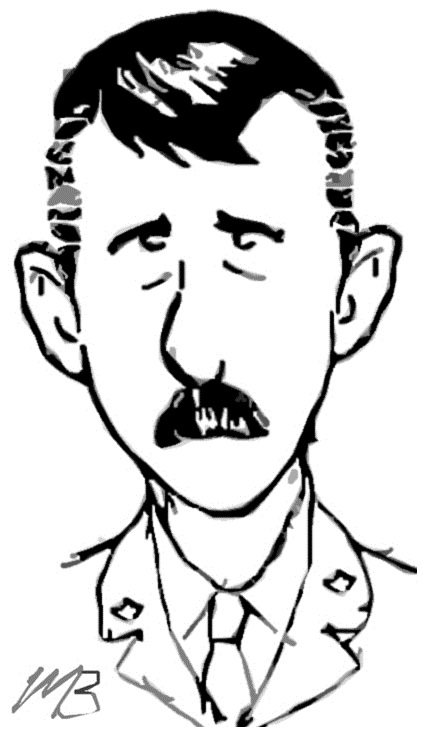
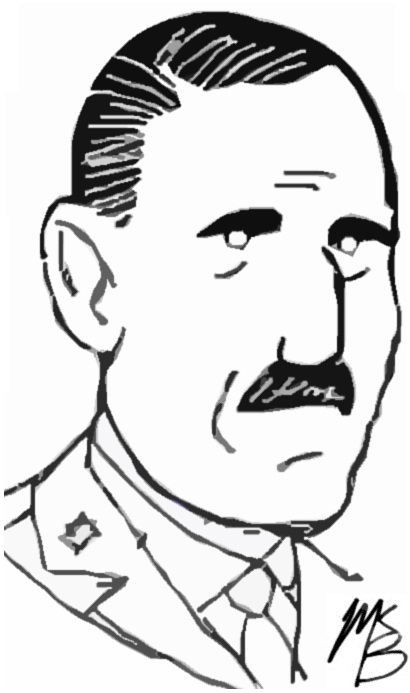
Lieutenant Colonel W. L. McGregor
241st (Canadian Scottish Borderers) BattalionMcGregor
Your colonel is peculiarly fitted by temperament, training and tradition
to lead a “kilted” battalion to victory. In his veins there flows the blood of that ancient clan whose proud boast it was “that despite their enemies, the McGregors should flourish forever.” In him we have combined the indomitable spirit of the Scottish Highlander, the bulldog tenacity of the English, and the resourcefulness and initiative of the Canadian. He will lead you to victory. Stand by him like a “stone wall” in the days to come.

(W. T. Gregory, “Farewell to the Kilties,” 1917, 10)

The son of Liberal MP and prominent businessman William McGregor (1836—1903), Walter Leishman McGregor was born 30 April 1875 in Windsor, Ontario. In 1904, Walter had supported his older brother Gordon (1873—1922) in forming a partnership with Henry Ford and creating the Ford Motor Company of Canada.
Continue reading

The Unsinkable

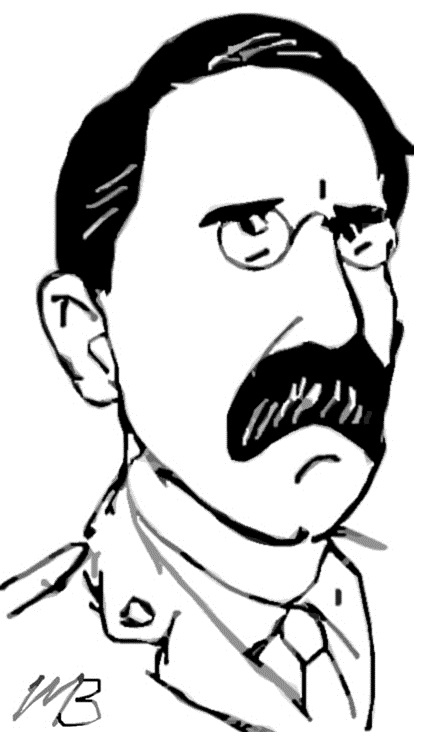
Major Charles A. Low
146th (Frontenac County) BattalionLow

Everybody aboard was preparing to leave the ship and glad that the journey was over, as the constant rumors of submarines and the nervous strain which is associated with same is not conductive to comfortable feelings.

At exactly 10.51, while in my cabin, the ship was hit on the starboard side, at the after well deck, close to the engine rooms. I was thrown across the cabin; there was no mistaking what had happened…

(Low to Kemp, 27 Mar 1918)

A native of Kingston, Ontario, Charles Adamson Low was born on 26 November 1874. A fourteen-year member of the 14th Princess of Wales’ Own Rifles, Low enlisted as junior major in Lieutenant Colonel W. G. Ketcheson’s 80th Battalion. In November 1915, he was authorized to raise the 146th Battalion from Frontenac County.

Continue reading

The Husband

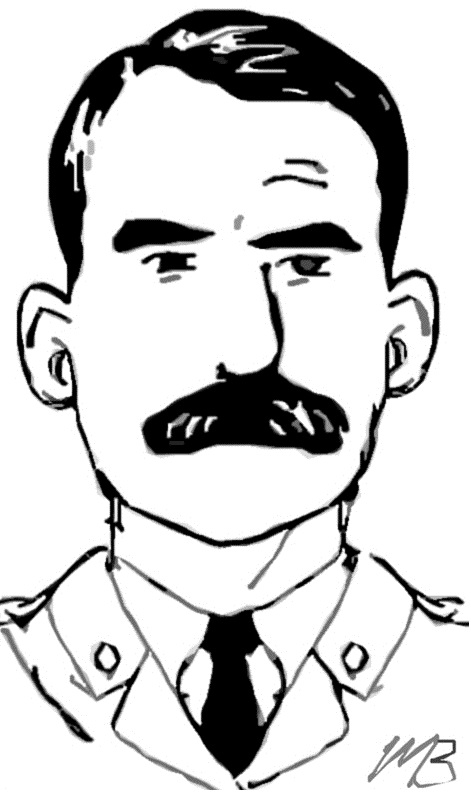
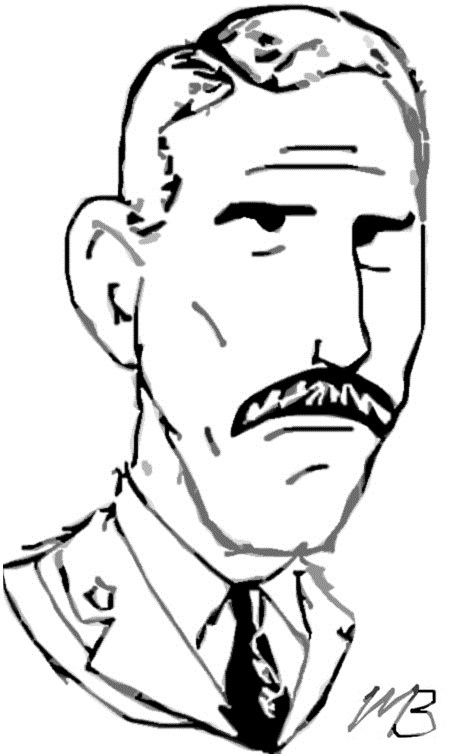
Lieutenant Colonel L. H. Millen, D.S.O.
19th (Central Ontario) BattalionMillen

There are a good many returned soldiers going about with a notion that because they have been at the war, Canada therefore owes them a living. I want to tell everyone of you that has come back here well and sound, that Canada does not owe you any living.

(Millen, Farewell address, Toronto Star, 26 May 1919, 4)

Lionel Herbert Millen replaced Lieutenant Colonel W. R. Turnbull in command of the 19th Battalion on 30 December 1916. He was born in London, England on 10 March 1876. A resident of Hamilton, he was a senior officer with the 91st Highlander Regiment, commanded by John Inglis McLaren. In November 1914, Millen enlisted as junior major with McLaren’s 19th Battalion. He married Edith Morgan Hubbell several weeks later on 7 January 1915.

Continue reading

The Benefactor

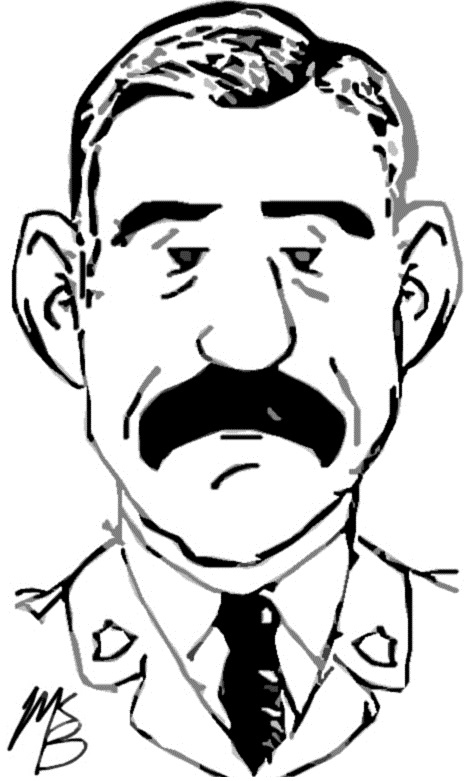
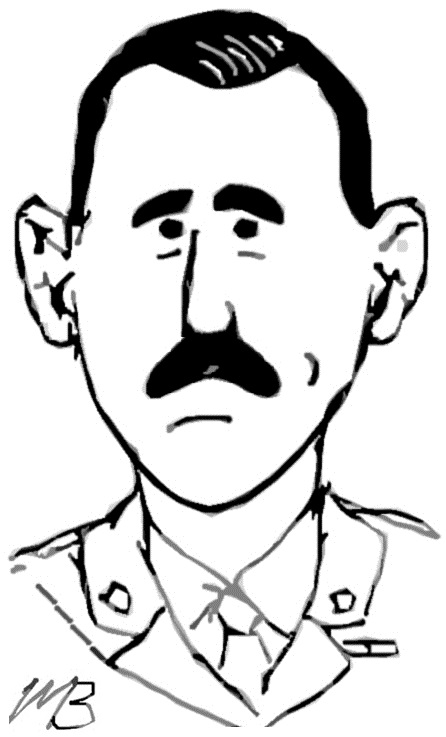
Lieutenant Colonel W. E. S. Knowles
129th (Wentworth) BattalionKnowles

If you don’t like me and do not care to serve under me, go elsewhere, but go to the front. You married men who have been waiting no longer need hold back, as your wife will now get the $20 and your hours are from 9 to 6 and you are allowed to go to your home. Last week we only got 27 men, and to-night I found only three men in this audience who are willing.

(Quoted in Hamilton Spectator, 27 March 1916, 11)

William Edward Sheridan Knowles was a barrister, former mayor of Dundas (1894—1895) and commanding officer of the 77th Regiment. He was born in Wentworth County, Canada West on 3 October 1862. In December 1915, he was authorized to raise the 129th Battalion from his home region. Reporting on reluctant volunteers, a newspaper stated Knowles, “felt compelled to use more strenuous methods. They had not yet said anything ungentlemanly to anyone, but he was going to fill the battalion and was prepared to be rude if necessary to get them.” Continue reading

The Brockvillian

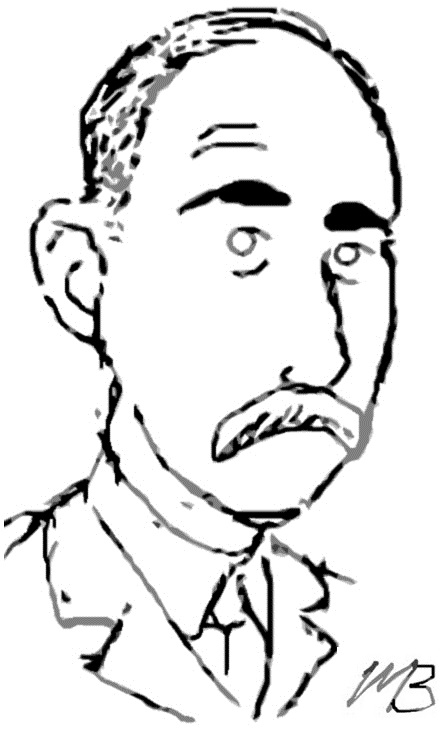
Lieutenant Colonel W. S. Buell
4th and 36th Battalions Buell

This officer was wounded on April 23rd near Ypres as described in A.F.A.45 of the 27th Aug’15. He now has very free movement at the shoulder, and has no pain and has considerable strength in the arm. His nervous condition, however, is not yet normal and this board recommends another month’s leave from this date.

(Proceedings of Medical Board, London, 11 Jan 1916)

Born on 11 October 1868 in Brockville, Ontario, William Senkler Buell descended from one of the oldest Loyalist families in Ontario. His ancestors had fought for the British in the American Revolution and the War of 1812. He followed his grandfather and father in politics and military affairs, becoming mayor of Brockville in 1900, president of the Liberal Association and commanding officer of the 41st Regiment in 1910. In August 1914, he helped to organize the 4th Battalion and was appointed second-in-command.

Continue reading

The Gardener

Lieutenant Colonel R. T. Pritchard
153rd (Wellington) BattalionPritchard

Colonel Pritchard was one of Canada’s unwanted senior officers. He had given up his business, left his home in Ontario, raised a battalion of friends and neighbours, trained them to the best of his ability and knowledge, and taken them to where they could smell gunpowder. Then he was told he could go home, he was no longer wanted. What would they call him at home?

(Col. J. M. Hughes, The Unwanted, 1956)

Born on 9 February 1868 in Nichol Township, Ontario, Robert Thomas Pritchard was a farmer in Wellington County and member of the 30th Regiment since 1893. In March 1916, he transferred from the 111th Battalion to take command of the newly authorized 153rd. After arriving in England in May 1917, the battalion was broken up and Pritchard was deemed surplus to requirements.

Continue reading

The Despised

Lieutenant Colonel D. H. MacLaren
157th (Simcoe Foresters) BattalionMacLaren

Mater spoke of the responsibilities of the senior officer for the breaking up of the battalion. She is quite right Col Mac is to blame for most of it. His selection as O.C. of a battalion of the calibre that one was, was unfortunate to say the least. He had no personality and inspired dislike instead of loyalty to him. He was disliked by the officers and despised by the men. However perhaps I can say more about it another time.

(Lieut. Leslie Frost, 157th Bn. to Parents, 15 Jan 1917)

David Henry MacLaren was a militiaman with over thirty years’ experience  in the 42nd and 35th Regiments. He was born on 13 December 1863 in Barrie, Canada West. In November 1915, the fifty-two year old pharmacist was selected to raise the 157th Battalion from Simcoe County. Future Ontario Premier, Leslie Frost (1895—1973) enlisted as a captain under MacLaren’s command.

Continue reading

The Stock Broker

Lieutenant Colonel G. F. Morrison, D.S.O.
19th and 18th BattalionsMorrison

It is presumed by the police that Morrison lay down on the chesterfield, and pressing the gun against his left breast, pulled the trigger. The bullet passed through the body below the heart and went out through the back lodging in the chesterfield. Examination of the army automatic found on the floor showed the only other bullet had jammed in the ejector.

(Toronto Globe, 14 Jul 1931, 11)

Major Gordon Fraser Morrison led the 19th Battalion through the first stage of the battle of the Somme in summer until commanding officer Lieutenant Colonel W. R. Turnbull recovered. On 9 October 1916, Morrison transferred to take command of the 18th when Henry L. Milligan returned to Canada following the death of his wife. Born in Toronto on 16 October 1884, Morrison was a member of the Queen’s Own Rifles, a mining executive and stockbroker with Pellet & Pellet. His grandfather, Angus Morrison had been mayor of Toronto in the 1870s.

Continue reading

The Band Leader

Lieutenant Colonel J. E. De Hertel
130th (Lanark and Renfrew) BattalionDeHertel

You have from now on not only to represent the honor of the 130th Battalion in those colours but the honour of your King. It was, as you know, customary to carry the colours into the battle-field, but this custom has been changed. The reason is that in the past thousands of men have sacrificed their lives in saving the colours. To avoid this unnecessary sacrifice of life it has been decided that in future the colours are to remain at home.

(Col. Hemming’s Address, Perth Courier, 2 June 1916)

John Edward De Hertel was a Hudson’s Bay Company factor, trade representative, manufacturer and sportsman. He was born in Perth, Ontario on 29 September 1863. While in charge of an HBC outpost during the 1885 Northwest Rebellion, De Hertel was briefly taken prisoner by Cree Chief Big Bear.

Continue reading

The Hockey Pioneer

Major Lennox Irving
240th (Renfrew) Battalion

We have the best type of manhood in the world in our brave troop fighting somewhere or everywhere in France. To appreciate even in the slightest degree, one mast see the heroes as they go into the trenches, go over the parapet, facing fearful odds, and then see them at their rest camps preparing for a great attack.

(Maj. Irving, Ottawa Journal, 11 Aug 1917, 16)

After the formation of the 240th Battalion, former 42nd Regiment commanding officer, fifty-three year old Lennox Irving came out of retirement to serve as second-in-command to Lieutenant Edgar John Watt. Born in Renfrew, Canada West on 16 May 1863, Irving was a barrister, militiaman and early hockey pioneer. While a student at Queen’s University, he participated in the first hockey game against the Royal Military College in 1886. Irving scored the lone goal to give Queen’s the victory. The two schools compete for the Carr-Harris Challenge Cup every year to commemorate this first hockey game.

Continue reading