The Ranger

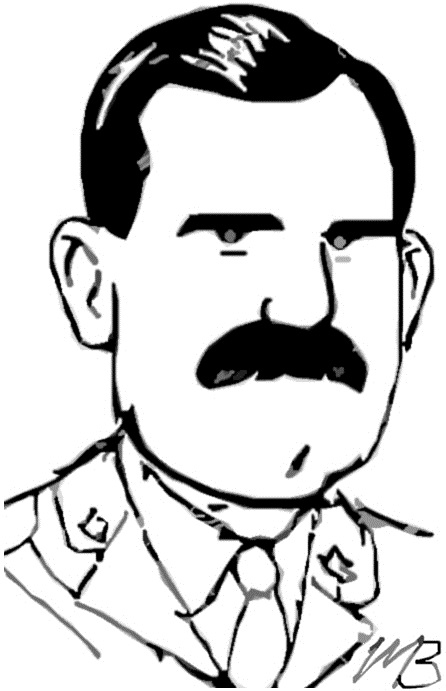
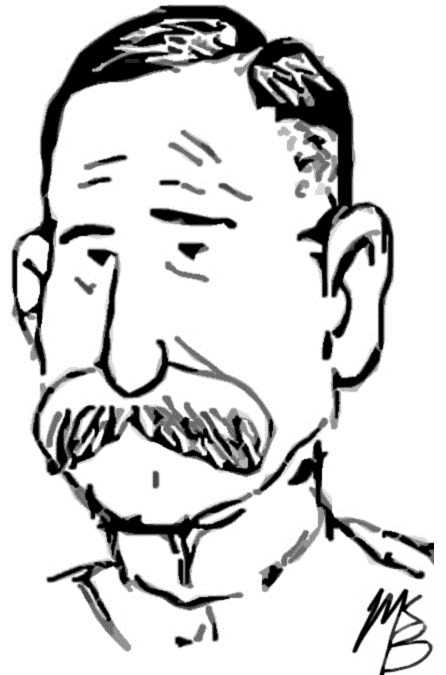
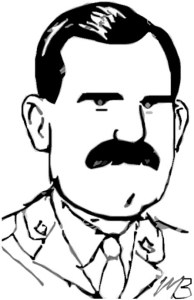
Lieutenant Colonel C. H. Rogers
20th (Central Ontario) BattalionCHRogers
If Britain should be drawn into the vortex of another European war, it would be difficult for Canada to claim the benefits of Empire and remain neutral. On the other head, if we saw fit to establish more friendly relations with our neighbours to the South, we might be drawn into a struggle bordering on the Pacific.

(Rogers, Toronto Globe, 9 Apr 1934, 10)

A descendant of famed Revolutionary War Loyalist Ranger, Robert Rogers, Charles Herman Rogers came from a long line of militiamen. Born in Grafton, Ontario on 28 December 1876, as a boy he joined the 40th Northumberland Regiment commanded by his father, Colonel Robert Zacheus Rogers (1843—1911). He served in the Boer war and in 1913 succeeded his uncle, Henry Cassidy Rogers, in command of the 3rd Prince of Wales Canadian Dragoons. In September 1914, Rogers became second-in-command to David Watson of the 2nd Battalion.
Continue reading

The Maverick

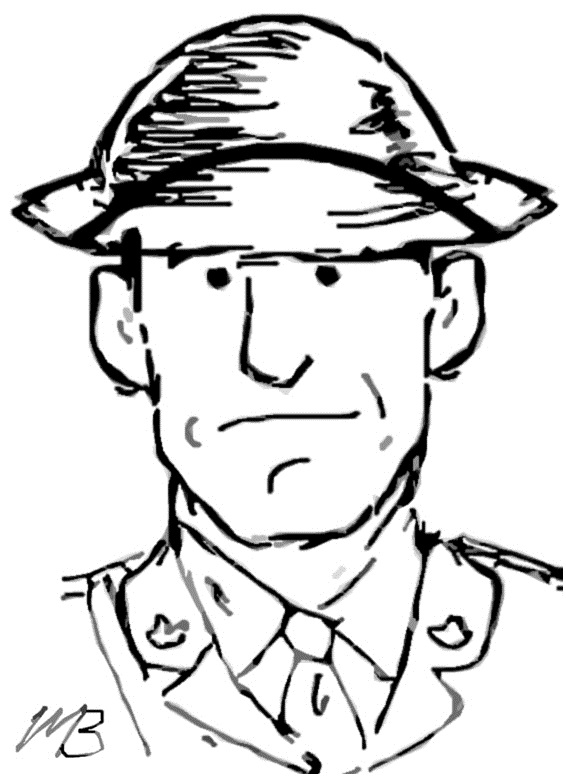
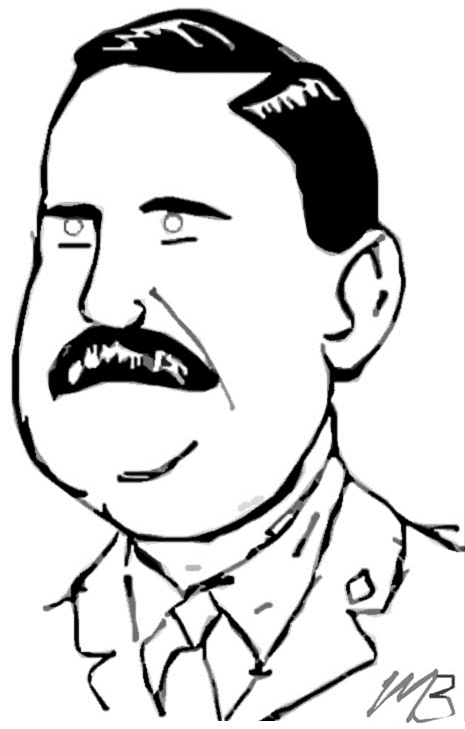
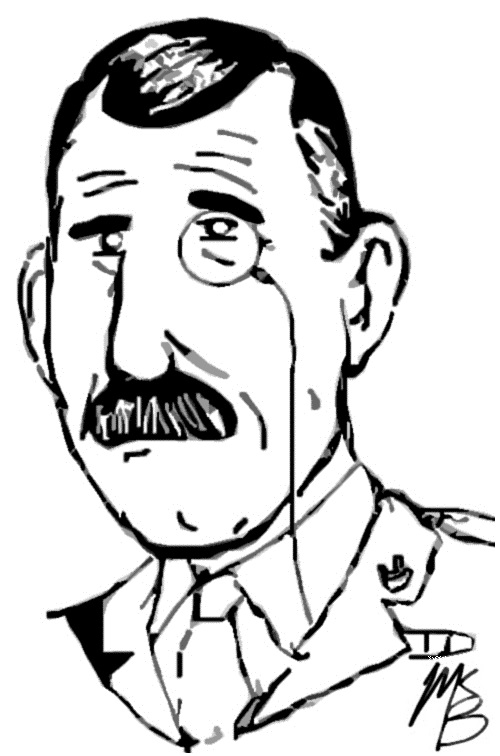
Lieutenant Colonel Agar Adamson, D.S.O.
Princess Patricia’s Canadian Light InfantryAdamson

What really makes a real man? The best men I have known always openly say they are cowards and hate the situation they find themselves in and really are afraid, perhaps it is partly their education which helps them to realize the danger, but there is a great deal in being one of a long line of soldiers in a family, although this only partly accounts for it, for men who never saw a soldier and for generations have led useless lives, have behaved in a similar manner when put against it out here...

(Agar Adamson to Mabel Adamson [wife], 4 Mar 1915)

Agar Stewart Allan Masterton Adamson was the first Canadian-born commander of Princess Patricia’s Canadian Light Infantry. A native of Montreal, he was born on 25 December 1865. A member of an influential family, Adamson became a socially connected civil servant and militia officer in Ottawa. Despite being forty-eight and having poor vision, in August 1914 the Boer War veteran enlisted as a captain with P.P.C.L.I. under Lieutenant Colonel Farquhar.

Continue reading

The Kentuckian

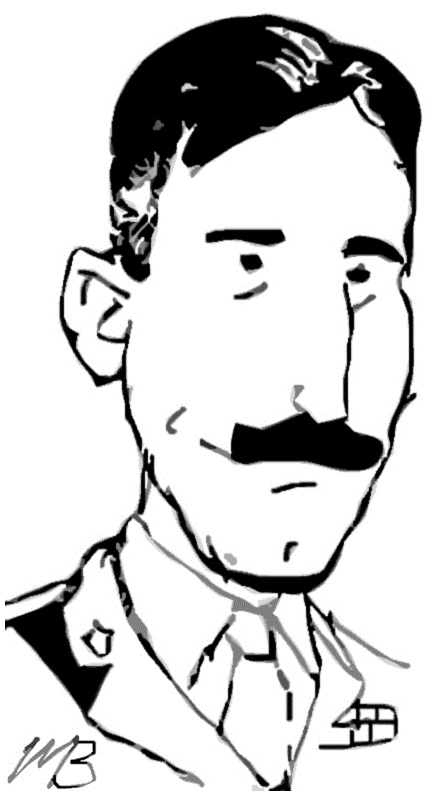
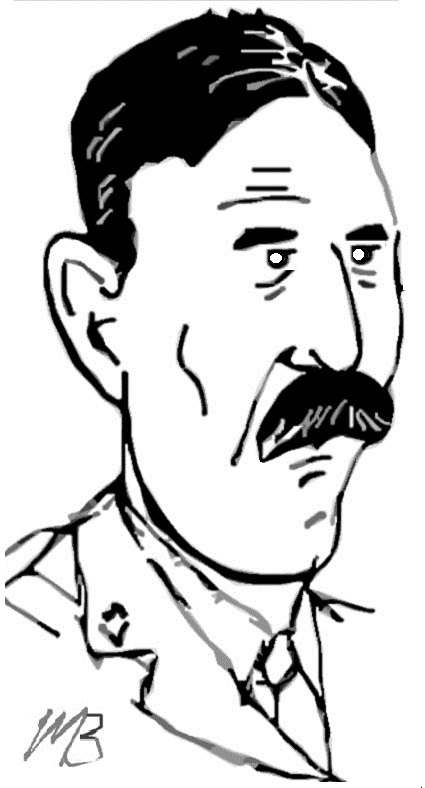
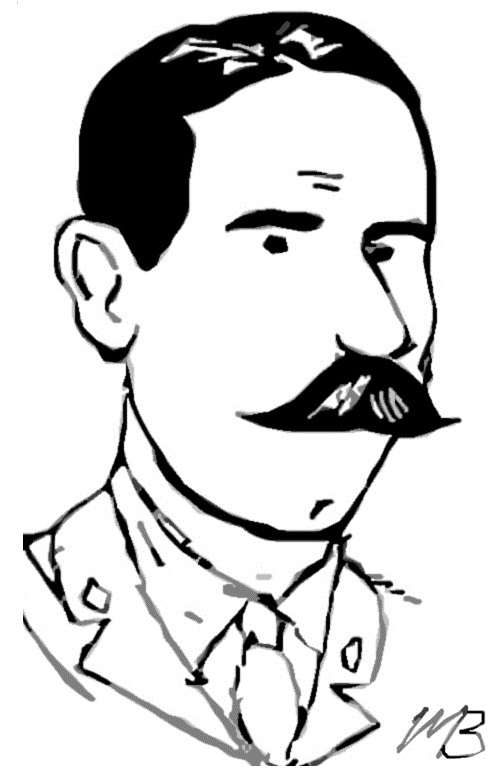
Lieutenant Colonel W. W. Stewart †
86th (Machine Gun) BattalionStewart

The cost of this tremendous war cannot be stated in terms of the Stock Exchange, for life and happiness mean infinitely more than dollars and cents.

Who can assess the value of a genial disposition, a kindly, sympathetic nature, a forceful personality, a large heart, a noble, earnest spirit?

(The Canadian Machine Gunner, June 1917, 12)

Born on 1 June 1871 in Covington, Kentucky, Walter Wilson Stewart immigrated to Canada with his family as a boy. He pursued a career in architecture, working in Hamilton and Cleveland, Ohio. In the Canadian militia, he served for two years with the 13th Regiment and twelve years with the 91st Highlanders. Beginning in 1915, he organized the 86th Battalion based in Hamilton with former 4th Battalion commander Robert H. Labatt.

Continue reading

The United Farmer

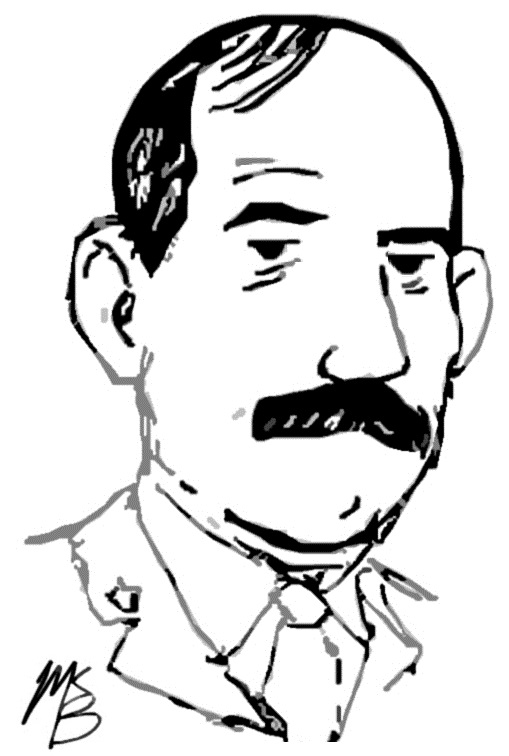
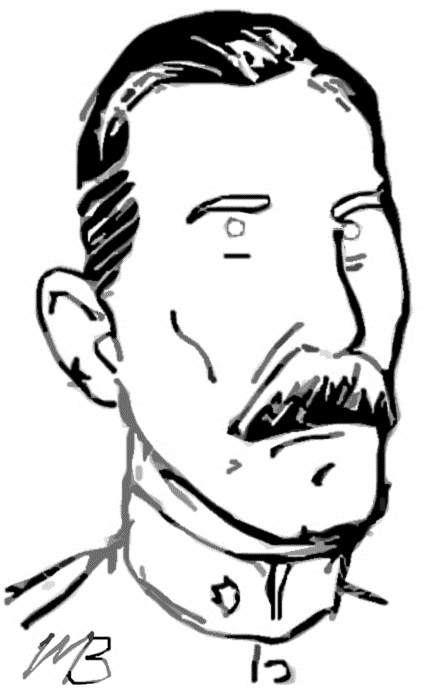
Lieutenant Colonel Doug Carmichael, D.S.O., M.C.
116th (Ontario County) BattalionCarmichael

He wears two decorations on the breast for doing things to the Germans, which, according to King’s regulations and the best methods of procedure, should have been planned by him and executed by some mere sub. But he was one of those majors and colonels, rare in any army, who actually led his men—personally led, out in front. He has many raids to his credit. He showed up well in all battles.

(Morning Leader, 18 Mar 1922, 36)

Dougall Carmichael was a Grey County farmer with ten years’ experience with the 35th Simcoe Foresters. He was born on 8 November 1885 in Collingwood, Ontario. Standing five-foot-five, he joined Lieutenant Colonel H. A. Genet’s 58th Battalion and rose to second-in-command.

Continue reading

The Defence Minister

Lieutenant Colonel G. R. Pearkes, D.S.O., M.C., V.C.
116th (Ontario County) BattalionPearkes

What kind of war must we be prepared to fight? With the introduction of nuclear weapons and the anticipated production of long-range ballistic missiles, it is obvious that the methods of waging any future war have clearly changed from those of World War II. Looking into the future is at best a risky business, but our military advisers must plan ahead, and it is their present opinion that a third world war would commence with a sudden ferocious thermonuclear attack of great intensity…

(Pearkes, Debates, 5 Dec 1957, 1900)

George Randolph Pearkes was a solider, politician, and winner of the Victoria Cross, the highest award for gallantry in the British Empire. He was born on 28 February 1888 in Watford, Hertfordshire, England and immigrated to Alberta in 1906. He joined the North West Mounted Police and fought with the 2nd and 5th Canadian Mounted Rifles. Pearkes began his military career as a private; he retired as major general.

Continue reading

The Methodist

Lieutenant Colonel Sam Sharpe, D.S.O., M.P. †
116th (Ontario County) BattalionSSharpe

But it is awful to contemplate the misery and suffering in this old world & were I to allow myself to ponder over what I have seen & what I have suffered thro the loss of the bravest & best in the world, I would soon become absolutely incapable of “Carrying on.”

(Sharpe to Muriel Hutchison, 21 Oct 1917)

Samuel Simpson Sharpe was a militia major and Conservative Member of Parliament for Ontario North (1908—1918). Born on 13 March 1873 in Zephyr, Scott Township, Ontario, he was a graduate from the University of Toronto and Osgoode Hall. During his university days, he was a champion tennis player and became a prominent solicitor in Uxbridge.

Continue reading

The ’85er

Lieutenant Colonel J. A. V. Preston
39th Battalion JAVPreston

Marched the remainder of the way to Batoche today and joined Middleton’s command, arriving early in the afternoon. The field still bears all the marks of battle, with some dead half-breeds and Indians. Middleton’s men had been fighting practically night and day four days, and when it was over most of them went to sleep and nothing had been done towards clearing the field of burying the dead, which duty devolved to us in large measure on our arrival.

(Lieut. Preston, Diary, 13 May 1885)

John Alexander Victor Preston was a lawyer, Orangeman, and court official in Dufferin County. He was born on 4 December 1863 in Manvers, Canada West. Preston joined the militia at the age of thirteen and volunteered to put down the Northwest Rebellion of Louis Riel at twenty-two. He served as a lieutenant in the Midland Battalion under the command of Colonel A. T. H. Williams and fought at the battle of Batoche (9-12 May 1885).

Continue reading

The Anti-Prohibitionist

Lieutenant Colonel H. A. C. Machin, M.P.P
94th (New Ontario) BattalionManchin

My position in this war has been very small, but I have had the privilege of serving some six months on the front… during the period I spent in France amid the horrors of war and human suffering and misery and the war’s leveling effects, I felt that if I survived and returned I could never again view affairs through the same coloured glasses as I did in 1914–before the war.

(Machin, Address in Ontario Legislature, 4 Mar 1919, 2)

Harold Arthur Clement Machin was a veteran of the Boer War and Conservative MPP for Kenora in the Ontario legislature between 1908 and 1919. Born on 9 May 1875 in Rochester, New York, Machin grew up in Newfoundland and Port Arthur, Ontario. In December 1915, he was authorized to raise the 94th Battalion from the region around Port Arthur, Fort William, Kenora and Rainy River.

Continue reading

The Fruit Farmer

Lieutenant Colonel Berkeley Henry Belson
81st (Niagara) BattalionBBelson

I saw many deeds performed by my own men which in an ordinary campaign would have won the Victoria Cross for them, such as binding up wounded comrades and carrying them to shelter under hot fire. Nobody wavered.

(Maj. Belson’s account of Second Ypres, Toronto Globe, 20 May 1915, 3)

Before the war, Berkeley Henry Belson was a fruit farmer in the Niagara Peninsula outside of St. Catharines. Born on 28 May 1871 in Gloucestershire, England, Belson served for six years as an infantry and artillery volunteer in the British army. His father was a Crimean War veteran and had fought in various colonial campaigns from New Zealand to China. After immigrating to Canada, the younger Belson joined the 19th Lincoln Regiment.

Continue reading

The Shopkeeper

Lieutenant Colonel J. A. W. Allan
20th (Central Ontario) BattalionJAWAllan

Replying to the address of welcome, Col. Allan spoke briefly, thanking his fellow townsmen for their many expressions of kindness. He had visited England, Wales, Scotland, Belgium and France, where he was in the trenches for a short time. He thought the ultimate victory of the allies was beyond doubt, but much hard fighting remained.

(Toronto World, 25 Sept 1916, 2)

Born on 6 September 1864, John Alfred Walker Allan was a successful hardware merchant and mayor of Newmarket (1913—1914). He stepped down at the outbreak of the Great War to raise the 20th Battalion from his hometown and central Ontario. Commanding officer of the 12th York Rifles, Allan had also served in the Northwest Rebellion of 1885.

Continue reading