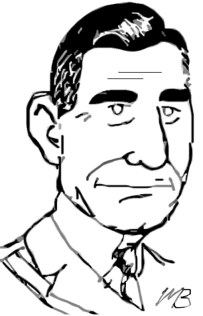
Lt. Col. G.H. Kirkpatrick

Lieutenant Colonel G.H. Kirkpatrick
11th Canadian Mounted Rifles & 72nd Battalion
GHKirkpatrick

The outstanding fearlessness of the new C.O., Lieut-Col. G. H. Kirkpatrick, D.S.O., also calls for special notice. This was the first occasion on which he had complete command of the Battalion in an action, and his courage and coolness were an inspiration to all ranks.

(History of the 72nd Battalion, Seaforth Highlanders of Canada, 1920, 150)

Guy Hamilton Kirkpatrick succeeded Lieutenant Colonel J. A. Clark in command of the 72nd Battalion on 5 September 1918. Born on 5 November 1875 in Kingston, Ontario, he graduated from the Royal Military College in 1896 and fought in South Africa with Lord Strathcona’s Horse. His father, Sir George Airey Kirkpatrick (1841—1899), had been a Conservative MP and Lieutenant Governor of Ontario.

Continue reading

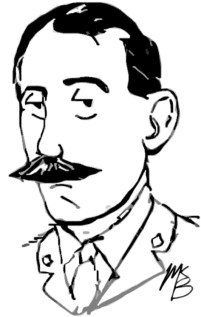
Lt. Col. Laws

Lieutenant Colonel Burnett Laws
1st Canadian Mounted Rifles
Laws

During the last war I served 41 months in France as Adjutant, 2nd in Command and Officer Commanding of a fighting Battalion — so surely my experience in the handling of me could be put to some use. I have kept pretty well posed in the changes made during the time elapsed since going on the reserve of officers and with a Refresher course could take hold of a Battalion or even a Brigade and whip it into shape. As you know I qualified for the command of a fighting Battalion which at the end of the last war had a reputation second to none in the Canadian Corps.

(Col. Laws to Military District No. 12, 22 May 1940)

Burnett Laws was a former North West Mounted Police constable, Boer War veteran and member of the 22nd Saskatchewan Light Horse. Born in Northumberland, England on 3 March 1877, he immigrated to Canada in 1897. After retiring from the NWMP in 1904, he became a farmer in Lloydminster, Saskatchewan.

Continue reading

The Flag Hugger

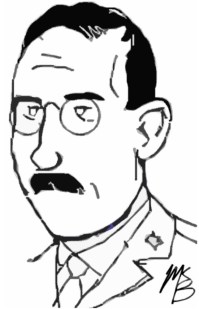
Lieutenant Colonel A.E. Bywater
33rd Battalion
Bywater

Considerable pressure is being brought to bear on adopting a new flag for Canada, in many cases by certain factions who were not over-zealous fighting Wars I and II and whose loyalty is often doubted.

Were a new flag to be adopted would it not be the most deadly insult and ingratitude toward the thousands buried in foreign lands, draped with the Union Jack and the thousands maimed and broken and hundreds of thousands who fought to keep that flag flying, a flag that has been baptized in the blood and sacrifices of our boys and now, next to the cross is a sacred emblem?

(Bywater, Globe and Mail, 17 Oct 1945, 6)

Arthur Edwin Bywater was a gentleman farmer and militia officer born in Colbone, Ontario on 7 April 1869. He first enlisted in the 21st Battalion before being appointed senior major with Lieutenant Colonel J. A. V. Preston’s 39th Battalion in March 1915. After the 39th was broken up, Bywater assumed command of the 33rd Reserve Battalion in England.

Continue reading

The Builder

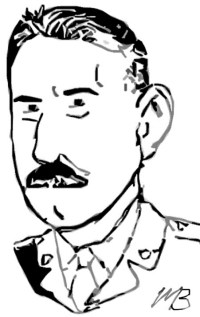
Lieutenant Colonel E.J.W. Ryan
102nd (British Columbia) Battalion
EJWRyan

When wounds compelled my temporary retirement you exhibited the same fine qualities of patience, obedience and endurance under the command in turn of my second, Major (now Lieut.-Colonel) E.J. Ryan, D.S.O. So many changes in command might well have taxed the discipline of older troops than you, but to the everlasting credit of the 102nd Battalion you gave each and all a full measure of confidence and devotion.

 (Lt. Col. Lister, address to 102nd, 25 May 1919)

A building contractor in Vancouver, Edward John Wilson Ryan was born in Mille Isle, Quebec on 7 September 1884. He enlisted with the 121st Battalion as a captain in December 1915. After a promotion to major, he went on an instruction tour of the front with the 102nd Battalion in October 1916. He was retained for service in France and later became the unit’s second in command.

Continue reading

The Aphasic

Lieutenant Colonel Jack Mersereau, D.S.O.
25th (Nova Scotia Rifles) BattalionMersereauCJ

He talks spontaneously but with deliberation at uncommon words he pauses an instant for he has to visualize the word before he can say it. He tends to displace words or syllables. If he wants to say ‘tomorrow’ he will often say \yesterday’ and sometimes he will not recognize the mistake. He mixes up the person or verbs, he will say ‘he’ instead of ‘she’ or ‘we’ instead of ‘they.’ At times will say damn in place of another word.

(Medical consultant report on Lt. Col. Mersereau, 9 July 1919)

While carrying a message to Brigadier General Arthur Currie during the Second Battle of Ypres, Major Chalmers Jack Mersereau was struck in the head by a piece of shrapnel. Although he managed to make the delivery to headquarters, he slipped into unconsciousness. Hospitalized for the next two months, he found that he had lost his power speech. Fluent in English and French with some German before the war, he struggled to regain basic vocabulary, which remained partially impaired for the rest of his life.

Continue reading

The Son-in-Law

Lieutenant Colonel Byron M. Green
164th (Halton and Dufferin) Battalion
BMGreen

Gen. Hughes was a fine martial figure in his uniform, and his girlish looking daughter looked even slighter than she would have done under other circumstances … “This is my girl – and she’s sent her husband to the front.”

I didn’t have to send him – he went himself,” Mrs. Green quickly retorted evidently jealous for the patriotism of her husband and the general smiled an indulgent acquiescence.

 (Toronto World, 7 Sept 1915)

Byron Malcolm Green was the son-in-law of Minister of Militia, Sir Sam Hughes. He was born in Leeds County, Ontario on 10 January 1886 and married Hughes’ daughter, Roby Mary Caroline, in October 1912. He was a banker, accountant, and stock broker with financial ties to Montreal, Toronto, and New York. In 1915, he enlisted as a lieutenant with the 36th Battalion. Continue reading

Lt. Col. A.D. Cameron

Lieutenant Colonel A.D. Cameron, D.S.O., M.C.
38th (Cameron Highlanders) Battalion

Cameron

He states when breaking horse on Salisbury Plains, horse threw its head up hitting him on nose. This was painful for some time, but was not treated. Since that time he has noticed that breathing through nose has been difficult.

(Medical History of an Invalid, 18 March 1919)

Born in Shanghai, China on 18 April 1891, Alexander Douglas Cameron was professional soldier with the Canadian Permanent Force. He joined Lord Strathcona’s Horse in October 1914, and despite an injury to the face from a horse, went to France with LdSH in May 1915.

Continue reading

Lt. Col. Nelles

Lieutenant Colonel S.B. Nelles
152nd (Weyburn-Estevan) Battalion
NellesSB

The commanding officer, Lieut. Colonel Stephen B. Nelles has had long experience. He is earnest, but inclined to be slow; conscientious, but rather lacking in energy.

 (Brig. Gen. John Hughes, Inspection Report, 23 Sept 1916)

Stephen Bell Nelles was born in Grimsby, Ontario on 20 January 1871. In 1905, he moved to west where he worked for Canada Permanent Mortgage Company in Winnipeg and Sun Life in Regina. He had been a member of the militia since 1890; serving in the Queen’s Own Rifles and 90th Winnipeg Rifles and the 95th Saskatchewan Rifles.

Continue reading

Lt. Col. Mackay

Lieutenant Colonel Joseph Mackay
225th (Kootenay) Battalion
JMackay

Col. Mackay says that he made the appointment solely upon the merits of the applicant, and that no appointments he has made, or may in future make, will be upon any other basis than that of proven merit, and that all commissions o be issued, excepting the staff, in the 225th battalion, will be of the rank of lieutenant, the promotions to the higher ranks to be made after fitness and competency has been demonstrated by service.

(Lethbridge Herald, 28 Mar 1916, 4)

A native of Ireland, Joseph Mackay was born in Londonderry on 16 September 1865. After immigrating to Kingston, Ontario with his family as a boy, MacKay moved to Carleton Place. He joined the 42nd Battalion, Lanark and Renfrew Regiment and rose to become its commanding officer in 1898. He was succeeded by Lennox Irving in 1901 and retired to British Columbia. Continue reading

The Publisher

Lieutenant Colonel R.F. Parkinson, D.S.O.
38th (Ottawa) Battalion
Parkingson

He was never too busy to find a job for a serviceman in need and dipped generously into his pocket times without number to tide a less fortunate comrade over a thin day. Even in recent years, “burned out” veterans who found themselves hard up had the habit of coming around the office to make a touch from

(Ottawa Journal, 4 Jan 1946)

Born on 1 January 1883 in Woodstock, Ontario, Robert Francis Parkinson was a newspaper publisher and managing director of the Ottawa Journal. He first joined the 22nd Oxford Rifles and then the 43rd Duke of Cornwall’s Own Rifles when he moved to Ottawa in 1908 to join the staff of the Ottawa Journal.

Continue reading