The Scion

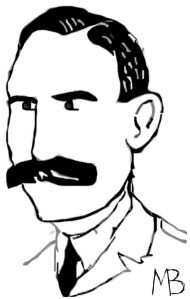
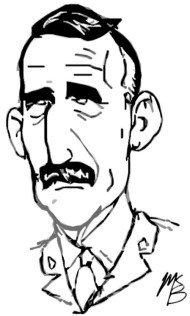
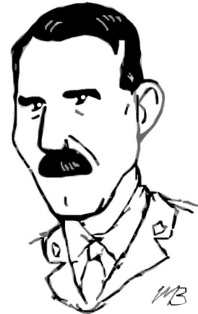
Lieutenant Colonel Reg Pellatt
83rd (Queen’s Own Rifles of Canada) BattalionPellatt

Esprit de corps is love of Regiment, and should permeate throughout all ranks. It is born of the knowledge that, when in the Queen’s Own, a man is a member of one of the oldest and finest regiments in the Canadian Militia, and a Regiment which, whenever Canada has called, has answered that call, living up to its splendid motto IN PACE PARATUS (In peace prepared) in the truest sense of the word.

(R. Pellatt, A Guide to Riflemen, 1924, 22)

Born on 30 June 1885 in Toronto, Reginald Pellatt was the son of Major General Sir Henry Mill Pellatt (1859—1939), commanding officer of the Queen’s Own Rifles of Canada. An influential financier and forty-year member of the QOR, the elder Pellatt had completed his famous estate of Casa Loma in 1913.

Continue reading

The Operagoer

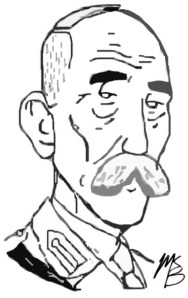
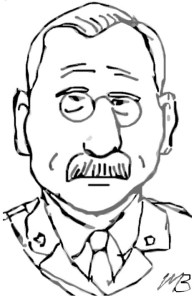
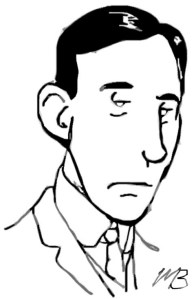
Lieutenant Colonel F. S. Meighen

14th (Royal Montreal Regiment) & 87th (Canadian Grenadier Guards) Battalions

Meighen

Colonel Meighen was a very thorough and painstaking officer, very much loved by his men. Several companies of his battalion were French Canadians and they fairly worshipped him. He was a model trench commandant, never tired of strengthening the works, and always ready himself to do anything that he asked of his officers or men. He had made an excellent battalion out of his corps, and as we had alternated with them in the trenches until this turn, we knew their worth.

(Col. J. A. Currie, 15th Bn. The Red Watch, 1916, 199)

Frank Stephen Meighen was a Montreal businessman, mining director and patron of the arts. He was born on 26 December 1870 in Perth, Ontario. After inheriting the family fortune after the death of his father, Meighen pursued various business interests in Montreal. As a trained pianist, he held a particular interest for arts and culture. He founded the Montreal Opera Company, but it only ran for three seasons between 1910 and 1913.

Continue reading

The Amputee

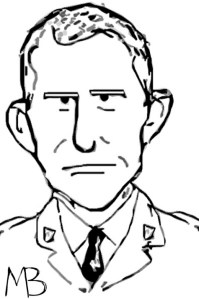
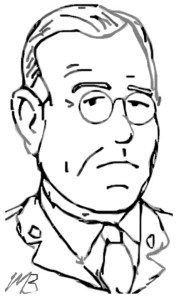
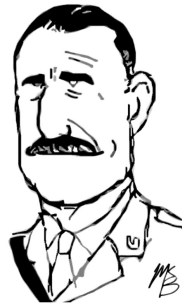
Lieutenant Colonel Ralph Webb, D.S.O., M.C.
47th (Western Ontario) BattalionWebb

A shell dropped in among the troops and twenty-two Winnipeg men and Col. Webb were wounded. Webb’s leg was completely severed near the hip. The colonel took out his pocket-knife and cut off the mangled remnants, then tied up his arteries with a shoelace. He afterwards underwent the necessary surgical operation without an anesthetic in Etaples field hospital. Recovering in England, he never used a crutch. He secured an artificial limb and left the hospital walking upon it. Within five months after his leg was blown off, he was back in France with his unit, with the artificial member.

(Winnipeg Tribune, 17 Nov 1924, 4)

Ralph Humphreys Webb succeeded Lieutenant Colonel M. J. Francis as commander of the 47th Battalion on 14 December 1917. In September 1914, the twenty-eight year old Webb had enlisted as a lieutenant with the Canadian Army Service Corps. Webb was born at sea on an ocean liner sailing from India on 30 August 1886. Raised in England, he immigrated to Canada in 1902.

Continue reading

The Good Neighbour

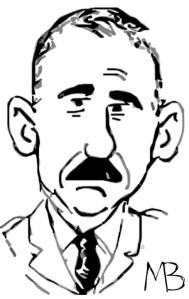
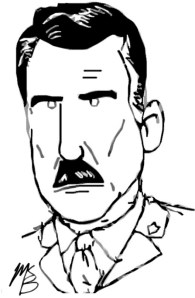
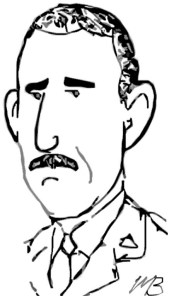
Lieutenant Colonel Levi Jerome Gilbert
117th (Eastern Townships) BattalionGilbert

A CALL TO ARMS

There is not a neighborhood in the Townships where it should be impossible to raise a section, and a section so raised would be a “CHUM SECTION.” Each MAN would be a neighbor, would share the same tents, drill and march side by side, befriend each other throughout the campaign and, let us trust, come home again together rejoicing in perils safely passed, but shared in common, and in a common participation which is surely coming if we all do our Duty.

(117th Citizens Recruiting Association pamphlet, 1 December 1915)

Born on 2 June 1870, Levi Jerome Gilbert was a civic leader in Sherbrooke, Quebec and a gentleman militia officer with the 58th Compton Regiment in the 7th Hussars. As commander of the 117th Battalion, Gilbert recruited volunteers from the Eastern Townships region of Quebec, which included Sherbrooke, Magog and Cowansville.

Continue reading

The Railway Tycoon

Brigadier General Jack Stewart, D.S.O.
239th (Railway Construction) Battalion

JWStewart

Stewart ran up railways with a rapidity that astounded the authorities… If I had been Prime Minister, he would have found a seat in the British House of Peers, the only recognition adequate to his vast services to the Empire in her worst hour of peril.

(T.P. O’Connor- Irish-Nationalist MP for Liverpool Scotland)

Responding to the critical Allied need for rail support in France, the Canadian government authorized the creation of several battalions designated for railway construction. In May 1916, noted Vancouver railway builder, John William Stewart began recruiting for the 239th Battalion. Born on 12 December 1865 in Sutherland, Scotland, Stewart moved to Canada in 1882. Rising from a poor immigrant labourer, Stewart became a very successful railway manger and contractor in western Canada and Montana.

Continue reading

The Fighter

Lieutenant Colonel Russ Boyle †
10th (Canadians) BattalionBoyle

Words will not express the absolute sense of calamity which has struck every officer and man in the battalion since we have lost him. He was our ideal of a man and a leader and I can assure you that there was not one of us who did not feel to the very limit his loss.

(Captain Ross, 10th Bn. to Mrs. Laura Boyle [wife], 27 May 1915)

Russell Lambert Boyle was one of three CEF colonels killed in action during the second battle of Ypres in April 1915. Born on 29 October 1880 in Port Colbourne, Ontario, Boyle was active in the militia from a young age. He joined the Canadian Field Artillery in 1894 and served with the 15th Light Horse. During the Boer War, he volunteered and fought in South Africa. As a resident of Crossfield, Alberta, Boyle sat on the town council and owned a ranch.

Continue reading

The Rancher

Lieutenant Colonel Norman Lang
65th (Saskatchewan) BattalionLang

No doubt, the graves of the men who have fallen in France will be as well looked after as is possible, but those who have been over there know that numbers of men have been blown to atoms. Something should be done in their honor, something that would serve as a permanent reminder of their sacrifice.

(Col. Lang, Saskatoon Daily Star, 21 Jan 1919, 17)

Born on 4 August 1879 in Exeter, Ontario, Norman Lang was a farmer and rancher in Allan, Saskatchewan. The grey-eyed, moustachioed, six-foot-three Lang was a member of the 29th Light Horse and veteran of the Boer War. In April 1915, he was authorized to raise the 65th from the Saskatoon area.

Continue reading

The Moustache

Lieutenant Colonel W. C. G. Armstrong
56th (Calgary) Battalion

WArmstrong

Troops In Garrison Promise Fresh Attack Tonight On “Suspicious” Hotels
OFFICERS ARE POWERLESS

The attack followed those of Thursday night, when two cafes belonging to the White Lunch company were demolished. The attack tonight is expected upon other hotels whose managers have expressed sympathy with owners of structures already destroyed. When the attack was made on the Riverside hotel last night. Lieut-Col. Armstrong, commanding the 56th battalion rushed to the scene of activities, but he was unable to persuade the men to quit.

(Winnipeg Tribune, 12 Feb 1916, 1)

William Charles Gordon Armstrong was a Calgary civic leader and founder of the 103rd (Calgary Rifles) Regiment. Born on 2 November 1865 in Sleaford, England, Armstrong immigrated to western Canada in 1892. He was a land surveyor, investor, city councillor and capitalist. After serving several years in the 15th Light Horse, he created the 103rd Regiment on 1 April 1910.

Continue reading

The Clergyman

Lieutenant Colonel Rev. C. S. Bullock
237th (New Brunswick Americans) BattalionBullock

Just to fight on until at last is ended
The war with all its horrors and its pain—
To see triumphant that which I defended
And find in loss the truer greater gain
To know that men still count that death is better
Than life, if lived on suppliant’s bended knee
And give their all to snap the bounds that fetter
Then smile at Death because their souls are free

(Bullock, The Rotarian, Dec 1942, 59)

Reverend Charles Seymour Bullock was an American Unitarian minister in the Ottawa Church of Our Father at the outbreak of the First World War. Born in Cold Spring, New York on 13 February 1867, Bullock had been a chaplain in the First Illinois Cavalry during the Spanish-American War. In 1912, he accepted a position with the Unitarian Church in Ottawa. An admirer of Canada, Bullock, strongly supported the war effort against Germany, becoming involved in fundraising and recruitment.

Continue reading

The Cavalryman

Lieutenant Colonel Sam Beckett †
75th (Mississauga) BattalionSBeckett

Col. Beckett ranked with the few most prominent and able military officers which Toronto and even Canada has produced in the present struggle abroad. That he was efficient and an authority on military tactics, particularly cavalry manoeuvers was attested when he was chosen one of the few officers who left here commanding battalions to take his regiment to France. He had innumerable friends in Toronto.

(Toronto World, 5 March 1917, 1)

Lieutenant Colonel Samuel Gustavus Beckett of the 75th Battalion was killed in action during a March 1917 trench raid near Vimy Ridge. Born on 2 December 1869 in Toronto, Beckett was a partner in an architect firm with fellow Lt. Colonel W. C. V. Chadwick of the 124th Battalion. A student of military history and expert on the cavalry tactics of American Confederate General Stonewall Jackson, Beckett had been involved in the Canadian militia since 1893. At the outbreak of the war, he was commanding officer of the 9th Mississauga Horse.

Continue reading