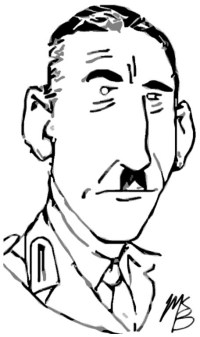
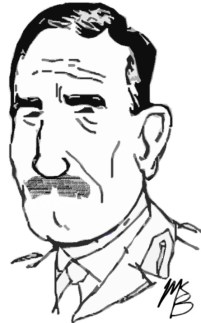
Lt. Col. Scroggie

Lieutenant Colonel J.A. Scroggie, D.S.O., M.C.
16th (Canadian Scottish) Battalion
Some correspondents have stated that trench warfare days were days of monotony broken by half-hours of Hell. While that is exaggerated it is in a sense true.

(Lt. Col. Scroggie speech, Kingston Standard, 7 Mar 1922, 2)

Born in Scotland on 4 August 1890, James Austin Scroggie immigrated to Canada in 1911 and took up fruit farming in British Columbia. He enlisted with the 30th Battalion as a private in November 1914, and joined the 16th Battalion in the field on a reinforcement draft six months later. Having proven himself as the NCO leader of the bombing section, he was commissioned a lieutenant on 12 May 1916. By the end of the war, he was twice-wounded, three-times mentioned in dispatches, and earned the Military Cross and two Bars.
Continue reading

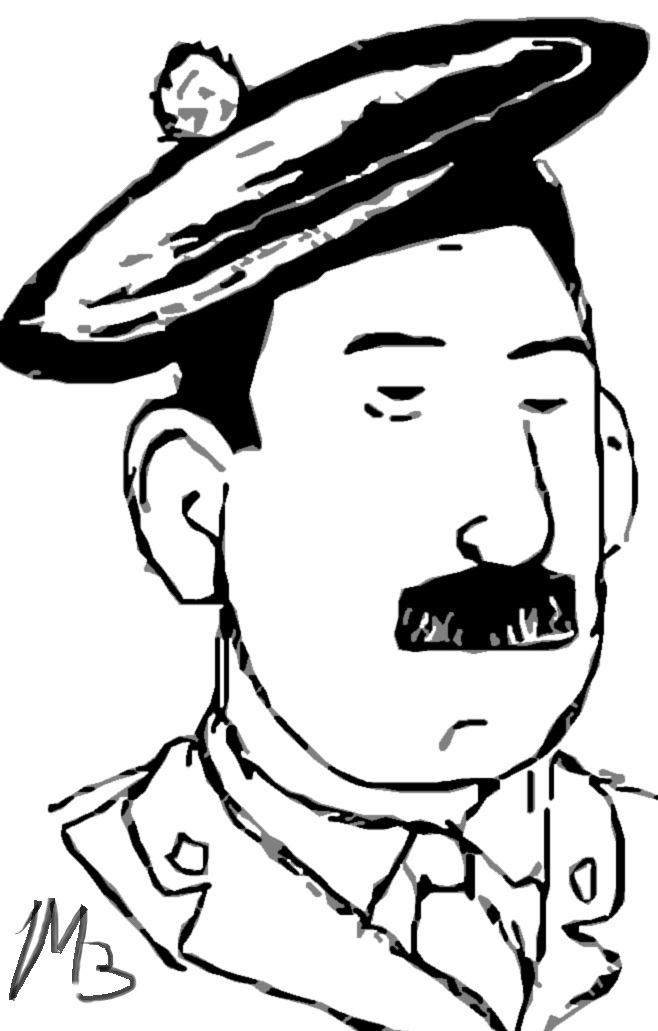
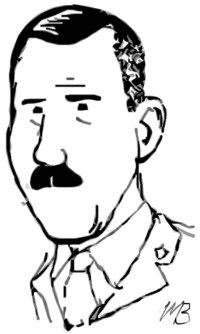
Maj. Gen. Burstall

Major General Sir Henry Burstall
2nd Canadian Division
Burstall

General Sir H.E. Burstall who commanded the Canadian artillery in the late war, was reputed to have an iron nerve, and, in action, to have been one of the coolest men in the army. Nothing, it was said of him so quickly aroused his anger as to see a man give way to fear, even momentary fear, and he seldom let such action pass in silence.

 (Vancouver Daily World, 28 Oct 1922, 22)

Born on 26 August 1870 in Sillery, Quebec, Henry Edward Burstall was a graduate of the Royal Military College, Boer War veteran and Permanent Force artillery officer. He commanded the 1st Division Artillery from September 1914 until September 1915 when he was elevated to GOC of the Royal Canadian Artillery Corps. In December 1916, Burstall replaced Major General Richard Turner of the 2nd Canadian Division.

Continue reading

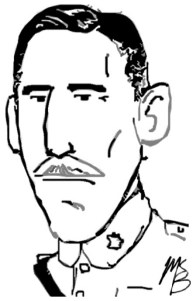
Lt. Col. Willets

Lieutenant Colonel C.R.E. Willets, D.S.O.
Royal Canadian Regiment

Willets

For conspicuous gallantry and devotion to duty. He went forward to the front line under very heavy fire and organized the defence of the position with great skill. He has at all times displayed the greatest courage and initiative.

(Willets, D.S.O. citation, 26 July 1917)

Born in Windsor, Nova Scotia on 21 May 1880, Charles Richard Edward Willets had left the Royal Military College early to serve in South Africa in 1901. After five years with the South African Constabulary, he was gazetted as a lieutenant in the Royal Canadian Regiment.

Continue reading

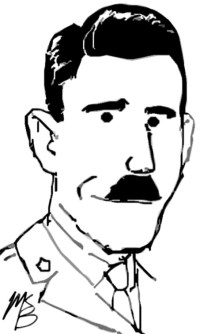
Brig. Gen. Hayter

Brigadier General Ross Hayter
10th Infantry Brigade
Hayter

He was a splendid example of the Royal Military College graduate, and, although all his service before the war was with the British forces, he never lost touch with Canada and never lost his Canadian spirit.

(Arthur Currie, 19 Dec 1929, 3)

Ross John Finnis Hayter was a graduate of the Royal Military College and Boer War veteran with nearly twenty years’ service in the British Army. He was born in Assam, India on 28 February 1875. He served as a brigade major with the 1st Infantry Brigade during the second battle of Ypres and later joined the staff of the 3rd Division under the command of General Louis Lipsett. Continue reading

Lt. Col. Leach

Lieutenant Colonel Francis Leach
231st (Seaforth Highlanders) Battalion

Before very long you will be going overseas–an event to which I know you have all been anxiously looking forward, and you will then have the honour of taking your place beside the brave lads who have preceded you.

(Lt. Col. Leach, January 1917)

Francis Easton Leach was a graduate of the Royal Military College and a veteran of the Boer War. A native of Montreal, he was born on 24 November 1875. After doing survey work in South Africa, he was employed as a railway engineer in British Columbia. He joined the 72nd Regiment after the outbreak of the Great War and was eventually authorized to raise the 231st Battalion from Vancouver in 1916.

Continue reading

Lt. Col. Dawson

Lieutenant Colonel H. J. Dawson, D.S.O.
59th (Eastern Ontario) & 46th (South Saskatchewan) BattalionsDawson

During the recent fighting Lieut.-Colonel Dawson gave out and was sent down to the Hospital. I think he has gone on down the line and, as the strenuous fighting is likely to continue for some time, I would like very much to have another man in command of the Battalion and give Dawson a good chance to rest. He has been recommended as an Officer fit to command a Brigade in the Field, and is one of the best Commanding Officers I have. He has been hard at it now since the Fourth Division came to France.

(Gen. Arthur Currie, 17 Aug 1918)

Born in Birkenhead, England on 21 November 1876, Herbert John Dawson was an associate professor at the Royal Military College and militia officer with the 14th (The Princess of Wales’ Own Rifles) Regiment since 1901. He was appointed lieutenant colonel in May 1915 when he began to organize the 59th Battalion from Eastern Ontario and Hull, Quebec.

Continue reading