The Schemer

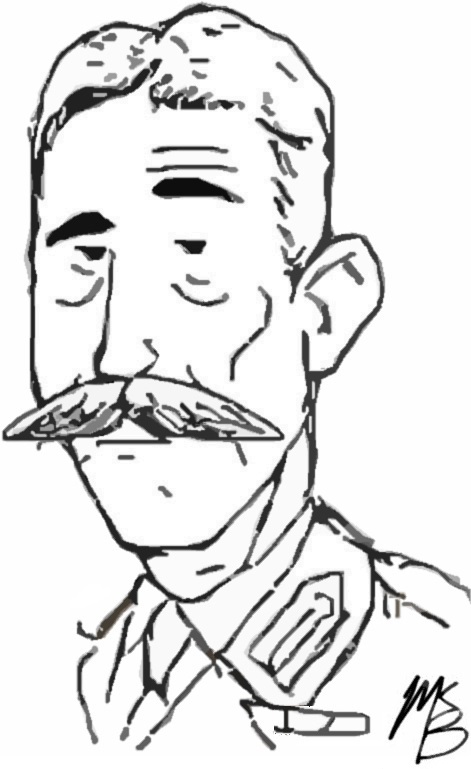
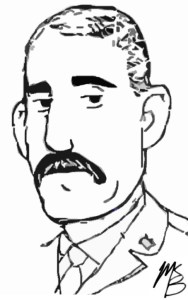
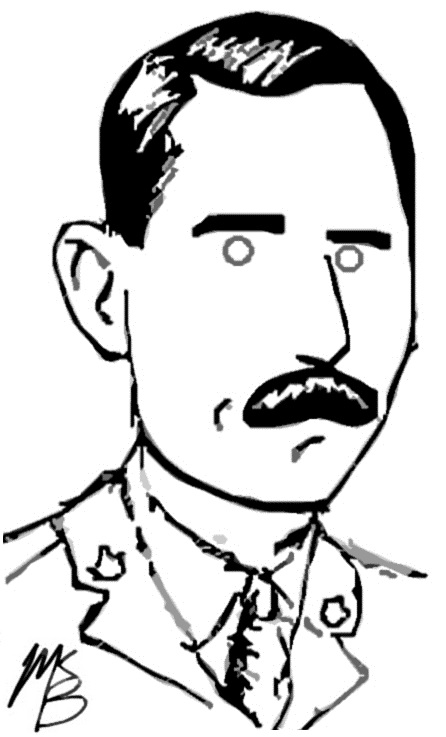
Major General Sir David Watson, D.S.O.
2nd (Iron Second) BattalionWatson
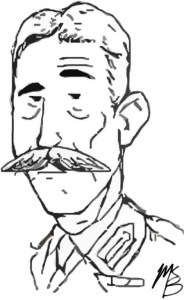
Had he not been colonel he would have received the V.C. for this. Ypres made him a marked man, and it left its mark on him. His friends say that he aged ten years in the ten days, for he and his battalion were in the fiercest part of the fighting.

(F. A. McKenzie, Through the Hindenburg Line, 1918, 10)

David Watson was a sportsman, journalist and owner of the Quebec Morning Chronicle. He was born in Quebec City on 7 February 1869. In his youth, Watson played for the Quebec Hockey Club and became active in the 8th Royal Rifles. Watson, a Conservative Party supporter and friend of Militia Minister Sam Hughes, was selected to command the 2nd Battalion when the Canadian Expeditionary Force assembled at Valcartier.
Continue reading

The Silent Member

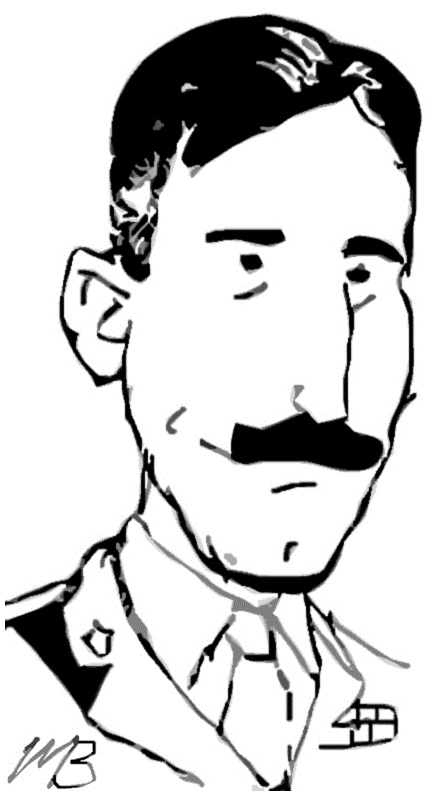
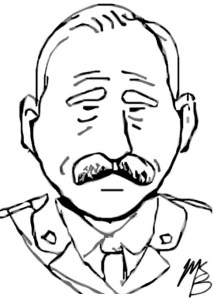
Colonel Harry McLeod, M.P.
12th Battalion
McLeod

Colonel Harry McLeod has also been taken away since last we met here.

His interests were perhaps, as much in the military field as in the political field. He was a student of military tactics and military matters generally, and attended manoeuvres in this and in other countries for purposes of study—and, indeed, in the late war served in the fields of Europe.

(PM Meighen, Debates, 15 Feb 1921, 4)

Born on 17 September 1871, Harry Fulton McLeod was a New Brunswick lawyer, member of Orange Lodge No. 20 and Conservative politician. He was mayor of Fredericton (1907—1908), member of the legislature (1908—1913), and federal MP for York (1913—1917) and York—Sunbury (1917—1921). As colonel of the 71st (York) Regiment, he was appointed to take the 12th Battalion overseas when the First Contingent assembled at Valcartier in August 1914.

Continue reading

The Immortalized

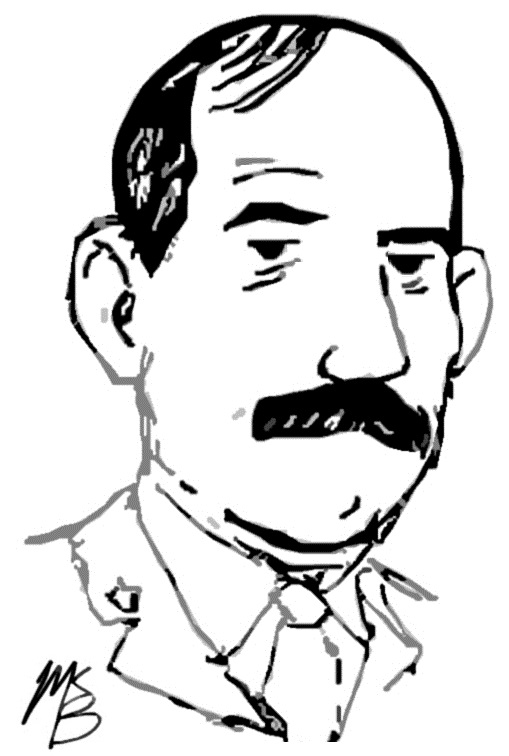
Lieutenant Colonel Harry Baker, M.P. †
5th Canadian Mounted RiflesBaker

It has been the lot of other nations to have their legislators, their parliamentarians, even their kings put on the uniform of soldiers and go forth to battle and meet a patriot’s death, but so far it has been the lot of Canada only once.

(Arthur Meighen, Debates, 3 Mar 1924, 49)

George Harold Baker was the only sitting Canadian Member of Parliament killed in action during the First World War. Born in Sweetsburg, Quebec on 4 November 1877, Baker was Conservative MP for Brome (1911—1916) and commanding officer of the 13th Scottish Light Dragoons. He died in the battle of Sanctuary Wood on 2 June 1916. He is commemorated with a life-sized bronze statue in the Centre Block of the House of Commons.

Continue reading

The Defence Minister

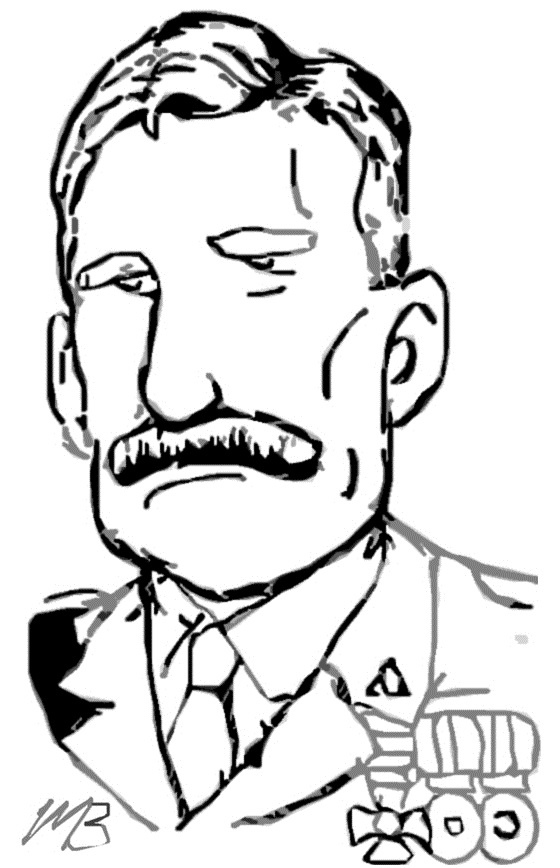
Lieutenant Colonel G. R. Pearkes, D.S.O., M.C., V.C.
116th (Ontario County) BattalionPearkes

What kind of war must we be prepared to fight? With the introduction of nuclear weapons and the anticipated production of long-range ballistic missiles, it is obvious that the methods of waging any future war have clearly changed from those of World War II. Looking into the future is at best a risky business, but our military advisers must plan ahead, and it is their present opinion that a third world war would commence with a sudden ferocious thermonuclear attack of great intensity…

(Pearkes, Debates, 5 Dec 1957, 1900)

George Randolph Pearkes was a solider, politician, and winner of the Victoria Cross, the highest award for gallantry in the British Empire. He was born on 28 February 1888 in Watford, Hertfordshire, England and immigrated to Alberta in 1906. He joined the North West Mounted Police and fought with the 2nd and 5th Canadian Mounted Rifles. Pearkes began his military career as a private; he retired as major general.

Continue reading

The Methodist

Lieutenant Colonel Sam Sharpe, D.S.O., M.P. †
116th (Ontario County) BattalionSSharpe

But it is awful to contemplate the misery and suffering in this old world & were I to allow myself to ponder over what I have seen & what I have suffered thro the loss of the bravest & best in the world, I would soon become absolutely incapable of “Carrying on.”

(Sharpe to Muriel Hutchison, 21 Oct 1917)

Samuel Simpson Sharpe was a militia major and Conservative Member of Parliament for Ontario North (1908—1918). Born on 13 March 1873 in Zephyr, Scott Township, Ontario, he was a graduate from the University of Toronto and Osgoode Hall. During his university days, he was a champion tennis player and became a prominent solicitor in Uxbridge.

Continue reading

The Police Chief

Lieutenant Colonel James Kirkcaldy, D.S.O.
78th (Winnipeg Grenadiers) BattalionKirkcaldy

For conspicuous gallantry and resourceful leadership. When one of his companies was held up by machine-gun fire, he took charge and overcame the opposition. Later, by aggressive fighting, he got his battalion forward, and formed a defensive flank, using a rifle himself and directing machine–gun and trench-mortar fire, and drove the enemy from their positions. His courage and fighting spirit were an inspiration to all.

(Kirkcaldy D.S.O. Citation, London Gazette, July 1918, 133)

James Kirkcaldy was born in Abdie, Scotland on 18 May 1866. After serving for over seven years in the Imperial Forces, he immigrated to Canada in 1891 and settled in Brandon, Manitoba. Shortly thereafter, the six-foot Scotsman was appointed the town’s chief of police, a post he held for the next thirteen years (1892—1905). A former member of the 12th Manitoba Dragoons and serving major with the 99th Rangers, in August 1914, Kirkcaldy enlisted in Louis Lipsett’s 8th Battalion at the rank of major.

Continue reading

The Westerner

Lieutenant Colonel Sam Donaldson, M.P.
188th (Prince Albert) BattalionDonaldson

If you had 300 or more of these Indians at the Front they would make good snipers as they are crack marksmen and they are as tough as any class of people I have ever met in this country.

(Donaldson to Sam Hughes, 25 Nov 1915)

Samuel James Donaldson was a veteran of the 1885 Rebellion, a former member of the North-West Mounted Police, farmer, sportsman and politician. He was born on 12 March 1856 in Appleton, Canada West. Saskatchewan and its People (1924) claimed that “his varied activities and numberless experiences serve to make his life story one of the most interesting of any of Canada’s native and adventurous sons.”

Continue reading

The Party Hack

Lieutenant Colonel W. H. Muirhead
219th (Nova Scotia Highlanders) BattalionMuirhead

When the war broke out one of the very first to volunteer from the province of Nova Scotia, and to place his services unqualifiedly at the disposal of his King, was Major Muirhead.

For nine months Major Muirhead has been in the trenches, and for the last four months of that period he has been a member and in charge of a bombing party, which you know, Sir is the most dangerous branch of the service.

(F. B. McCurdy, Debates, 28 Jan 1916, 398)

In summer 1914, the Nova Scotia Supreme Court indicted William Harry Muirhead on eight counts of electoral fraud and perjury. Muirhead, a Conservative political operator, had allegedly secured a February 1914 provincial by-election in Victoria County through bribery and forgery. After the outbreak of the Great War, the embattled party bagman joined the Royal Canadian Dragoons, or as Liberal MP Daniel Duncan McKenzie intimated, “Major Muirhead fled the country on the pretext that he was going to war.”

Continue reading

The Blue Blood

Lieutenant Colonel A. L. Bonnycastle
200th (Bonny’s Buccaneers) Battalion Bonnycastle

I am raising a battalion of stalwarts that will make the Germans hop.

(Bonnycastle, Winnipeg Tribune, 8 March 1916, 5)

Angus Lorne Bonnycastle was a former Conservative member of the Manitoba legislature (1907—1911), a Winnipeg barrister and provincial police magistrate. Born on 3 November 1873 in Campbellford, Ontario, Bonnycastle moved to Manitoba as a school teacher in 1893. He was a member of one of Ontario’s most prominent military families. His great-grand father, Sir Richard Henry Bonnycastle (1791—1847) helped to suppress the 1837 Rebellion and oversaw fortification construction in Kingston. His father Major R. H. Bonnycastle (1843—1911) had participated in the Fenian Raids and the Northwest Rebellion.

Continue reading

The Partisan

Lieutenant Colonel S. G. Robertson
17th (Nova Scotia Highlanders) BattalionRobertson

As a matter of fact Robertson was quite hopeless as a commanding officer. When I obliged to tell him so he made at least 3 answers in excuse all of which made me exclaim to him: ‘Why here, out of your own mouth, you more than ever convince me of your unfitness for command.”

(Gen. E..A. Alderson to George Perley, 12 Mar 1915)

Born on 13 September 1868 in Bothwell, Scotland, Struan Gordon Robertson was a Nova Scotia barrister, militia major, a Conservative Party activist and nominated candidate for the riding of Pictou. When Militia Minister called on militiamen from across the country to assemble at Valcartier, Quebec in August 1914, Robertson arrived with 500 Nova Scotia determined to go overseas as a unit. When Hughes derided Robertson, he complained to his friend Prime Minister Robert Borden, who was equally interested to see a full battalion representing their home province. Robertson was given command of the 17th Battalion.

Continue reading