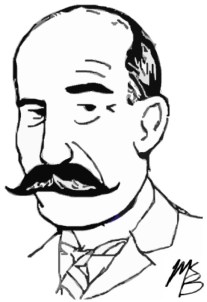
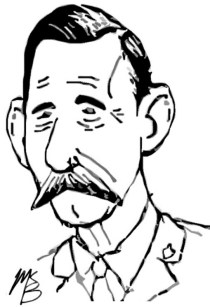
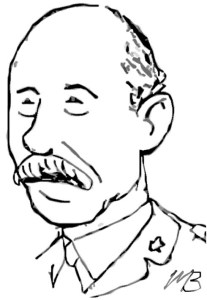
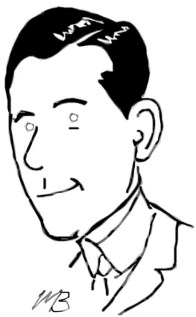
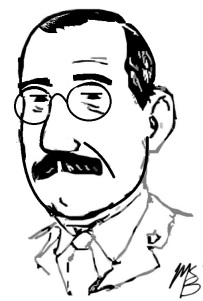
Lt. Col. W.R. Smyth, MP

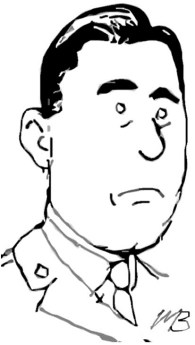
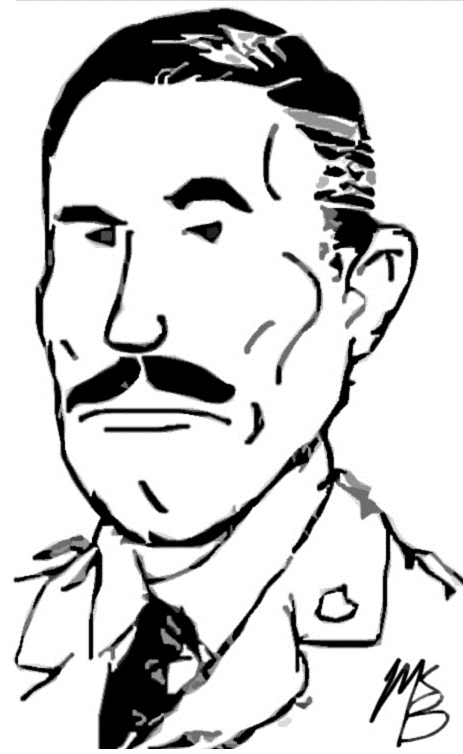
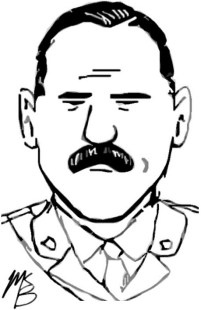
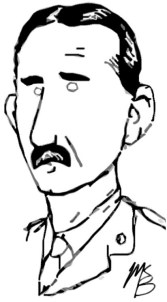
Lieutenant Colonel W.R. Smyth, MP
238th (Canadian Forestry) Battalion
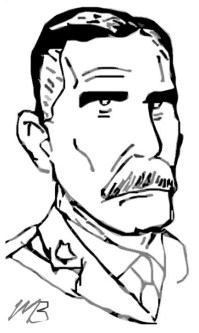
Smyth

Am extremely sorry that certain cables crossed and I inadvertently accepted nomination. I wired Robb withdrawing my acceptance … Please convey this to electorate at first opportunity. I depend on all loyal Canadians to support the Union Government and thereby help win the war. We need men and must have them.

(Smyth to G.B. Nicholson, Nov 1917)

William Ross Smyth was a lumber tycoon, Conservative MPP in the Ontario legislature (1902—1908 and federal MP for Algoma East (1908—1917). He was born in Aberdeenshire, Scotland on 3 January 1857. He was one of several sitting Conservative MPs selected to recruit an overseas battalion.
Continue reading

Lt. Col. White, MP

Lieutenant Colonel G.V. White, MP
224th (Lumbermen) Battalion
GWhite

We cannot be too generous in our treatment of our sailors, soldiers and airmen. I take it that this measure will recompense fairly generously the men and women who have served their country well. I believe the people of Canada will wholeheartedly endorse this very important legislation.

(Senator White, Debates, 11 Aug 1944, 452)

Gerald Verner White was Conservative Member of Parliament for Renfrew North. Born on 6 July 1879 in Pembroke, Ontario, he was the son of Peter White (1838—1906), a lumber tycoon and former Speaker of the House of Commons. After his father’s death, the younger White won a by-election for Renfrew North in 1906. A militia officer with the 42nd Regiment, White enlisted as senior major with J. F. De Hertel’s 130th Battalion in November 1915. By February 1916, he transferred to the 224th Foresters as second-in-command to Alexander McDougall. Continue reading

The Senator

Lieutenant Colonel W.H. Sharpe, MP
184th (Manitou) Battalion
WHharpe

The man who is not prepared to serve his country at the present time should have no place in the affairs of Canada.

(W.H. Sharpe, Debates, 23 Jan 1917, 9)

William Henry Sharpe was a homesteader, merchant and politician. Born in Scott Township, Ontario on 19 April 1868, he moved to Manitoba and was elected Conservative MP for Lisgar in 1908. After a failed bid in the 1915 provincial election and an appointment to the Senate, Sharpe was authorized to raise the 184th Battalion. His younger brother Sam Sharpe, fellow Conservative MP, commanded the 116th Battalion.

Continue reading

Lt. Col. Tremain, MP

Lieutenant Colonel H.B. Tremain, MP
112th (Nova Scotia) Battalion
Tremain

I would appeal for a greater measure of co-operation between the two great parties during the grave crisis through which our Empire is passing. When victory of democratic communities is achieved over the forces of autocratic despotism, represented by Kaiserism, then and not till then, let our political warfare again be waged…

 (Tremain, Debates, 8 Mar 1915, 827)

Hadley Brown Tremain was a barrister and Conservative MP for Hants (1911—1921). He was born in Port Hood, Nova Scotia on 23 October 1874. He attended Windsor Collegiate and Kings College before receiving an M.A. degree from Harvard Law School in 1899. He defeated Liberal MP Judson Burpee Black in the 1911 election. After the outbreak of the Great War, Tremain endorsed a party truce, arguing that after the crisis there would “be time enough to re-engage in part recrimination and strife in this country.”

Continue reading

Lt. Col. Spencer

Lieutenant Colonel Nelson Spencer
175th (Medicine Hat) and 31st Battalions

What happened to Colonel Spencer will happen, more or less decisively, to Government candidates throughout the prairie Provinces…

 And Colonel Spencer stands quite as high in the estimation of the voters in his district as Government candidates generally can stand in the opinions of their respective communities. If he could not save his deposit, it is a bad look out for them if the conditions of the contest are the same.

 (Edmonton Bulletin, 2 Jul 1921, 7)

Born in New Brunswick on 7 December 1876, Nelson Spencer was a Conservative politician in Alberta and member of the provincial legislature (1913—1921). He belonged to the 21st Alberta Hussars and raised the 175th Battalion from his riding in early 1916. In response to questions about Spencer’s competency, Sir Sam Hughes replied, “He as all the necessary qualities to become a most efficient officer, and is rapidly acquiring the necessary military training.”

Continue reading

Lt. Col. Pratt

Lieutenant Colonel Arthur C. Pratt, MPP
133rd (Norfolk’s Own) Battalion
Pratt

One of my sergeants put it cleverly when he said that, while the Canadians make the best fighting men in the world, they are not soldiers, and he was right when he said it. The Canadian fighters are citizens. The war was merely an interlude in their citizenry. During the fighting they bore all manner of hardship because they were part of the fighting but when the fighting had ended they unconsciously became citizens again and not amendable to the strict discipline of military life. They wanted to get back to the life to which they belonged.

(Pratt, Toronto Star, 19 March 1919)

Arthur Clarence Pratt was a Conservative member of the Ontario legislature for Norfolk South from 1905 to 1919. He was born 6 February 1871 in Lynedoch, Ontario. In November 1915, he joined with Hal B. Donly, his Liberal opponent from the June 1914 provincial election, to raise the 133rd Battalion from Norfolk County.

Continue reading

Lt. Col. Weaver

Major C. Y. Weaver, D.S.O.
49th (Edmonton Regiment) BattalionWeaver

Weaver was a man without a spark of vanity and had a wonderful sense of humor. He used to pretend to be suspicious of very clever men and argued at length that clever men were unstable, indeed dangerous. On the other hand he suggested that he himself was stupid, and contended that there were many advantages in being considered stupid. In point of fact, Weaver was a deep thinker and a student in the subjects in which he was interested.

(Gen. Griesbach, The Forty-Niner, 3 Jan 1931, 12)

Charles Yardley Weaver was an Edmonton barrister, justice of the peace and prominent cricket player. Born in Liverpool England on 9 June 1884, he moved to Canada and built a homestead in Alberta at the age of nineteen. He joined the Edmonton Fusiliers in 1908 and was selected by Lieutenant Colonel W. A. Griesbach to be his second-in-command when he raised the 49th Battalion in January 1915.

Continue reading

Lt. Col. McMeans

Lieutenant Colonel Lendrum McMeans
221st (Bulldogs) Battalion McMeans

I desire to reiterate what the honourable gentleman [Mr. Sharpe] has just said. I too have lost of my substance and of my blood in this war; I too went out and did my best to raise men; and this honourable gentleman [Mr. Bennett] has no right to get up and sneer at men who have done that.

 (McMeans, Senate Debates, 26 May 1920, 434)

Born on 1 August 1859 in Brantford, Canada West, Lendrum McMeans was Conservative member of the Manitoba Legislature (1910—1914) and civic leader in Winnipeg. In April 1916, McMeans was authorized to raise the 221st Battalion. His oldest son, thirty-one year old Major Vivian Arthur Vinton McMeans returned from the front in August to join in his father’s battalion. The colonel’s youngest son, twenty-six year old Captain Ernest D’Harcourt McMeans, had been killed in battle on 22 May 1915.

Continue reading

Lt. Col. Arthurs, M.P.

Lieutenant Colonel James Arthurs, M.P.
162nd (Timber Wolves) BattalionArthurs

But they wanted to go. One member of this House, Col. Arthurs—I read the most touching letter I have seen for many a day—is in the trenches. He had reduced his rank and gone over in spite of his son’s remonstrance from the trenches ordering his dad to get out.

(Sam Hughes, Debates, 6 Feb 1917, 574)

James Arthurs was a hardware merchant, self-styled gentleman and Conservative MP for Parry Sound (1908—1935). He was born on 3 October 1866 in Toronto. He raised the 162nd Battalion from his home county and proceeded to England in November 1916. Despite age restrictions on senior officers, the fifty-year old Arthurs reverted to captain and joined the 1st Battalion on the front in February 1917.

Continue reading

Lt. Col. Taylor, M.P.

Lieutenant Colonel James D. Taylor, M.P.
131st (New Westminster) BattalionTaylor

Mr. Chairman, there is poison gas disseminated in connection with this war from other quarters than the trenches in the German line, and there is sniping equally disastrous to the cause of the war as that of the German sharpshooters. I am one of those colonels, commanding officers, of which the hon. gentlemen who act the part of political snipers in Canada speak so contemptuously in this House and through their press.

 (J. D. Taylor, Debates, 6 Feb 1917, 565)

 James Davis Taylor was a journalist and publisher in Ottawa and British Columbia and Conservative MP for New Westminster (1908—1917). He was born on 2 September 1863 in Abenaqui Mills, Canada East. During the Northwest campaign, he fought as a private with the Ottawa Sharpshooters at the battle of Cut Knife on 2 May 1885. After the Rebellion, he bought the Canadian Militia Gazette and later organized the 104th Militia Regiment in 1904. He led the 131st Battalion to England before returning to Canada in early January 1917.

Continue reading