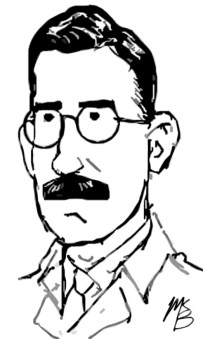
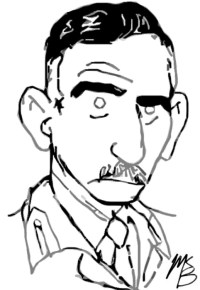
Brig. M.H.S. Penhale

Brigadier Matthew Penhale
4th & 3rd Infantry Brigades
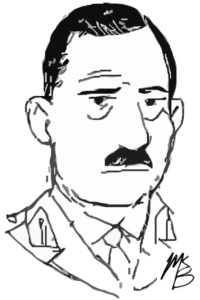
[On nuclear attack] Surely it is better to tell the people everything than to withhold information they must have to ensure survival.

(Quoted in Star-Phoenix, 16 Jan 1960, 5)

Born in Sherbrooke, Quebec on 13 February 1895, Matthew Howard Somers Penhale enlisted with the Royal Canadian Horse Artillery in 1915 after graduation from RMC. He was wounded at Cambrai in 1917 and made a professional career in the army after the First World War. After the outbreak of war in 1939, Penhale served as assistant adjunct general of Canadian Military headquarters in London before returning to Canada to head the directorate of staff duties at National Defence Headquarters.
Continue reading

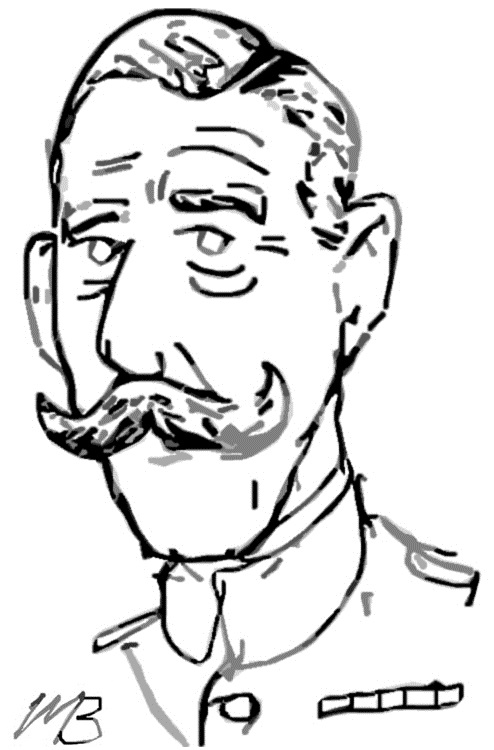
Brig. F.N. Cabeldu

Brigadier Fred Cabeldu
Canadian Scottish Regiment
4th Infantry Brigade

The steadiness and high morale of the 1st Battalion, The Canadian Scottish Regiment can be attributed to Lieutenant-Colonel Cabeldu’s calm handling of every emergency, his tireless devotion to duty and inspiring leadership under the most trying circumstances.

(D.S.O. citation, 31 Aug 1944)

Born in October 1905 in Hampton Wick, Middlesex, England, Frederick Norman Cabeldu grew up in Japan and was educated in Victoria, British Columbia. A partner in an investment firm in civilian life, he was commissioned in the Canadian Scottish Regiment in 1926 and rose to major. He became acting commanding officer in the absence of Lieutenant-Colonel Doug Macbeth in April 1943, and officially took over in August. Ten months later he led the battalion in the D-Day landings of 6 June 1944.

Continue reading

Brig. S. Lett

Brigadier Sherwood Lett
South Saskatchewan Regiment
4th Infantry Brigade
Lett

And this is the man I first saw one rainy day in the First World War, welcoming us to a rat-infested land of death and destruction. Sherwood Lett, an ordinary Canadian officer in 1915, has come a long way … Surely, here is one Canadian who has had, and is still having a full life. As a politician, he might well have been a Prime Minister of Canada.

(Jim Greenblatt, Star-Phoenix, 10 Aug 1963, 15)

Born on 1 August 1895 in Iroquois, Ontario, Sherwood Lett was a University of British Columbia graduate, a decorated First World War veteran, a Rhodes Scholar a t Oxford, and a lawyer in Vancouver. He had served as a captain with the 46th (Saskatchewan) Battalion in France and earned the Military Cross for conspicuous gallantry under heavy fire. Commanding officer of the Irish Fusiliers from 1932 to 1937, Lett volunteered again and went overseas as brigade major with the 2nd Canadian Division.

Continue reading

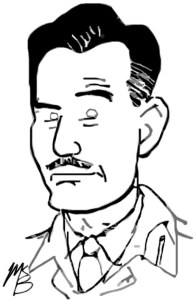
Lt-Col. Loat & Brig. Sager

Lieutenant-Colonel C.J. Loat
&
Brigadier John Sager
Westminster Regiment
4th Infantry Brigade
Sager

Known as “Brick” to his friends and intimates and affectionately as “Little Joe” by all the men of the Westminsters during the period of his command, he was a good athlete and was fond of athletics and it was through his energic leadership that his regiment became outstanding the Canadian Army for their athletic prowess.

(Chilliwack Progress, 26 May 1943, 10)

Born on 29 May 1898 in Stirling, Ontario, John Earl Sager moved to British Columbia in 1909 and worked as a teacher at the Vancouver technical high school. At the end of the First World War, he had belonged to the officer training corps at the University of British Columbia and joined the Westminster Regiment in 1923. Second-in-command before the war, he succeeded the aging Lieutenant-Colonel C.J. Loat in January 1940. Standing five-foot-five, Sager was known in the unit as “Little Joe.”

Continue reading

Brig. J.E. Ganong

Brigadier J. Edwin Ganong
48th Highlanders of Canada
4th Infantry Brigade
GanongEd

After we broke through Falaise, about D-plus 70, the Canadian soldier showed extraordinary fortitude and endurance. Troops seldom could be relieved; but they stood up under the most violent strain the war had produced. No matter how much training a man has, he is a novice until he is under fire. But the Canadians quickly became veterans. They were wonderful.

(Ganong quoted in Windsor Star, 22 Dec 1944, 9)

Born on 30 Dec 1903 in St. Stephen, New Brunswick, James Edwin Ganong Jr. was a Toronto lawyer who had attended the Royal Military College and Osgoode Hall. He was adjutant in the 48th Highlanders on mobilization and served as a company commander during the aborted Second British Expeditionary Force to France in June 1940. In March 1942, although he had already been promoted to the Canadian Corps headquarters staff, Ganong reverted to replace Lieutenant-Colonel Bill Hendrie.

Continue reading

The Retiree

Colonel Septimus J. A. Denison
4th Infantry Brigade DenisonS

… I am afraid we have had in the past, officers placed upon the general staff in time of trouble who are a long way better fitted to carry a constituency or empty a bottle of good Canadian rye in the morning.

(Denison, Lecture, Feb 1898)

Born in Toronto in 1859, Septimus Junius Augustus Denison was the brother of Colonel George Taylor Denison III and member of Canada’s most prominent military family. A graduate of the Royal Military College, he served for twenty-five years with the Royal Canadian Regiment and was aide-de-camp to General Lord Roberts during the Boer War. Continue reading

The Nobleman

Brigadier General Lord Brooke
4th and 12th Infantry BrigadesLordBrooke

All day long I had witnessed the tragedy of men “made in the image of God” bringing their utmost skill and science to the hateful task of mutual murder.

As an exhibition of scientific slaughter the firing was lacking in nothing. The range of the guns was exact, the shooting perfect. The shrapnel burst over the heads of the retreating troops, as it were in large patterns. There was no cover, no escape for the unhappy Russians. Under this awful hail of bullets the men dropped like wheat beneath the sickle of the reaper. Death most truly was gathering a rich harvest.

(Lord Brooke, An Eye-Witness in Manchuria, 1905, 131)

Born on 10 September 1882, Leopold Guy Francis Maynard Greville was the son of British Conservative MP Francis Greville, 5th Earl of Warwick (styled Lord Brooke) and Daisy Greville, Lady Warwick, a socialist socialite who had been mistress to King Edward VII. While a student at Eton, Lord Brooke ran away to fight in the Boer War. He was a press correspondent during the Russo-Japanese War and recounted his experiences in An Eye-Witness in Manchuria (1905).

Continue reading