The Steeplechaser

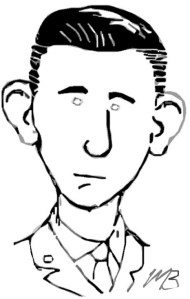
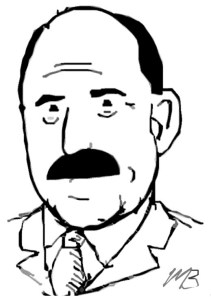
Lieutenant Colonel L. H. Nelles, D.S.O.
4th (Central Ontario) BattalionLHNelles
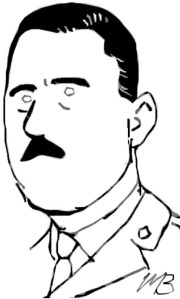
Colonel Nelles never became the popular idol that Thomson had been; but as the months went by and he showed that in addition to this bent for smartness he had tactical ability far beyond the average, a sense of justice, and (more important still) his full share of personal bravery a better feeling grew.

(Lieut. Pedley, Only This, 1999, 18)

Lafayette Henry Nelles was the last commanding officer of the 4th Battalion. He was born on 5 December 1890 in London, Ontario. In November 1914, the twenty-three year old enlisted with 12th Reserve Battalion. When an enemy sniper killed Lieutenant Colonel A. T. Thomson on 20 November 1917, Nelles took charge of the 4th Battalion. Nelles received the Distinguished Service Order in June 1918 and remained in command until demobilization.

Continue reading

The Unforgotten

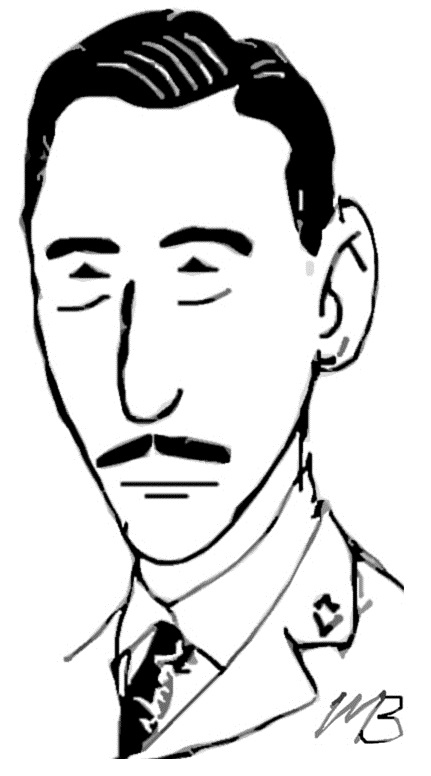
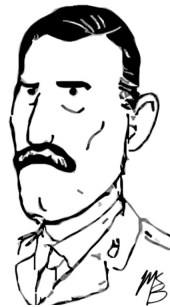
Lieutenant Colonel A. T. Thomson, D.S.O., M.C. †
4th (Central Ontario) Battalion Thomson

The fourth will not forget him
Although his stay was short,
For he proved to be a soldier
Far above the average sort.
His ways were very quiet
But in action he was strong;
He was absolutely fearless
And his judgment was seldom wrong.
To the men he was a leader
Whom they were proud to serve,
Never say a word against him
Or you’ll regret that word.
He is gone but not forgotten
By those who knew him best,
For we know that safe in heaven
He has found eternal rest.

(4th Bn. Scout Section, 1917)

Born on 27 February 1888 in Port Credit Ontario, Alexander Thomas Thomson was a member of the 36th Peel Regiment. He was assigned to the 10th Battalion at the rank of lieutenant when the First Contingent assembled at Valcartier in August 1914.

Continue reading

The Lil’ Colonel

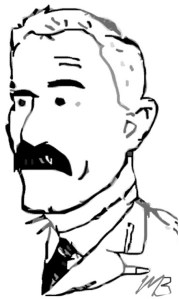
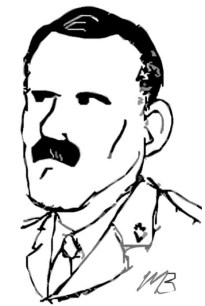
Lieutenant Colonel W. Rae, D.S.O.
4th (Central Ontario) Battalion Rae
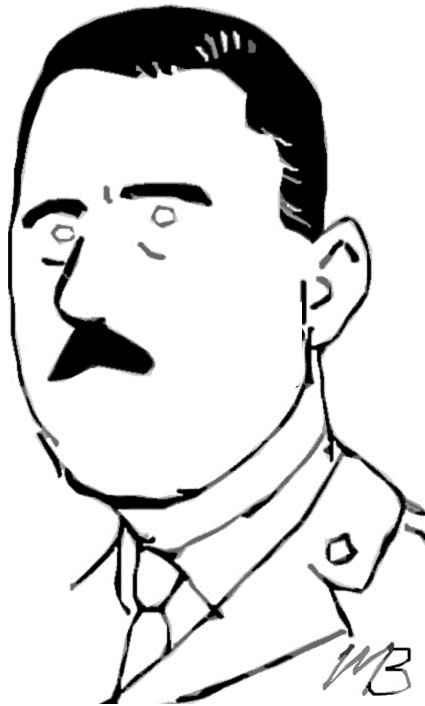
A battalion of infantry is a chameleon, ceaselessly changing its colour to suit the changing complexions of its commanding officers. The Fourth Canadian Battalion followed the rule.

But the madness of the Fourth appears to have been an intermittent fever. Birchall engendered it, Colquhoun advertised it, Rae damped down the fire. For with the coming of Rae we first discern another element creeping in, which seems as difficult to mix with the rugged abandon of the early days as oil with water—the element of cold discipline.

(Lieut. Pedley, Only This, 1999, 18)

A native of Scotland, William Rae was born on 15 January 1883 in Aberdeen. He immigrated to Canada in 1907, moved to British Columbia and joined the 72nd Seaforth Highlanders Regiment. At the outbreak of the Great War, the five-foot-six Scotsman enlisted with the 16th Battalion. Rae fought at Second Ypres during the German gas attack and was the only company commander in the 16th to survive the battle. By June 1916, he had transferred to the 4th Battalion in order to take command from Lieutenant Colonel Malcolm Colquhoun.

Continue reading

The Hometown Hero

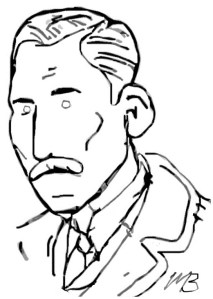
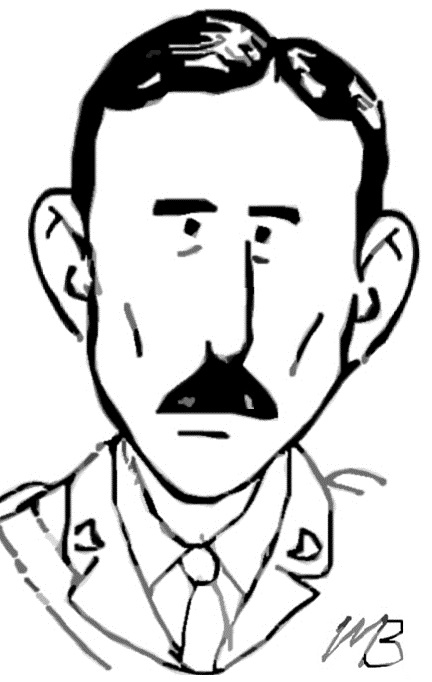
Colonel Mac Colquhoun, D.S.O.
4th (Central Ontario) BattalionColquhoun

People here have quite a different opinion of the Canadians now. They want to have the Canadians in the fighting all the time. We are classed now among the very best troops.

(Colquhoun to Wife, Apr 1915, History of Brant County, 1920, 451)

Born in Mulmur, Ontario on 13 April 1869, Malcolm Alexander Colquhoun was a Brantford contractor and captain with the 38th Dufferin Rifles. In August 1914, he enlisted in Lieutenant Colonel Robert Hodgetts Labatt’s 4th Battalion. In command of “B” Company at Second Ypres, he was one of the only officers in the entire battalion to emerge unwounded from the battle. Describing the fighting to his wife, Colquhoun wrote, “To put it plainly, it was a perfect hell.”

Continue reading

The Fearless

Lieutenant Colonel Arthur Birchall †
4th (Central Ontario) Battalion Birchall

A few years ago it was thought that a soldier was a machine, and should never be allowed to think for himself; the South African War altered all that, as far as our Army was concerned; the soldier is now taught to use his brains and to take advantage of ground and cover, with results which have been amply justified during the present war. In other words, our men are regarded as intelligent human beings.

(Birchall, Rapid Training of a Company for War, 1915, 29)

Arthur Percival Dearman Birchall was one of three CEF colonels killed in action during the second battle of Ypres in April 1915. Born on 3 July 1877 in Gloucester, England, Birchall was a professional soldier and fourteen-year veteran with the British Army. Before the World War, he participated in an officer exchange program with the Canadian militia and relocated to western Canada. As a military instructor, he attempted to transform citizen militiamen into effective soldiers prepared for war.

Continue reading

The Pensioner

Lieutenant Colonel R. H. Labatt
4th (Central Ontario) Battalion
Labatt

He was prominent in all manly sports, and for years a member of the champion Tiger football team. A successful oarsman and canoeist, Chairman of the Hamilton Club, an organization of outstanding ability, both in military life and in sport. His passing will be regretted by a very large circle. Personally he was the soul of honour and loved by all his friends.

(Trinity College School Record, 1919, 33)

Born on 24 Feb 1864 in London, Canada West, Robert Hodgetts Labatt was a member of the famous Canadian brewing family. A long time militiaman, he had volunteered as a private during the 1885 Northwest Rebellion. In August 1914, he was appointed commander of the 4th Battalion when the First Contingent assembled at Valcartier.

Continue reading

The Grenadier

Lieutenant Colonel W. B. Kingsmill, D.S.O.
123rd (Royal Grenadiers) BattalionKingsmill

Feeling very confident that the Battalion will carry on in the future as it has done in the past, I wish one and all, A Happy New Year, and trust that it will please God to see our task completed, and that we will be back in Canada with those we Love in the not far distant future.

(Kingsmill, 123rd War Diary, 1 Jan 1918, 51)

Born in Toronto on 6 May 1876, Walter Bernard Kingsmill was a graduate of the Royal Military College and Osgoode Hall. He joined the 10th Royal Grenadiers in 1898 and became commanding officer of the militia regiment. In November 1915, he received authorization to raise the 123rd Battalion from Toronto.

Continue reading

The Recruiter

Lieutenant Colonel George Morfitt
137th (Calgary) BattalionMorfitt

The Major has another good one. During his recruiting experiences—and he has enrolled 3,800—he has come across two Tipperary men who did not know their birthday. He christened them both for Christmas Day, so that it would be easy for them to remember in the future.

(Medicine Hat News, 7 Oct 1915, 4)

Born on 16 March 1873 in St. Mary’s Ontario, George W Morfitt was a Calgary broker and member of the 103rd Militia Regiment. Before his appointment to command the 137th Battalion in November 1915, he had been a recruiter for the 31st under Arthur Henry Bell and second-in-command of the 82nd. Suspicious of foreign volunteers with Germanic names, the “eagle-eyed” recruiting officer vowed, “I’m not taking any chancesnot if I know it. A German who slips into the 82nd will have to get up pretty early in the morning.”

Continue reading

Father Christmas

Lieutenant Colonel George B. Laurie
1st Battalion, Royal Irish RiflesLaurie

I used to be up at cockcrow when a small child on Christmas Day, to see what Santa Claus had brought me, and I shall be up early enough to-morrow in all conscience too, but for a different reason—standing to arms—so that I shall not get my throat cut.

Best of love to you for Christmas. Whilst you are in church I shall be in the trenches, but both doing our rightful duty, I trust.

(Lt-Col. Laurie to Wife, 24 Dec 1914)

On 25 December 1914, George Brenton Laurie was one of the few Canadian-born officers to witness the so-called Christmas truce in No Man’s Land. He recorded the encounter in a letter to his wife: “Then we saw both sides, English and German, begin to swarm out to meet each other; we thought it wiser to keep our men in, because we did not trust the Germans.” Suspicious, Laurie initially held his men back before going to investigate himself. As both side met, the Germans complimented the colonel on his battalion’s marksmanship and were eager to learn if the Canadian Division had arrived to the front yet. The armistice held for two days until both sides resumed the fighting.

Continue reading

The Reverter

Lieutenant Colonel G. F. McFarland
147th (Grey) BattalionGFMcFarland

Away over in the Hun lines I could hear male voices singing Christmas Carols very melodiously….

Just about dawn one of our snipers saw a Hun making his way overland from one trench to the other, evidently thinking the light was not yet good enough for rifle-fire. Our fellow “drilled” him clean, and was heard to remark as he ejected the empty shell: “Merry Christmas, Fritz, you …!

(McFarland, Diary, 25 December 1917)

Born in Markdale, Ontario, on 30 June 1880, George Franklin McFarland was a Toronto barrister and member of the 31st Militia Regiment. He graduated with a law degree from the University of Toronto in 1905. In early 1916, McFarland was appointed commander of the 147th Battalion, based in Owen Sound.

Continue reading