The Commander

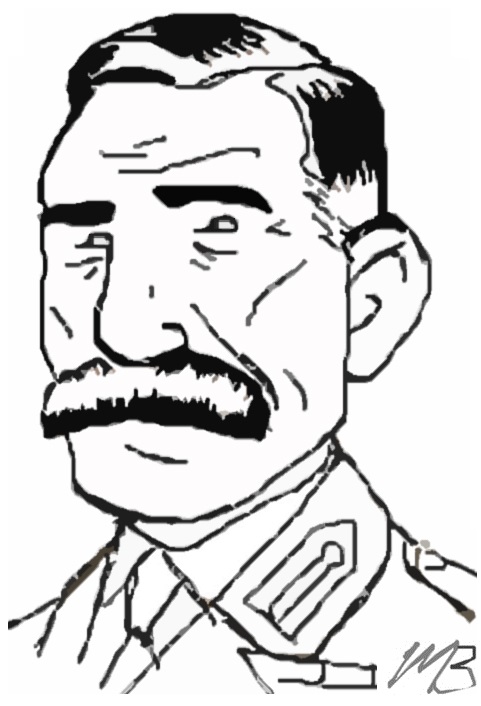
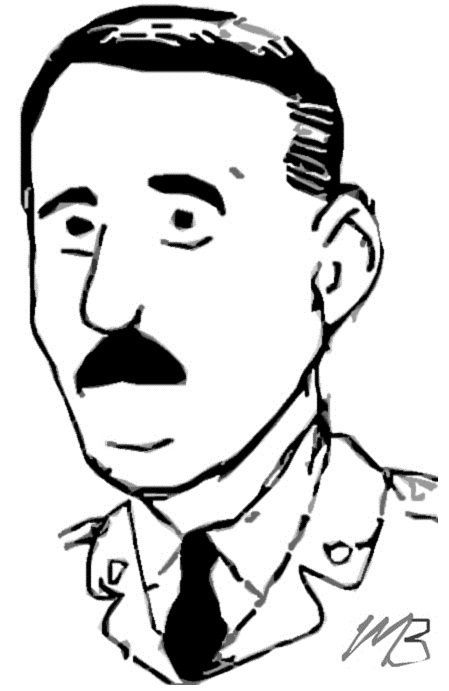
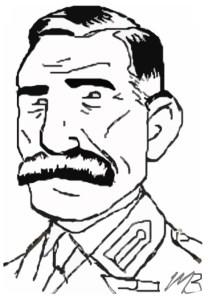
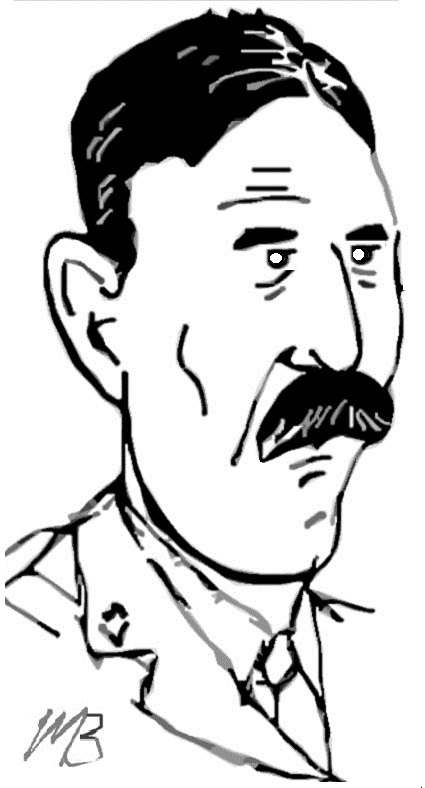
Brigadier General G. S. Tuxford, D.S.O.
5th (Tuxford’s Dandies) BattalionTuxford
On the 24th [April 1915] Major Hilliam, my adjutant, called me out about 4 o’clock in the morning to witness a huge wall of greeny, yellow smoke that was rolling up the hillside. We had no idea what it was, but thought it might have something to do with the reported gas attacks of the preceding day. We were not long left in doubt.

(Tuxford, “After Action Report,” 10 Mar 1916)

Born in Wales on 7 February 1870, George Stuart Tuxford was a Moose Jaw homesteader, rancher and militiaman. In August 1914, he received authorization to raise two mounted units from the West. He later explained, “In the one battalion I placed the 12th, 16th, 27th, 29th, 30th, 31st, 35th (Light Horse) and Corps of Guides. This battalion became the 5th Canadian Infantry Battalion, and later on being asked to select a name for the battalion, I could think of no better than that of Western Cavalry, and as such they remained the 5th Battalion, Western Cavalry.”
Continue reading

The Fruit Farmer

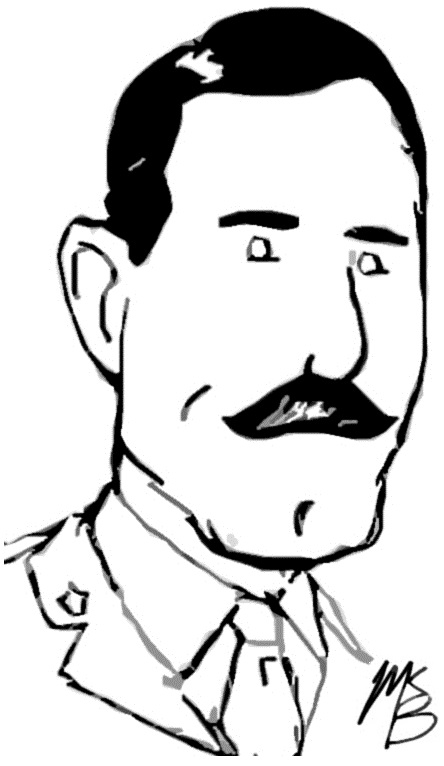
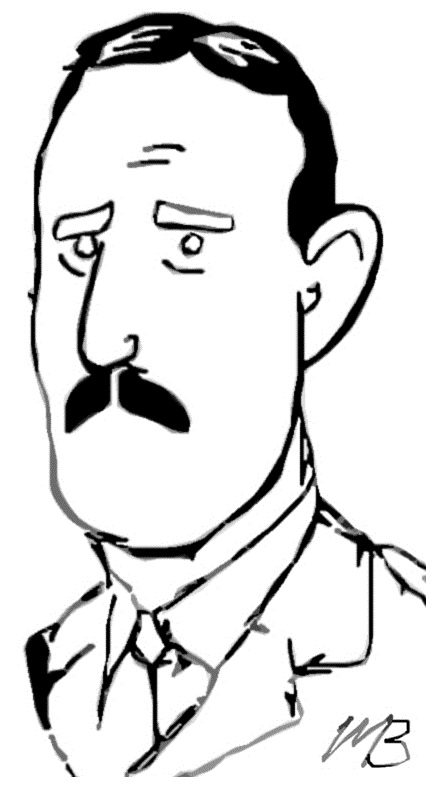
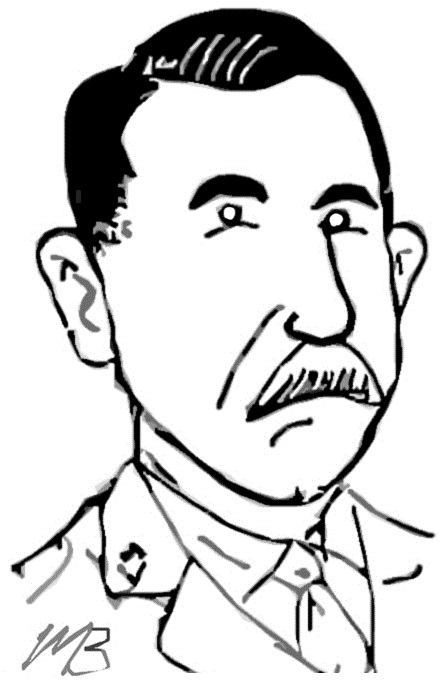
Lieutenant Colonel Berkeley Henry Belson
81st (Niagara) BattalionBBelson

I saw many deeds performed by my own men which in an ordinary campaign would have won the Victoria Cross for them, such as binding up wounded comrades and carrying them to shelter under hot fire. Nobody wavered.

(Maj. Belson’s account of Second Ypres, Toronto Globe, 20 May 1915, 3)

Before the war, Berkeley Henry Belson was a fruit farmer in the Niagara Peninsula outside of St. Catharines. Born on 28 May 1871 in Gloucestershire, England, Belson served for six years as an infantry and artillery volunteer in the British army. His father was a Crimean War veteran and had fought in various colonial campaigns from New Zealand to China. After immigrating to Canada, the younger Belson joined the 19th Lincoln Regiment.

Continue reading

The Bug

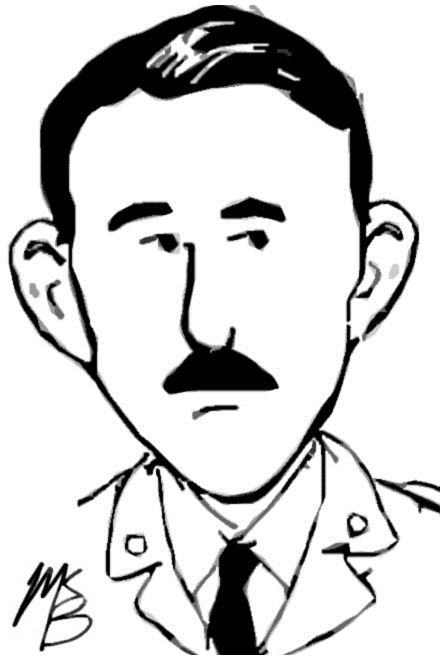
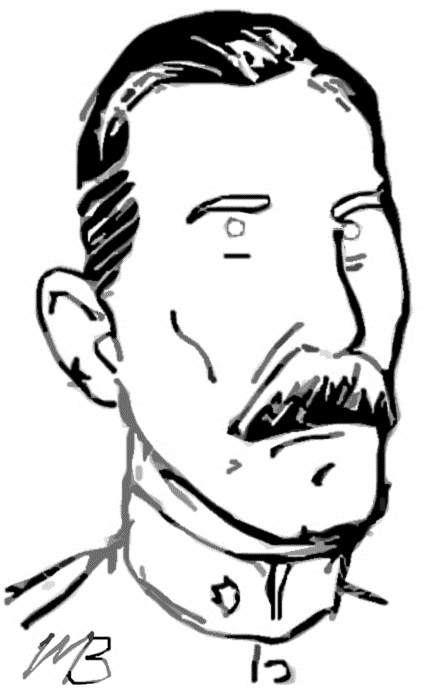
Lieutenant Colonel A. L. Saunders, D.S.O., M.C.
8th (90th Winnipeg Rifles) BattalionSaunders

At 1 PM on January 20th 1915, we fell in to march to Tidworth. Pte. Bug Saunders (afterwards Lt. Col. Saunders, D.S.O. and bar, M.C. and bar) distinguished himself by getting into a fight and appearing on parade with one eye closed.

(A. H. J. Andrews, Diary, Jan 1915)

Alec Laurence Saunders was born on 28 September 1888 in Kingston, Ontario. In September 1914, the five-foot-three and a half Winnipeg clerk enlisted as a private with the 6th Battalion. Four years later, he was commanding officer of the 8th Battalion for the final Hundred Days of the war. Although initially viewed skeptically for his short stature, Saunders, nicknamed Bug, quickly distinguished himself in battle.

Continue reading

The Father

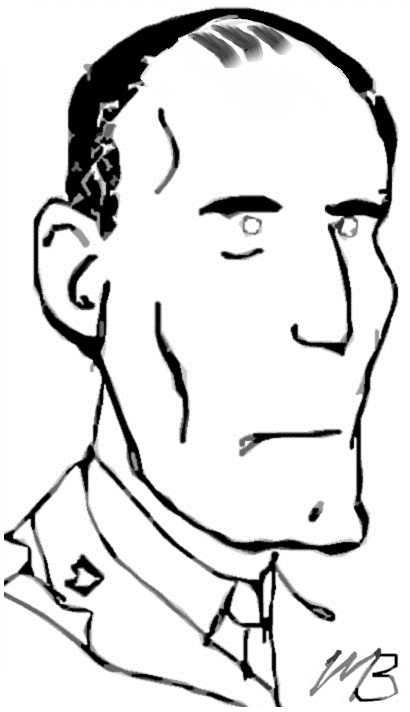
Lieutenant Colonel Tommy Raddall, D.S.O. †
8th (90th Winnipeg Rifles) BattalionRaddall

He was smiling as he kissed us all goodbye, but his eyes were full of tears, like ours.

I can still see the trap trotting away, the driver flicking his whip and the man in khaki dabbing at his eyes with a handkerchief. Three years later, almost to the day, he was lying dead on the battlefield of Amiens.

(T. H. Raddall Jr., In My Time: A Memoir, 1976, 26)

Born on 9 December 1876, Thomas Head Raddall was a professional British soldier and an instructor at the Hythe Musketry School. In 1913, Raddall and his family transferred to Halifax, Nova Scotia. In September 1914, he joined the 8th Battalion at Valcartier with the rank of lieutenant. He was the father of Thomas Head Raddall Jr. (1903—1994), Canadian author of historical fiction who was made member of the Order of Canada in 1971.

Continue reading

The Cemetery Keeper

Lieutenant Colonel J. M. Prower, D.S.O.
8th (90th Winnipeg Rifles) BattalionPrower

I am pretty well all right but am scared of my nerves going, as I seem to be getting confoundedly jumpy. I suppose my “blow up” at Festubert and having been buried by Johnsons five times since, is what is worrying me, though why I cannot say, as it happens to most people.

(Prower to Aunt, July 1915)

John Mervyn Prower was born on 8 March 1885 in Quebec but grew up in England. After serving for seven years in the British Army, Prower returned to Canada and settled in British Columbia, where he joined the 31st Horse. In September 1914, he was selected captain of “H” Company in the 8th Battalion under the command of Lieutenant Colonel Louis Lipsett. He quickly gained a promotion to major in summer 1915 and later assumed command of the 8th on 3 August 1916.

Continue reading

The Nazi-Watcher

Major K. C. Bedson
8th (90th Winnipeg Rifles) BattalionBedson

Watched closely by gestapo agents in their midst, Nazi prisoners of war in internment camps in Canada wage a 24-hour battle of wits against the veteran Canadian soldiers who guard them, hoping to earn good marks for their credit in post-war Germany by constantly trying to escape and making life as difficult as possible for the camp staff.

(Col. Bedson’s report, Winnipeg Free Press, 17 Dec 1943, 5)

Kenneth Campbell Bedson was the son of Samuel Lawrence Bedson (1842—1891), an English-born army officer who settled in Manitoba after Wolseley’s Expedition in 1870. The elder Bedson was a prison warden, golfer, sportsman and hunter. As a boy, Kenneth Bedson helped his father herd buffalo on the family farm. Bedson was born In Stoney Mountain, Manitoba on 31 July 1881. During the Boer War, Bedson fought with the 2nd Mounted Rifles. He also belonged to the 100th Winnipeg Grenadiers and the Fort Garry Horse. In September 1914, he enlisted as a captain in Lieutenant Colonel Louis Lipsett’s 8th Battalion.

Continue reading

The Adjutant General

Lieutenant Colonel H. H. Matthews, D.S.O.
8th (90th Winnipeg Rifles) BattalionMatthews

General Matthews had been one of ray closest friends since the First Great War. We are going to greatly miss his advice and help at National Defence Headquarters. He was a man with a most lovable character, who was friendly with people and in turn inspired their friendship. In France and Belgium he was a first class fighting man and in peace-time he was also a first-rate officer. Few officers in either peace or war were more efficient.

(Gen. T. V. Anderson’s statement, Ottawa Journal, 13 May 1940, 15)

Born on 22 May 1877 in Lower Harford, England, Harold Hallord Matthews immigrated to Vancouver in 1894. He became a cattle rancher and joined the British Columbia Horse. He fought in France with Louis Lipsett’s 8th Battalion until he was wounded at Second Ypres in April 1915. He rejoined his unit five months later and was appointed commanding officer on 28 September 1915 following the elevation of Lipsett to the 2nd Brigade.

Continue reading

The Irishman

Major General Louis Lipsett †
8th (90th Winnipeg Rifles) BattalionLipsett

General Lipsett is not only a fine soldier but a sympathetic Irishman, with the power of inspiring personal affection and devotion among those under him to a very unusual degree.

He inspires such confidence that I cannot imagine any man showing fear in his presence. To have Lipsett by your side would be enough to give a coward courage. “He never asks anyone to do a thing that he is not ready to do himself,” his men say. “He never forgets a man. He knows everybody’s name and all about us.”

(F. A. McKenzie, Through the Hindenburg Line, 1918, 9)

Born on 14 June 1874 in Ballyshannon, Ireland, Louis James Lipsett was a professional soldier with the Royal Irish Regiment. He served for five years in India on the Northwest Frontier. A veteran of the Tirah Campaign and the Boer War, he participated in an officer exchange program with the Canadian militia in 1911 and relocated to western Canada. After the outbreak of the Great War, he secured British Columbia coastal defences and assumed command of the 8th (Little Black Devils) Battalion, based in Winnipeg.

Continue reading

The Shopkeeper

Lieutenant Colonel J. A. W. Allan
20th (Central Ontario) BattalionJAWAllan

Replying to the address of welcome, Col. Allan spoke briefly, thanking his fellow townsmen for their many expressions of kindness. He had visited England, Wales, Scotland, Belgium and France, where he was in the trenches for a short time. He thought the ultimate victory of the allies was beyond doubt, but much hard fighting remained.

(Toronto World, 25 Sept 1916, 2)

Born on 6 September 1864, John Alfred Walker Allan was a successful hardware merchant and mayor of Newmarket (1913—1914). He stepped down at the outbreak of the Great War to raise the 20th Battalion from his hometown and central Ontario. Commanding officer of the 12th York Rifles, Allan had also served in the Northwest Rebellion of 1885.

Continue reading

The Imposter

“Colonel” Omar Leslie Macklem

Detroit—“Colonel” Omar L. Macklem who for several days has been lionized locally as a war hero, and who has figured prominently in military demonstrations here, today was ordered deported to Canada…

(New York Times, 6 Nov 1917, 3)

Entire vindication has been given Col. Omar Macklem, whose famous case aroused the interest of the whole country…

(Toronto Globe, 11 Dec 1917, 10)

After United States border officials deported Omar Leslie Macklem from Michigan in November 1917, Canadian military authorities charged the “bogus colonel” with impersonating an officer and forging cheques. Born on 12 June 1884 in Tilbury, Ontario, Macklem had enlisted as a private with the 33rd Battalion in March 1915.

Continue reading