The Fundraiser

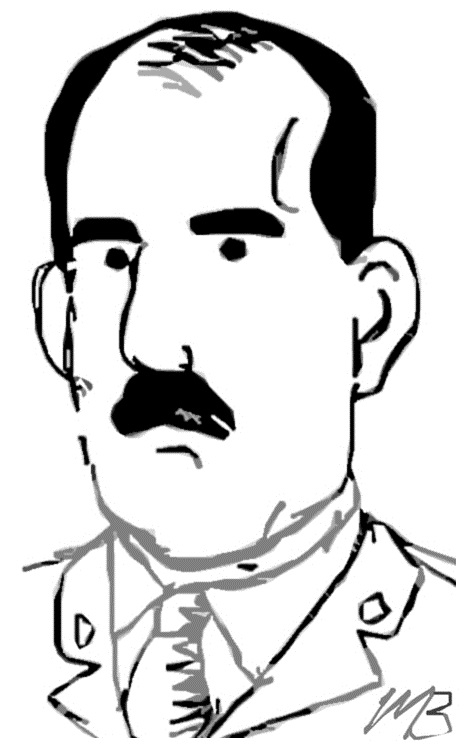
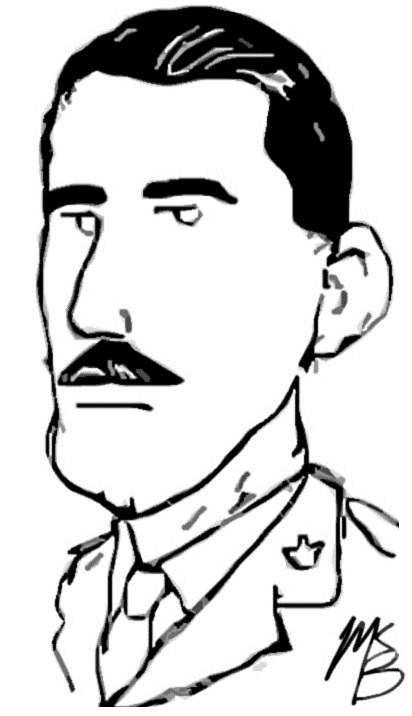
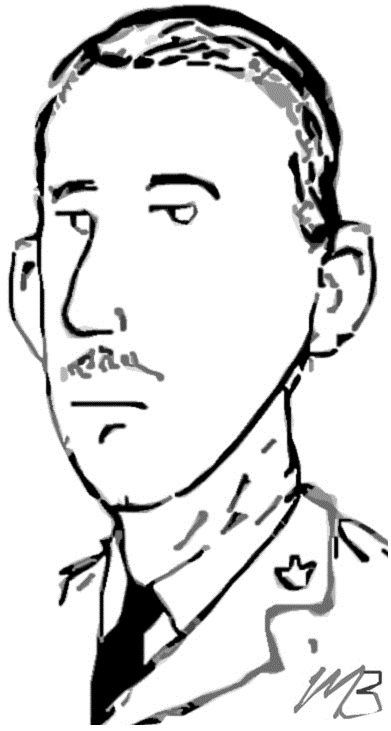
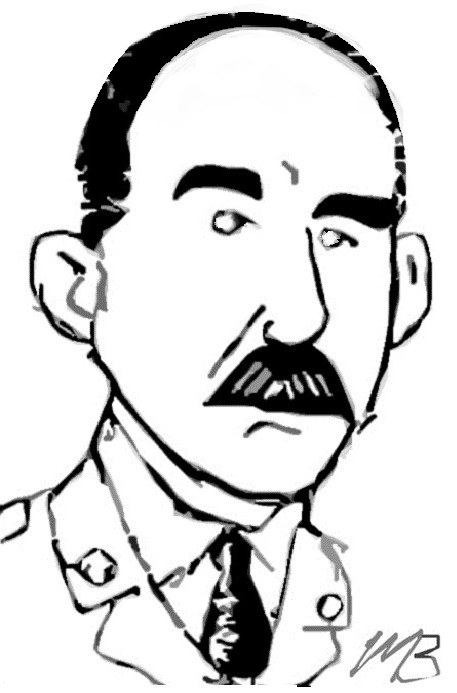
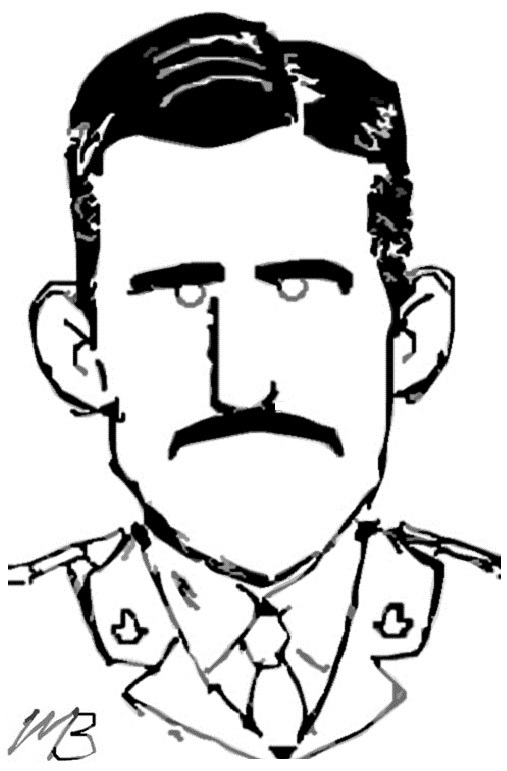
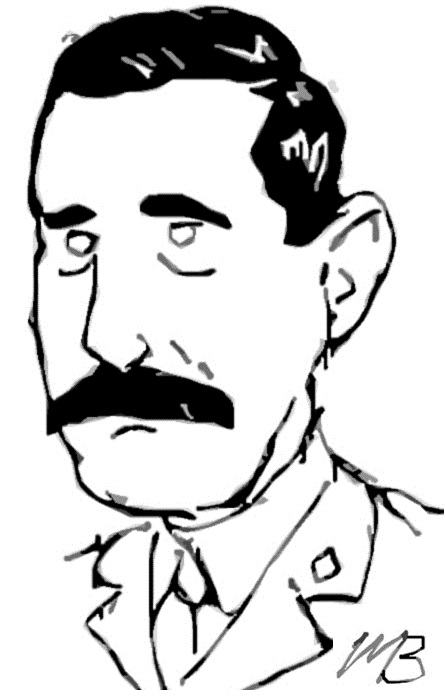
Brigadier General Eric McCuaig, D.S.O.
13th (Royal Highlanders of Canada) BattalionMcCuaig
One night, too, the officers staged a concert in the local theatre, all the talent being drawn from their own roster. By sacrificing his moustache, Lieut-Col. McCuaig scored a tremendous hit in a charming female role…

(The 13th Battalion Royal Highlanders of Canada, 1925, 203)

George Eric McCuaig assumed command of the 13th Battalion after an explosion killed Lieutenant Colonel Victor Buchanan and many of his senior officers. A native of Toronto, McCuaig was born on 2 September 1885. He graduated from McGill University, worked in Montreal as a stockbroker and belonged to the Black Watch.
Continue reading

The Pawn

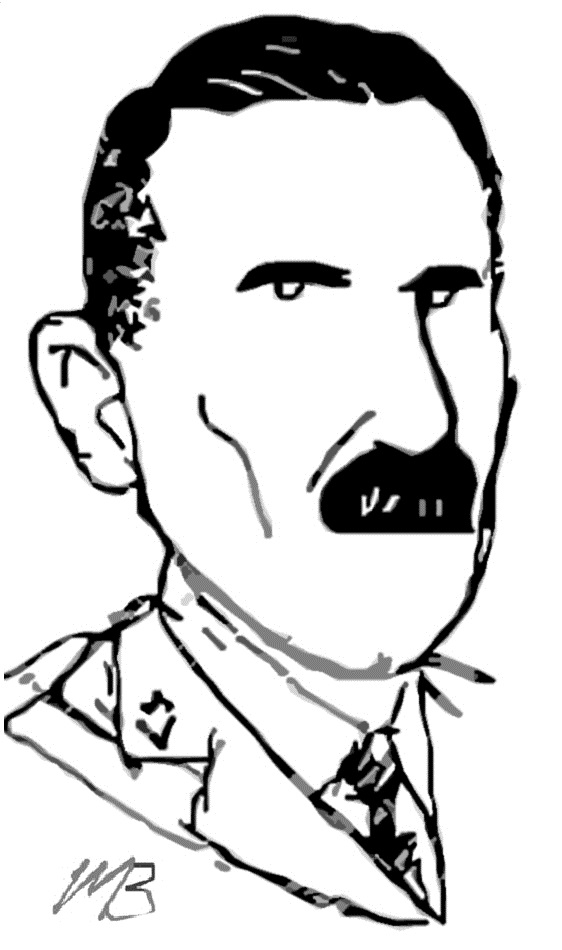
Major J. H. Sills
44th (South Saskatchewan) BattalionSills

The Officer Commanding the 44th Battalion who was in England undergoing treatment for a damaged shoulder and his Second-in-command had each been adversely reported on by me, and I had placed Major Sills, a Graduate of the Royal Military College, Canada and who had 16 months experience in France and whom I knew to be a most efficient Officer and capable business man in Command of the Battalion.

(Gen. W. Hughes to Gen. Turner, 20 Mar 1917)

John Hamilton Sills was a civil engineer, militiaman and graduate of the Royal Military College. A descendant of United Empire Loyalists he was born in Frankford, Ontario on 1 May 1882. Sills enlisted with William St. Pierre Hughes’ 21st Battalion in April 1915 and was promoted to July in August 1916.

Continue reading

The Flax Seeder

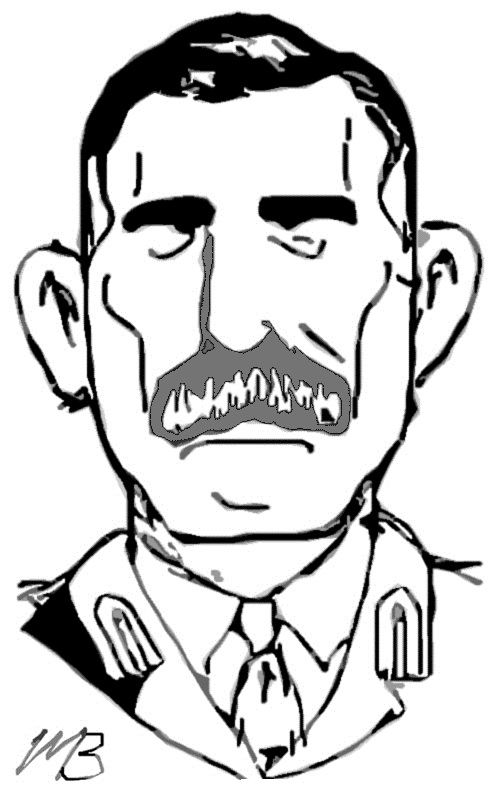
Lieutenant Colonel E. R. Wayland
44th (Manitoba) BattalionWayland

The evening was spent in many handshakings, as old comradeships were renewed. Many an Incident of the war days was told, as the sight of the familiar faces brought back vivid memories, some joyful, others sad. A large number of members of the association turned out to see again the man who had guided their destinies in France.

(Winnipeg Tribune, 26 September 1931, 3)

Born on 23 March 1869 in London, England, Edward Robert Wayland was an Ontario grain exporter and nine-year member of the 96th Regiment. In October 1914, he led a detachment of troops from Fort William and Port Arthur to Winnipeg, where he was appointed to command the 44th Battalion. The 44th sailed for England in October 1915 and deployed to France in August 1916 as part of the 10th Infantry Brigade, 4th Division.

Continue reading

The Mink Breeder

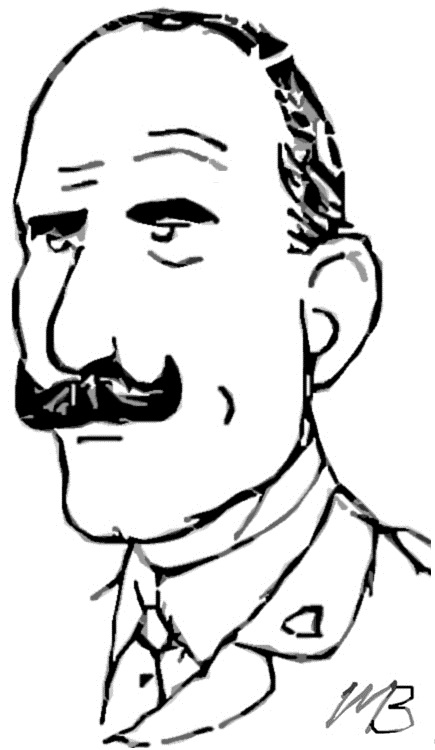
Lieutenant Colonel William A. Lowry
82nd (Lowry’s Lions) BattalionLowry

The attack was timed for 12 o’clock. There had been no preparation for any artillery fire from our side. The 10th battalion was given the position of honor–that in front. Not a shot was fired by the Germans until we were within 50 yards of the wood, then a most terrific rifle and machine gun fire commenced; it was practically a sheet of lead. In the space of a few seconds, possible between 700 and 800 of our men fell.

(Calgary Herald, 26 Nov 1915, 12)

In September 1914, William Arthur Lowry enlisted as an officer in Lieutenant Colonel Russ Boyle’s 10th Battalion at Valcartier. Born on 19 July 1878 in Wellington County, Ontario, Lowry was a veteran of Strathcona’s Horse in the Boer War and a member of the Corps of Guides since 1912. He was wounded in the second battle of Ypres and witnessed Boyle’s death in hospital on 25 April 1915.

Continue reading

The Brother

Brigadier General W. St. P. Hughes, D.S.O.
21st (Eastern Ontario) BattalionWSHughes

It was such fighting ability that enabled my 21st Battalion to come home with the record of never having been given a black eye in over four years of active participation in the war. They never went after anything they did not take, and they never gave up anything they captured. Of the original 1058, less than 150 are now alive, most of them buried in Flanders’s Fields and in the Somme.

(W. Hughes, “An Appreciation,” in H. W. McBride, A Rifleman Went to War, 1935)

William St. Pierre Hughes was Inspector of Penitentiaries and commanding officer of 14th The Princess of Wales’ Own Rifles Princess of Wales’ Own Rifles. Born on 2 June 1864 in Darlington Township, Canada West, he was also the younger brother of Sir Sam, MP for Victoria and Minister of Militia. In November 1914, Hughes, a veteran of the Northwest Rebellion with over thirty years’ experience in the militia, took command of the 21st Battalion, based in Kingston.

Continue reading

The Co-operator

Lieutenant Colonel H.D. Pickett
229th (South Saskatchewan) Battalion

I had our farewell address from Col. Pickett and our lecture from our new Colonel Colonel McKay. He seems a pretty good head too. There was no love lost on Colonel Pickett.

(W. M. Dennis, 229th Bn. to fiancé, 20 May 1917)

A descendant of a United Empire Loyalist family, Henry Davidson Pickett was born on 6 December 1876 in Kingston, New Brunswick. In 1903, shortly after graduating with a law degree from the University of King’s College, Pickett moved in the Northwest Territories, where he established a legal practice at Moose Jaw. While a student in the Maritimes he had belonged to 8th Canadian Hussars (Princess Louise’s) and the 62nd (St. John) Fusiliers. After arriving in western Canada, he joined the 95th Saskatchewan Rifles, rising to the rank of major. In March 1916, he was appointed commanding officer of the 229th Battalion from the south of the province.

Continue reading

The Gurkha

Lieutenant Colonel A. H. G. Kemball, D.S.O. †
54th (Kootenay) BattalionKemball

So Kemball was ignored. That gallant officer—the adjective in his case is deserved—defied orders and refused to stay in the rear when his men were in peril. He led them personally on an attack he knew was futile.

(Pierre Berton, Vimy, 1986, 129)

Born in Belgaum, India on 4 January 1861, Arnold Henry Grant Kemball was a professional soldier with thirty-two years’ experience in the Indian Army.  A veteran of the Gurkha Rifles, Kemball served in the Hazara Expedition (1888), the North West Frontier (1897) and Tirah Campaign (1898). He retired as commander of the 5th Gurkhas in 1910 and moved to British Columbia.

Continue reading

The Trench Raider

Lieutenant Colonel John Wise, D.S.O., M.C.
25th (Nova Scotia Rifles) BattalionWise

I regret that I did not have the pleasure of meeting you during my recent visit to France.

I send my hearty congratulations to you upon the command of the splendid 25th Battalion and my best wishes to you, the Officers, non-commissioned officers and men on the great service which still lies before you.

(Prime Minister Borden to Wise, 27 Jul 1918)

Born in London, England on 11 June 1893, John W. Wise was one of the few battalion commanders to rise from the ranks. Wise had earned a reputation as an effective trench raider in the 25th Battalion and won a Military Cross for a successful nighttime attack in 1915. Following subsequent heroics and promotions, he assumed command of the 25th on 19 April 1918.

Continue reading

The Bookkeeper

Lieutenant Colonel Arthur O. Blois, D.S.O.
25th (Nova Scotia Rifles) BattalionBlois

My husband Lieut.-Colonel Arthur O. Blois, D.S.O. of the 25th Canadian Battalion, has been overseas for about two years, and he is now slated for his three months commanding officer’s course in England. He cabled this fact to me today, and asks me to now meet him there. Naturally I am anxious to go. My husband was wounded at Vimy and decorated after that battle.

(Ethel Blois [wife] to Joseph Pope, 27 Nov 1917

When Major J. A. De Lancey was struck down during the battle of Vimy Ridge, Arthur Osborne Blois took temporary charge of the 25th Battalion. Blois was a Halifax accountant and bookkeeper born on 28 June 1885. He first volunteered with 40th Battalion before receiving a commission with the 64th in summer 1915. After the breakup of that unit, he joined the 25th in August 1916.

Continue reading

The Bald

Lieutenant Colonel Stan Bauld
25th (Nova Scotia Rifles) BattalionBauldDS

Col. Bauld was in command and I must say that he has done good work for the whole time that he was out there. He was such that no matter who the man was he would do all in his power to assist him.

(Lieut. Lewis, Over the Top with the 25th, 1918)

Duncan Stanley Bauld was a commercial traveler born in Halifax on 16 April 1884. He belonged to the 66th Regiment and enlisted with Lieutenant Colonel G. A. LeCain’s 25th Nova Scotia Rifles. Following the poor performance of the battalion during its first action in late September, LeCain and his senior major were sacked. Edward Hilliam was appointed to take command and Bauld was promoted to second-in-command.

Continue reading